



Useful information · COMPARE
Long-Term Cost of Ownership: Why Durability Matters
Purchase price is only one part of a greenhouse or pergola investment. This practical guide explains how to compare lifetime costs, evaluate durability, plan installation and maintenance, and avoid false economies before choosing a structure.
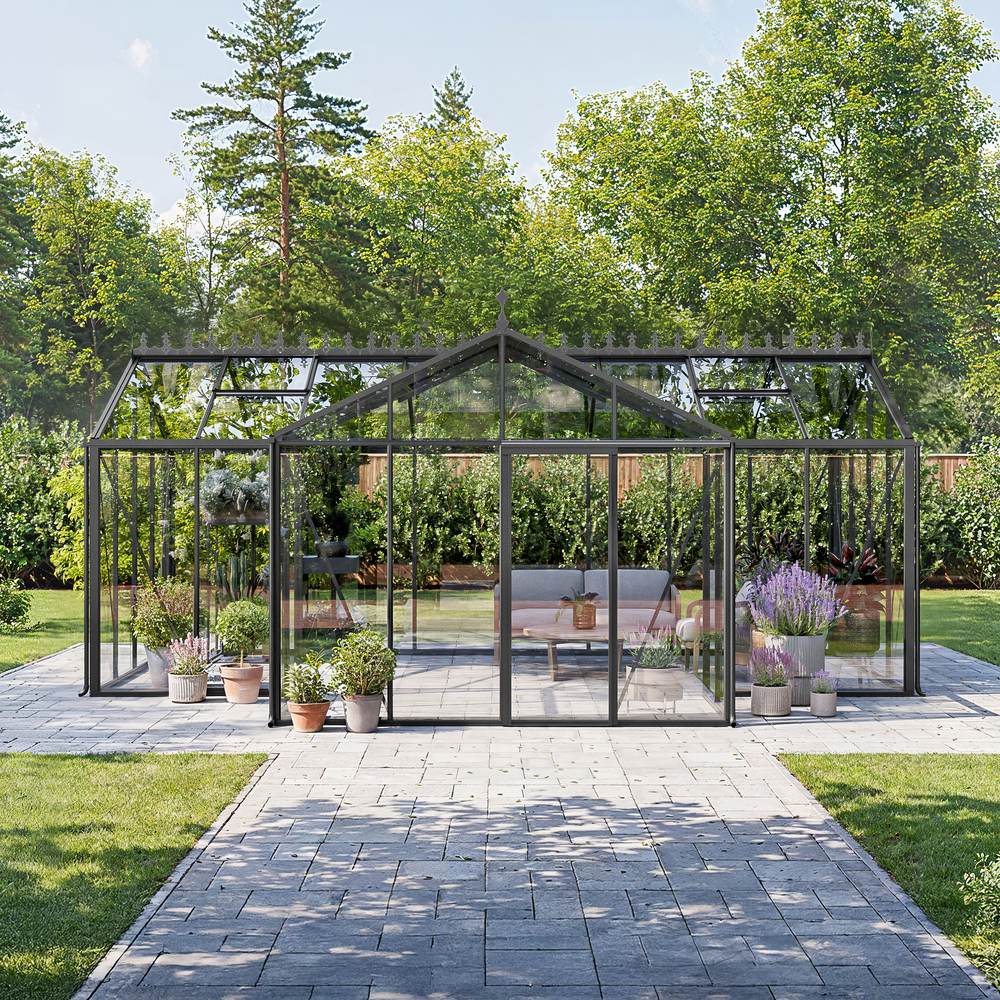
Purchase price is not the same as long-term cost
A greenhouse, orangery or pergola is a long-term addition to a property. Comparing products only by their initial prices can therefore produce a misleading result. The lower-priced option is not necessarily less expensive to own if it needs frequent refinishing, difficult repairs, premature panel replacement or eventual replacement of the complete structure.
Long-term cost of ownership considers the money, labor and disruption associated with a structure throughout the period you expect to use it. Durability matters because it can reduce how often you must repair, restore or replace major components. It can also help preserve the appearance and everyday usefulness that motivated the purchase.
This does not mean that the most expensive design is automatically the best value. The right decision depends on the site, intended use, installation quality, maintenance commitment and selected configuration. A compact Mini Wall Greenhouse, for example, solves a different problem from a freestanding Bloomcabin Orangerie. A useful comparison begins with structures that can serve the same purpose on your property.
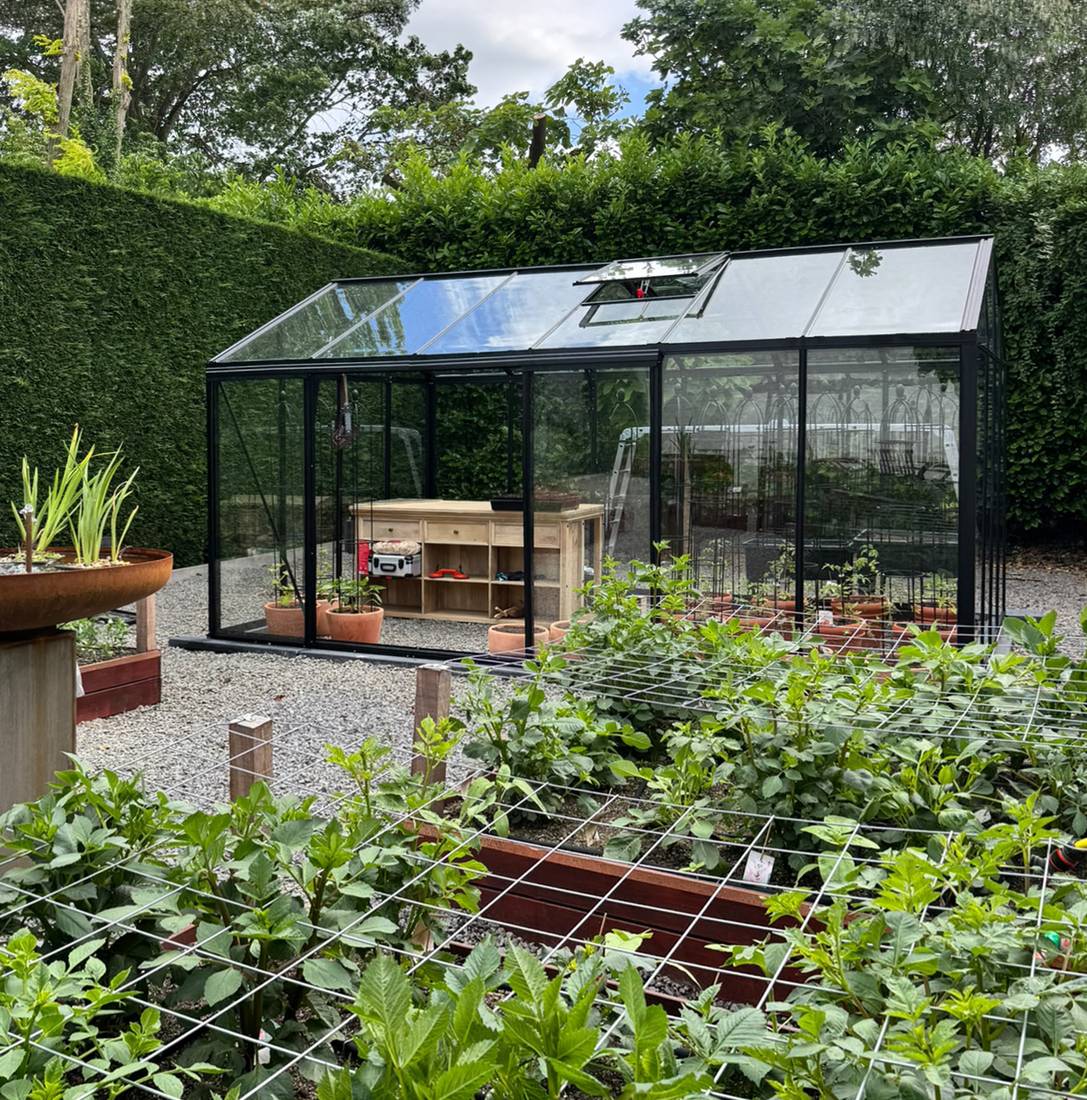
What belongs in a total cost of ownership calculation?
A practical ownership estimate should include more than the listed product price. Some costs occur once, some recur, and others arise only if a component is damaged or the owner’s needs change.
| Cost category | What to consider | Why durability affects it |
|---|---|---|
| Product acquisition | Selected model, configuration, glazing, doors, accessories and available options | A well-matched product can reduce the need for later alterations or early replacement. |
| Site preparation | Access, clearing, grading, drainage planning and the appropriate base or foundation | A stable, suitable site helps protect alignment and limits avoidable stress on the structure. |
| Delivery and receiving | Receiving arrangements, unloading plan, package inspection and safe storage before assembly | Careful handling helps prevent damage from becoming an installation or replacement expense. |
| Installation | Assembly labor, tools, access equipment and any qualified help required for site-specific work | Correct assembly supports long-term fit, operation and weather management. |
| Routine care | Cleaning, inspection, vegetation control, drainage checks and adjustment of moving parts | Durable materials can simplify care, but no outdoor structure is maintenance-free. |
| Repairs and replacements | Damage to panels, seals, hardware, doors, vents or other serviceable components | Robust construction and replaceable components can limit the scope of a repair. |
| Owner time | Hours spent cleaning, refinishing, adjusting, arranging repairs or managing replacement | Low-maintenance construction can reduce recurring labor and disruption. |
| End-of-use decision | Continued use, adaptation, component renewal or replacement of the structure | A structure that remains sound and useful provides more value from the original installation effort. |
A simple planning formula is: purchase and installation costs + recurring care + expected repairs + owner time + replacement costs − remaining value or continued utility = estimated long-term cost. This is a planning tool rather than a promise of future expenses. Weather, use and maintenance differ from one property to another.
How durability creates practical value
Fewer major interventions
Durability is valuable when it prevents small, predictable maintenance tasks from turning into major restoration projects. An owner should still clean the structure, keep drainage routes clear and check doors, vents, fasteners and seals. The distinction is that routine care should support the structure rather than repeatedly rescue deteriorating materials.
More value from installation work
Site preparation and assembly require planning regardless of the structure’s initial price. If the complete product must be replaced early, much of that effort may need to be repeated. A durable structure spreads those one-time costs across a longer useful period. This is one reason material quality, component fit and installation discipline deserve attention before purchase.
Greater continuity of use
A greenhouse interrupted by persistent door, glazing or water-management problems is less useful even if the repair invoices appear modest. Downtime can disturb growing plans, storage arrangements and daily routines. For more background on the relationship between construction and ownership value, read Premium Aluminum and Glass Greenhouses: Long-Term Value for American Gardeners and Buy a Greenhouse Once, Harvest for Years.
Material choice: compare maintenance systems, not labels
Material names alone do not establish quality. Overall durability depends on design, finish, connections, glazing or roof materials, hardware, exposure and maintenance. Nevertheless, material choice influences the type of care an owner can expect.
| Decision factor | Aluminum structure | Wood structure |
|---|---|---|
| Routine surface care | Generally centered on cleaning and inspection of the finish and connections | May include periodic coating or refinishing depending on the wood, finish and exposure |
| Moisture response | Does not rot, but water management and condition of finishes and connections still matter | Persistent moisture can contribute to decay, swelling or coating failure if not managed |
| Dimensional behavior | Provides a stable framing approach when correctly designed and installed | Natural movement can occur as environmental moisture conditions change |
| Appearance | Clean profiles and a consistent manufactured finish | Natural texture that some owners prefer and may be willing to maintain |
| Ownership question | Are components, finish, glazing and drainage details suited to the site? | Is the owner prepared for the inspection and surface-care schedule the material may require? |
Bloomcabin offers aluminum-based designs such as the Classic Greenhouse, Classic Plus 385 and Classic Premium Greenhouse. The article Long-Lasting, Low-Maintenance Aluminum Greenhouses discusses aluminum care in more detail. Pergola buyers can also compare ownership considerations in Aluminum vs. Wood Pergola.
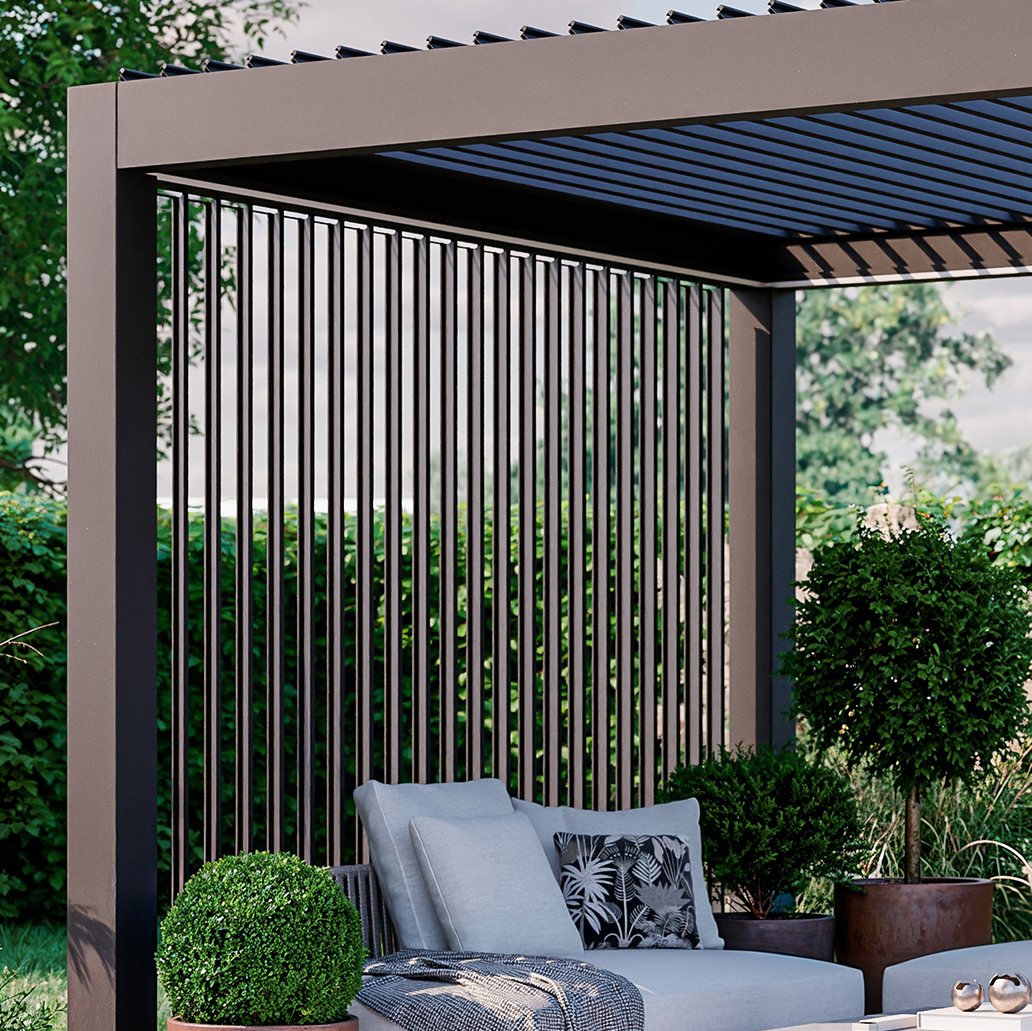
Glazing and roof systems affect lifetime costs
The frame is only one part of an outdoor structure. Greenhouse glazing, seals, vents, doors and water-management details all contribute to long-term performance. Pergolas add their own roof, drainage and optional enclosure considerations.
When comparing greenhouse glazing choices, consider light transmission, appearance, cleaning, impact exposure, panel retention and the process for replacing an individual damaged panel. Do not assume that one glazing material is ideal for every location. A garden exposed to falling branches presents a different risk profile from a sheltered courtyard. Your growing goals may also affect the desired balance of light, insulation and appearance.
For a broader overview of one common combination, see The Ultimate Guide to Aluminum Glass Greenhouses. Confirm the actual material and configuration offered for the model you are considering rather than applying a general article to every product.
For an adjustable-roof outdoor structure, evaluate how the roof is operated, how water is directed, which components need periodic cleaning and how optional walls may change use and care. The Bloomcabin Bioclimatic Aluminum Pergola is a relevant product pathway, while Are Louvered Pergolas Worth It? provides additional decision questions.
Choose a form that fits the property
A durable product can still be a poor investment if its form conflicts with the site. Shape affects placement, circulation, foundation planning, access for cleaning and the ability to use the interior efficiently.
- Freestanding models: These can provide access around the exterior, but they need a suitable open location. Compare the Prestige Premium Greenhouse with other freestanding designs based on intended use, not price alone.
- Lean-to models: A Lean-To Greenhouse uses a wall-side layout. Buyers must assess the existing wall, access and water behavior at the interface before deciding that this form suits the site.
- T-shaped designs: The Garden View T Greenhouse can support differentiated interior zones, while the Wall-Mounted T-Model Orangery addresses a different relationship with the building.
- Compact wall models: A smaller wall-mounted design can be valuable where the growing goal and available space are limited. Buying a larger structure than the site can support does not create better lifetime value.
- Pergolas: A Bloomcabin Pergola is intended for outdoor living rather than greenhouse growing. Its value should be measured against shade, shelter and patio-use goals.
Bloomcabin’s overview of design freedom and available choices can help organize the style decision. Do not pay for complexity that has no practical purpose, but do not undersize a structure merely to reduce the initial total.
Site preparation is part of durability
Long-term performance starts below and around the structure. A poor location or unsuitable base can undermine an otherwise durable product. Before ordering, assess the following:
- Whether the site offers appropriate space, orientation and practical access.
- How surface water moves before, during and after heavy rain.
- Whether doors can open and users can circulate without obstruction.
- Whether the exterior will remain reachable for cleaning and inspection.
- How nearby trees, roof runoff, drifting snow or falling debris may affect the structure.
- Whether the proposed base or foundation is suitable for the selected product and local site conditions.
- Whether wall-mounted work involves a wall that is suitable for the intended connection.
Do not assume that a visually level area is installation-ready. Follow the current product instructions and obtain appropriate site-specific advice when needed. Local requirements and property conditions vary, so they should be confirmed rather than inferred from a general ownership guide.
Receiving and installation: protect the investment from day one
- Review the order details. Confirm the selected model, configuration and delivery information. Bloomcabin’s How to Order page explains the purchasing pathway.
- Plan access and receiving. Read the current purchase and delivery terms before the shipment arrives. Make sure the receiving location and handling plan are suitable.
- Inspect the shipment. Check packages and components in accordance with the supplied documentation and applicable terms. Keep identification and packaging organized until the parts have been verified.
- Store components carefully. Protect unassembled materials from unstable stacking, traffic and other avoidable damage.
- Read the complete manual. Use the current instructions for the exact model and configuration. Review the sequence, required tools and safety information before beginning rather than improvising from photographs.
- Verify the prepared site. Resolve base, access or alignment concerns before they become assembly problems.
- Assemble methodically. Keep parts organized, follow the stated sequence and avoid forcing components that do not align as expected.
- Complete an operational check. Inspect the finished structure and test accessible doors, vents, roof operation or other moving elements applicable to the product.
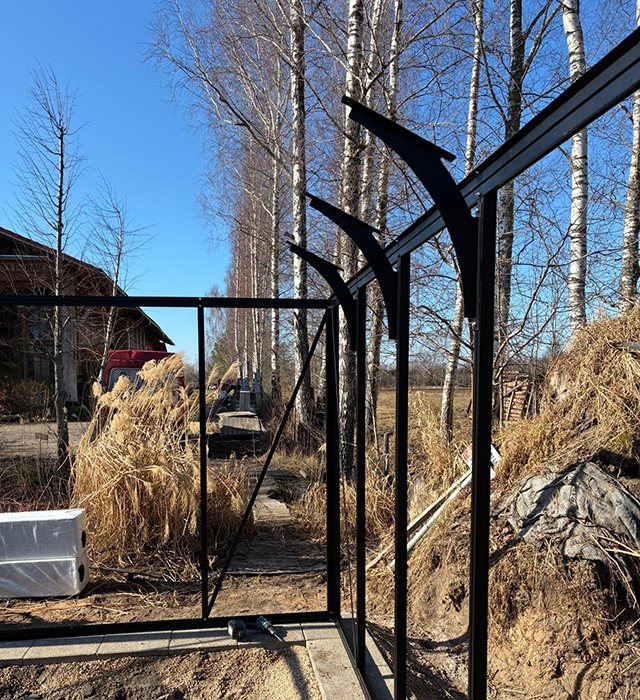
Anna Koku Skola should be understood as one real greenhouse installation sequence. Its images can illustrate visible stages and the changing form of that particular installation, but they are not a substitute for the product manual and do not establish hidden construction details. Every buyer should follow the documentation for the exact structure being assembled.
A manageable maintenance plan lowers ownership cost
Low maintenance does not mean no maintenance. Preventive checks are generally easier to plan than corrective work after dirt, vegetation or blocked drainage has caused a functional problem. Follow the product-specific guidance on maintaining an aluminum greenhouse.
Regular visual check
- Remove leaves, plant material and loose debris from accessible surfaces and water paths.
- Look for visible panel damage, displaced seals, loose accessible hardware or unusual gaps.
- Check that doors, vents and other moving components operate normally.
- Keep plants, soil and stored objects from obstructing tracks, openings or drainage routes.
Periodic cleaning
- Use cleaning methods and products compatible with the supplied materials and finishes.
- Work safely and avoid leaning ladders or tools against glazing or unsupported components.
- Clean both for appearance and for visibility of developing issues.
- Do not use an aggressive method merely because it appears faster.
Event-based inspection
After unusual weather or accidental impact, inspect the structure from safe, accessible positions. Look for visible changes in alignment, panel condition, operation and water flow. If damage is suspected, stop using an affected moving element until the issue can be assessed. Durability helps manage ordinary exposure; it does not make an outdoor structure immune to every event.
Repairability can matter as much as resistance to damage
No responsible lifetime-cost comparison should assume that nothing will ever be damaged. Instead, ask what happens if one panel, seal, door component or piece of hardware requires attention. A serviceable structure may allow a localized problem to remain localized. A structure that cannot be practically assessed or repaired may turn minor damage into a much larger expense.
Before buying, ask how the exact model is documented, how components are identified and what information should be retained after assembly. Keep the order confirmation, model information, manuals and photographs of the completed installation together. This record can reduce uncertainty if support is needed later.
Review the current warranty information before purchase. A warranty and physical durability are related but different concepts: durability concerns how a product performs in use, while warranty coverage is governed by its written terms, conditions and exclusions. Also review the Return and Cancellation Policy before placing an order.
How to compare two quotations fairly
Use the same assumptions for every candidate. If one quotation includes a desired option and another does not, comparing only the totals will distort the decision.
- Write down the intended use, desired location and essential features.
- Confirm that each structure can satisfy those same requirements.
- List what is included and what would need to be added separately.
- Estimate site preparation and installation using the same scope.
- Identify expected routine care for the frame, glazing, roof and moving components.
- Consider access for cleaning and the owner time each option may require.
- Review documentation, service pathways and repairability.
- Consider the cost and disruption of premature replacement without predicting an unsupported lifespan.
- Compare the resulting ownership ranges, not just one optimistic total.
| Worksheet item | Option A | Option B |
|---|---|---|
| Meets intended use and site constraints | Yes / No | Yes / No |
| Initial product and selected options | Enter quote | Enter quote |
| Site and installation allowance | Enter estimate | Enter estimate |
| Recurring cleaning and care | Low / Medium / High | Low / Medium / High |
| Access for inspection and repairs | Easy / Moderate / Difficult | Easy / Moderate / Difficult |
| Documentation reviewed | Yes / No | Yes / No |
| Replacement disruption considered | Yes / No | Yes / No |
Customer experience can add useful context, provided it is not treated as a substitute for product documentation. Browse Customer Reviews and then verify the features important to your project. Bloomcabin’s explanation of premium quality provides another framework for assessing value.
Common false economies
- Choosing by footprint alone: Two structures with similar floor areas may differ in form, access, usable layout and maintenance requirements.
- Ignoring the base: Saving on site preparation can create alignment, drainage or assembly problems that are expensive to correct later.
- Buying too small: A structure that cannot support the intended use may be replaced or supplemented earlier than planned.
- Buying unnecessary complexity: Features that provide no practical value still add acquisition and care considerations.
- Assuming maintenance-free ownership: Dirt, vegetation and blocked water paths can affect even durable materials.
- Postponing small corrections: A door or vent that begins operating abnormally should be checked before repeated use causes additional difficulty.
- Discarding documentation: Missing model and component information can make future support less efficient.
- Confusing price with quality: A higher price needs a reason, but a lower price is not a saving if the product is unsuitable for the site or expected use.
Frequently asked questions
Does a durable greenhouse always have the lowest lifetime cost?
No. Durability is only one part of value. A durable greenhouse that is poorly matched to the site, incorrectly installed or larger than the owner needs may not be the most economical choice. Compare suitability, preparation, maintenance, repairability and expected use together.
How many years should I use in my cost calculation?
Use a planning period that reflects how long you realistically expect to remain committed to the structure and property. Because actual service life depends on product configuration, site exposure, care and events, this guide does not assign a universal number. It is useful to calculate more than one scenario rather than relying on a single prediction.
Is aluminum maintenance-free?
No. Aluminum avoids some care associated with materials that require recurring surface refinishing, but the complete structure still needs cleaning and inspection. Glazing, seals, drainage routes, doors, vents and accessible hardware also require attention.
Is glass always the most durable glazing?
No single glazing choice is automatically best for every property. Evaluate appearance, light, impact exposure, cleaning, panel retention, replacement practicality and the actual options offered for the selected model.
Can I reduce cost by assembling the structure myself?
That depends on the product instructions, your tools, experience, available help and site. Self-assembly can reduce purchased labor only when the work is completed correctly and safely. Errors that require disassembly, replacement parts or site correction can eliminate the expected saving.
Why should delivery be included in ownership planning?
Large outdoor structures require an organized receiving plan. Access, handling, inspection and protected storage can affect whether installation begins with components in the expected condition. Review current order and delivery terms before committing to the purchase.
Does a warranty prove how long a product will last?
No. A warranty is a defined contractual commitment governed by written terms. Product longevity is influenced by materials, design, installation, environment, care and use. Read the warranty rather than treating it as a general lifespan prediction.
Should appearance be part of lifetime value?
Yes. A greenhouse, orangery or pergola remains visible on the property. If an owner dislikes its form or cannot keep its finish presentable with a reasonable care routine, technically functional service may still feel unsatisfactory. Long-term value includes continued enjoyment as well as repair expenses.
What records should I keep?
Retain the order confirmation, exact model and configuration, manuals, warranty information, component records and installation photographs. Also keep notes about maintenance or repairs. Organized records can make future identification and support more efficient.
Where should I start if several Bloomcabin models appear suitable?
Start with the site and intended use, then compare form, access, glazing or roof system, available options and maintenance expectations. The overview Best Aluminium Greenhouses for American Gardens can help define an initial shortlist, but final decisions should use current product information for each exact model.
The durable choice is the one you can use and care for well
Durability matters because it protects more than the original purchase price. It protects site-preparation effort, assembly work, growing plans, outdoor enjoyment and the time an owner would otherwise spend arranging corrective work. The strongest lifetime value usually comes from a structure that fits its location, is installed according to its documentation and receives simple, consistent care.
Before ordering, compare equivalent configurations, review delivery and policy information, plan the site, understand routine maintenance and keep room in the budget for proper installation. That process is more reliable than selecting the cheapest quotation or assuming the highest-priced option must be best. Long-term ownership begins with a product decision, but durable value is created by the complete system of product, place, installation and care.
