



Useful information · MATERIALS
Greenhouse Wind and Snow Load Ratings: How to Read the Specifications
Wind and snow ratings are meaningful only when you understand the units, test assumptions, installation conditions and local site exposure behind them. This guide explains how to compare greenhouse specifications without treating a single rating as a universal guarantee.
A greenhouse wind or snow load rating is not simply a measure of how strong the greenhouse looks. It is a technical value tied to a particular structure, configuration, installation method and set of assumptions. To use that value responsibly, you must determine what was rated, which units were used and whether the stated conditions resemble your property.
This page explains the terminology customers commonly encounter when comparing aluminum greenhouses. It also covers site exposure, foundations, permitting, delivery inspection, installation and seasonal maintenance. Because ratings can vary by model, size and configuration, obtain the applicable documentation for the exact greenhouse you intend to order. Do not transfer a value from a similar-looking model or from a different size.
What a structural load rating tells you
A load rating identifies a defined design condition or structural capacity. It does not mean that a greenhouse is unaffected by every storm below a particular forecast number. Actual performance depends on the complete installed system: frame, glazing, fasteners, doors, vents, base, anchors, foundation and supporting ground or building.
A useful specification should identify more than a number. Before relying on it, look for the following:
- Load type: wind, ground snow, roof snow or another defined load.
- Units: pounds per square foot, miles per hour or another stated unit.
- Reference condition: whether wind is described as a basic design speed, a gust or a different measurement.
- Model and size: the exact greenhouse configuration covered by the value.
- Installation assumptions: foundation, anchoring, glazing and assembly requirements.
- Limitations: excluded conditions, required maintenance or configuration restrictions.
A rating should therefore be treated as part of a specification package, not as a stand-alone marketing number. The broader aluminum greenhouse information and Aluminum Greenhouse FAQ can help you place structural questions within the overall buying process.
Wind ratings: understand the number before comparing it
Wind may be expressed as a speed, such as miles per hour, or as pressure, commonly pounds per square foot. Those formats are related, but they are not interchangeable without knowing the calculation method and assumptions. Wind pressure does not rise in a simple one-to-one relationship with wind speed. Doubling a stated speed does not merely double the pressure.
Do not convert a pressure rating into an apparently equivalent speed by using an informal online formula and then compare that result with a manufacturer’s stated wind speed. Differences in gust duration, exposure category, height, directional effects, enclosure assumptions and safety factors can make the comparison misleading.
Terms that can change the meaning of a wind specification
| Term | Why it matters | Question to ask |
|---|---|---|
| Basic design wind speed | This is a defined design input, not necessarily the same as a weather-app forecast. | Which standard, map or design method applies? |
| Gust | A short-duration peak may be reported differently from sustained wind. | Is the value a gust speed, sustained speed or pressure? |
| Exposure | Open terrain, shorelines and hilltops can experience greater wind effects than sheltered locations. | What site exposure was assumed? |
| Internal pressure | An open or damaged door, vent or glazing panel can change pressure inside the greenhouse. | Must all openings be closed during high winds? |
| Anchorage | Frame capacity does not prove that the base or foundation can resist uplift and sliding. | What anchoring condition is required? |
| Configuration | Size, shape, attached sections and optional components can affect wind behavior. | Does the documentation cover my complete configuration? |
Wind acts from more than one direction. It pushes against windward surfaces, creates suction on leeward walls and roof areas, and can generate uplift at roof edges. Turbulence around a house, fence, neighboring structure or tree line can also produce localized effects. A sheltered-looking corner is not automatically a low-wind site.
Doors and vents deserve particular attention. A greenhouse assessed with its openings closed should not be assumed to have the same resistance with a door propped open. Before a forecast storm, close and secure doors, roof vents and other operable components according to the product instructions. Never remain outside during dangerous weather to make last-minute adjustments.
Snow ratings: ground snow is not roof snow
Snow load is commonly expressed as weight per unit area, such as pounds per square foot. This is a load, not a depth. The same depth of snow can have very different weight depending on moisture, compaction, drifting, ice layers and rain absorbed by the snowpack.
One of the most important distinctions is between ground snow load and roof snow load. Ground snow load describes a mapped or otherwise established site condition. Roof snow load is a design value determined after accounting for factors such as roof shape, exposure, thermal conditions, importance and drifting. A greenhouse specification stating roof capacity should not automatically be compared directly with a local ground snow figure.
Why snow depth alone is unreliable
- Light, dry snow may weigh substantially less than wet snow of the same depth.
- Wind can scour one roof area while forming a drift on another.
- Repeated thawing and freezing can create dense layers or ice.
- Rain falling on existing snow can rapidly increase weight.
- Snow sliding from a taller nearby roof can impose a localized load or impact.
A uniform rating does not necessarily address every possible drift or falling-snow condition. Pay special attention to lean-to greenhouses, wall-mounted designs, roof valleys and sites next to taller buildings. The supporting wall may shelter one wind direction while also creating drifting or receiving snow from the main roof.
For general cold-weather operating principles, the winter snow, wind and cold guide explains why active inspection and safe seasonal care still matter even when a structure has stated specifications.
How to compare greenhouse specifications correctly
Start by comparing products of the exact size and configuration you are considering. Bloomcabin offers several architectural formats, and their structural documentation should be reviewed individually. Examples include the Classic aluminum greenhouse, Classic Premium greenhouse, Bloomcabin Orangerie and Prestige Premium greenhouse.
Attached and specialized forms require equally careful review. These include the aluminum lean-to greenhouse, Garden View T greenhouse, wall-mounted T-model orangery, aluminum mini wall greenhouse, Bloomcabin Oasis pyramid greenhouse and greenhouse with built-in storage.
Use the following comparison process:
- Identify the exact product. Record the model, dimensions, roof form, glazing choice, doors, vents and connected sections.
- Request the applicable rating. Confirm that the document applies to that complete configuration rather than a representative image or product family.
- Normalize the terminology. Determine whether each snow value is ground or roof load and whether each wind value is speed or pressure.
- Review installation assumptions. Note the required base, anchors, foundation and attachment to any existing wall.
- Establish local design criteria. Ask the authority having jurisdiction or a qualified local professional what applies to the property.
- Resolve discrepancies in writing. Do not assume that a higher-looking number is superior when units or reference conditions differ.
The orangery greenhouse guide and small greenhouse guide can help narrow the architectural format before you request configuration-specific structural information. You can also review Bloomcabin’s approach to greenhouse design choices.
Site conditions can govern the decision
Two identical greenhouses can face different structural demands. A suburban backyard surrounded by similarly sized buildings is not equivalent to an exposed ridge, open field or shoreline. Local wind maps and snow criteria are only the beginning; topography, elevation and nearby obstructions can modify the design conditions.
Complete a site exposure review
- Is the greenhouse on a hill, ridge, escarpment or open slope?
- Is it near a coast, large lake, open field or broad unobstructed area?
- Could wind be funneled between buildings or through a narrow passage?
- Can snow slide or be shoveled from another roof onto the greenhouse?
- Could drifting develop beside a taller wall, fence or roof step?
- Are trees close enough to drop branches or damage glazing?
- Does surface water drain away from the proposed foundation?
- Is the supporting soil stable and suitable for the planned foundation?
Orientation can improve sun access and daily use, but it does not replace structural verification. Avoid rotating a greenhouse solely to present a smaller wall to the prevailing wind unless that decision has been coordinated with the complete site and foundation plan.
Permits, local criteria and professional review
A manufacturer’s rating does not approve a project for a particular address. State, county, city, zoning and homeowners’ association requirements may all differ. The local authority may request drawings, design criteria, setbacks, foundation information or other documents. Begin this review before ordering or preparing the site.
The U.S. greenhouse permit guide outlines questions to raise with local offices. For a general order sequence, see how to order. Where site conditions, local requirements or structural documentation are unclear, use a qualified professional familiar with the project location.
The foundation and anchors are part of the load path
A greenhouse frame cannot transfer wind and snow forces safely unless it is connected to adequate support. Roof forces travel through rafters and frame members, into the base and anchors, then into the foundation and ground. A weak or incorrectly installed connection can interrupt that load path even when the frame itself is appropriately specified.
Foundation decisions should consider levelness, drainage, frost movement, soil conditions, local requirements and the greenhouse manufacturer’s instructions. A patio that appears solid is not automatically a verified structural foundation. Likewise, adding more fasteners without an approved plan does not prove greater capacity and may damage components.
Review the greenhouse foundation guide when discussing alternatives. For an attached greenhouse, the existing wall and its connections also require review. Cladding alone should not be assumed to provide structural support.
Before ordering: a specification checklist
- Confirm the exact model, size, color, glazing and accessory configuration.
- Obtain the wind terminology, value and assumptions for that configuration.
- Obtain the snow terminology, value and assumptions for that configuration.
- Ask whether attached sections or optional equipment alter the applicable documentation.
- Identify the required foundation and anchoring conditions.
- Check local permits, zoning, setbacks and homeowners’ association requirements.
- Compare the local site criteria with the product information on a like-for-like basis.
- Resolve roof-versus-ground snow terminology before making a decision.
- Confirm who will prepare the site and who will assemble the greenhouse.
- Read the applicable purchase and delivery terms, warranty information and Return and Cancellation Policy.
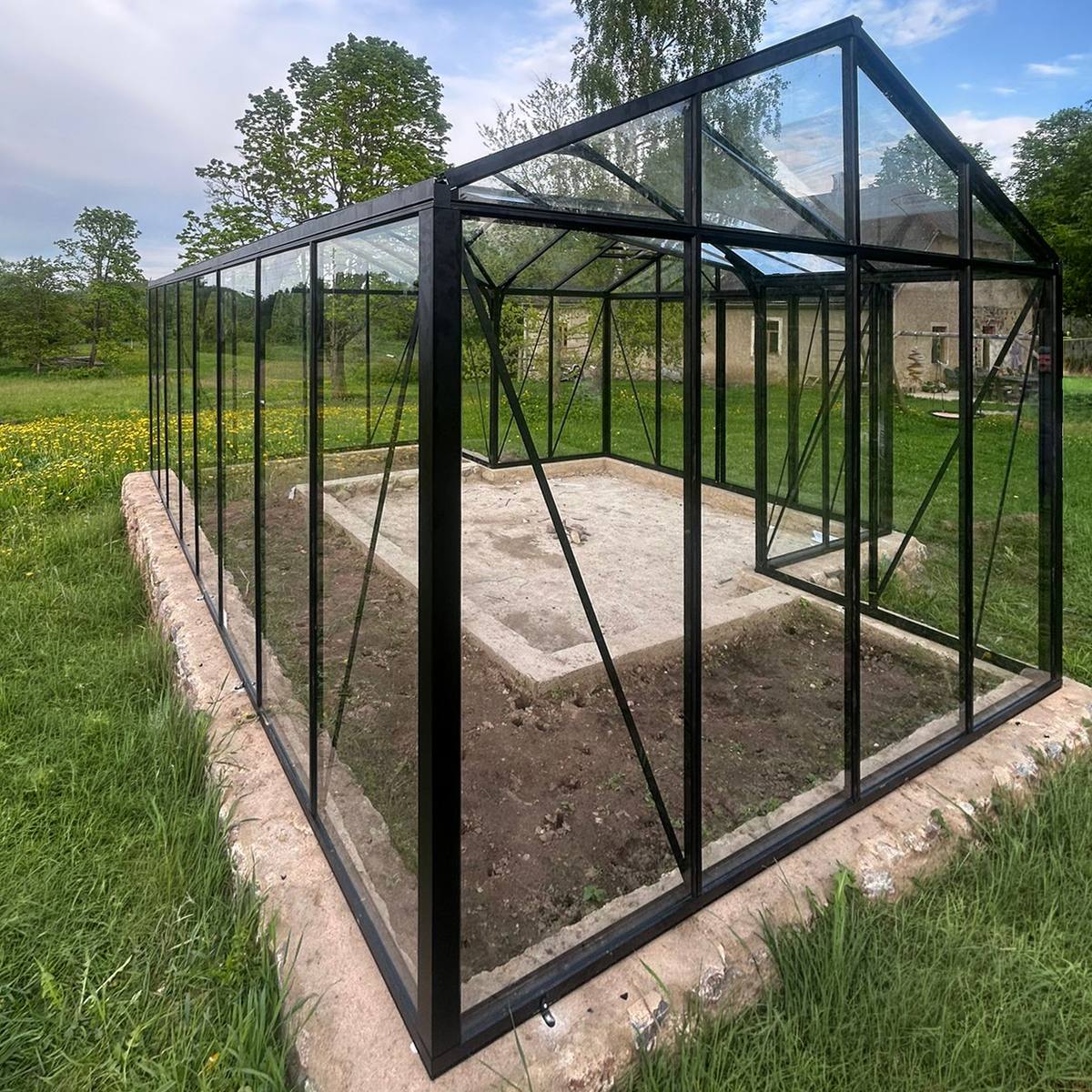
Receiving and installation
Plan access and staging before delivery. When the shipment arrives, inspect the packaging and compare received packages with the supplied documents. Record visible shipping damage promptly and keep components protected, organized and supported until assembly. Do not leave glazing or long frame components where wind can overturn or scatter them.
Use the manual for the exact model and configuration. Manuals establish component identification, assembly order, fastener placement and installation checks. Local page functionality may provide the applicable USA manual links. Do not substitute a manual from a visually similar greenhouse.
The Anna Koku Skola installation sequence should be understood as one real greenhouse installation sequence rather than as unrelated decorative images. A sequence can help customers recognize the progression from prepared site to frame assembly, glazing and completion. However, photographs do not replace the manual, and visible images do not establish hidden anchors, internal reinforcements, fastener torque or structural ratings.
Installation quality checks
- Verify that the foundation is complete, level and dimensionally appropriate before unpacking assembly groups.
- Inventory parts against the supplied documentation without mixing labeled groups.
- Protect frame finishes and glazing edges during staging.
- Follow the specified assembly order; temporary bracing should remain in place as directed.
- Check that the frame is square, level and plumb at the stages identified in the instructions.
- Install every specified fastener, seal and retainer in the correct location.
- Confirm doors and vents operate correctly and close securely.
- Complete the required base and foundation connections.
- Perform a final inspection before loading shelves, hanging plants or occupying the greenhouse.
Do not improvise structural changes to accommodate shelving, heaters, irrigation, shade equipment or electrical components. Additional loads attached to the frame may not be included in the original structural assumptions.
Maintenance preserves the installed condition
Ratings assume a complete structure in serviceable condition. Loose fasteners, damaged glazing, obstructed doors, deteriorated seals or foundation movement can change how loads move through the greenhouse. Establish regular inspections and add checks before and after severe weather.
- Keep doors and operable vents aligned, functional and capable of being secured.
- Inspect glazing retainers and accessible fasteners for looseness or damage.
- Keep gutters and drainage paths clear where fitted.
- Watch for foundation settlement, frost movement or loss of level.
- Remove loose objects near the greenhouse before high winds.
- Inspect for impact damage from branches, tools or yard equipment.
- Follow the manufacturer’s safe instructions for snow and ice management.
- Do not climb onto the greenhouse roof or strike glazing to break ice.
Never create an uneven loading problem by removing snow from only one area without understanding the consequences. Work from a safe location and use methods permitted by the product instructions. If snow is heavy, wet, drifted, iced or approaching a stated limit, seek appropriate assistance rather than taking risks.
See Maintenance of Your Aluminum Greenhouse for routine care. Climate management remains a separate operating subject: the greenhouse temperature and humidity guide explains ventilation and condensation considerations, while Grow Fresh Food 365 Days a Year covers year-round growing planning.
Common specification mistakes
- Comparing unlike units: wind pressure and wind speed cannot be ranked by the apparent size of their numbers.
- Confusing ground and roof snow: they represent different stages of the design process.
- Using forecast snowfall depth: depth alone does not establish weight.
- Ignoring openings: an unsecured door can alter internal pressure during a storm.
- Assuming every size is identical: capacity may vary with configuration.
- Separating the frame from its foundation: wind resistance depends on the full load path.
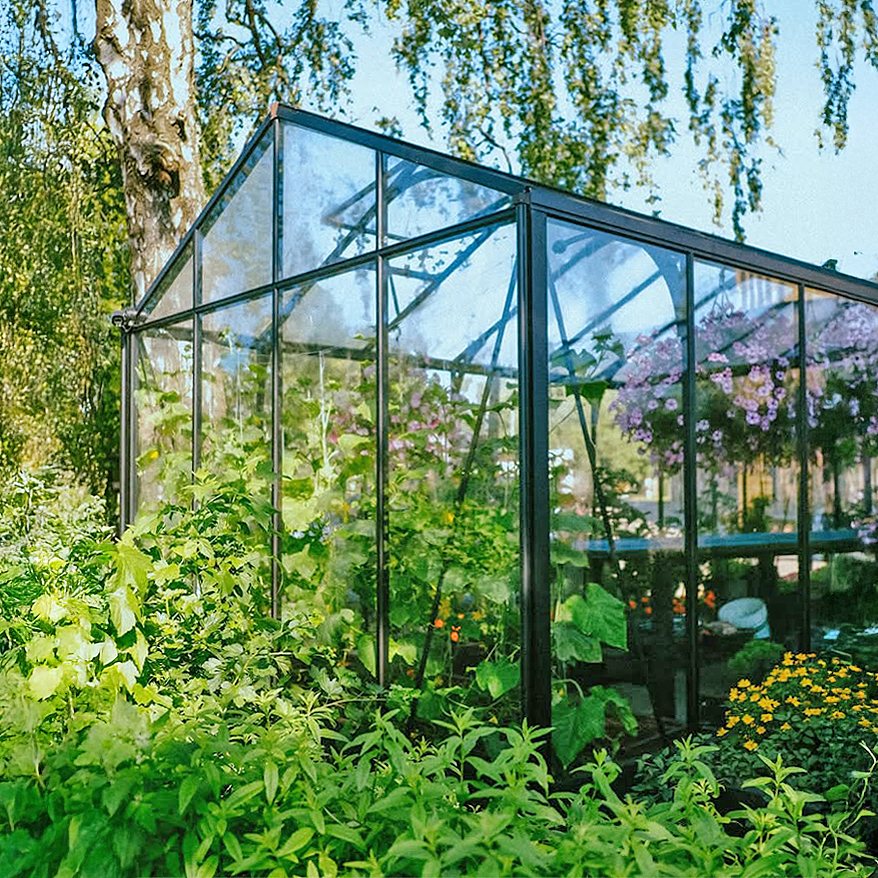
- Relying on photographs: images communicate design and installation progress but do not certify concealed construction details.
- Treating a rating as permission: product documentation does not replace local approval.
Frequently asked questions
Is a higher wind-speed number always better?
No. First verify that both values use the same wind definition, units, exposure assumptions and configuration. A basic design speed, short-duration gust and converted pressure value are not automatically comparable.
Can I convert a wind rating in pounds per square foot to miles per hour?
A calculation may relate pressure and speed, but a simple conversion can omit important assumptions. Ask for the original basis of the rating and compare products using consistent terminology rather than a self-converted number.
Is ground snow load the amount my greenhouse roof can support?
Not necessarily. Ground snow load is a site criterion. Roof snow load is derived by applying relevant factors to the site condition. Confirm which value appears in the greenhouse specification and which value your local authority requires.
How many inches of snow equal a stated snow load?
There is no universal depth because snow density changes. Dry powder, wet snow, compacted layers and ice can have very different weights. Monitor condition and weight concerns rather than relying only on depth.
Does an aluminum frame eliminate wind and snow concerns?
No material eliminates the need for a correct design, foundation, anchoring, assembly and maintenance. Evaluate the complete installed greenhouse rather than judging by frame material alone.
Does attaching a greenhouse to my house make it stronger?
Not automatically. An attached design introduces connections to an existing structure and may face drifting or sliding snow from the higher roof. The wall and attachment method must be suitable for the intended loads.
Can trees or fences provide enough wind protection?
They may alter wind, but they can also create turbulence, drifting or impact hazards. Trees and fences should not be treated as substitutes for the required greenhouse rating and anchoring.
Should roof vents stay open during a windstorm?
Follow the product instructions. In general, openings intended to be secured for severe weather should be closed before conditions become dangerous. Do not attempt last-minute closure during a storm.
Does heating melt enough snow to protect the roof?
Do not rely on heating as structural protection. Heating can produce uneven melting, refreezing or ice at colder edges. Operate the greenhouse for plant climate needs while following the stated snow-management guidance.
Can I add braces or anchors to increase the rating?
Unapproved modifications do not create a verified new rating. Changes can redirect loads or damage frame components. Any structural alteration should be reviewed and documented appropriately.
What if my local requirement is higher than the product documentation?
Do not assume that better anchoring alone resolves the difference. Contact Bloomcabin with the exact configuration and consult the appropriate local authority or qualified professional before ordering or installing.
Are customer photographs proof of structural performance?
No. Photographs and customer reviews can show appearance and user experience, but they do not establish engineering criteria, concealed connections or suitability for another address.
Final decision rule
Choose a greenhouse only after matching the exact model and configuration, the manufacturer’s defined wind and snow information, the required installation conditions and the criteria applicable to your site.
If any of those four elements is missing, the comparison is incomplete. Clarify the terminology before ordering, prepare the foundation before assembly and maintain the greenhouse as a complete structural system throughout its service life.
