



Useful information · COMPARE
Greenhouse Glazing Options Explained: Clear, Bioclean, Stopsol, Mirror, Matte Glass and Polycarbonate
A practical comparison of clear glass, Bioclean glass, Stopsol solar-control glass, mirror glass, matte glass and polycarbonate for greenhouses. Understand light, privacy, appearance, cleaning, placement and installation considerations before choosing.
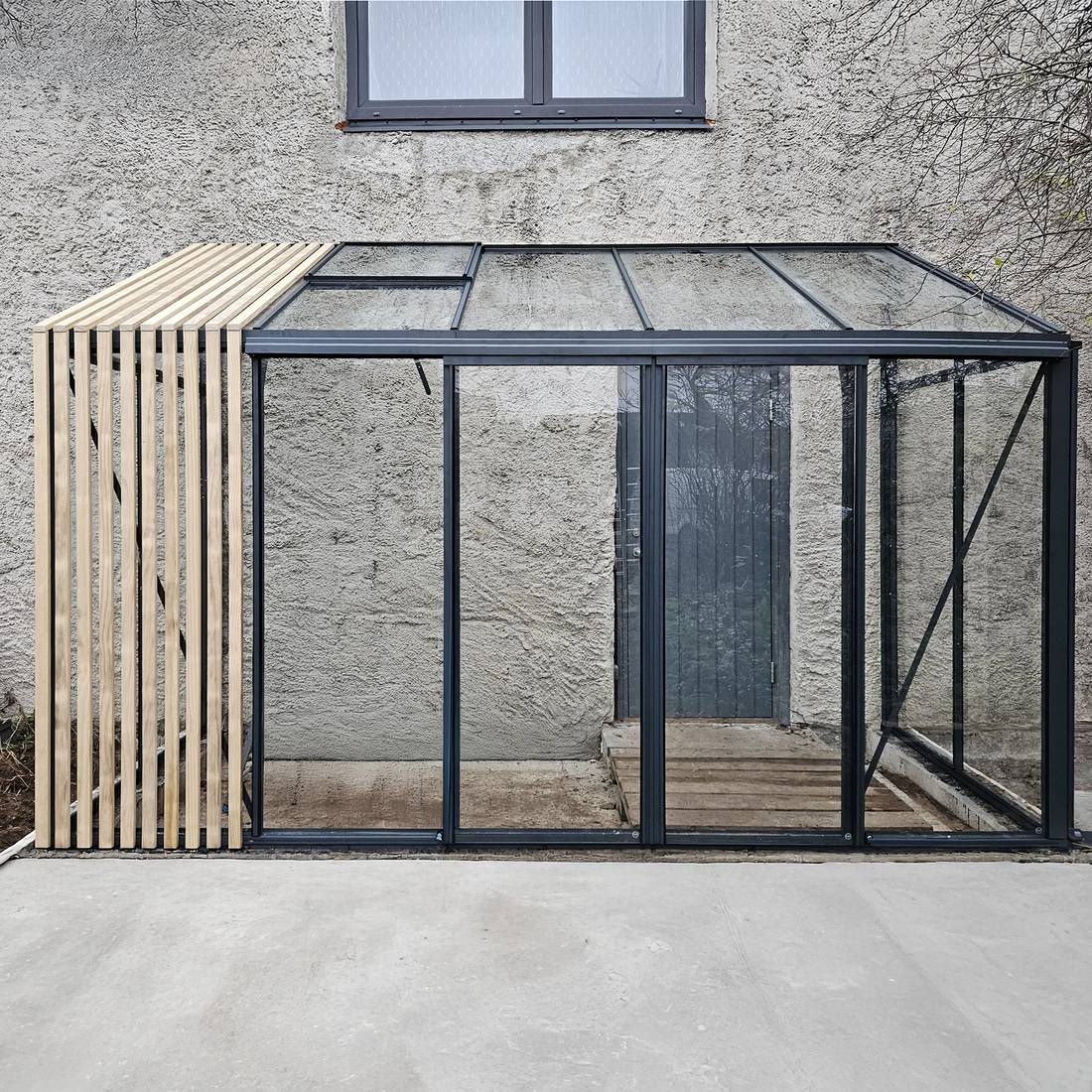
Glazing affects how a greenhouse looks, how daylight enters it, how private the interior feels and how much routine cleaning its surfaces may require. It also influences the experience of working, relaxing and growing inside the structure. There is no single glazing material that is automatically best for every garden or every panel. The right decision depends on the greenhouse location, intended use, nearby views, desired appearance and maintenance priorities.
This guide compares clear glass, Bioclean glass, Stopsol glass, mirror glass, matte glass and polycarbonate. It also explains how to combine materials, what to confirm when ordering, what to inspect at delivery and how to care for each surface. For a broader introduction to structures and configurations, see our information about aluminum greenhouses and conservatories.
Quick comparison of greenhouse glazing options
| Glazing option | Primary reason to choose it | Important consideration | Common placement |
|---|---|---|---|
| Clear glass | Open views and a traditional transparent appearance | Shows water spots, dust and interior activity readily | Roofs, walls, doors and feature elevations |
| Bioclean glass | Reduced dependence on manual exterior cleaning | Its special surface must be handled and maintained correctly | Exposed roof and wall areas where compatible |
| Stopsol glass | Solar-control performance and a reflective architectural appearance | Color and reflectivity vary with light and viewing conditions | Sun-exposed walls or roofs, subject to design suitability |
| Mirror glass | Strong visual screening and a distinctive reflective finish | It does not provide unconditional one-way privacy | Selected walls or decorative sections |
| Matte glass | Diffused views and increased visual privacy | Reduces the clear outward view | Boundary-facing walls, lower panels or work areas |
| Polycarbonate | Lightweight translucent glazing and diffused daylight | Appearance, construction and care differ from glass | Roof or wall sections selected for practical growing needs |
This table is a starting point rather than a specification sheet. Available glazing choices can vary by greenhouse model, panel position and project configuration. Confirm the exact materials, finishes and compatible locations included in your quotation before ordering.
1. Clear glass: maximum visual openness
Clear glass is the familiar choice for an aluminum greenhouse. It creates open sightlines between the garden and interior, displays plants clearly and complements both traditional and contemporary frames. It is particularly attractive when the greenhouse is intended to be a garden focal point, entertaining space or conservatory-like room as well as a growing environment.
Transparency is also useful for monitoring plants from outside. The tradeoff is that shelving, containers, tools, condensation, dust and water marks remain visible. A clear greenhouse positioned close to a neighbor, sidewalk or busy part of the home may feel less private than expected.
Clear glass does not eliminate the need for ventilation, shading or active temperature management. A transparent enclosure can still become hot in strong sun. Assess sun exposure, door and vent use, seasonal planting and any separate shading plan as one system. Our spring greenhouse guide discusses cleaning, ventilation and seasonal setup together.
Clear glass suits many forms, including the Classic aluminum greenhouse, the larger Bloomcabin Orangerie and the Garden View T greenhouse. Compatibility and the exact glass supplied must always be established for the selected model.
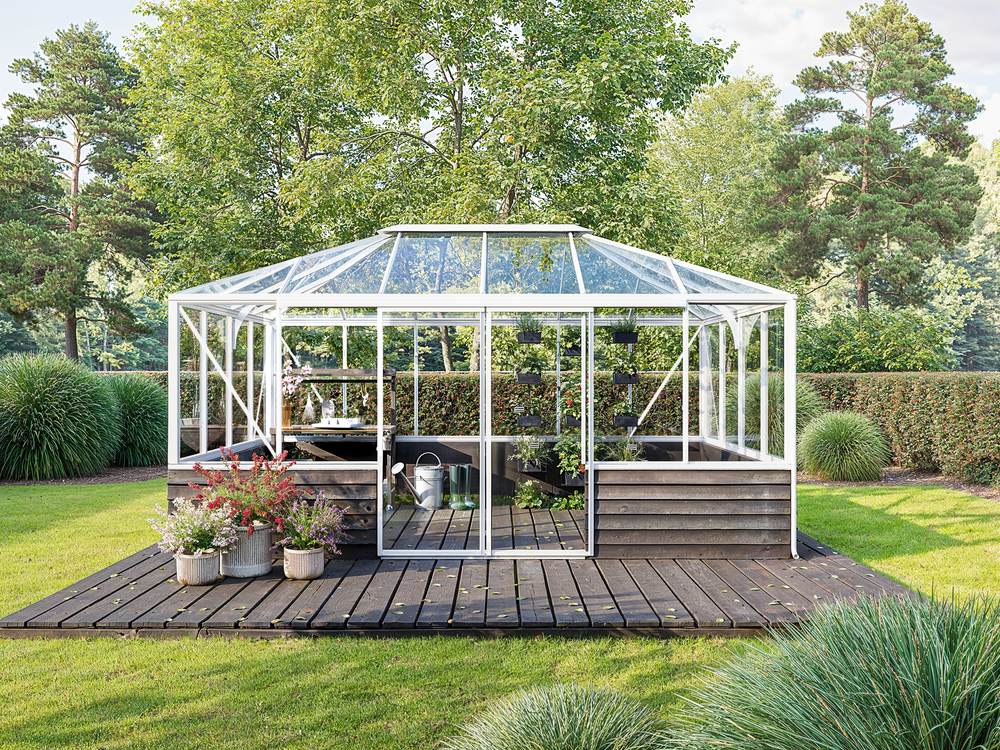
2. Bioclean glass: a lower-cleaning exterior surface
Bioclean glass is selected when easier exterior upkeep is a priority. Its specially treated surface uses exposure to daylight to help break down organic deposits, while rain can spread more evenly across the surface and carry loosened material away. This can reduce the frequency or effort of manual cleaning under suitable conditions.
It should not be understood as glass that never needs cleaning. Pollen, mineral residue, bird droppings, sap, soil splashes and sheltered deposits may remain. Roof sections under trees or walls protected by an eave may receive less direct daylight or rain, so the intended effect may be less noticeable there. Local weather and water quality also affect the final appearance.
A coated or treated face must be identified and oriented correctly during assembly. Installers should follow the project documentation and avoid marking, scraping or contaminating the functional surface. Do not assume that an unlabeled side can face either direction. Before using a cleaner, scraper, sealant or accessory against the glass, verify that it is suitable for the surface.
Bioclean is valuable for owners who want a glass appearance but prefer to reduce demanding roof-cleaning work. It remains important to keep gutters, frame channels and ventilation components clear. See greenhouse maintenance guidance for whole-structure care rather than treating glazing as an isolated component.
3. Stopsol glass: solar control with a reflective appearance
Stopsol is a solar-control glass with a reflective architectural character. It is considered when a project needs greater management of solar energy than ordinary clear glazing can provide, or when the owner wants a more reflective exterior. Its appearance may shift with the sky, surrounding landscape, viewing angle and relative brightness on each side.
Solar-control glass can help moderate solar gain, but it does not replace ventilation or thoughtful greenhouse operation. Plant needs also matter: reducing incoming solar energy can be helpful in one location or season but undesirable in another. A heavily shaded site may not benefit from the same choice as an exposed south- or west-facing site.
Ask where Stopsol can be positioned and whether it is proposed for the roof, selected walls or a larger elevation. The orientation of a coated surface is a technical installation matter, not a decision to make by visual guesswork. Reflectivity should also be considered in relation to nearby windows, seating areas, roads and neighbors.
If your priority is long-term structure quality as well as glazing, read about the considerations behind premium aluminum and glass greenhouses. For a highly finished model reference, explore the Bloomcabin Classic Premium greenhouse or the Bloomcabin Prestige Premium greenhouse.
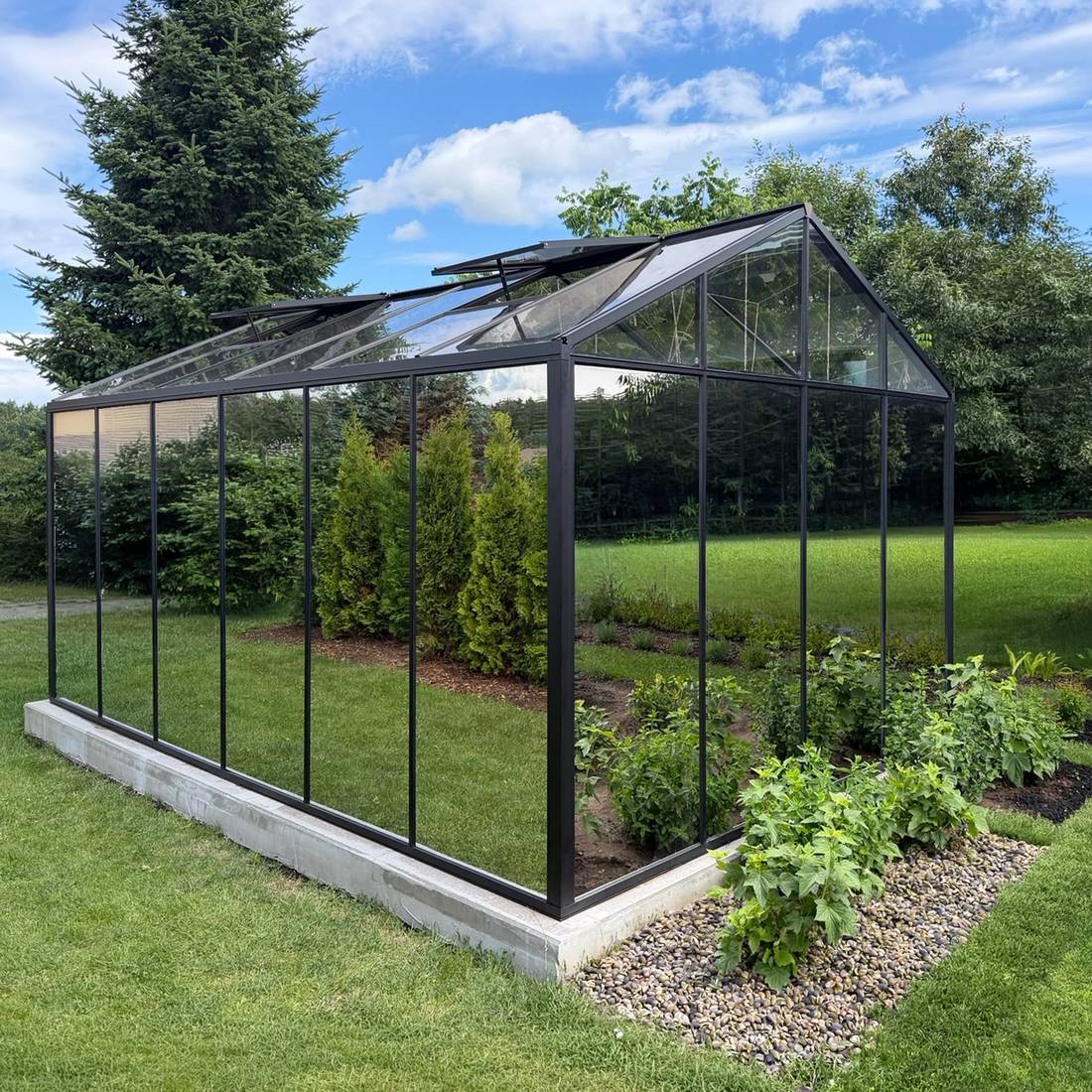
4. Mirror glass: screening that depends on light
Mirror glass produces a pronounced reflective effect and can visually screen selected parts of a greenhouse. It may be useful where storage, a potting bench or a neighboring property would otherwise be prominent. The mirrored surface can also give an elevation a contemporary, integrated appearance.
Mirror glass must not be treated as an absolute one-way privacy system. The stronger reflection is generally seen from the brighter side. When the greenhouse interior is illuminated after dark and the exterior is comparatively dark, visibility can change substantially. Curtains, screens, planting or matte panels may be more dependable where privacy is essential throughout the day and night.
Use mirror glazing deliberately rather than automatically covering every elevation. A large reflective area can alter how the greenhouse relates to its garden. Consider reflected views, seasonal sun, exterior lighting and bird awareness. A physical sample viewed at the planned site can be more informative than judging a finish from a screen.
5. Matte glass: privacy with diffused views
Matte glass obscures detail and softens the visual connection through a panel. It is a practical option for boundary-facing walls, potting areas, utility zones or lower panels where privacy is more important than an uninterrupted view. It can also reduce the visual prominence of stored supplies and working surfaces.
The finish diffuses light rather than acting like a clear window. Shapes and movement may still be perceptible, particularly when one side is brightly lit, so the result should be understood as visual obscuration rather than guaranteed concealment. Its softer appearance often combines well with clear upper panels that preserve views of the sky and garden.
Texture and surface treatment can influence cleaning. Residue may behave differently on matte and smooth clear surfaces, and aggressive polishing could alter the appearance. Confirm the correct face orientation and approved care method. Matte glass is often best specified panel by panel after mapping actual sightlines.
6. Polycarbonate: lightweight, translucent glazing
Polycarbonate is not simply “plastic glass.” Greenhouse polycarbonate is a separate glazing category with its own panel construction, optical character, handling requirements and installation details. Depending on the configuration offered, it can diffuse incoming light and make interior objects less sharply visible than clear glass.
Its lighter weight can make panels easier to handle, but they still require careful storage and installation. Multiwall panels have internal channels and designated edges. Correct orientation, end treatment, allowance for material movement and use of compatible components are important. Protective film is temporary packaging, not a permanent exterior layer, and it should be removed at the stage directed by the installation instructions.
Do not select polycarbonate from thickness alone. Compare panel construction, appearance, UV-protected face, compatible frame system, light behavior and intended use. Our greenhouse polycarbonate guide explains these variables in more detail.
Polycarbonate can be useful in a dedicated growing greenhouse where diffused daylight and reduced visual transparency are preferred. Owners planning edible crops can also review guidance on growing tomatoes in a greenhouse and using pots, soil and raised beds. Glazing supports the growing plan, but watering, ventilation, crop spacing and seasonal management remain equally important.
How to choose glazing by project priority
| If your main priority is… | Start by considering… | Then verify… |
|---|---|---|
| Clear garden views | Clear glass | Privacy, cleaning access and shading needs |
| Less exterior cleaning effort | Bioclean glass | Rain exposure, coated-face orientation and compatible care |
| Solar control | Stopsol glass | Site exposure, plant needs, ventilation and reflectivity |
| Reflective visual screening | Mirror glass | Day-versus-night privacy and surrounding reflections |
| Consistent visual obscuration | Matte glass | Required privacy level and loss of clear views |
| Diffused translucent glazing | Polycarbonate | Panel construction, orientation and installation details |
Begin with how the greenhouse will be used. A seed-starting and food-growing space may lead to a different choice than a garden room used for dining. If year-round harvest is the goal, the article on how to grow fresh food throughout the year can help frame operational needs without assuming that glazing alone creates a year-round growing environment.
Mixing glazing types within one greenhouse
Different elevations perform different jobs. A wall facing a neighbor may need privacy, while a wall facing the owner’s garden may benefit from clear views. A roof receives different weather and sun exposure than a lower wall panel. Where the model and technical design permit it, combining glazing can therefore be more effective than applying one material everywhere.
- Clear plus matte: Keep clear roof or upper-wall views while obscuring selected lower or boundary-facing panels.
- Clear plus mirror: Preserve openness on the main garden elevation while screening a work or storage zone.
- Clear plus Stopsol: Apply solar-control glazing only to the elevation where exposure justifies it.
- Glass plus polycarbonate: Use each material according to growing, privacy and appearance priorities, if supported by the greenhouse system.
- Bioclean plus another glass: Prioritize lower-cleaning glazing in exposed, difficult-to-reach areas while choosing another finish elsewhere.
Mixing must be planned before manufacturing and installation. Panel thickness, edge treatment, retaining components, coated-face direction and visual alignment cannot be improvised on site. Bloomcabin’s page about freedom of choice and tailored greenhouse design provides broader context, while the article on how to mix and match greenhouse glazing offers additional design ideas.
Glazing considerations for different greenhouse forms
Building form changes the importance of each view and exposure. A freestanding greenhouse can receive sunlight and attention from every side. A lean-to aluminum greenhouse shares its setting with an existing wall, so reflections, access and drainage should be considered together. The Premium lean-to greenhouse offers another design direction for a wall-connected project.
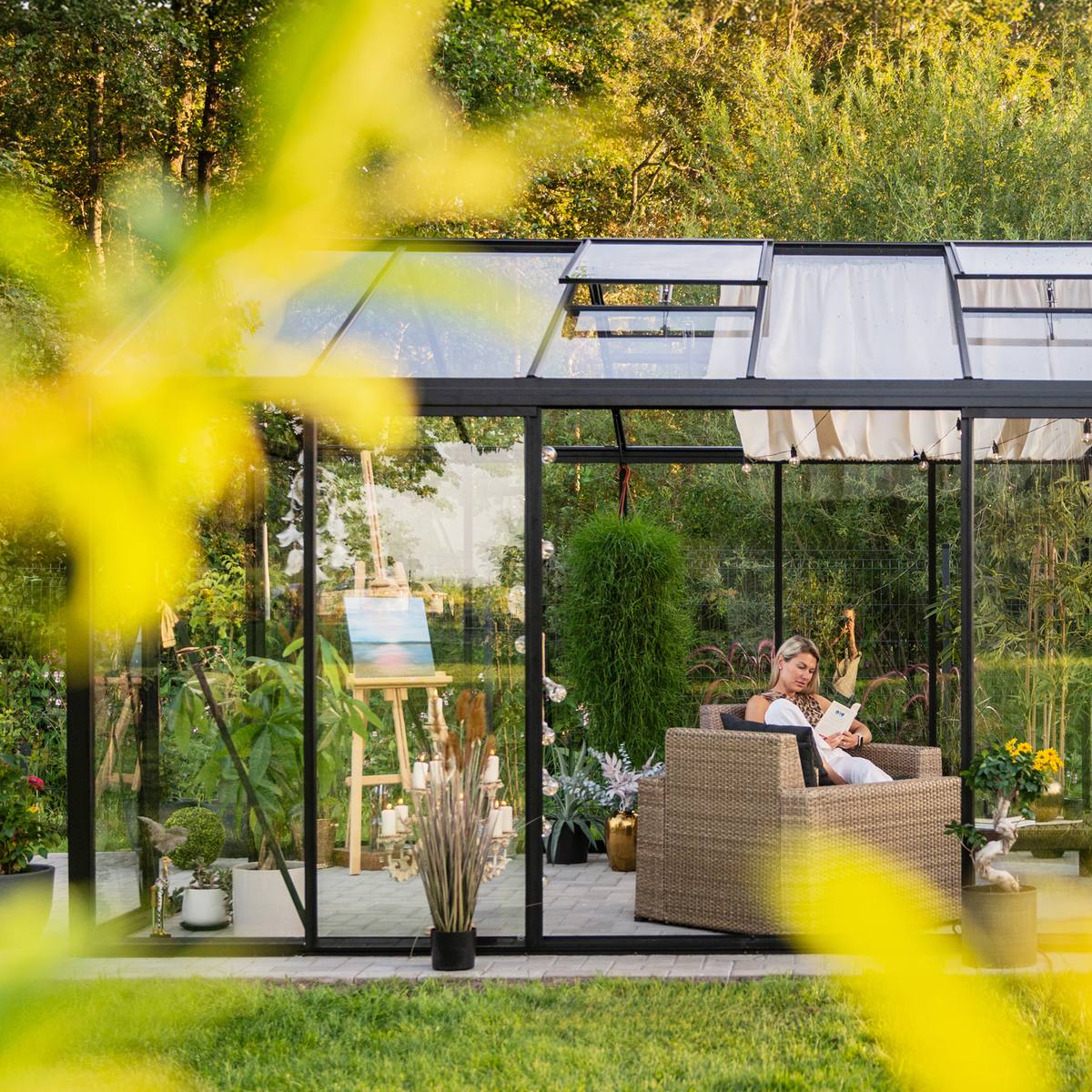
A compact wall installation, such as the aluminum mini wall greenhouse, may place glazing close to working paths or windows. Privacy may be less important than easy access and a clear view of plants. For a more architectural composition, compare the wall-mounted T-model orangery and the Bloomcabin Oasis pyramid greenhouse.
Do not assume that every glazing option is available in every shape or panel. Curves, roof geometry, doors, vents and junctions can limit what is technically compatible. Review model-specific choices before treating a visual concept as final.
A practical selection process
- Define primary use. List growing, relaxation, dining, display, potting and storage activities in order of importance.
- Map the site. Note sun direction, trees, adjacent buildings, boundary views, exterior lights and areas where cleaning access is difficult.
- Mark privacy zones. Identify exact panels that face neighbors, streets, household windows or work areas.
- Choose the desired visual character. Decide whether the structure should appear transparent, softly diffused or reflective.
- Plan environmental control. Consider doors, vents, optional shading and normal operating habits along with glazing.
- Request compatible choices. Confirm which glass and polycarbonate options can be installed in each panel of the selected model.
- Review samples carefully. Examine reflective and matte finishes in daylight and, when possible, under lighting conditions similar to the site.
- Record the final schedule. Ensure the quotation or order documentation identifies glazing by elevation or panel group, not only by a general material name.
Before purchase, consult the Aluminum Greenhouse FAQ and the explanation of how to order. Also review the applicable purchase and delivery terms, warranty information and return and cancellation policy before finalizing a customized glazing arrangement.
Receiving and inspecting glazing
Glazing should remain organized and protected until installation. Follow the delivery and handling instructions supplied for the project rather than leaning panels casually against walls or moving them without suitable support. Glass edges are particularly vulnerable to impact, while polycarbonate faces can be scratched by dirt trapped between stacked panels.
- Compare the delivery with the packing or project documentation.
- Inspect packaging and accessible components promptly in accordance with the applicable delivery procedure.
- Keep labels, orientation marks and protective materials in place until the instructions call for removal.
- Separate visibly different glazing types without removing their identification.
- Do not drag panels across one another.
- Keep glazing away from active construction work, welding, grinding, concrete splashes and loose hardware.
- Record and report suspected damage through the stated order process rather than installing a questionable panel.
Coated glass can look different according to orientation and lighting. A perceived color variation is not enough to determine which face belongs outward. Use labels, drawings and project documentation. If anything is unclear, pause and obtain confirmation.
Installation: treat glazing as a planned sequence
Foundation readiness, frame geometry and panel installation are connected. Glazing should not be used to force an out-of-square frame into position. Complete and verify the supporting structure as directed before fitting panels. Use only specified retaining components, seals and compatible materials.
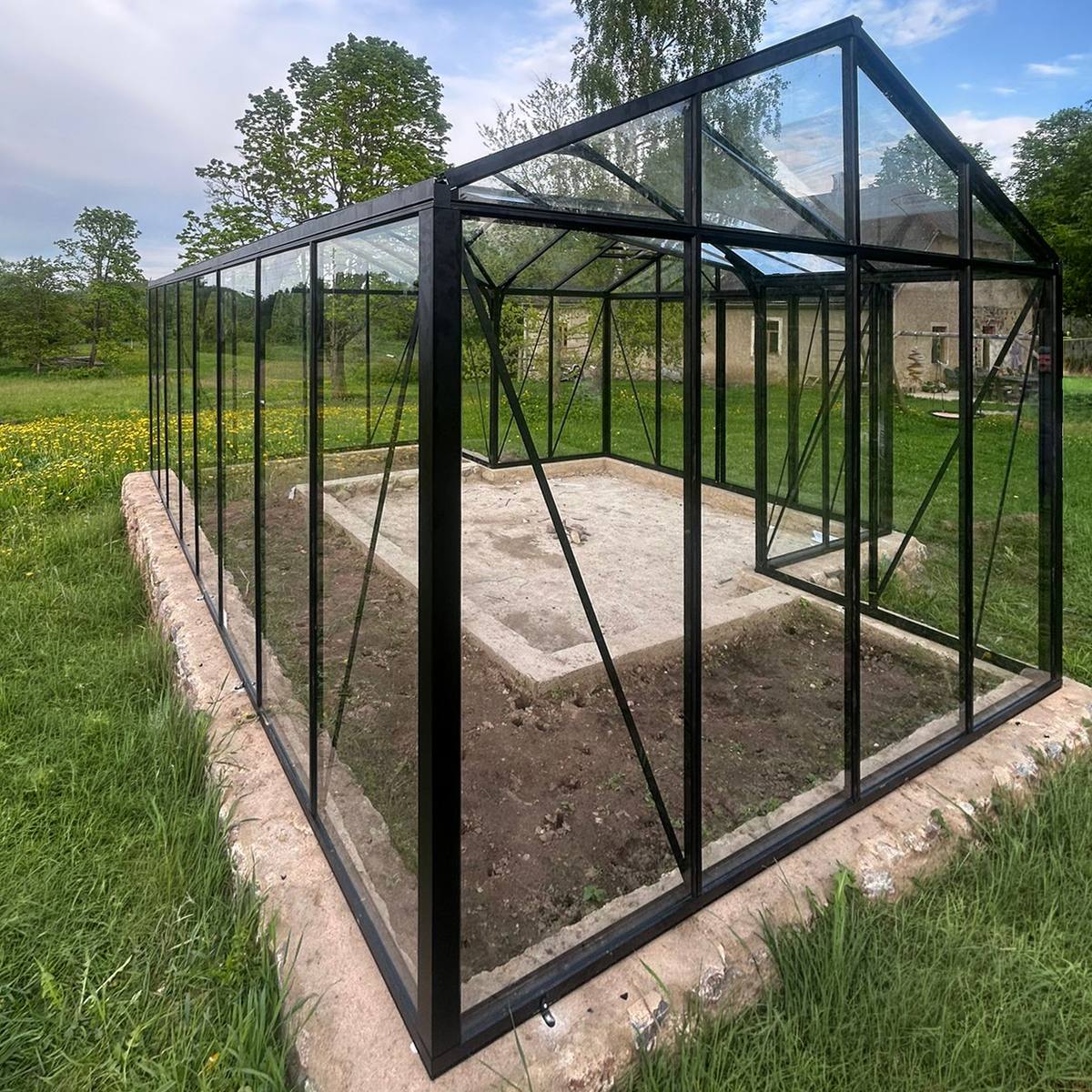
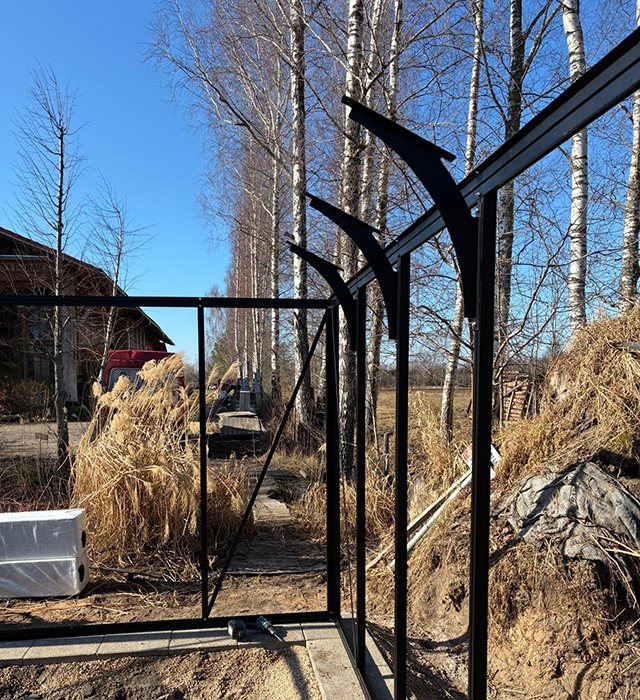
Anna Koku Skola should be understood as one real greenhouse installation sequence: site and supporting work are followed by organized frame assembly, glazing placement and completion checks. A photograph from that sequence can document visible progress at one moment, but it cannot prove concealed fixings, coated-face orientation or other hidden technical details. Those must be established from the installation information for the actual project.
During glazing work, keep panels sorted, protect edges and avoid resting tools against finished surfaces. Doors and vents need correct alignment independently of the glazing choice. For related planning, see the overview of sliding door options. Where professional skills or equipment are needed, arrange suitable assistance instead of improvising handling methods.
Cleaning and ongoing care
Start with the least aggressive suitable method. Loose grit should be rinsed away before wiping because trapped particles can scratch finishes. Use clean, soft tools and follow the care information supplied for the specific glass coating or polycarbonate panel. Avoid assuming that a household glass product is appropriate for every surface.
- Clear glass: Clean as needed to remove soil, algae, pollen and mineral deposits. Pay attention to edges and frame channels without damaging seals.
- Bioclean glass: Allow the functional surface to work under suitable daylight and rain conditions, but remove persistent contamination using an approved method.
- Stopsol and mirror glass: Avoid abrasive pads, blades or incompatible chemicals that could mark the reflective surface.
- Matte glass: Clean evenly and gently so that rubbing or residue does not create irregular-looking areas.
- Polycarbonate: Use compatible soft cleaning materials, protect the UV-designated face and avoid scratching or forcing water into improperly protected channels.
Inspect more than the center of each panel. Check seals, retaining parts, vents, doors, gutters and drainage paths. Condensation inside a greenhouse is not automatically evidence of defective glazing; it can result from moist air meeting a cooler surface. Ventilation, watering habits, plant density and outdoor conditions all influence it.
Frequently asked questions
Which glazing gives the clearest view?
Clear glass normally provides the most direct view through the greenhouse. Cleanliness, condensation, reflections and lighting still affect visibility.
Does Bioclean glass mean I never need to wash the greenhouse?
No. It is intended to reduce the effort associated with exterior organic dirt under appropriate exposure, not eliminate maintenance. Sheltered areas and persistent deposits may still need careful cleaning.
Will Stopsol glass keep a greenhouse cool?
Stopsol can reduce solar energy entering through the glazed area, but it cannot guarantee a particular indoor temperature. Site exposure, ventilation, outdoor weather, shading, plants and operating habits all matter.
Is mirror glass private at night?
Not reliably. Reflective privacy depends on the relative brightness on each side. Interior lighting at night can make the inside more visible. Use a separate privacy strategy if nighttime screening is essential.
Is matte glass completely opaque?
Matte glass obscures detail but may still reveal light, movement or silhouettes. Confirm the actual finish if complete concealment is required.
Is polycarbonate better than glass?
Neither material is universally better. Glass offers a particular visual clarity and architectural character; polycarbonate offers a lighter, translucent panel solution with different light and handling properties. The best choice follows the site and intended use.
Can I combine glass and polycarbonate?
Potentially, but only where the selected greenhouse system and panel locations support the combination. It must be specified before manufacture rather than substituted casually during installation.
Can I change glazing after ordering?
Changes may affect design, production and order status. Do not assume they are possible. Contact Bloomcabin promptly and review the order, return and cancellation terms applicable to your purchase.
Should every roof panel use the same glazing?
Uniform glazing can produce a consistent appearance, but a mixed plan may be appropriate when exposures differ. Any variation must be technically compatible and clearly documented.
Does special glazing replace greenhouse shading?
No glazing choice automatically replaces shading. Crop sensitivity, season, orientation and local conditions determine whether separate shading is useful.
How do I know which side of coated glass faces outward?
Use the supplied labels, drawings and installation instructions. Appearance alone is not a dependable guide. Stop work and request clarification if identification is missing.
What should I decide before requesting a quote?
Provide the greenhouse model, intended use, site orientation, privacy concerns, preferred appearance and panels where a special finish is desired. Photographs and a simple elevation sketch can help communicate the design intent, but the final compatible arrangement must appear in the project documentation.
Final decision checklist
- Have you identified the greenhouse’s primary use?
- Have you mapped sun, shade, neighboring views and nighttime lighting?
- Do you understand the difference between solar control, reflection and privacy?
- Have you selected glazing by elevation rather than only by whole-building appearance?
- Have you confirmed model and panel compatibility?
- Are coated-face direction and panel identification documented?
- Can the glazing be delivered, stored and moved safely at the site?
- Have you planned cleaning access without assuming any surface is maintenance-free?
- Have you reviewed the order, delivery, warranty and cancellation information?
- Does the final quotation clearly describe the agreed glazing arrangement?
The most successful greenhouse glazing plan is rarely based on one feature. It balances plant needs, architecture, privacy, solar exposure, maintenance and the way the owner wants to experience the garden. Compare physical appearance and practical performance, confirm all project-specific details in writing and treat glazing, ventilation, doors and shading as parts of one complete greenhouse system.
