



Useful information · MATERIALS
Powder-Coated Aluminum: Durability, Corrosion Resistance and RAL Colors
A practical guide to powder-coated aluminum for greenhouses and pergolas, including finish durability, corrosion behavior, RAL color selection, delivery inspection, installation care, cleaning and minor damage.
Powder-coated aluminum combines a lightweight, corrosion-resistant metal with a durable decorative finish. It is well suited to outdoor structures because the aluminum provides the structural material while the coating gives the visible surface its color, texture and additional environmental protection. The result is attractive and comparatively easy to maintain, but it is not completely immune to scratches, deposits, chemical exposure or improper installation.
This guide explains what customers should know before ordering, receiving, installing and caring for a powder-coated aluminum greenhouse or pergola. It also clarifies what RAL color references mean, why colors can look different in real settings and how to protect the finish over the life of the structure.
What Is Powder-Coated Aluminum?
Aluminum naturally forms a thin oxide layer when exposed to air. This layer helps protect the underlying metal from continued deterioration. Powder coating adds a separate, factory-applied finish over the prepared aluminum surface.
In a typical powder-coating process, a dry coating material is applied to properly prepared metal and then cured to form a continuous finish. Surface preparation, coating formulation, application and curing all affect the final result. The completed surface provides color and helps isolate the metal from moisture, dirt and ordinary outdoor contaminants.
The roles of the two materials should not be confused:
| Component | Primary role | What customers see |
|---|---|---|
| Aluminum | Forms the frame, profiles or other structural components | Usually covered on visible surfaces by the finish |
| Natural oxide layer | Helps aluminum resist continued atmospheric corrosion | Normally not noticeable beneath an intact coating |
| Powder coating | Provides color, appearance and an additional protective barrier | The finished exterior surface |
Powder coating does not turn aluminum into an indestructible material. Sharp tools can cut it, abrasive cleaners can dull it and concentrated chemicals can affect it. Its practical advantage is the combination of good outdoor performance, an even appearance and straightforward routine care.
Durability in Everyday Outdoor Use
A properly finished aluminum structure is designed to face normal outdoor conditions such as rain, sun, changing temperatures and airborne dirt. Unlike an applied liquid paint that may need regular repainting, a powder-coated surface is intended to remain a finished exterior surface without seasonal recoating.
Actual appearance over time depends on the environment and care. A structure beneath trees may collect sap, pollen and organic debris. A wall-mounted installation can receive runoff from the adjacent building. Coastal air may leave salt deposits, while pool chemicals, fertilizers, masonry residue and deicing products can create more aggressive local exposure. Prompt, gentle cleaning is more effective than allowing deposits to remain for long periods.
Normal weathering should also be distinguished from damage. Gradual changes in gloss or appearance can occur as an outdoor finish ages. A deep scratch, impact mark or damaged edge is a localized event. Chalking, staining and mineral deposits can sometimes be mistaken for coating failure even though the surface may simply need appropriate cleaning.
For a broader overview of the material, see Long-Lasting, Low-Maintenance Aluminum Greenhouses. Owners can also consult Maintenance of Your Aluminum Greenhouse.
How Aluminum Resists Corrosion
Aluminum does not rust in the same way as unprotected iron or carbon steel. Rust specifically refers to iron corrosion. Aluminum can nevertheless corrode under unfavorable conditions, particularly where contaminants remain trapped, incompatible metals stay in electrical contact in the presence of moisture, or strong chemicals attack the surface.
An intact powder coating acts as a barrier between the aluminum and its surroundings. If a small area is scratched, the behavior is not necessarily the same as a rust spot on painted steel because aluminum forms its own oxide layer. That does not mean exposed areas should be ignored. Damage should be cleaned, monitored and addressed using guidance appropriate to the component and finish.
Conditions that deserve extra attention
- Salt and coastal deposits: Salt left on surfaces can hold moisture and create a more aggressive environment. More frequent fresh-water cleaning may be appropriate.
- Standing water and blocked drainage: Leaves and debris can retain moisture. Keep intended drainage paths clear without altering the structure.
- Dissimilar metals: Certain metal combinations can contribute to galvanic corrosion when electrical contact and moisture are present. Use only specified fasteners and installation components rather than substituting hardware.
- Masonry and construction residue: Cement dust, mortar, sealants and metal grinding particles should not be allowed to harden or remain on coated surfaces.
- Garden and household chemicals: Fertilizers, pesticides, pool products, solvents and strongly acidic or alkaline cleaners may discolor or damage a finish.
- Constant wet organic material: Soil, wet leaves and plant matter should not be piled against aluminum profiles.
Corrosion resistance is a system property. Good materials still depend on correct site preparation, assembly, drainage and maintenance. Before selecting a base or anchoring approach, review the Greenhouse Foundation Guide. Do not drill, cut, anchor or substitute parts based solely on general advice; follow the documentation provided for the specific model and site.
Understanding RAL Colors
RAL references provide a standardized way to identify colors. A RAL designation is more useful than an informal description such as dark green, charcoal or cream because it points to a defined color reference. It helps customers, designers and manufacturers communicate more consistently.
A RAL reference is not a guarantee that every representation will look identical in every setting. Perceived color is affected by surface texture, gloss, daylight, artificial lighting, surrounding materials and viewing angle. Computer monitors and phones also display color differently, so an online image should be treated as a visual guide rather than a physical color match.
Why the same color can appear different
- Direct sun can make a finish look lighter and reveal more variation than overcast light.
- Gloss level affects the way highlights and reflections are perceived.
- A textured finish can appear different from a smooth finish with the same nominal color reference.
- Nearby brick, siding, plants, paving and glass influence visual perception.
- Dust, water spots and pollen temporarily change the apparent shade.
- Separate production runs or different materials may show small visual differences.
If exact coordination with doors, windows, roofing or other architectural elements matters, confirm the available finish for the selected product before ordering. Compare a physical sample when one is available, and evaluate it outdoors near the intended site at different times of day. Do not choose solely from a phone screenshot, compressed photograph or printed home-office page.
Bloomcabin’s overview of greenhouse colors and premium finishes provides additional design context. The available palette may depend on the product and configuration, so color availability should always be verified as part of the actual order.
Choosing a Product and Finish Before Ordering
Start with the structure type and site requirements, then evaluate color. A beautiful finish cannot correct an unsuitable footprint, incomplete foundation plan or poor relationship with an existing wall. Consider how the color will relate to the home, paving, fences and planting throughout the year rather than only during peak growing season.
Greenhouse options include the Aluminum Classic Greenhouse, Bloomcabin Classic Premium greenhouse and Classic Plus 385. Customers planning around an existing building can compare the aluminum lean-to greenhouse, mini wall greenhouse and wall greenhouse.
For combined uses, review the greenhouse with built-in storage. Larger-format designs include the Bloomcabin Orangerie and Garden View T greenhouse. Outdoor living projects can consider the bioclimatic aluminum pergola.
Pre-order finish checklist
- Confirm the exact product, configuration and available finish options.
- Ask whether the selected description corresponds to a specific RAL reference.
- Review color in relation to the house and permanent hardscape.
- Understand that digital images cannot guarantee exact color reproduction.
- Verify the order confirmation before production or fulfillment proceeds.
- Read how to order, the purchase and delivery terms and the Return and Cancellation Policy.
Receiving and Inspecting Coated Components
Plan a clean, stable area for delivery and inspection. Follow the applicable delivery instructions and check the shipment as required by the order documentation. Packaging should not be removed carelessly with blades or sharp tools that could contact finished profiles.
As components are unpacked, compare labels and parts with the supplied documentation. Look for visible transit damage, deformation, deep scratches or finish differences that appear inconsistent with the order. Photograph the packaging and affected area before assembly if a concern is found. Retain relevant packaging and report the issue through the proper customer-service process rather than attempting an immediate cosmetic repair.
Keep profiles supported and separated from rough concrete, soil, standing water and metal debris. Do not drag coated components across one another. If installation will not begin immediately, store parts according to the supplied instructions and protect them from construction traffic.
Protecting the Finish During Installation
Most avoidable finish damage occurs through dragging, tool slips, uncontrolled drilling debris or contact with unfinished construction materials. Prepare the foundation and work area before opening all packages. Use clean supports, organize fasteners and keep cutting or grinding work from other trades away from the coated aluminum and glazing.
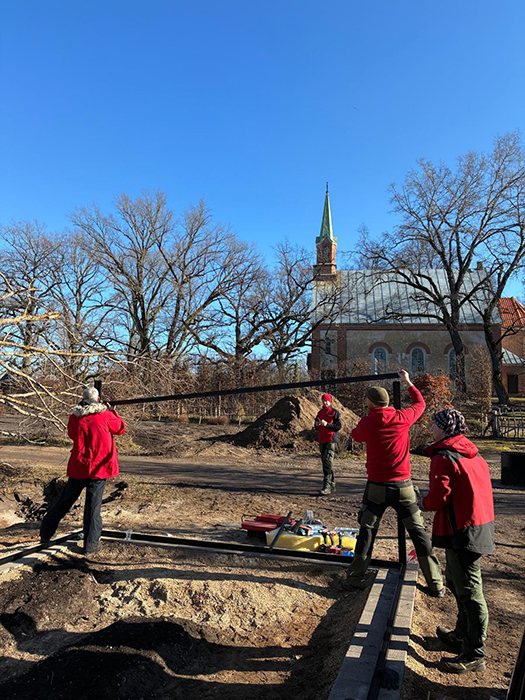
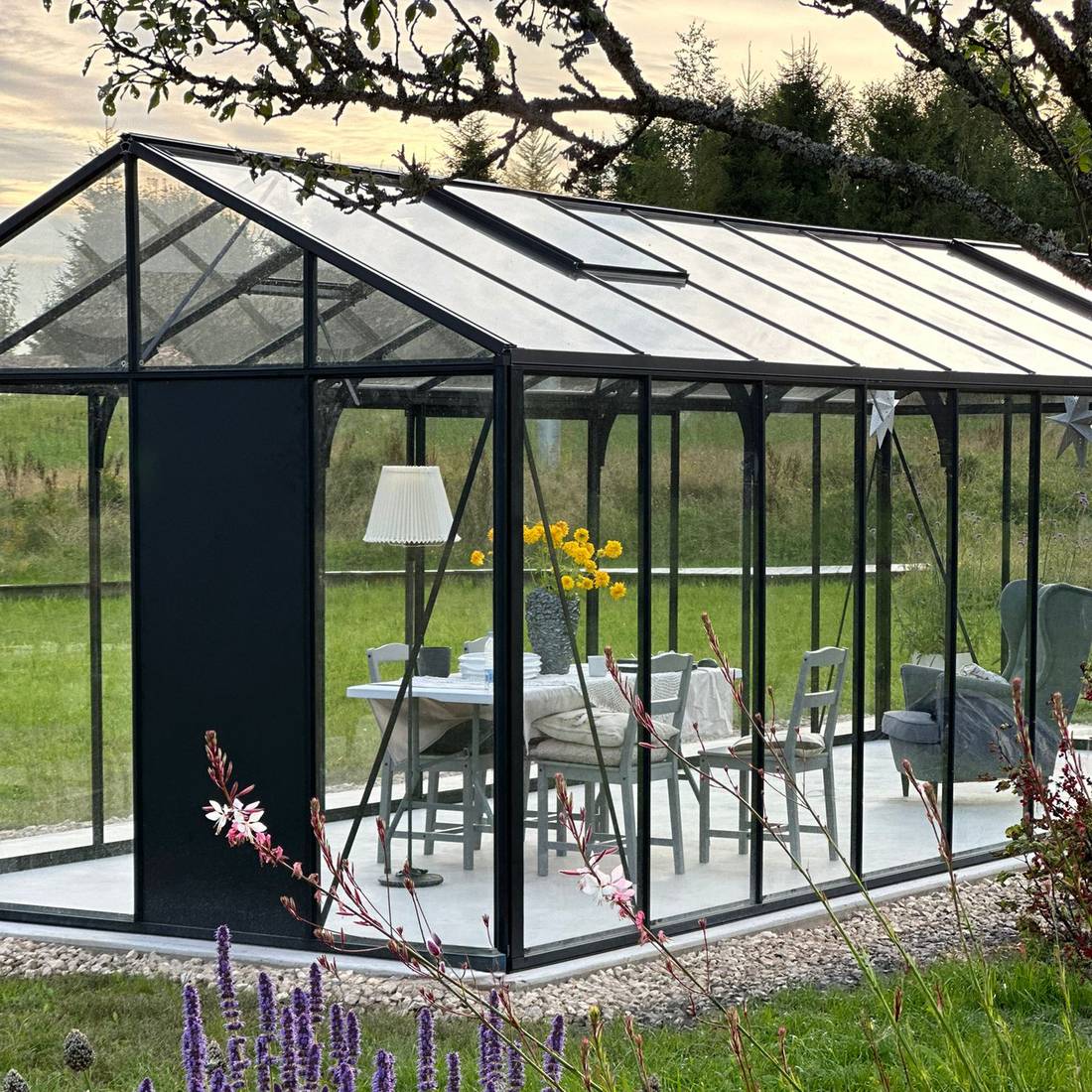
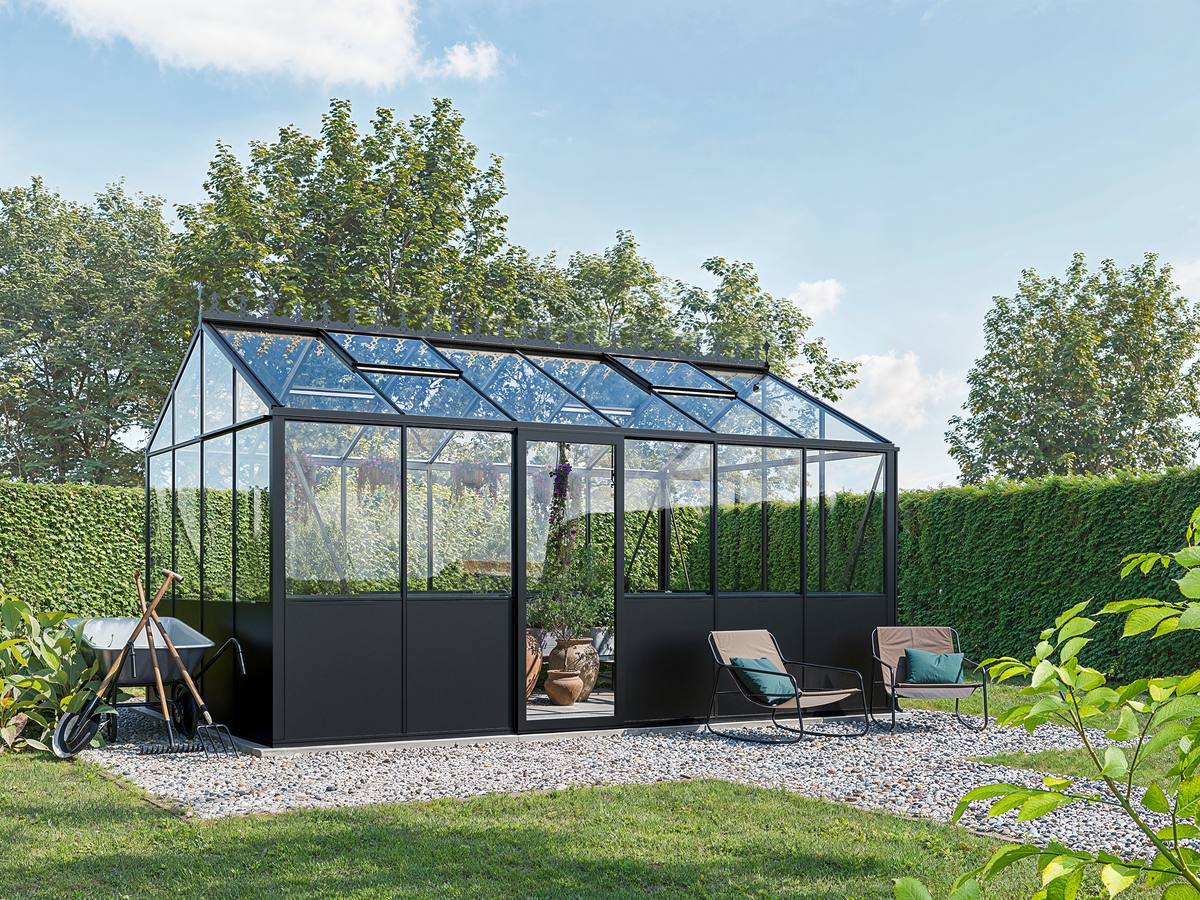
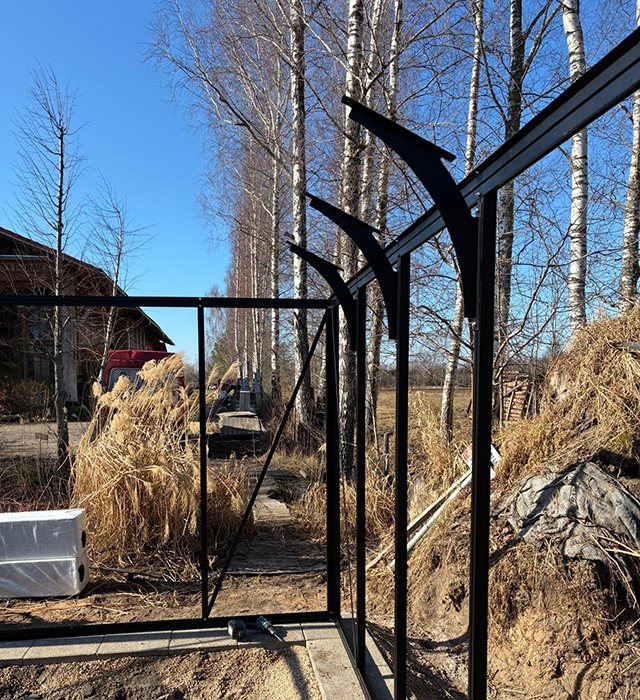
Anna Koku Skola should be understood as one real greenhouse installation sequence. Its images document visible stages of the same project, from an earlier assembly stage to a more complete structure. They can help customers understand the progression of an installation, but photographs do not reveal hidden anchors, internal connections or site-specific foundation details. The manual and project requirements remain controlling.
During assembly:
- Use the designated parts and fasteners in the instructed locations.
- Keep profile ends and corners from striking paving or masonry.
- Remove metal shavings and abrasive debris promptly with a non-scratching method.
- Do not use the coated frame as a support for unrelated cutting, welding or grinding.
- Avoid writing on visible surfaces with permanent markers.
- Do not apply unapproved tapes, sealants, cleaners or touch-up products.
- Complete drainage and water-management details exactly as instructed.
Foundation planning should happen before delivery, not while coated parts are spread across the yard. For post-assembly organization, use the Bloomcabin Greenhouse Setup Guide.
Cleaning and Routine Maintenance
Routine cleaning preserves appearance and removes deposits that can hold moisture or react with the finish. Begin with the least aggressive method: loose debris removal, clean water and a soft cloth or sponge. If a mild cleaning solution is appropriate, test it first in a small, inconspicuous area and rinse thoroughly. Product-specific care instructions take priority over general guidance.
Avoid steel wool, abrasive pads, scraping blades and harsh scouring powders. Pressure washing can force water into joints or damage adjacent seals and should not be assumed suitable. Solvents, concentrated acids, strong alkaline products and cleaners of unknown composition should not be used merely because they are marketed for another metal or exterior surface.
Practical maintenance routine
- Walk around the structure and inspect visible coated profiles, joints and drainage paths.
- Remove leaves, soil, cobwebs and loose organic material.
- Rinse surface dust and water-soluble deposits with clean water.
- Gently clean remaining marks using an approved, non-abrasive method.
- Rinse away cleaner residue and allow surfaces to dry.
- Check for localized scratches, impact damage or staining that needs follow-up.
- Record and photograph any change that appears to be progressing.
Cleaning frequency should match exposure. A sheltered suburban garden, a coastal location and a structure beneath resinous trees will not need identical schedules. Spring is a useful time for a full inspection; see the Spring Greenhouse Guide. Pergola owners should also consider seasonal debris, drainage and cold-weather operation described in Can You Use a Pergola in Winter?
Scratches, Chips and Cosmetic Repair
Do not assume that every visible mark has penetrated the coating. First remove dirt gently and inspect the clean, dry surface. A transfer mark from packaging or another material may look like a scratch but sit on top of the finish. Conversely, a narrow bright line or exposed edge may indicate a deeper cut.
For damage discovered on delivery, document and report it before attempting repair. For later accidental damage, ask Bloomcabin for appropriate guidance. Generic automotive paint, household spray paint or a color chosen only by a similar name may have a different shade, gloss, texture or compatibility. Even a matching RAL reference may remain visible because application method and surface texture affect the result.
Cosmetic touch-up should not be confused with factory refinishing. The aim of a small repair may be to protect a localized exposed area and reduce visual contrast, not to make the event completely invisible. Significant deformation, damage near a connection or a recurring corrosion concern requires evaluation rather than cosmetic concealment. Review the applicable warranty information before modifying a component.
Greenhouse and Pergola Considerations
Both product categories benefit from powder-coated aluminum, but their exposure patterns differ. Greenhouses experience condensation, potting soil, fertilizers and frequent contact around doors and growing areas. Pergolas may collect roof debris, receive patio cooking residue or stand near pools. Maintenance should respond to the actual use of the structure.
For greenhouse questions, visit the Aluminum Greenhouse FAQ. Pergola owners can use the Pergola FAQ. Customers comparing structural materials may also read Aluminum vs. Wood Pergola.
Frequently Asked Questions
Does powder-coated aluminum rust?
Aluminum does not develop iron rust. It can corrode under adverse conditions, but its natural oxide layer and an intact coating provide useful protection. Salt, trapped contamination, incompatible metals and strong chemicals still require attention.
Will the coating ever need to be repainted?
Routine seasonal repainting is not the normal maintenance approach for powder-coated aluminum. If the finish suffers localized or widespread damage, obtain product-specific guidance rather than applying general exterior paint.
Is a RAL code an exact digital color?
No. A RAL reference identifies a standardized color, but screens and printers cannot reproduce it reliably. Gloss, texture, lighting and surrounding materials also alter its appearance. Use a confirmed physical reference when close architectural coordination is important.
Can two components with the same RAL reference look slightly different?
They can. Differences in material, texture, gloss, production run, orientation and lighting may affect visual perception. Evaluate components together under the same light before deciding that a finish is inconsistent.
Can I clean the frame with a pressure washer?
Do not assume that pressure washing is suitable. High-pressure water can affect joints, seals or adjacent materials. Follow the maintenance instructions for the product and start with water, soft tools and the least aggressive approved method.
What should I do if a component arrives scratched?
Stop before installing or touching up the affected part. Photograph the component and packaging, retain relevant materials and report the concern according to the delivery and order terms.
Is powder-coated aluminum maintenance-free?
No exterior material is literally maintenance-free. Powder-coated aluminum is low maintenance, but it still benefits from cleaning, drainage checks and prompt removal of salt, soil, leaves, fertilizer and other deposits.
Can I use any stainless steel or hardware-store fastener?
No. Fastener material, shape and location are part of the assembly system. Substitution may affect fit, connections or corrosion behavior. Use only the specified components and follow the supplied instructions.
Does a scratch automatically mean the frame will fail?
No. A cosmetic scratch does not automatically indicate a structural problem. Its depth, location and cause matter. Deep damage, deformation or damage at a connection should be assessed rather than hidden with paint.
Which color is best for heat or plant growth?
Choose the frame color primarily for the available product finish and desired architectural appearance. Greenhouse growing conditions depend on the complete structure, glazing, ventilation, season and operation; frame color alone should not be treated as a control for plant performance.
Where can I confirm my product’s color and care requirements?
Use the selected product page, order documentation and supplied maintenance information. If details remain unclear, confirm them before ordering or applying a cleaner, coating or repair product. General educational guidance cannot replace information for the exact configuration.
Final Buying and Ownership Checklist
- Select the correct structure and site plan before choosing a color.
- Confirm finish availability and any applicable RAL reference on the actual order.
- Use physical color evaluation when close matching is important.
- Prepare the foundation and clean staging area before delivery.
- Inspect coated parts carefully and document concerns before assembly.
- Follow the supplied installation instructions without unapproved substitutions.
- Remove construction debris, salts, soil and chemicals promptly.
- Clean with gentle methods and keep intended drainage paths clear.
- Report significant finish or component damage before attempting repair.
- Keep order, finish and maintenance records for future reference.
Powder-coated aluminum offers a practical balance of durability, corrosion resistance, low maintenance and architectural color. Its long-term appearance depends not only on the coating itself, but also on informed color selection, careful handling, correct installation and sensible cleaning. Treat the finish as a high-quality exterior surface rather than an indestructible shell, and it can remain an integral part of the greenhouse or pergola’s design for years of use.
