



MATERIALS
Toughened safety glass in greenhouses: strength, safety and service life
Toughened safety glass offers substantial mechanical strength and a less hazardous breakage pattern. This guide examines greenhouse glazing from selection and delivery to fitting, upkeep and continuing inspection.
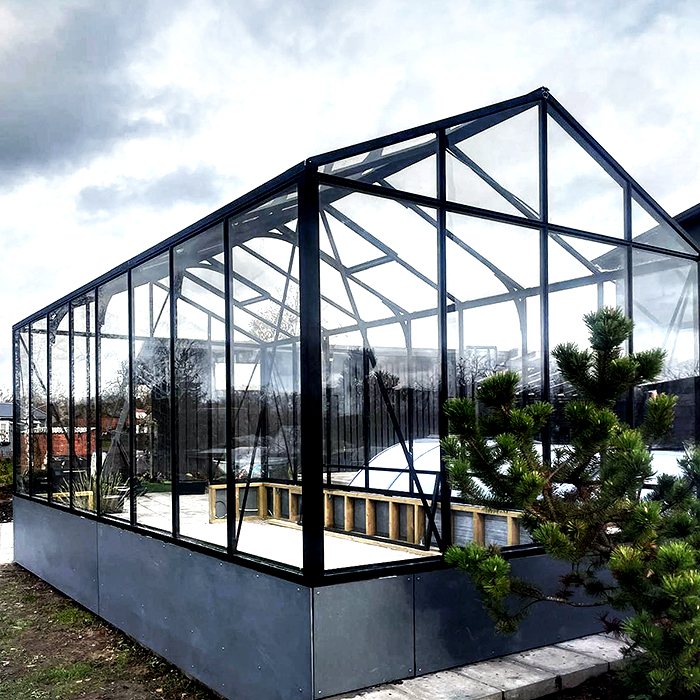
Toughened safety glazing combines clarity and dimensional stability with more mechanical resistance than ordinary untoughened glass, making it useful in high-quality greenhouses. Good performance also needs an even supporting base, aligned aluminium sections, intact pane edges and appropriate seals. Installation must avoid concentrated stresses.
This guide covers technical considerations and practical tasks between ordering and ongoing inspection. Consult the ordered model’s own assembly documentation for binding instructions, alongside applicable site requirements. The guide cannot substitute for those documents. Available structural forms are shown under Greenhouses and conservatories.
How toughened greenhouse glazing works
Toughened glass is usually a single sheet of safety glazing, commonly abbreviated ESG in German product documents. Compression acts across its surfaces while balancing tensile stress remains inside. That engineered stress distribution increases resistance to bending and thermal differences, and also produces the material's distinctive response when it fails.
Once loading passes the pane's allowable capacity, it will generally disintegrate into numerous small pieces instead of forming a few elongated, sharp shards. Some injury hazards are reduced, not removed. Fragments may still cause cuts, drop from the structure or scatter through frames, plants and paving.
The term safety glass does not mean the pane cannot break, support a person or withstand every impact. Confirm the glazing included with a particular model from its quotation, order paperwork and assembly manual. Owners' practical observations can also be found among the greenhouse reviews.
What happens during toughening?
A pane is cut to its final dimensions before thermal toughening. It is then heated under controlled conditions and cooled quickly. The surface layers lose heat faster than the core, leaving a lasting distribution of stresses within the glass.
Order is critical: all cutting, edge finishing and holes belong before toughening. Sawing, drilling or grinding later disturbs the built-in stresses and may shatter the whole pane immediately. If glazing does not fit during assembly, never alter it on site. Verify the part number and orientation, then inspect the frame geometry and foundation alignment.
A practical summary of benefits and limits
| Property | What it means in practice | Limitation to remember |
|---|---|---|
| Mechanical capacity | Appropriate for normal loads in a properly designed greenhouse glazing system. | Cannot prevent damage from severe blows, flying stones, tools or a distorted frame. |
| Failure pattern | Typically disintegrates into numerous smaller pieces rather than broad, jagged shards. | Falling fragments can still injure people or damage surrounding items. |
| Thermal resistance | Handles changing cycles of warmth and cooling better than annealed glass. | Strong thermal gradients and concentrated sources of heat remain unsuitable. |
| Surface | Hard, enduringly transparent and readily maintained. | Grit, metal equipment and inappropriate abrasives may scratch it. |
| Edges | Remain dependable when stored and installed with proper protection. | Corners and edges are especially vulnerable to blows or concentrated contact. |
| Modification | Factory-produced in its finished dimensions. | No cutting or drilling is possible once toughening is complete. |
Plastic panels provide another approach to greenhouse glazing. The article about polycarbonate for greenhouses compares their weight, transmission of light, insulating effect and ageing. Any material decision should assess the frame, seals, intended use and location as a single system.
Pairing safety glass with an aluminium frame
Accurately formed aluminium profiles can create slender frames around expansive transparent panels. Glass contributes excellent light transmission, a tough surface and colour that does not alter with age. Moisture neither warps the material nor soaks into it.
Correct load transfer makes the combination work. Neither exposed metal nor misaligned profiles should bear against or distort a pane. Its seals, supports and fixings maintain the intended position and cushion vulnerable edges. A lasting, flat and accurately squared frame depends on the foundation beneath it.
The design history behind transparent garden buildings is explored further through Victorian greenhouses and the orangery guide.
Decisions to make before placing an order
- Use: Is the space mainly for raising crops, protecting plants through colder periods, spending time inside, or several purposes?
- Site: Consider shade, overhanging branches, ball play, airborne gravel and garden equipment operating close to the glazing.
- Foundation: Can the site support a firm, level foundation made accurately to size?
- Access: Can long or heavy packages travel safely from the unloading location along the available access route?
- Installation: Will enough helpers, suitable suction equipment, clean supports and personal protective equipment be ready?
- Local requirements: Ask the relevant authority whether approvals, boundary clearances or other location-specific controls affect the project.
For a broader introduction to this process, read Greenhouse or pergola planning approval. The current position still needs confirmation for the actual state, territory and council area.
Clarify both the ordering steps and exactly what delivery includes before committing to a purchase. Relevant pages are How to order, Purchasing and delivery and the guide to buying a greenhouse with delivery to Australia.
Receiving and checking glazing consignments
Have a responsible person present at delivery to accept the consignment, inspect the outer packaging and check packages against the supplied paperwork. Look for crushed edge guards, damaged boxes, evidence of impacts or loose components, and listen for glass breakage.
Photograph apparent damage before taking the consignment farther and notify it through the specified procedure. Open every pack in a controlled way and observe its markings. Leave structural packaging in place whenever removing it could make a pane unstable. Questions about contents or damage reports can be directed through Contact , accompanied by the order information and useful photographs.
Temporary storage before glazing
Store panes somewhere sheltered, dry and inaccessible to unauthorised visitors. Delivery and installation guidance determines their orientation; provide stable, padded support and a secure restraint. Near-vertical glazing can suddenly tip, whereas laying it too flat may introduce inappropriate bending stresses.
Never trap sand, screws or metal shavings between sheets. Keep the package away from moving vehicles, doors, lawnmowers and tools that could fall. Do not allow damp packing materials to remain against the glass indefinitely without inspection.
Handling glass safely on site
Never lift glazing from a corner, drag it across flooring or rest it on concrete. Wear suitable protective gloves, goggles and robust shoes, plus any extra equipment required overhead. Before each lift, check the grip of the suction equipment; it must be clean, intact and suitable for that operation.
Provide enough people for the size of pane and clear the full path between storage and installation. Prepared soft supports are the only suitable temporary resting points. A broad pane can behave like a sail in wind, so delay the work when conditions are unsafe. Never prop unsecured glass against the greenhouse structure.
Preparing the frame and sequencing the glazing
Complete and align the aluminium frame as directed before any pane goes in. Verify that the foundation is level, the frame is square by checking its diagonals, walls stand plumb and every load-bearing profile is seated correctly. Follow the stated tightening sequence: securing fasteners prematurely can block final adjustment and trap stress in the frame.
- Match every component and pane to the correct reference in the manual.
- Remove grit, swarf and packing debris from all supporting surfaces.
- Inspect seals for damage, twisting, incorrect runs and poorly formed joints.
- Place the assigned pane in its opening while maintaining the specified edge clearance.
- Fit clips, beads or retaining profiles exactly as the instructions require.
- After each stage, inspect the frame line and spacing again.
- Set doors, windows and vents according to the manual, then verify unrestricted operation.
Construction details vary between models. Instructions provided for the actual greenhouse override general advice and videos showing different structures.
Assembly stages illustrated at Anna Koku Skola
Anna Koku Skola illustrates one continuous installation, from preparing the site and supporting base through erecting and aligning the aluminium structure to glazing and the final check. Its photographs depict successive operations within that project, not separate builds.
Sequence protects the structure. Establish a square, stable load-bearing frame first; next confirm that every glass seat and seal is clean. Fit and secure only the pane assigned to each opening. Finish by adjusting opening components, checking fixings and removing leftover materials. Glass must never become a tool for pulling an unstable frame into alignment.
Avoiding preventable damage
- Keep ladders, boards, garden stakes and equipment off every glass surface.
- Operate lawnmowers and line trimmers in a direction that cannot propel stones at the structure.
- Trim any branch before it can rub against or strike the glazing.
- Restrain windows and doors so gusts cannot slam them shut.
- Position heaters, films and dark items where they will not produce concentrated heating.
- Attend to loose fasteners and deteriorated seals rather than waiting for another season.
Whole-structure maintenance also involves aluminium greenhouse care. Treat glazing, profiles, drainage and operating parts as an interconnected assembly.
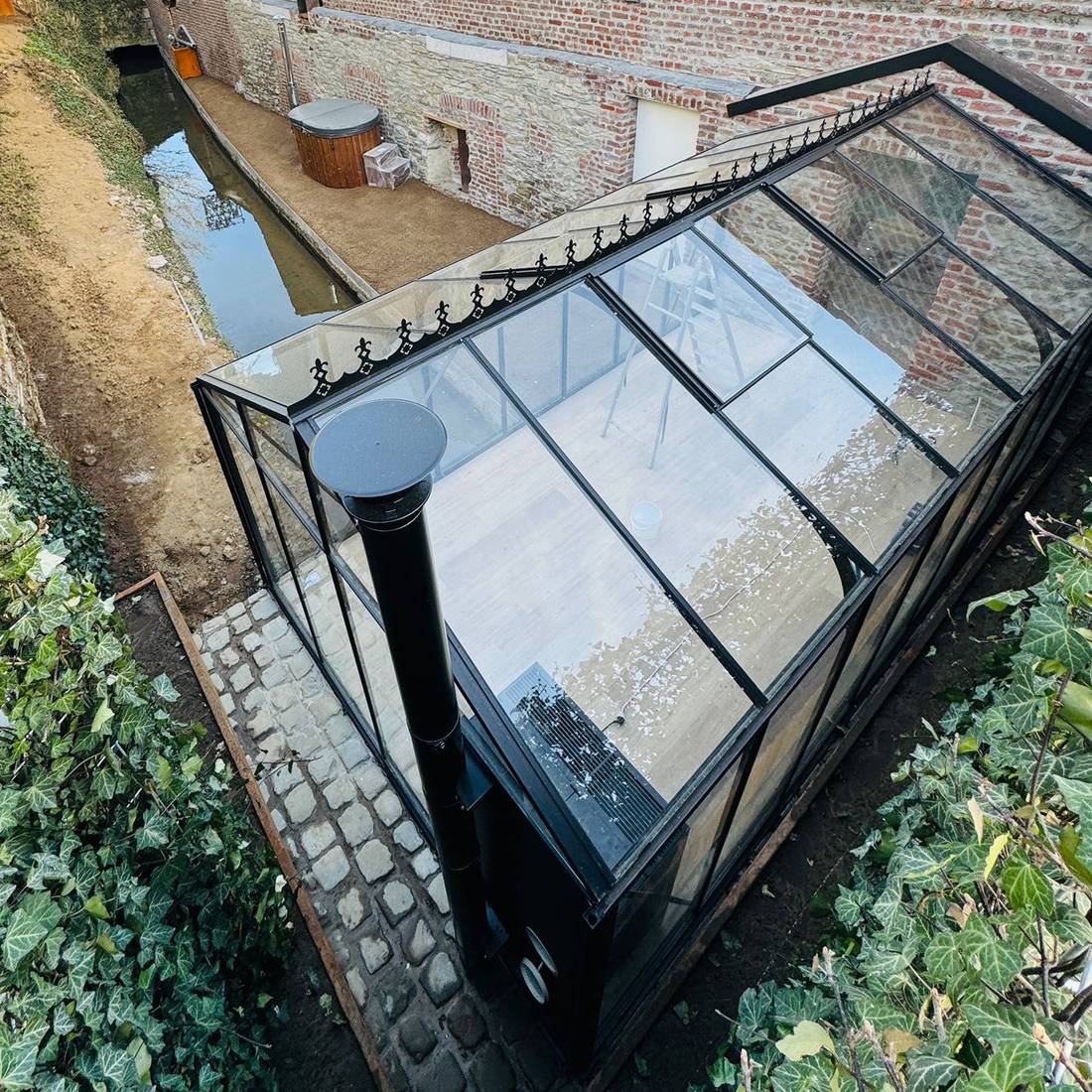
Washing toughened greenhouse glazing
Rinse generously with clean water first, washing off dust and sand. Follow with a mild, suitable detergent applied using a clean soft cloth or non-abrasive sponge. Clean successive sections and rinse off the remaining detergent.
Dirty brushes, metal blades, scouring powders and harsh chemicals may harm the glazing, seals or coated aluminium. Never force deposits away from an edge. Avoid applying very cold water to glass that has become intensely hot. Safe footing takes priority over reaching every spot, and a ladder must stand without bearing on a pane.
Managing condensation, heat and use throughout the year
Condensation forms wherever moist air meets glazing colder than the air’s dew point. In a planted greenhouse this ordinary physical effect need not indicate leaking glasswork. Watering, wet soil and vegetation can substantially increase the moisture carried indoors.
Ventilate routinely, tailor watering to conditions and keep drainage routes open to moderate excess moisture. The guide to greenhouse temperature and humidity examines those factors in more depth, while crop-specific context appears under growing lettuce in a greenhouse.
Plan shade, ventilation and any technical installations together for all-season use. Have suitably qualified specialists check the local requirements applicable to any heating or electrical installation.
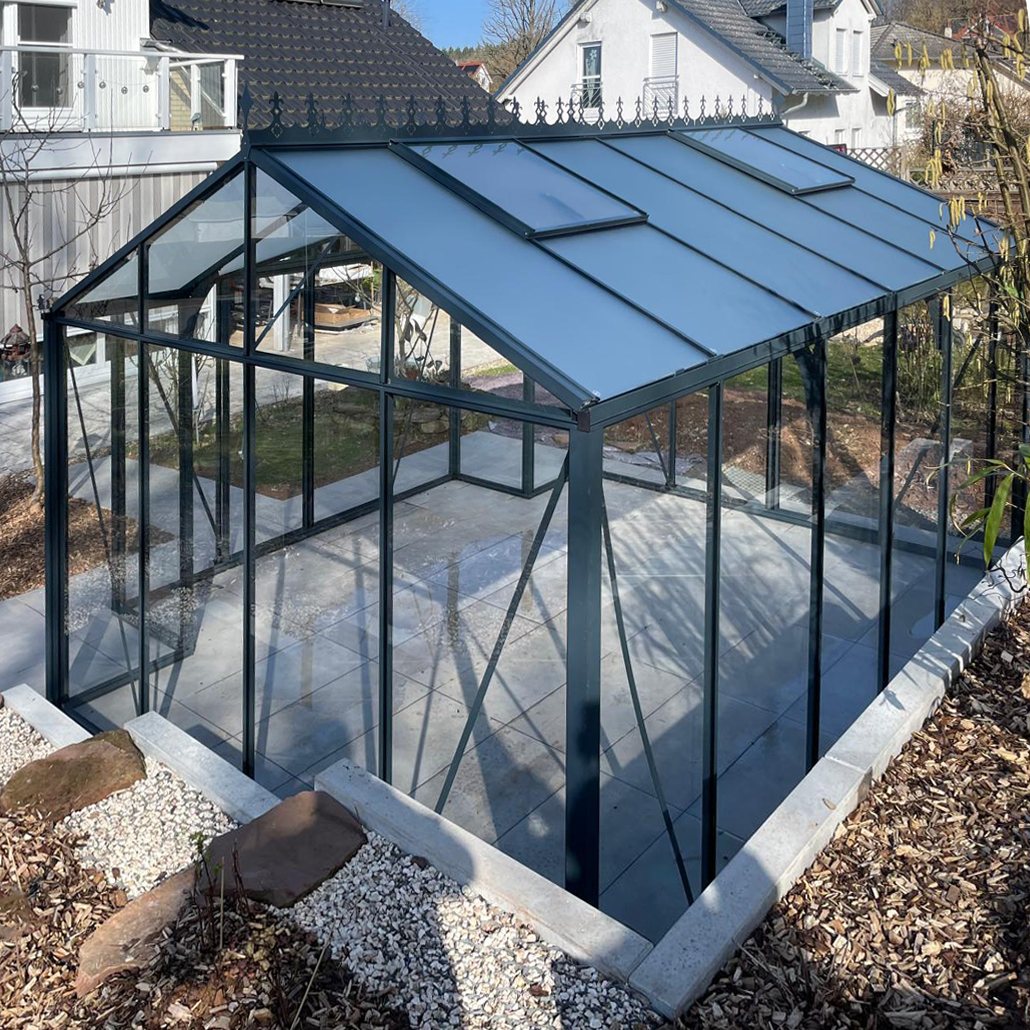
Responding to a broken pane
- Evacuate the immediate area and stop anyone entering it.
- Cease all work below the affected section.
- Put on protective gloves, safety glasses and robust footwear.
- Gather loose pieces in a controlled manner, never with unprotected hands.
- Examine nearby panes, seals and framing for deformation or signs of impact.
- Use the model, pane location and documentation to specify the replacement accurately.
- Ask the local council or waste service how the fragments should be discarded.
Determine why the glass failed before installing its replacement. A severe impact may leave obvious evidence, but an injured edge, debris beneath a support or a distorted frame aperture are other possibilities. For procedures and applicable terms, consult Warranty; that information alone does not classify the individual incident automatically.
Checklist for continuing inspection
- Following high winds or a storm: Inspect the panes, roof, moving elements and exposed fixings.
- At several points during the year: Clear drainage channels and look for seals that have shifted.
- Ahead of your main growing period: Confirm that doors, windows and automatic openers move without obstruction.
- After work nearby: Look over the glazing for scratches, edge defects or impact marks.
- When something changes: Investigate new gaps, rattles or binding doors without delay.
- Prior to washing: Verify that tools, ladders and suction lifters remain serviceable and safe.
Do not correct small discrepancies by adding makeshift packers, drilling more holes or overtightening fasteners. Refer back to the assembly documents and obtain competent assistance when the cause is uncertain. Related resources appear under Useful information .
Choosing glass also shapes the design
Clear glazing makes the garden and interior visible to each other, highlighting planting, pathways and aluminium geometry. Assess that visual effect from your home, terrace and main garden routes when choosing a structure, as well as considering the area available for cultivation.
A cohesive outdoor layout may incorporate other structures. Decisions involving bioclimatic versus traditional pergolas, between wall-attached versus freestanding pergolas or the pergola size guide need to account for clearances and important sightlines. Technical planning may also draw on the pergola foundation guide .
When a wellness zone includes an Elma S outdoor sauna, allow for its delivery route, maintenance access and any shade it might cast over the greenhouse.
Questions people commonly ask
Can toughened safety glass still break?
Yes. Although it tolerates many routine thermal and mechanical stresses better than annealed glass, a heavy blow, edge damage, severe constraint or another excessive load can cause failure.
May an ill-fitting safety pane be trimmed?
No. Cutting, edge grinding and drilling are unsafe after toughening. Instead, confirm which pane has been selected, its installation direction, the frame dimensions and whether the foundation and structure are correctly aligned.
Why do the edges need particular care?
Toughening gives the face of a pane considerable resistance, but corners and edges remain more susceptible to concentrated blows. Prevent them from touching concrete, bare metal and tools.
Does the glass prevent all injuries?
No. Breaking into small pieces reduces certain dangers posed by big sharp fragments, but those pieces can still cause cuts, enter shoes or fall from a glazed roof. Restrict access wherever breakage occurs.
Will toughened glass yellow or turn hazy?
Unlike certain plastics, the glass itself does not become yellow through ordinary use. Dirt, mineral scale, dried condensation and other deposits can nevertheless obscure it. Cleaning with suitable products helps preserve a clear surface.
Is a minor edge chip repairable?
Do not improvise an edge repair using adhesive, silicone or abrasive work. Arrange an assessment to establish whether the entire pane requires replacement, because apparently small damage at the edge of toughened glass may have technical significance.
Is condensation proof of a glazing leak?
No. Humid internal air can condense on cold surfaces without a leak. However, moisture that repeatedly collects at one location on the frame is a reason to inspect drainage, seals and the installation.
Is it safe to rest a ladder on greenhouse glazing?
No. This introduces unintended line and point forces, and the ladder could move. Give it stable, independent footing rather than relying on the glass or delicate profiles for support.
Can someone stand on a glazed roof?
No. Greenhouse roof panes are not working platforms. Cleaning, repairs and servicing need a proper access method that keeps the weight of people and equipment entirely off the glazing.
Do all Bloomcabin models use an identical glazing method?
No. Retainers, seal arrangements, profile geometry and the order of assembly can change between models. The delivery contents and documentation belonging to the specific model provide the controlling instructions.
What best supports a lengthy service life?
The essentials work together: a firm and level foundation, a frame assembled square, protected edges, properly seated seals and routine inspections. Avoid unauthorised or unsuitable alterations.
How should greenhouse selection begin?
Start by defining the purpose, location, preferred footprint, foundation and delivery access. Next, compare structural forms and glazing options. For guidance concerning an individual project, use the Bloomcabin pages About us and Contact to decide on the next enquiry.
