



SUPPORT
Requesting Spare Parts, Replacement Glass and Components
Technical guidance for correctly identifying, requesting, receiving and installing replacement glazing, fittings, seals and other parts.
Begin a parts request by pinning down the structure, model and exact component rather than offering a rough description. Profiles, panes, seals and fittings that look alike may perform different jobs in aluminium greenhouses or pergolas, so dimensions are often insufficient by themselves. This guide covers the information to provide, safe glass measurement and ways to minimise follow-up queries.
Start with the reason for replacement
Why the part is required provides useful technical clues. Transit-damaged glazing calls for a different response from a window that has become stiff after years of use. Describe the event or change behind the request first.
- Damage in transit: Record the package, shipping label, damage and affected location.
- Damage during assembly: Identify the assembly step involved and say whether nearby parts were affected.
- Wear and tear: Give the structure’s age, maintenance history and change in performance.
- Severe weather or impact: Inspect the obvious damage as well as the frame, fasteners and adjoining areas.
- Lost component: Indicate the building stage or package from which it probably came.
- Proposed modification: Make clear that the intention is to alter the structure, not restore its original form.
When something no longer operates properly, note whether the fault is continuous, temperature-related or appears only during wind or loading. A door may bind because of debris, shifted alignment, loosened joints or an unsuitable adjustment. In those cases, changing one component may leave the underlying cause unresolved.
Details that help identify the required part
Complete starting information reduces the chance of choosing something that looks right but is technically unsuitable. Refer to the original order documents and the model-specific assembly instructions wherever possible. The standard purchasing process is explained in How to Order.
Order and structure information
- Order or invoice number, or any other available reference
- Name of the individual or organisation that ordered the product
- Original delivery address and approximate purchase period
- Product, model family and configuration
- Aluminium colour or surface-finish option
- Form, including freestanding, lean-to or an unusual footprint
- Accessories supplied originally and any later alterations
Earlier images of the completed structure may assist identification. The greenhouse reviews show varied installation settings and demonstrate why a wide shot paired with a detail image is more informative than a photograph of the part alone.
Information about the component
State its position from a fixed viewpoint. “Left” or “rear” means little without a reference. A clearer description is: “Facing the door from outside, the second roof panel on the right.” Include:
- Required quantity
- What the part does
- Visible numbers, stamps or other markings
- Overall size and relevant distances between holes
- Profile or seal cross-section
- Damage type and its location
- Scaled detail photos plus wider views showing where the part sits
A fastener cannot be identified from length and diameter alone. Its head, thread, material, mating component and orientation may be critical. Never remove a fastener that is carrying a load merely to photograph it if this could destabilise the structure.
Confirm the product family first
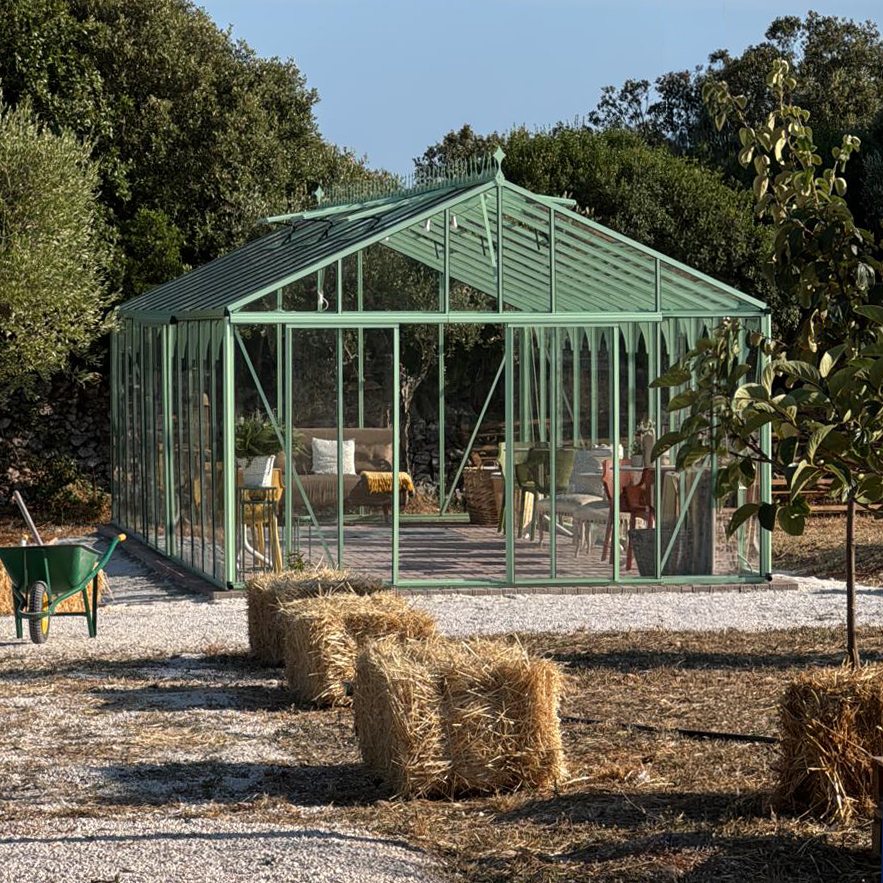
Bloomcabin supplies several structural forms and product groups. First determine whether the requested item comes from a greenhouse, conservatory, pergola or another kind of product. The Greenhouses and Conservatories section gives an overview. Because lean-to models can use different wall junctions and roof geometry from freestanding designs, also consult the article about the aluminium lean-to greenhouse.
Matching colour or a similar build date does not prove compatibility. Location, opening direction and structural role may differ even within one model family, and names used in one category do not carry across to another. The Elma S outdoor sauna is from an entirely different technical family than an aluminium greenhouse. Precise classification keeps the request tied to the correct structure.
Common groups of replacement parts
| Category | Examples | Identification points |
|---|---|---|
| Glazing | Panels for roofs, sides, doors or gables | Model and location; shape, edges, holes and nominal size |
| Aluminium profiles | Posts, rails, rafters, covers and junction profiles | Section, length, finish and joining points |
| Seals | Seals for glazing, doors, windows and junctions | Section, groove, fitting direction and material condition |
| Hardware | Hinges, rollers, handles, supports and connectors | Hole layout, side, movement and matching component |
| Fixings | Screws, nuts, slot nuts and clamps | Thread, size, head, material and fitted location |
| Operable parts | Components for doors, vents or roof windows | Model, action, travel direction and attachment points |
| Drainage | Gutters, outlets, end pieces and related parts | Profile, outlet direction, joint and drainage fall |
Avoid grouping several damaged small items under the vague label “assembly kit”. Number or mark every item separately. That allows the request to be assessed as either a complete kit or a specific subset.
Glass replacements for greenhouses
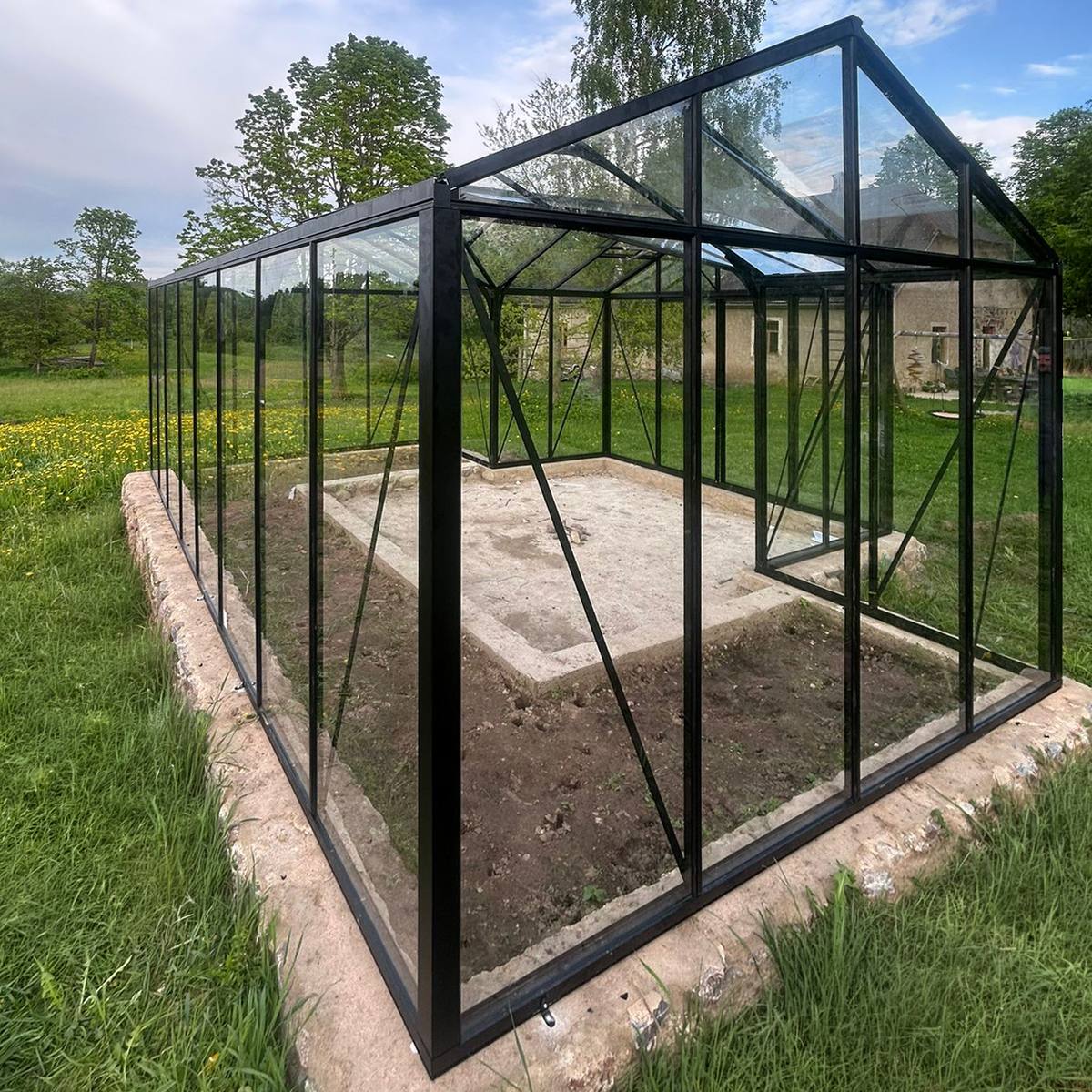
Greenhouse glazing forms part of the structure. Identification may depend on its type, thickness, shape, edge finish, holes, cut-outs and fitted location, not merely width and height. A roof panel may differ from a side panel of similar appearance. Use the model, panel position and original paperwork wherever possible.
Glass is not the same as multiwall sheeting or another glazing product. The article Polycarbonate for Greenhouses explains plastic-panel construction and selection. Substituting one material for another is a technical modification, not a routine parts order; assess the consequences for sealing, fastening and load transfer.
Dealing with cracked or shattered glazing
Keep others clear of the area first. Use appropriate personal protective equipment and do not work in windy conditions. Avoid placing further load on the damaged pane. Any temporary cover or restraint must prevent fragments and loose material from falling or being lifted by wind.
- Take a wide photograph before capturing the damaged panel.
- Capture the fracture, edges, fasteners and neighbouring profiles.
- Define the precise location from a stated viewpoint.
- Without adding load, inspect nearby seals, supports and profiles for damage.
- Retain labels and any safe components that can be identified.
- Dispose of hazardous shards correctly; preserving evidence never outranks safety.
Resolve any unusual stress before fitting new glass. Damage may recur if the frame is distorted, the base is uneven, a seal sits incorrectly or the clamping pressure is uneven.
Use measurements as supporting identification
Measurements provide a valuable cross-check but may not identify the model. Where practicable, measure the glass itself rather than the exposed opening. For a broken pane, consult the original documents, compare an identical position or use retained edge pieces. Mark any estimate instead of presenting a missing corner as measured.
- Take width and height readings in several places
- Record every dimension in millimetres
- Draw and dimension any pane that is not rectangular
- Check diagonals if the geometry is uncertain
- Locate holes from clearly defined reference edges
- Use an appropriate method to establish glass thickness
- Show which photo or drawing corresponds to each measurement
Unlike ordinary raw glass, some safety glazing cannot be cut or drilled once manufactured. Its final outline and machining must therefore be established beforehand. Do not order local glass from the clear frame opening alone merely because it appears to fit.
Put together an unambiguous parts enquiry
Consolidate everything in a single message. Separate, unlabelled photo messages invite mix-ups. If several items are required, organise them in a numbered list.
- Include contact and order references.
- Identify the model, version and finish.
- Summarise what prompted the request.
- Assign each item a number and quantity.
- Apply matching numbers to the photographs.
- Supply positions and measurements.
- Explain whether the structure remains safe to use.
Send the completed request through the Bloomcabin contact options. Replace a vague description such as “door seal” with: “Position 3: bottom seal on the moving door leaf, viewed from outside; overview and section shown in photos 3a to 3c.”
Delivery faults and receipt of replacement goods
When an item is missing or damaged on first delivery, record the consignment before disturbing it more than necessary. Photograph the outside and inside packaging, shipping identification, affected area and the part in context. Process guidance appears under Purchasing and Delivery.
International orders may need extra information about routing and identification. Where the original destination was Austria or Switzerland, refer to the guidance on greenhouse purchases and the relevant delivery arrangements.
What to check on receipt
- Confirm the recipient and consignment information.
- Before opening, photograph every side of the package.
- Record any damage that is visible.
- Identify parts using the supplied documents.
- Inspect glazing and long profiles for obvious damage.
- Keep small components out of discarded packing.
- Label parts clearly and store them somewhere dry and protected.
Do not trial-fit an obviously damaged or incorrect item. Doing so may harm other components and complicate later assessment.
Prepare for installation
Before work begins, determine whether the structure needs unloading, bracing or partial dismantling. Have the correct assembly guide ready and label anything removed. Glazing, roofs and load-bearing joints call for suitable tools, secure access and enough people to handle the task safely.
Before proceeding, ask:
- Has the new component been matched to the exact location?
- Are all seals, connectors and fasteners present?
- Is the frame square, with no visible distortion?
- Can the existing item come out without danger?
- Will neighbouring parts require temporary support?
- Should local rules or a specialist trade be considered?
Altering the foundation, site or structural form may call for another project-specific check. For general orientation, read whether a greenhouse or pergola needs approval. Confirm the current state or territory and council requirements for the actual property. For pergola substructures, the pergola foundation guide provides further practical guidance.
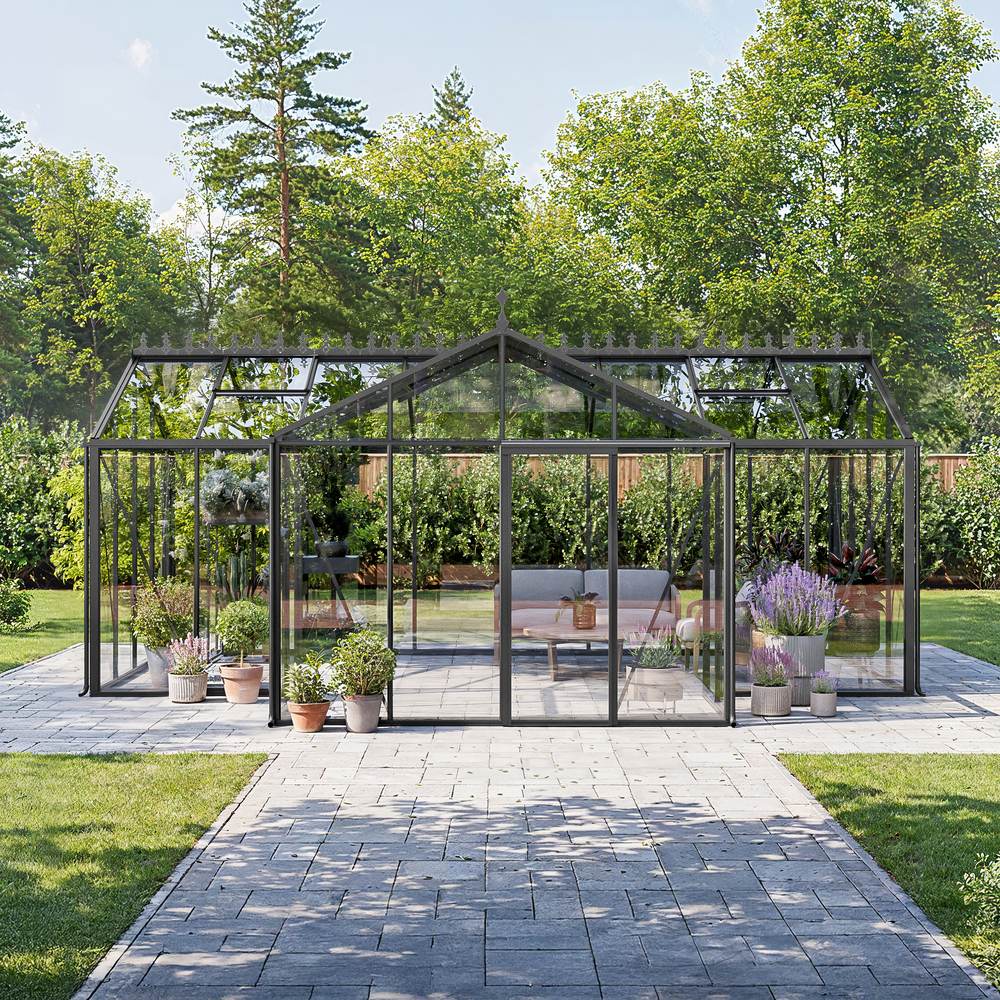
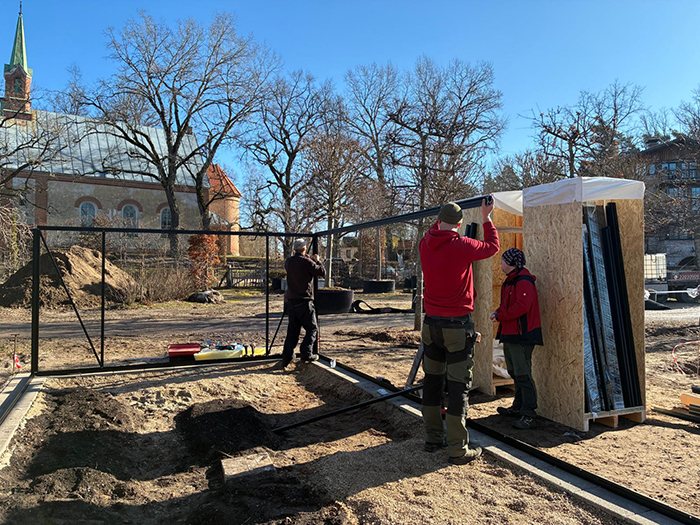
Anna Koku Skola: one installation documented throughout
The Anna Koku Skola photographs follow a single installation from one stage to the next; they are not images of separate projects. That continuity is valuable when identifying parts. Earlier views reveal uncovered joints and components, while later ones place them within the finished structure.
This sequence demonstrates three useful layers of evidence: the delivered parts and their condition, intermediate assembly stages, and the fully aligned result. Store images chronologically and name them by stage so a later glass panel, profile or connector can be located reliably. Capture concealed joints before glazing or covers hide them.
Maintenance and practical spares storage
Routine inspection can limit secondary damage. See Caring for Your Aluminium Greenhouse for guidance. Examine moving parts, seals, drainage and visible joints, but do not tighten every fastener indiscriminately. Excessive tightening can cause as much trouble as looseness.
Heat and humidity affect condensation, grime and stresses on ventilation parts. The guide to greenhouse temperature and humidity offers more detail. Organised watering can also stop water lingering where it should not; related advice appears in water-wise gardening.
A modest stock of frequently used wear or assembly items can be worthwhile when each one is positively identified. Do not buy unknown “universal” parts just in case. Keep seals relaxed, small pieces dry, and glass protected against tipping, impact and edge pressure. Mark each package with its model, position, part number and storage date.

Pergola glazing walls and controls
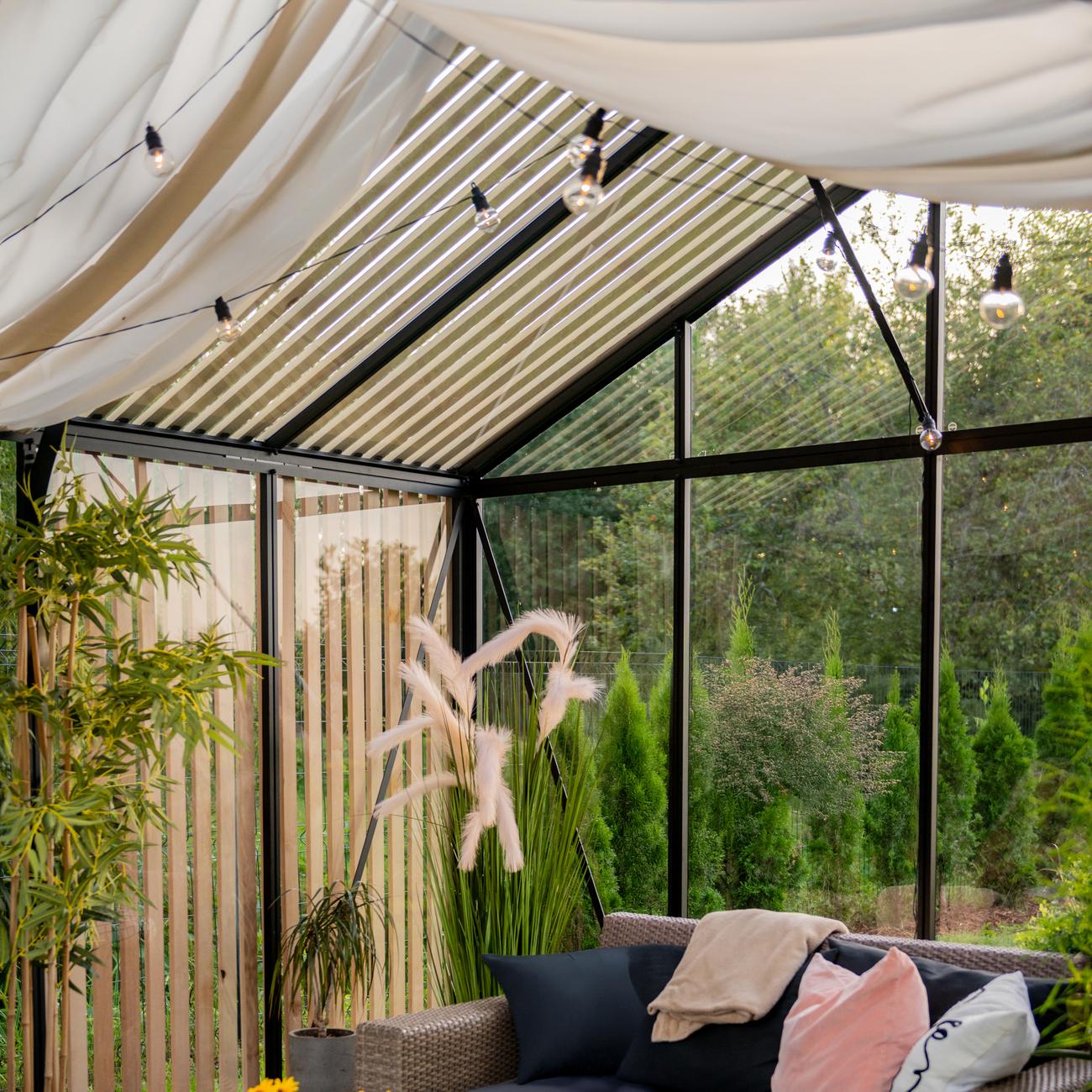
Pergolas follow the same identification basics, although their form and method of operation become especially important. Establish first whether the product is a bioclimatic or classic pergola and whether the structure is wall-mounted or freestanding . Use the pergola size guide to interpret dimensions and panel layout.
For a glass wall, record the panel location, opening direction, guide or track arrangement, and the junctions at floor and roof. For controls, also note the drive system, wiring or mechanical connection and describe the fault precisely. For electrical work, ask the relevant state or territory regulator about licensing and certification, then engage an appropriately qualified contractor.
Adding or changing a roof or glass wall does not establish compatibility with the existing pergola. The Bioclimatic Pergola, Roof and Glass sets out how those functions interact. Never use force on a jammed louvre, drive or sliding panel.
Questions customers often ask
Are width and height enough to order new glass?
Usually they are cross-checks rather than full identification. Also provide the model, fitted location, glass type and thickness, outline, edge details and any holes wherever possible. Include a complete-panel photograph and a dimensioned drawing to reduce mistakes.
Can Bloomcabin models share the same glass panels?
Compatibility must be verified. Matching outside measurements do not prove that edges, attachments or structural roles are alike. Even one structure may use different glazing in its roof, sides and door.
What images are useful for identification?
Provide one view of the whole structure, another of the relevant side, the exact fitted location and several close details. Show a ruler or tape, visible markings and the matching components where useful. If movement is the issue, add a short sequence showing the mechanism in different positions.
May I discard a damaged item once it is photographed?
Until the request is documented, retain labels, harmless pieces and fragments that remain identifiable. Hazardous glass must instead be removed and disposed of safely. Clear photographs can preserve the identifying evidence without compromising safety.
Is DIY installation of replacement glazing suitable?
The answer depends on panel size and weight, location, access, structural design and your skills. Large panes and roof glazing present serious hazards. Engage a suitable specialist if uncertain, and follow the assembly guide and safe-work procedures for the site.
How can I describe a part whose name I do not know?
Number your images and describe the position. State what the item does, where it attaches and which piece it supports or moves. A drawing with an arrow is often clearer than an uncertain technical name.
Can I source a substitute seal, fastener or bracket locally?
Only after confirming both compatibility and technical suitability. Consider geometry, material, strength, corrosion characteristics and contact with aluminium or glass. A visual resemblance alone does not make an item a safe substitute.
How should I respond to a stiff door or roof vent?
Do not apply force. Look for contamination, deformation, loosened joints, guide problems or misalignment, and record when the fault appears. Before ordering a part, determine whether the frame or foundation is responsible.
Does every parts request qualify under the warranty?
No. Coverage under the commercial warranty depends on the product, cause, supporting records and applicable terms. Submitting a technical request begins an assessment; it is not approval. Consult the Warranty section.
May I request components for a greenhouse alteration?
Yes, you may enquire, but the availability of one part does not make a proposed modification technically suitable. An alteration may affect structural behaviour, glazing, drainage, ventilation and junctions. Fully describe both the present arrangement and intended result.
What is the right way to store spares?
Choose a dry, sheltered place and use clear labels. Support long profiles so they cannot sag. Secure glass against tipping and edge impacts. Keep seals free from kinks, excessive stretching, prolonged heat and direct sunlight.
Where are the purchasing and privacy policies?
Review the Bloomcabin terms and privacy notice shown during purchase and when making an enquiry. Share only the personal details required to identify the order. The Useful Information section is the general starting point for ordering and service guidance.
Parts-request final check
- Reason for the request stated clearly
- Order reference and model identified
- Position defined from a consistent viewing direction
- Each item numbered with the quantity required
- Wide, location and close-detail images included
- Supporting measurements entered in millimetres
- Glass outline, holes and edges recorded
- Surrounding parts inspected for damage
- Safety and installation needs assessed
- Contact information and delivery address verified
Good records save time and reduce ordering errors. The aim is not to send the most photographs, but to connect each product and location clearly with the relevant part, measurement and reported fault.
