



PROCESS
Getting ready for delivery day: access, unloading and receipt
Successful receipt begins well ahead of the truck’s arrival. Use this guide to organise vehicle access, a safe unloading zone, capable helpers, suitable handling aids, package inspection and protected short-term storage.
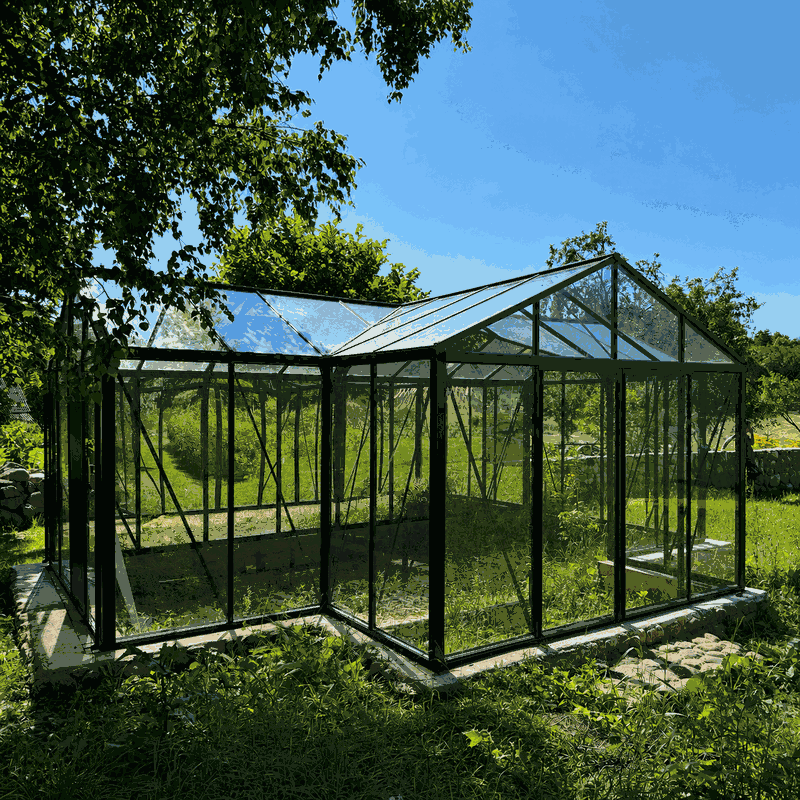
A greenhouse, pergola or outdoor sauna arrives very differently from a routine parcel. Your consignment may contain units that are lengthy, heavy, fragile or impossible for one person to handle. Assembly is often planned behind the home, although the truck may reach only a driveway, kerbside or near-street handover point.
Good preparation covers more than meeting the driver. Settle the access route, unloading space, available help, movement path, storage location and each person’s duties beforehand. The sequence below keeps handover, unloading and construction as distinct stages. For background on the purchase process, read Ordering from Bloomcabin together with Purchasing and delivery.
The delivery plan in brief
Five parts of the plan need to align. The truck needs a workable route to the nominated handover location; that place must allow safe unloading; capable people and appropriate aids must be ready; the consignment requires checking; and secure storage must be available afterwards.
| Stage | Task | Intended result |
|---|---|---|
| Before you order | Evaluate vehicle access, the product route and build location | Identify transport obstacles while options remain |
| Once ordered | Nominate unloading and holding areas | Create an orderly movement plan |
| Ahead of arrival | Confirm helpers, handling aids and contactability | Avoid preventable delays at handover |
| As the truck arrives | Direct the vehicle and isolate the work zone | Maintain an organised transfer |
| Once unloaded | Tally, examine, photograph and protect each package | Create a traceable record of condition |
The confirmed conditions for your particular order take precedence. Resolve any uncertainty before the nominated day through the contact team .

1. Assess the approach before ordering
Assess truck access, not car access. Tight bends, parked cars, low branches, eaves, weight restrictions or insufficient turning space can make an otherwise usable driveway unsuitable for deliveries.
Inspect the street-to-handover route for bends, gate widths, gradients, ground strength and overhead obstructions. Can the unloaded vehicle leave forwards, or must it turn? Dead ends, narrow private roads and nearby construction may substantially change access planning.
Checklist for access to the property
- Can the driver readily identify the address and see its street number?
- Is there clearance from posts, walls, hedges, gates and projecting rooflines?
- Have you allowed for wires, branches, lighting and every other overhead obstruction?
- Will the surface remain level and firm enough in the forecast conditions?
- Do any operating-hour, mass, clearance or entry limits apply?
- Will cars, bins or construction supplies restrict the turning area?
- Is there a safe stopping location that does not create a prohibited traffic obstruction?
- Can directions be given while everyone stays clear of the vehicle’s path?
Where unloading may occupy a road, verge or footpath, contact the relevant council or road authority early to ask what site-specific arrangements or approvals are required. Keep that enquiry separate from planning checks for the structure itself; begin with Planning checks for greenhouses and pergolas in Australia.
2. Choose unloading and staging locations
Do not assume that unloading and construction will use one area. Handover needs an accessible, stable place without obstructions. The staging area must then hold the packages in a layout that supports counting and inspection before they are moved onwards in a practical sequence.
Map a simple flow from the truck to unloading, inspection, temporary storage and finally the build site. Bypass steps, loose stones, tight garden entrances and newly established beds wherever practical. A long package may be narrow, yet still demand substantial room when it is turned.
Select clean, dry and even ground. Keep cartons away from mud, pooled water and sharp-edged rocks. Any supports must be stable and spread the load so that packages are not distorted by isolated pressure points. Do not obstruct pedestrian routes, traffic movement or emergency exits.
The type of product also changes the handling plan. An outdoor sauna Elma S, an HC150 barrel sauna or the larger HCF 300 barrel sauna may use packaging and handling arrangements unlike those for a greenhouse. Base your space allowance on the information supplied with the order, not on an impression formed from photographs.
3. Allocate people, equipment and duties
Your receiving person must know the order, be authorised to decide and remain contactable during delivery. Arrange sufficient capable helpers; do not assume neighbours are available or the driver will carry goods to the build site.
Select handling equipment for the packages, weight, ground and route. Only competent operators should use purpose-designed equipment. Improvised levers, unstable trolleys or unsuitable garden tools risk injury and damage. Follow the order and agreed delivery requirements.
Nominate these roles for the handover
- Order contact: speaks with the carrier or driver and keeps the paperwork close at hand.
- Movement spotter: watches the route and turning space from outside the danger zone.
- Placement lead: directs the resting position of every package.
- Delivery checker: keeps the tally, reads identifiers and notes anything unusual.
- Site marshal: prevents children, animals and people not involved in the work from entering.
Several duties may sit with one person, provided they can be performed together without compromising safety. Business and reseller enquiries can also be directed to Trade partners .
4. Complete these jobs shortly before delivery
- Verify the advice received: Recheck the destination address, telephone details, order scope and every supplied instruction.
- Open up the route: Move trailers, cars, bikes, rubbish bins and unsecured objects elsewhere.
- Watch the conditions: Rain, snow, frost or waterlogged soil may alter both vehicle access and manual handling.
- Identify each zone: Decide in advance where the individual units are to rest.
- Set up your records: Have the order papers, a phone or camera and a way to take notes ready.
- Prepare protected storage: Clear a dry and tidy location that cannot be entered without permission.
- Read the construction material: It may show that particular assemblies need to be separated or stored according to build order.
Review the future construction area as a separate exercise. For a pergola, the guide to pergola sizing can assist with space planning, while the pergola footing guide covers the supporting base. Foundation work and receipt of the consignment are different activities, although their schedules need to fit together.
5. Manage the vehicle’s arrival step by step
Pause before any package is removed from an arriving truck. Meet the driver at the location already agreed, verify the destination and decide together where stopping and unloading will occur. Draw attention to restricted widths, visible obstacles, soft surfaces or ground that cannot carry the load.
Keep every person out of blind spots while the vehicle moves, including the space at its rear and between the truck and any structure. Children and pets must remain well beyond the work zone. Appoint one spotter to signal; competing directions from several people can easily be misunderstood.
Reassess the site immediately before work starts. Conditions may have shifted because of a visitor’s car, another delivery vehicle, wet turf or strong wind. If the original plan no longer works, protecting people and preventing damage matter more than unloading quickly.

6. Retain control while the consignment is unloaded
Arrange packages deliberately, leaving their identifiers in view whenever feasible. Avoid arbitrary stacks, and never balance a delicate unit—or one marked for another orientation—on an unsuitable edge. Observe every handling and storage symbol on the wrapping.
Maintain a written tally as items come off the vehicle. This makes duplicate counts and packages left in another area less likely. Put small boxes of fittings and accessories where long bundles cannot conceal them. Group goods by build stage only if their identification remains unmistakable.
The active unloading zone is not the place to unwrap or modify packages. Concentrate first on a safe transfer, the number received and externally apparent condition. Later, move to an appropriate location and compare the contents methodically with the documents available.
Stop the unloading operation if any of these occur
- Someone enters the hazardous zone without being directed.
- A truck or handling aid no longer appears securely positioned.
- The surface starts to sink, loses grip or cannot support the operation.
- A unit begins to lean, sag or move free of its restraint.
- Clear visual communication among the driver, spotter and crew is lost.
- Wind or heavy rain makes broad or elongated components difficult to control.
- What is happening no longer matches the delivery arrangements you were given.
Do not answer any of these problems with a rushed workaround. Isolate the area, discuss a safer course and contact Bloomcabin if the difference from the confirmed arrangements cannot be settled.
7. Record and examine what has arrived
Once unloading is finished, reconcile the package tally against the delivery paperwork you have. Walk around each unit and look for punctures, pronounced compression, torn material, water exposure, closures that have opened or unexpected changes in shape. Inspect underneath only when this requires no unsafe lifting.
Begin with photographs showing the consignment as a whole. Then capture each concern from more than one angle: wider views establish where it appears, while close images show the detail. Include a readable label or package reference where one exists. Retain affected wrapping until the issue has been addressed.
Use the nominated receipt process to note anything visible at handover. Before signing, understand precisely what your signature confirms. Damage to a carton is not proof that the part inside has failed, but a modest-looking pressure mark should not be dismissed either. Relevant terms are available under Warranty information.

8. Protect the components after accepting them
Packaging offers protection only for the purpose for which it was designed; it is not a substitute for proper long-term storage. Use a dry, clean and stable area secured against wind, toppling, theft and unintended entry. Prevent contact with bare ground, pooled water and unmanaged dampness.
Distribute support beneath long items to avoid concentrated loads or damaging deflection. Heavy cartons must not rest on vulnerable glazing, sheet products, finishes or panels. Respect orientation arrows and other package markings, and keep hardware with the corresponding small connectors.
Confirm whether outdoor storage is permitted for these goods and under what conditions. Loose tarps can trap moisture, abrade finishes or blow off; unauthorised repacking complicates component identification. For later use and surface care, consult maintaining an aluminium greenhouse.
9. Complete receipt before moving on to construction
Finishing the unload does not by itself mean assembly can start. First conclude the receipt checks. Next, organise packages using their identifiers and read the construction instructions from beginning to end. Confirm that the foundation, fixing locations, tools, personal protection and any specialist work are all prepared.
Resist opening the whole consignment together. Doing so can mix small pieces, expose finishes to damage and separate parts from their references. Work in the stated construction sequence, retaining labels until there can be no doubt about each component’s identity.
Further help for greenhouse work is available through Greenhouses and conservatories and Practical information . Across Australia, including its territories and islands, routes and handover details may vary by address and product. Confirm the arrangements for your order and review greenhouse purchasing and delivery guidance.
10. Prevent familiar mistakes on the day
- Allowing only for the product footprint: Handling and turning require clear space beyond the final structure’s dimensions.
- Assuming the driver will help with construction: Rely only on work included in your confirmed form of delivery.
- Using turf without assessing its strength: Ground that was firm earlier may become unsuitable after moisture.
- Unwrapping the entire order at once: Doing this makes loss, damage and mistaken identification more likely.
- Signing before inspecting packages: Note outwardly apparent concerns during the transfer process.
- Rushing straight into construction: Resolve missing goods, uncertain damage and incomplete foundation work beforehand.
- Throwing wrapping away too soon: Protective pieces and package references may still serve a purpose.
- Treating access as proof of site approval: Whether a truck can deliver is separate from whether the proposed structure may proceed at that address.
Your selection also shapes the logistics. Compare classic and bioclimatic pergolas as well as freestanding and wall-mounted pergolas before locking in the route and build plan. For saunas, look beyond the outline of models including the outdoor sauna Elma L, the HC 225 barrel sauna and HCF 225 barrel sauna . The details confirmed for the individual order and its delivery remain decisive.

Set up the greenhouse once construction is complete
After assembly, move through cleaning, operational checks, fitting out and preparation for plants. Clear away leftover wrapping and use the instructions to test doors, vents and all other moving elements. Add paths, growing benches, watering equipment or cultivation beds only after those checks are satisfactory.
New growers can begin with the introductory guide to greenhouse gardening. Advice about managing the growing environment appears in Humidity and temperature in a greenhouse , while the guide to spring cleaning and planting preparation supports preparation for your local spring.
When selecting materials, consult Insulation, polycarbonate and multiwall panels for an explanation of how these topics relate. Anyone considering a more formal garden building can also use the guide to orangerie greenhouses. For a practical crop example, read about growing capsicums and chillies under cover.
Common questions
Does someone have to be there when delivery occurs?
Follow the terms confirmed for the order. A reachable, authorised person should nevertheless attend to open access, point out the unloading location, examine the consignment and provide any necessary acknowledgements. Do not leave receipt to someone unfamiliar with the arrangements.
Will the driver move everything to the intended greenhouse position?
Only expect this if it has been expressly included. The confirmed delivery method determines both the service and the handover location. Make your own plan for moving goods inside the boundary, with people and equipment suited to the work.
What size area should be cleared for unloading?
Determine space from the vehicle, packages, unloading method and site. Allow secure truck standing, working room beside or behind it, and areas for placing and moving goods. Check the delivery documents for specifics.
Is an unsealed driveway or lawn suitable for handover?
It can be used only when its condition suits the truck, the method of unloading and the weather, and when the agreed terms allow it. Turf may appear dry while remaining soft below. Inspect the site itself and provide a firm handover surface whenever there is doubt.
What should happen if wrapping appears damaged?
End any handling that has become unsafe. Take images of the whole package, its identifier and the affected place, then record the concern according to the stated receipt process. Preserve both goods and wrapping, and submit a clear report with the relevant evidence.
Should the consignment be opened before the driver leaves?
The initial priority is generally the package count and outward condition. Unwrap an item at that point only when the particular process calls for it or it has been agreed. Conduct the complete contents check later, systematically and with the supporting documents.
May greenhouse components remain outside?
Do not leave them outdoors without protection. Whether limited external storage is possible depends on the wrapping, the contents and any conditions stated for them. As a minimum, choose secure, ventilated, dry and stable storage and comply with the instructions for the product.
Is it all right to begin assembly as soon as unloading ends?
Start after receipt checks, package identification and site inspection. Have the foundation, tools, helpers and safety measures ready. Resolve damage, shortages or unsuitable weather before assembly.
Where is more guidance about greenhouses from Bloomcabin available?
Start with Greenhouses and conservatories, About Bloomcabin and the Bloomcabin journal. Accounts from existing customers are also collected in Greenhouse customer reviews .
Final checklist before signing for the goods
- Destination, contact information and handover instructions verified
- Route clearance, bends, overhead space and turning room assessed
- Any address-specific authority enquiries completed early
- Separate unloading, examination and storage zones made ready
- Capable helpers and fit-for-purpose aids arranged
- Pets, children and other people excluded from the work zone
- A running package tally maintained throughout unloading
- Every wrapper checked for outward signs of concern
- Consignment overview, identifiers and affected areas photographed
- Observed concerns entered through the required process
- All components placed securely, dry and in an orderly layout
- Construction deferred until preparation and receipt checks were complete
A well-organised handover helps protect people, goods and the project schedule. Defining the truck route, transfer location and individual responsibilities before arrival leaves far less room for hurried decisions once the consignment is at the property.
