



Plan your sauna heater and electrical connection
Choosing an electric sauna heater requires information about the room, control system and existing electrical installation. This guide explains what to gather before ordering, how to read the rating plate and which points to raise with the electrician.
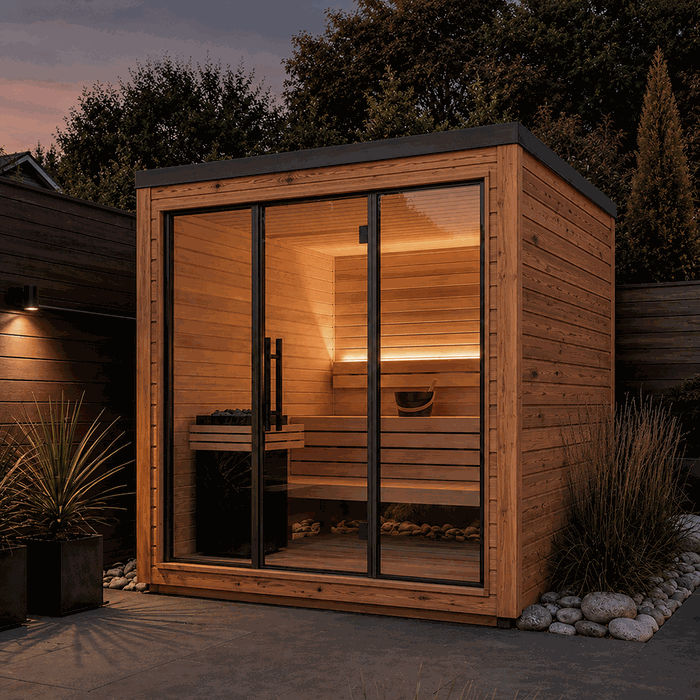
Treat the room, heater, controls, sensors and site as a single system before selecting any circuit breaker. That combined assessment reveals the appropriate electricity supply, safeguards and cable route for an outdoor sauna.
The guidance is intended for private outdoor saunas in Australia. It cannot replace component manufacturers’ instructions or a professional electrical assessment. Use the documents for the equipment actually delivered and check the requirements applying in the relevant state or territory and at the installation site.
Components that make up electric sauna heating
Heating involves more than the sauna heater itself. The design may call for the following additional parts, all selected to work together correctly:
- Sauna heater: Contains the elements, stone basket, terminals and required clearances.
- Sauna stones: Use the specified stone type, dimensions, quantity and stacking pattern.
- Controls: May be incorporated into the heater or housed separately.
- Power unit: Some arrangements use a separate switching device to carry the heater load.
- Temperature sensor and safety temperature limiter: Measure heat at the location nominated in the instructions.
- Control panel: Provides local operation from inside or outside, as the design permits.
- Connection and sensor cables: Must suit their position, operating temperature and the equipment instructions.
- Protective devices: Includes circuit safeguards, residual-current protection and any required means of isolation.
Inclusions vary, so confirm them against the documents for the selected product. The Sauna section compares the available formats. Cabins of comparable size may still use quite different heater arrangements.

Assess the room before looking at the switchboard
Effective room heat demand determines heater selection. Although internal volume provides the first reference point, glazing, doors, poorly insulated or heat-conductive surfaces, room geometry, ventilation and the outside climate also change the way the space warms.
For example, the compact Elma S outdoor sauna and its roomier counterpart, the Elma L outdoor sauna , need not share an electrical design merely because their exteriors seem alike. Apply the same care when comparing the HC150 barrel sauna with longer barrel models.
Excess capacity offers no automatic advantage: it can affect regulation and call for more supply capacity than necessary. Too little capacity may mean extended running, difficulty reaching the set point or uneven heat. Follow the sizing methods published by both the heater and sauna manufacturers.
Information needed to recommend a suitable heater
- the precise sauna model and proposed installation configuration;
- clear internal measurements and the volume calculated from them;
- area and type of glazing, stonework and other surfaces without typical insulation;
- available details of the walls, ceiling and floor construction;
- the intended heater location and possible fixing method;
- separation from walls, benches, the door and heater guard;
- the site, planned cable path and approximate route length;
- the present supply and unused capacity in the switchboard;
- required on-site controls or permitted remote functions.
Where details remain uncertain, provide the model name, plan and site photos in one enquiry. Ask product-specific questions through Contact .
Understanding the heater’s electrical specifications
A short product description may show only heat output, which cannot define the electrical design. Consult the exact model’s rating plate, connection diagram and installation instructions instead.
| Information | How to use it in planning |
|---|---|
| Rated output | Power consumed by the heating appliance under the stated conditions. |
| Rated voltage and supply type | Identifies the intended electricity supply and permitted connection arrangement. |
| Rated current | Used with cable installation conditions and manufacturer data when choosing conductors, switches and protection. |
| Phase and terminal allocation | Sets out the allowed terminal connection and cannot be inferred from power alone. |
| Control type | Shows whether separate operating controls, sensors or a power unit are needed. |
| Ingress protection and installation location | Establishes the environments in which the component can be fitted. |
| Cable requirements | Can nominate conductor size, temperature rating and termination conditions. |
Advertised power by itself cannot establish current. Account for the internal arrangement, number of phases, control equipment and the appliance version supplied for the destination market.
Circuit design, protective equipment and isolation
Because a sauna heater draws a considerable load for sustained periods, its design will generally examine a suitably rated dedicated circuit. The electrician should determine the necessary isolation, residual-current device and other protection from the appliance documents, site conditions and existing installation.
A power point is not suitable merely because an accessory plug fits it. Temporary garden supplies, extension leads and portable reels are not an appropriate designed supply for fixed sauna heating.
Points to raise with the electrician
- Can the incoming service and switchboard support the proposed load?
- Which supply arrangement and terminals does the selected model specify?
- What cable suits this route, distance and method of installation?
- What protection follows from the equipment instructions and conditions on site?
- Which locations are acceptable for joints and connection points?
- How can the installation be isolated and secured against accidental re-energising?
- Will the work involve trenching, conduit or alterations to a sub-board?
- What test results and completion records will be handed over?
Evaluating supply and switchboard capacity
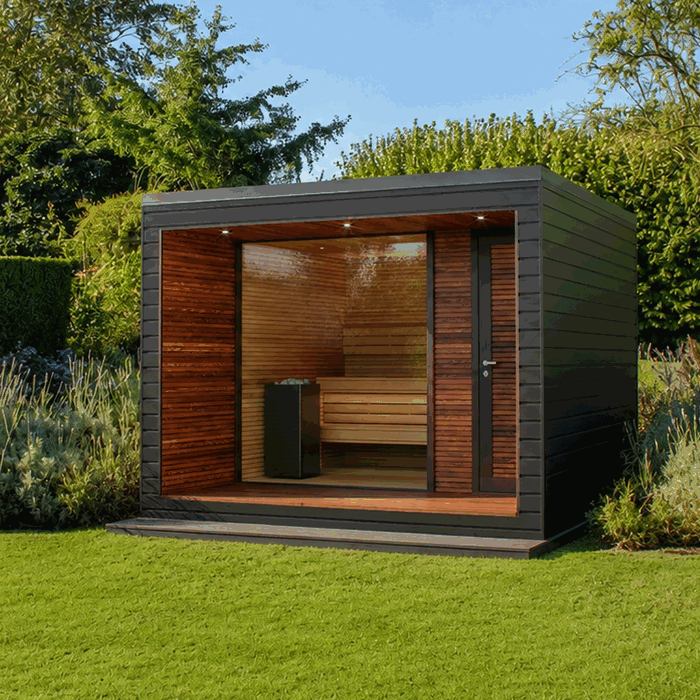
An unused module position does not prove that the switchboard has adequate capacity. The review should cover the incoming service, upstream devices, board, load diversity, cable paths and existing major loads such as heat pumps, EV chargers, instantaneous water heaters, cooking appliances and garden equipment.
Plan the sauna alongside the rest of the garden’s electrical needs. Lights, outdoor power points, pumps, pergola drives and a later garden building may each require circuits. Forward planning may avoid future excavation and rebuilding, but it never permits protection for the sauna heater to be rated above its requirements.
Planning cable routes for heat and weather
One outdoor sauna can contain several distinct cable environments: buried ground, an exposed exterior, perhaps a service compartment, and a very hot room. Cable that performs correctly in a cooler zone may be unsuitable beside the ceiling or heater terminals.
Determine the path before foundations and assembly begin. Allow for impact protection, water, ultraviolet exposure, bend limits, penetrations and separation between sensor and power wiring. Keep cables away from heated surfaces, cutting edges and positions needed for later fasteners.
Minimise openings through roofs and outer walls. Where a penetration is unavoidable, detail it to prevent water entering the wall build-up. Never improvise a closure for unused holes with incompatible materials.
Control equipment, sensing and operation from afar
Operation may be built into the heater or provided by an external control arrangement. For an external design, use the panel, switching unit, temperature sensor and safety equipment as the manufacturer-specified system. Similar-looking plugs or terminals do not make parts from unrelated systems compatible.
Install the temperature sensor only where the manufacturer directs. Its position affects normal regulation and over-temperature shutdown. Shifting it into a cooler zone to make the room hotter defeats those functions and can create hazardous overheating.
App-based or remote starting may depend on extra safety interlocks. Before activating the heater remotely, check that towels, cleaning tools and other objects are neither touching it nor within its restricted zone. An ordinary home-automation relay is not a substitute for the control arrangement specified by the manufacturer.

Earthing, bonding and protection from electric shock
Consider protective conductors, earthing, equipotential bonding and residual-current devices across the installation as a whole. Do not join metal parts indiscriminately. The electrician identifies the conductive items involved and confirms the effectiveness of the protective arrangement through appropriate measurements.
Timber construction does not remove electrical risk. Damp conditions, wet skin, exterior exposure and elevated temperatures impose particular demands on equipment and workmanship. Alterations made after testing can undermine the protection that was verified.
Heater clearances and contact guards
Treat every specified distance from the heater to timber, seating, ceiling, door and adjacent construction as a fixed design input. Obtain these values from the instructions for that exact version; experience or measurements from a similar-looking product are not reliable substitutes.
A guard can reduce accidental contact only if it preserves ventilation and every required clearance. Fix it firmly and never use it for storage or drying. For layout comparisons—including HC 180, HC 225 and HCF 225—check the protected heater zone as carefully as the available seating.
A workable pre-purchase sequence
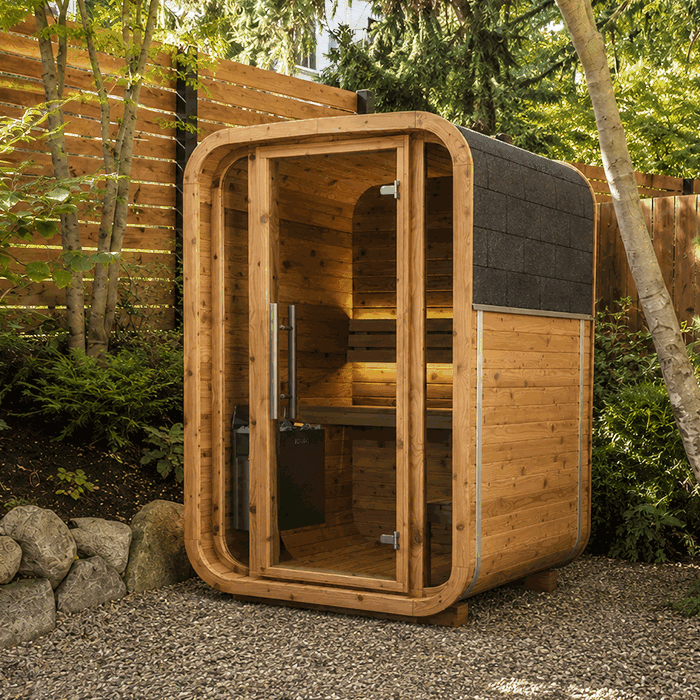
- Select the sauna: Establish its form, interior, glazing, door and heater location. Use Comparing timber, barrel and garden saunas for the broader product assessment.
- Assess the location: Review access, foundations, drainage, setbacks and requirements applying at the site. The related guide asks whether approval can apply to garden structures; the chosen sauna still needs a location-specific check.
- Seek heater-sizing advice: Send the supplier the room information and functions you want.
- Collect equipment documents: Obtain manuals, connection drawings and rating-plate details before designing the electrical work.
- Arrange an electrical site assessment: Have the existing installation, protection strategy and proposed cable path examined at the property.
- Itemise the costs: List the cabin, heater package, excavation, cable, switchboard work and commissioning as separate items.
- Verify package contents: Do not place the order until the included sensors, controls and connection parts have been identified.
- Set the construction order: Identify wiring needed before foundations or assembly, then schedule final connections for the completed structure.
For purchasing steps, see How to order. Review freight and handling separately under Shopping and delivery .
Receiving and inspecting the heater package
Before assembly, check for visible transit damage, the correct model references and missing items. Reconcile the rating plate, controller, sensors, panel, power unit, fasteners, stones and manuals with the order confirmation.
Leave damaged terminals, crushed sensor leads and distorted enclosures unrepaired. Retain packaging and identification labels while the issue is investigated. The relevant scope and claim terms appear under Warranty .
Checks before installation and first operation
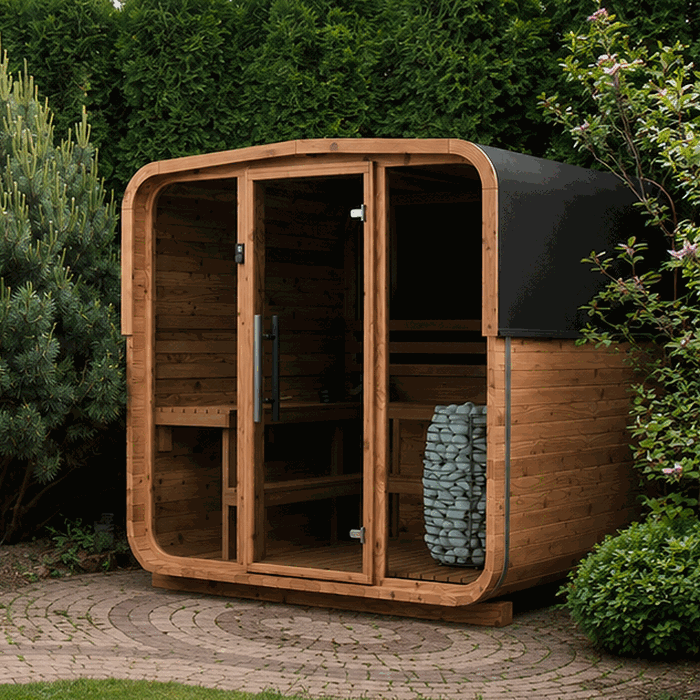
- cabin assembled fully as directed by its installation documents;
- planned heater matched to the precise electrical version delivered;
- heater fixed securely with every required clearance confirmed;
- guard installed firmly where the design includes one;
- stones inspected, washed and placed loosely in the instructed pattern;
- sensor and temperature-limiting devices fixed at their nominated locations;
- sensor wiring and power cabling protected and kept apart;
- terminal connections verified against the equipment instructions;
- earthing, isolation and protective devices examined;
- required electrical measurements performed and recorded by the electrician;
- air openings unobstructed by fittings or loose objects;
- initial heating cycle watched throughout;
- controller, operating devices and shutdown functions tested;
- users shown safe operation, isolation and the correct response to faults.
The initial heating cycle can release odours from production or materials. Ventilate as directed by the manufacturer. Shut down immediately and obtain professional assessment if there is substantial smoke, arcing, a scorching smell or repeated operation of a protective device.
Ongoing care and diagnosing faults
Inspect the heater zone for misplaced items before each session. Periodically examine the stone bed, visible wiring, fasteners, guard, vents and controls. Stones that crumble or settle too tightly can restrict airflow and strain the elements; renew and restack them as the heater instructions direct.
When a protective device operates, repeatedly switching it back on without diagnosis is unsafe. Moisture, damaged wiring, the elements, controls or connections may be responsible. The fact that the cabin still becomes warm does not eliminate the possibility of an electrical defect.
Write down when the event happened, the stage of operation, displayed codes and anything unusual. This record assists the service team and electrician. Only suitably qualified people should open enclosures, terminal compartments or controllers, and only after safe de-energisation.
Plan the sauna as part of the whole garden
A technically suitable position depends on more than cable access. Consider paths, privacy, drainage, lighting, prevailing wind and room for maintenance because each affects everyday use. An HCF 300 or LC 225 therefore belongs on the site plan with its actual access and service clearances shown.
If the project also includes a pergola, consult Selecting a bioclimatic pergola when organising the zones. Greenhouses require a different approach to heat and moisture; refer to managing greenhouse temperature and humidity and polycarbonate insulation behaviour.
For ideas that connect the whole outdoor space, browse garden trends. Compare the building categories under Greenhouses and conservatories and Garden buildings . The broader technical library is available through Useful information.
Common questions
Can an existing household power point supply my electric sauna heater?
Its appearance alone cannot answer that question. Many heaters call for another supply arrangement and a purpose-designed circuit. Check the relevant rating plate and wiring drawing, then have a qualified electrician assess the existing wiring and protection even for a lower-output unit.
What determines the appropriate heater capacity?
Use the room’s internal volume and construction together. The calculation also needs to account for glazing, less-insulated surfaces, geometry and the heater manufacturer’s method. Neither barrel length nor seating capacity is a sufficient basis by itself.
Do I order the heater before consulting an electrician?
First identify a likely model and obtain its complete technical information. Delay purchase until the available supply can support it and every required system component is known. This reduces the risk of selecting the wrong electrical version or facing unplanned alterations.
Does advertised wattage determine the circuit breaker?
No. Design also relies on voltage, phase arrangement, rated current, connection configuration, cable conditions and manufacturer instructions. The electrician selects the conductors and protection together while accounting for the existing electrical system.
Are controls incorporated into every sauna heater?
No. Operating controls are integral on some models; others rely on external controls, sensors and sometimes a separate switching unit. Establish the compatible set and confirm what the package contains before ordering.
Can I position the temperature sensor where it gives my preferred reading?
No. Its prescribed location comes from the manufacturer. Choosing another position changes regulation and may interfere with over-temperature shutdown. Relocate a sensor only where the approved equipment documentation permits it.
Is a home-automation relay suitable for switching the heater?
Only when the sauna system expressly provides a compatible interface and all associated safeguards remain effective. A general-purpose relay cannot stand in for the specified controller, interlocks or supervision of remote starting.
What if a protective device operates during warm-up?
Turn the heater off rather than resetting the device repeatedly. Note the operating stage and any displayed message. An electrician or authorised service technician should examine the terminals, cable, protective equipment, elements and possible moisture ingress.
Is electrical planning relevant to a wood-fired sauna?
Yes, whenever the sauna includes lighting, power points, controls or another electrical load. The heater itself adds no electrical demand, but exterior cabling and protection against moisture still matter. Separately check the wood heater’s local installation, fire-safety and flue requirements.
May electrical preparation happen before the cabin is built?
It may be practical to install underground cable, conduits and some switchboard equipment early. Confirm the final locations of the heater, controls, sensors and connection points against the completed cabin. Connect and test the equipment only after the full system is assembled.
What records are worth retaining?
Retain the invoice and confirmation, rating-plate information, user and installation manuals, wiring drawing, test documentation, controller settings and photographs of hidden cable paths. They support maintenance, identification of replacement parts and later modifications.
Who decides the final connection arrangement?
Equipment requirements come from the heater manufacturer, while the sauna supplier provides information about the product and room. The electrician considers those documents alongside the existing installation and conditions at the site. Generic internet guidance cannot determine the completed connection.
