



COMPARE
The Long View: How Durability Shapes Ownership Costs
How economical a greenhouse, pergola or outdoor sauna proves over years cannot be read from its price tag. Construction, siting, foundations, glazing, assembly, maintenance and repairability all contribute.
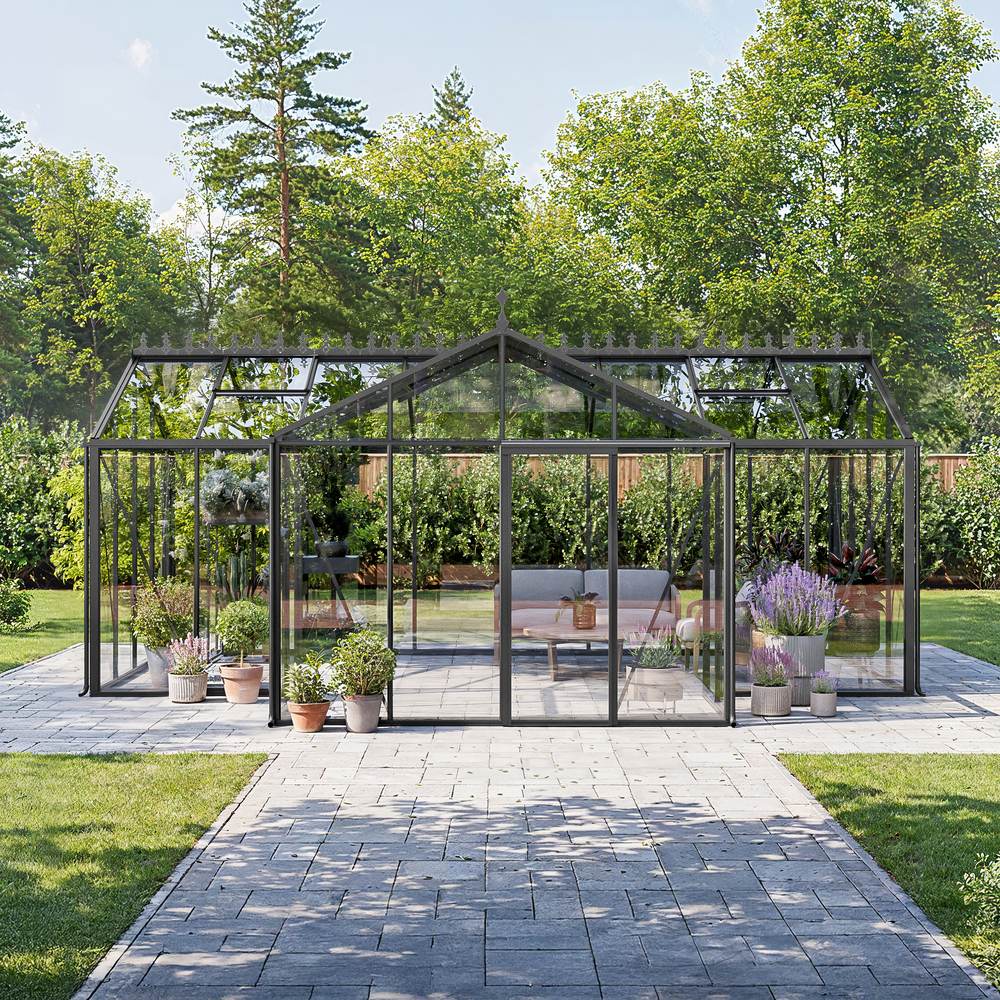
Price is a natural starting point when choosing a greenhouse, pergola or outdoor sauna. Also budget for preparing the site, foundations, transport, assembly, upkeep, repairs and eventual component replacement.
Assess the work and expenditure required throughout your intended ownership, alongside the use you will obtain. This lifecycle approach, often called total cost of ownership, separates apparent bargains from lasting value.
Look beyond the purchase figure
The purchase figure starts the ownership calculation. Similar-sized greenhouses may incur quite different later costs: early realignment, replacement glazing or corrosion treatment for one, versus longer reliable use from a dearer, correctly installed structure.
Nor is the highest-priced option necessarily the best value. Even a well-made model can generate avoidable expense when it is wrong for the site. Conversely, a straightforward structure may be entirely sensible when it matches the planned use, property and realistic maintenance commitment.
Compare expenditure per useful year, rather than the purchase cost per square metre alone. Available building forms appear under Greenhouse and conservatory designs. For help at the beginning of the decision process, visit Advice and information for an overview.
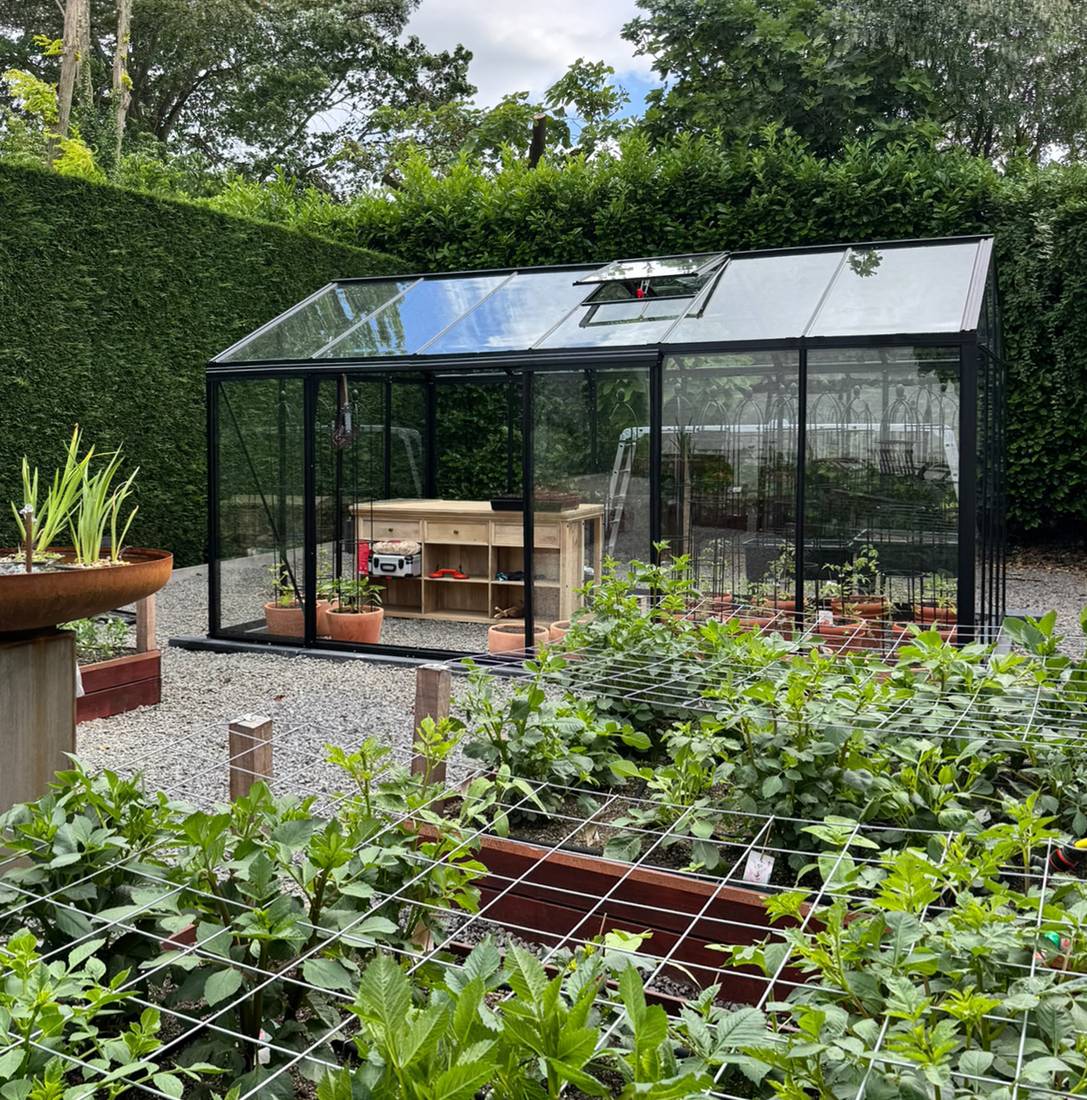
Building a complete ownership-cost estimate
Include more than the readily visible charges. Work and services outside the product package can materially alter the total. A straightforward comparison table is enough initially, provided every quotation is assessed against identical categories.
| Expense category | Items to investigate | Likely effect over time |
|---|---|---|
| Initial purchase | Frame, glazing, doors, ventilation and accessories | Establishes the starting specification |
| Project planning | Site review, approval enquiries and foundation design | Helps prevent revisions and halted work |
| Delivery logistics | Freight, site access, unloading and interim storage | Limits exposure to damage and delays |
| Installation | Owner assembly, trades, equipment and helping hands | Influences alignment, sealing and correct operation |
| Ongoing operation | Washing, lubrication, adjustment and consumable items | Preserves usability and surface condition |
| Remedial work | Replacement components, panels, seals and fasteners | Supports a longer economic working life |
| Downtime | Lost cultivation time or an inaccessible outdoor space | Lowers the value received in practice |
Select a credible timeframe and record every assumption behind it. A single-year comparison says little about a permanently installed structure. However, avoid treating any lifespan as assured until the location, servicing demands and prospects for obtaining replacement components have been considered.
Order conditions and delivery arrangements should appear in the estimate too. Consult Purchasing and delivery, Placing an order and Warranty information to keep the different cost types separate.
Where durable construction adds everyday value
Durability is broader than simply withstanding rainfall. It concerns dependable performance in the conditions the structure will actually face. Relevant features include material resilience, deliberate water drainage, secure joints, appropriate glazing, sound anchorage and access for servicing or replacing components that wear.
Reducing disruptive replacement work
Robust construction makes premature renewal of whole surfaces or structural assemblies less likely. Routine attention is still required, but it becomes easier to anticipate and budget. Planned minor work is ordinarily more economical than a sequence of urgent repairs after failures.
Separate ordinary wear from an underlying design problem. Gaskets, hinges, rollers and other frequently operated parts can eventually call for attention. If these components are reachable and can be renewed individually, routine wear need not develop into extensive reconstruction.
Spreading foundation and installation expenditure
Full site preparation, foundation work and installation are generally undertaken once. A structure that serves for longer spreads those outlays across additional years. Where an unsuitable building is replaced early, some or all of the same preparatory work may have to be funded again.
Pergolas illustrate this relationship particularly well. A foundation planned for the project helps maintain geometry and transfers loads appropriately. Read the Foundation planning guide for pergolas for the main considerations. Final requirements still depend on the chosen model, the ground and the individual location.
Keeping the structure available
A greenhouse earns its value during cultivation periods. Problems with its openings, airflow or glazing can put plants at risk and interrupt regular tasks. Our information about controlling temperature and humidity under glass explains the importance of an enclosure that remains dependable and operable.
The principle also applies to pergolas and saunas. When either remains ready for use, it provides recurring leisure value. Paying more initially achieves little if awkward access, onerous upkeep or repeated damage leaves the structure unavailable for extended periods.
Compare maintenance systems, not material labels
A material name alone—aluminium, timber, glass or polycarbonate—does not establish quality. Consider the grade and finish, how components join and drain, their contact surfaces and upkeep requirements. Assess maintainability across the whole system.
Aluminium avoids the treatment regime of bare timber, yet describing it as completely maintenance-free would be inaccurate. Clear accumulated grime, prevent blocked drainage and examine joints periodically. See our article on aluminium greenhouse care for a practical maintenance method.
With timber, examine the finish, moisture movement and protection created by the design itself. Outdoor saunas add repeated changes in heat and humidity. Look beyond their silhouette to ventilation, cleaning, access and intended operation. Different approaches are illustrated by the Elma S outdoor sauna, HC150 Thermowood barrel sauna and HC 225 Thermowood barrel sauna models. Confirm the definitive specifications on the page for the particular model.
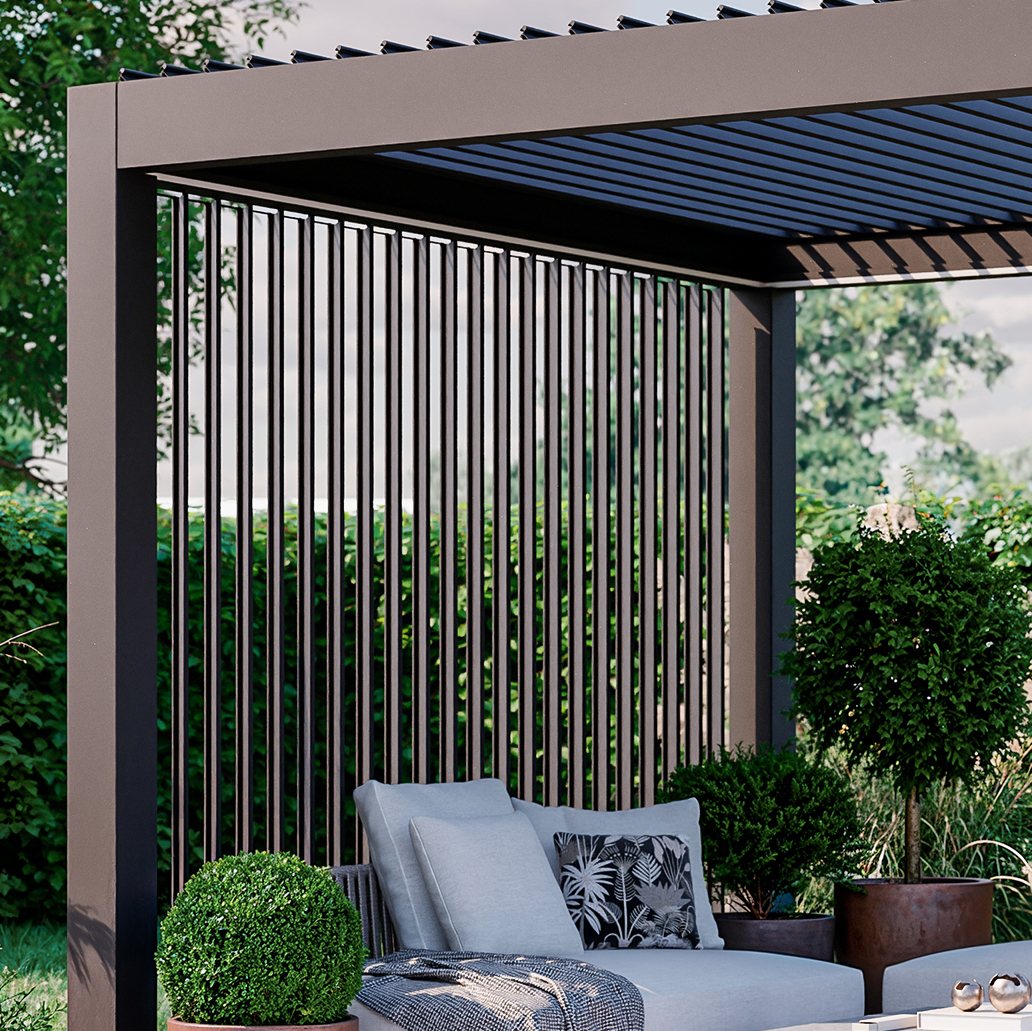
Roof and glazing choices contribute to lifecycle expense
Glazed walls and roof surfaces affect daylight, thermal performance, structural weight, cleaning and the effort involved in repairs. The intended use should determine the choice. Priorities for a greenhouse against a wall can differ from those of a freestanding orangery; pergolas place greater emphasis on shade, rainwater control and operation.
Glass remains clear and dimensionally stable, though breakage may require specialist replacement. Lighter polycarbonate responds differently to heat and mechanical stress. Compare the panel construction, edge fixing and installation as well as the material. See Choosing greenhouse polycarbonate for guidance on thickness, cellular construction and insulating behaviour.
Questions for any roof or glazing system
- What secures each pane or sheet in position?
- Is one damaged bay replaceable without disturbing the others?
- Is there a safe method for reaching roof surfaces during inspection and cleaning?
- What paths carry away rainwater and condensation?
- How much surrounding construction must be removed to renew a component?
- Can the correct replacement components be identified?
Pergola ownership costs also depend on what the roof does. Compare classic and bioclimatic pergola designs then review glass roofs and bioclimatic pergolas to consider how operation and roof mechanisms may influence later expenditure.
Fit the structure to the property
Long service begins with a design appropriate for its surroundings. Bigger does not necessarily mean more useful: excess size may interrupt movement, make upkeep awkward or cast lasting shade across the garden. An undersized choice can instead prompt an early extension or complete replacement.
Map seasonal sunlight, exposed faces, roof runoff, nearby buildings, trees, boundaries, access routes and future landscaping. A pergola plan must also settle whether attachment to the home is desirable. The article Attached versus freestanding pergolas examines that choice, while the Guide to pergola sizing helps allocate the available area.
Appearance contributes to enduring value as well. If traditional architecture is likely to remain your preference, make it part of the brief. Explore Victorian-style greenhouse design and orangery design and planning to see how use, form and garden character can be considered together.
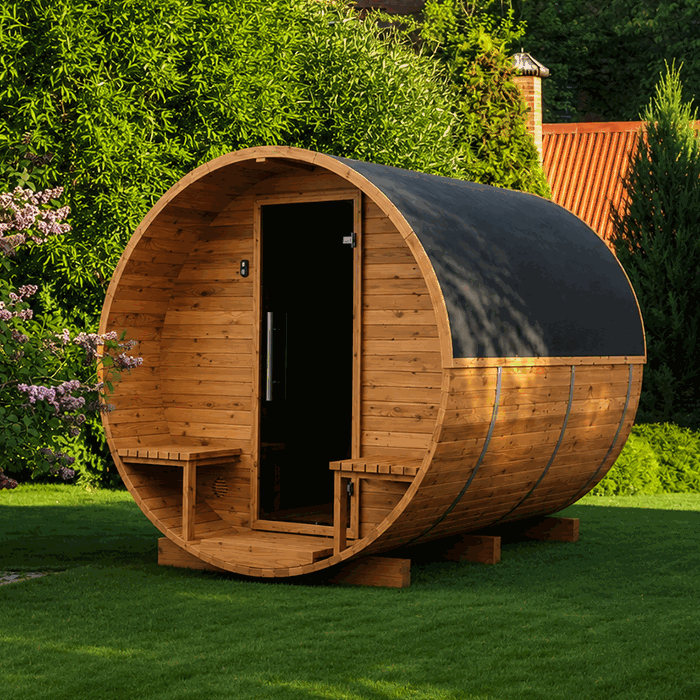
Durability starts below the structure
A well-built product cannot perform as intended without a suitable base. Ground movement, poor runoff or incorrect positioning can strain the frame, doors and glazing. Rectifying those conditions later will usually cost more than investigating and preparing the site properly.
- Clarify the purpose: List the crops, occupancy needs, seasons of use and access routes required.
- Record the site: Measure its footprint, levels, fall, clearances and delivery access.
- Investigate the ground: Have bearing capacity, drainage and any relevant frost exposure assessed appropriately.
- Select the base: Match the foundation solution to both the model and site conditions.
- Consult local authorities: Ask the relevant state or territory and council which planning, building, boundary and project-specific controls must be checked.
- Map required services: Set electricity, water and drainage routes before construction where those services are proposed.
Approval status cannot be assumed from the product type alone. Begin with Local approval checks for greenhouses and pergolas then confirm the current requirements for the actual address, design and intended use.
Protecting the purchase through delivery and installation
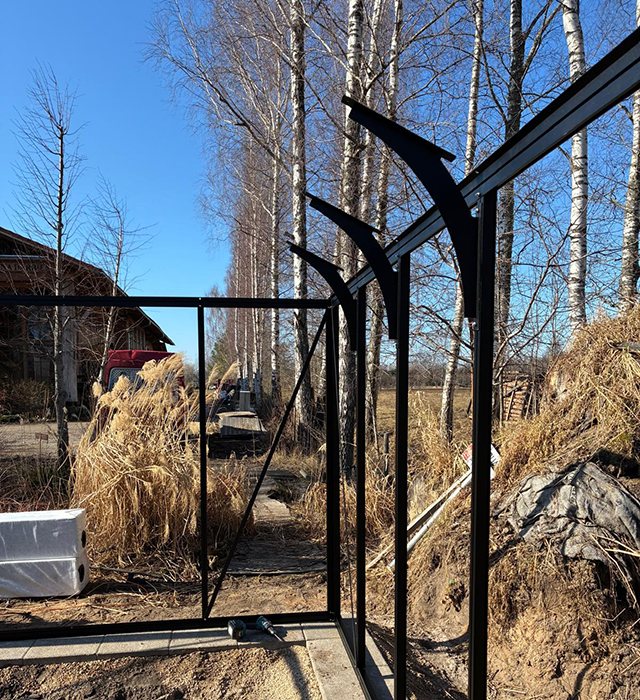
Freight damage, damp or insecure storage and mistakes during assembly can shorten working life before the first use. Prepare the access route, unloading area, dry holding space and checking process. Long frame sections, glazing and roofing pieces all require controlled handling.
Check delivered components promptly against the paperwork. Identify them and arrange protected storage before removing packaging. Photograph damage or discrepancies and report them through the specified channel. For help, visit Contact page to send an enquiry.
Follow the specified order of work and continually check squareness, height, level and fasteners. Unplanned modifications may interfere with structural load transfer, runoff or component fit. Tighten hardware according to the instructions; use alternative holes or fixings only after their suitability has been established.
Simple maintenance can contain long-term expense
An effective care plan need not be elaborate. Brief checks carried out and recorded at sensible intervals usually achieve more than rare, intensive sessions. Early recognition of a change is the central aim.
Routine condition check
- Have visible caps, covers and fasteners stayed in their intended positions?
- Are doors, windows and louvres moving freely, without new resistance?
- Do the glazing, edge restraints and seals remain intact?
- Are gutters, vents and discharge routes free of obstructions?
- Can you see distortion, rubbing points or evidence associated with an unusual sound?
Scheduled washing
Deposits can trap dampness, impede runoff and add strain to mechanisms. Choose cleaning methods compatible with every material present. Harsh chemicals and abrasive tools may harm coatings or transparent panels. Use a safe system for elevated and roof work, and engage an appropriate professional wherever safe access cannot be achieved.
Checks after an incident
Inspect again after severe weather, impact, nearby building work or noticeable settlement. Remove loads only by a safe, intended method. Consult the particular model's documentation for permitted loads and prescribed actions.
Ease of repair deserves equal attention
No structure escapes every possible incident. Ask how isolated damage would be repaired: replacing one module may cost less than replacing a large assembly in a supposedly tougher system because of a small defect.
Keep assembly documents, ensure components can be identified and check access to individual glazing panels, seals and fittings. Structural, electrical or safety-related repairs demand appropriate expertise. Browse outdoor sauna models under Sauna.
Making an equal comparison between quotations
Build a comparison matrix using equivalent information from both suppliers. Reviews offer practical observations, but cannot replace technical assessment. Another useful perspective is Reviews of our greenhouses alongside the relevant product information.
| Comparison prompt | Offer A | Offer B |
|---|---|---|
| Is every part of the proposed structure properly specified? | Record | Record |
| Does the scope include doors, ventilation and all glazing? | Record | Record |
| Which foundations and site preparations will be necessary? | Record | Record |
| Which freight and unloading tasks are included? | Record | Record |
| Who is responsible for installation and the final checks? | Record | Record |
| What continuing maintenance will be required? | Record | Record |
| Are separate components accessible for repair or renewal? | Record | Record |
| What information is still uncertain? | Record | Record |
Compare the totals only after completing this exercise. A quotation can appear cheaper simply because foundation, freight or installation is omitted and charged later. An unknown amount is not zero; list it openly as a financial risk that still needs clarification.
Savings that often prove costly
- Choosing barely enough space: Premature enlargement or replacement may exceed the cost of planning an adequate size initially.
- Accepting a poor location: Restricted access, inadequate runoff or deep shade can diminish practical use.
- Treating foundations as an afterthought: Errors at the base are transferred through the structure above.
- Judging inclusions from headings alone: Suppliers may define glazing, accessories and installation work in different ways.
- Budgeting nothing for upkeep: Regular cleaning and observation benefit even materials known for resilience.
- Hiding a defect temporarily: Prompt, competent rectification generally costs less than allowing damage to spread.
- Discounting visual appeal: An unwanted design may be removed early even while it remains technically serviceable.
Questions owners commonly ask
Will the most durable greenhouse necessarily cost least over time?
No. It also has to match the land, its planned purpose and the care the owner can realistically provide. Excess capacity or poor suitability can outweigh excellent materials. Durability contributes strongly to value, but does not determine it alone.
What ownership period should the calculation cover?
Compare short, medium and long ownership periods without assuming an unsupported lifespan. These scenarios show when lower upkeep or fewer replacements could compensate for a higher initial price.
Does aluminium require no attention?
It still needs care. Aluminium generally demands little maintenance, but periodic observation and cleaning remain appropriate. The drainage, joints, glazed areas and mechanisms require attention regardless of the material used for the frame.
Does glass always provide the longest-lasting infill?
No single answer applies. Performance varies with the glass specification, retaining system, setting, exposure and scope for replacing a damaged section. Polycarbonate brings a different balance of qualities. Judge the entire glazing assembly rather than choosing on its material label.
Is owner assembly a way to reduce expenditure?
Yes, where owner assembly is intended and you have the skills, time, tools and helpers. Errors in foundations, alignment or glazing can outweigh the saving. Electrical and other safety-critical work requires suitable expertise.
Why treat delivery as an ownership expense?
The access route, unloading operation, delivery check and temporary storage all consume time or other resources. Poorly planned handling also increases the prospect of delay and breakage. For broader cross-border considerations, read Guidance for international greenhouse deliveries before arranging the consignment.
Can a warranty be treated as proof of product lifespan?
No. A commercial warranty sets out defined promises, conditions and exclusions; it does not guarantee a particular technical lifespan. Read the document applying to the chosen product. Any commercial warranty operates alongside, and does not replace, applicable rights under Australian Consumer Law.
Does appearance belong in a long-range assessment?
Yes. A permanent garden building influences the setting of both the land and the home. A form that continues to feel appropriate is more likely to be used and cared for over many years. Visual appeal cannot, however, compensate for technical unsuitability.
What records are worth retaining?
File the quotation, confirmation, freight paperwork, assembly manual, foundation details, warranty documentation, construction photographs and records of maintenance or repairs. Keep the exact model designation and useful component references with them so the structure can be identified later.
How do I start when several Bloomcabin models could work?
Define your site, intended use and space. Compare layouts, access, glazing, ventilation, assembly and maintenance. Resolve outstanding technical or commercial questions before ordering.
Choose something you can use and maintain well
Good whole-of-life value combines a reasonable purchase outlay with appropriate site preparation, competent installation and achievable maintenance. No single material claim creates durability. It develops through the interaction of form, foundation, enclosure, joints, drainage, operation and the ability to carry out repairs.
Choose a realistic ownership period, account for associated expenses and assess access for inspection, cleaning, servicing and repairs. These considerations reveal lasting usefulness beyond the lowest quoted price.
