



PREPARATION
Keep your order protected until assembly
Careful interim storage prevents glass, aluminium, timber, seals and fittings from becoming damp, distorted or misplaced. This guide explains how to ready the storage location, accept the consignment and brief the assembly crew.
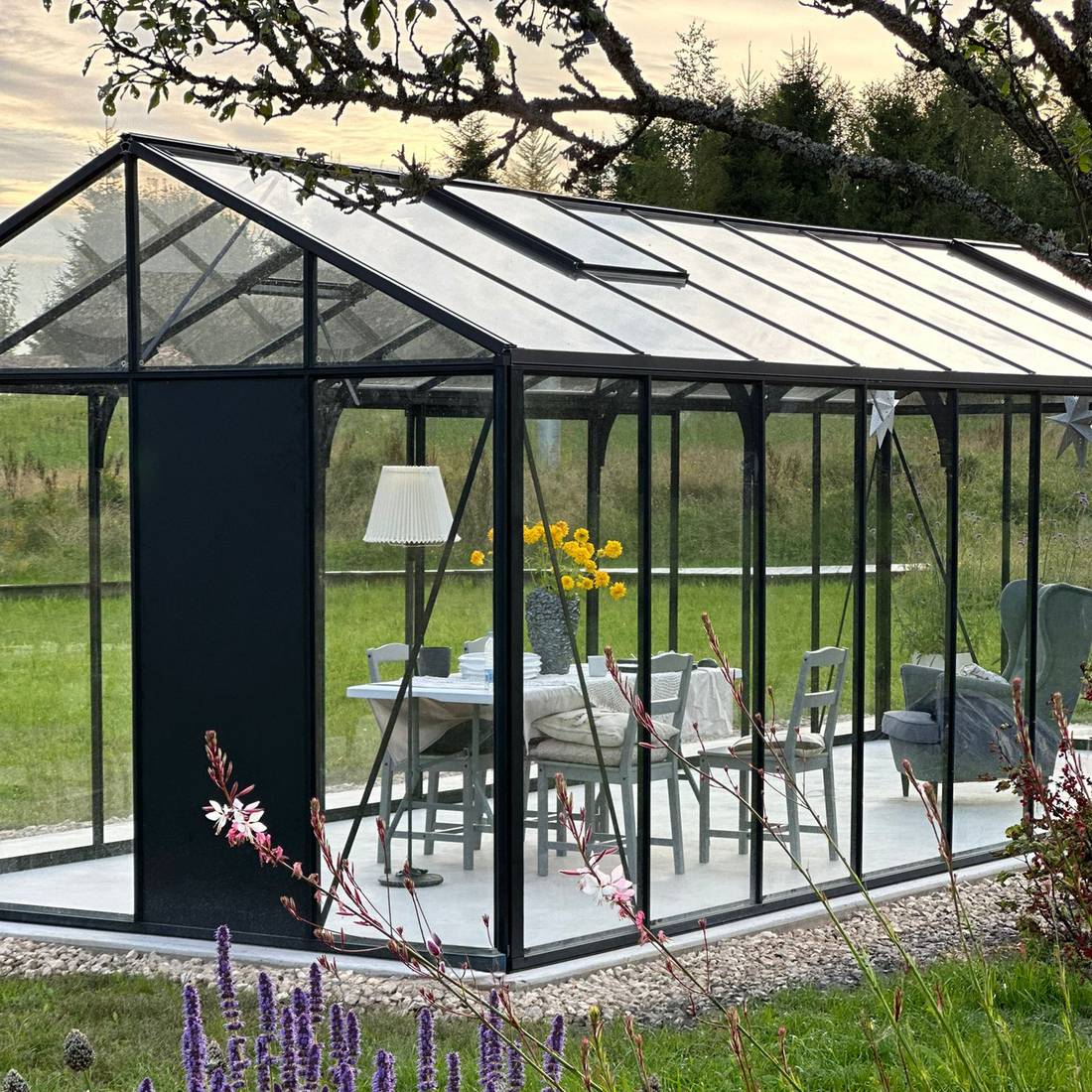
Installation might take place days after arrival or, depending on the project, considerably later. Until then, parts for a greenhouse, pergola or outdoor sauna lack the protection of the finished structure. Handle every package as product material, not general stores, and avoid spreading the order around the worksite.
Plan the temporary holding area before the consignment arrives. It needs a firm, level base, separation from rain and ground damp, an orderly package layout and prompt delivery checks. Product labels, consignment paperwork and assembly instructions override this general guidance. For help with an order or delivery, use Shopping & delivery, How to order and Contact Bloomcabin .
Pre-installation storage checklist
- Put the assembly instructions and delivery paperwork within reach before unloading.
- Set aside a level, clean, sufficiently large storage area.
- Keep components clear of soil, standing water and splashback.
- Keep access, unloading routes and manoeuvring space clear.
- Do not load delicate packages without approved stacking clearance.
- Check delivered items, package numbers and visible condition on arrival.
- Photograph and record damage or irregularities in writing.
- Leave labels, protective films and orientation marks in place.
- Give glass, timber, aluminium and small components material-appropriate storage.
- Allow ventilation without leaving the shipment exposed to weather.
- Keep foundation materials separate from product packages.
- Limit access to instructed people and document handover.
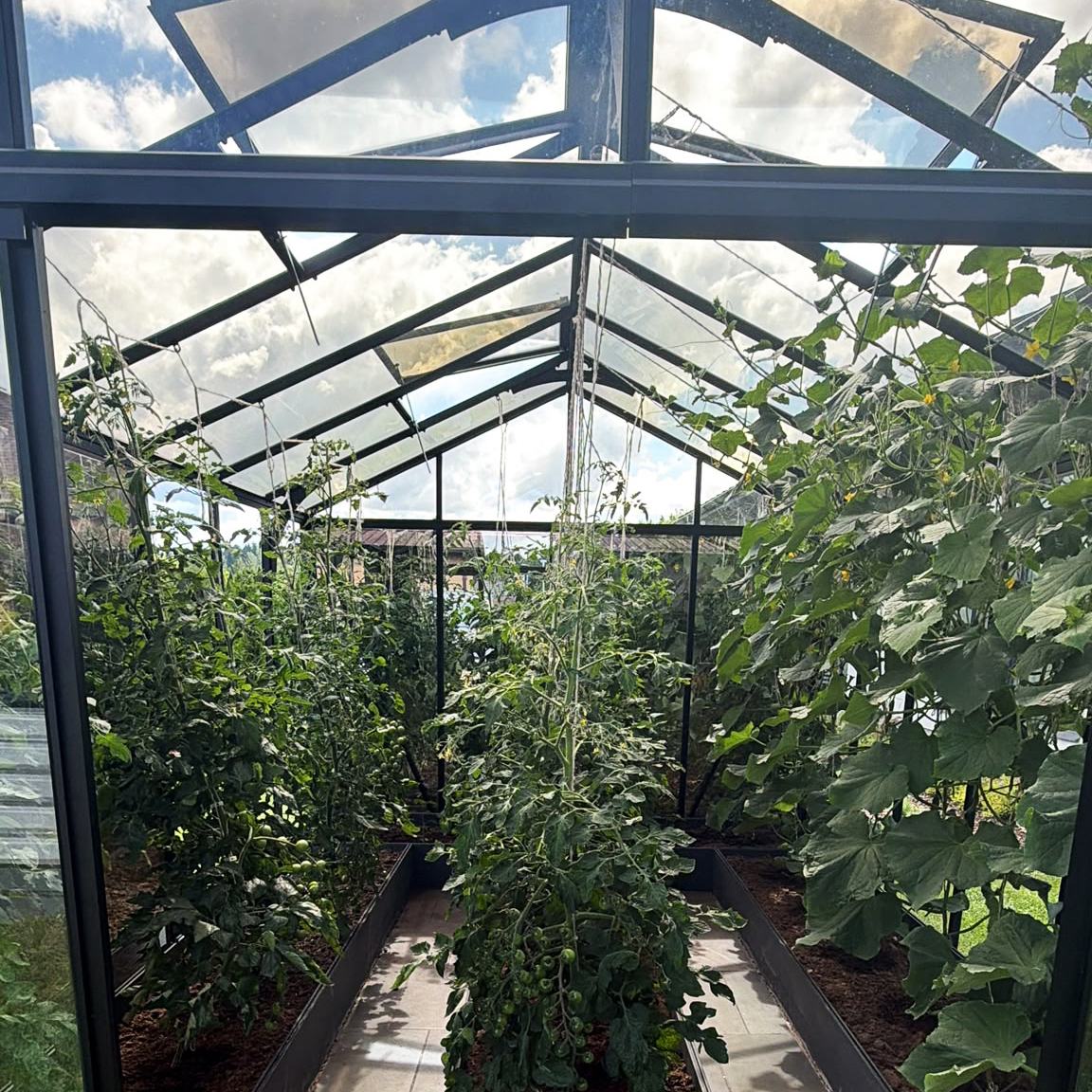
1. Set up the storage area before delivery
Select the holding area before the truck reaches the site. Map the route from the drop-off point and remove obstacles in advance. Tight corners, steps, unstable ground, restricted overhead clearance and parked vehicles may otherwise require repeated repositioning. Extra handling creates more opportunities for impact damage, surface scratches and package confusion.
Provide sufficient space for long bundles to be supported throughout and for glazing units to remain in the position shown on their markings. Leave a safe aisle as well. Labels should be readable without first having to shift a heavy package.
Storage-area requirements
| Criterion | Practical approach |
|---|---|
| Surface | Level, load-bearing, clean and free from sharp building debris |
| Ground clearance | Use stable supports and prevent sagging |
| Weather protection | Protect from rain, snow, persistent wetness and strong wind |
| Ventilation | Permit airflow; do not seal packages in wet plastic |
| Access | Restricted to authorised people, not a general site passage |
| Organisation | Keep package numbers visible; mark assembly-stage areas |
Lockable indoor storage can work well, although enclosure alone does not make a room suitable. Poorly aired basements, damp unfinished buildings and areas undergoing plaster or screed work may hold substantial humidity. Nor does a loose tarpaulin make an exposed area safe: gusts may lift it, wind-driven rain can enter at the sides, and movement can scuff coated finishes.
2. Receive and inspect delivery promptly
Have a nominated person present to examine the consignment as soon as it arrives. Check the package count against the delivery papers without taking all the wrapping apart. Note crushed corners, split film, saturated cartons, shifted glazing, absent packages and any other visible transport damage immediately.
Signing for the order is not a substitute for recording its condition. Photograph the complete load where it was unloaded, followed by close views of each concern from several directions. Include readable labels and package numbers in at least one image. Use the advised transport-damage reporting process and review Warranty and claims handling.
Information to document
- Delivery date and approximate arrival time
- Name of the person accepting delivery
- Number and identification of received packages
- Overall view before packages are moved
- Condition of cartons, film, crates, pallets and edge protection
- Location and type of visible damage
- Unusual moisture or signs of movement
- Differences between documents and delivered packages
- Immediate action taken, such as dry relocation
Retain damaged wrapping until you know whether it will be required for an assessment. Disturb an affected area only as much as needed to stop further harm or remove an immediate danger.
3. Retain labels, orientation and packaging condition
Handling symbols, arrows, package identifiers, balance-point marks and words such as “this side up”, “fragile” or “do not stack” all guide storage. Never rotate a package merely to fit the available space. If labels are removed or bundles cut open, identification becomes harder and components may be unpacked out of sequence.
Limit opening to what the required arrival inspection demands. Before unwrapping any package, capture its original state in photographs and keep every identifier. Afterwards, close it again in a way that preserves the intended protection and airflow as closely as practicable. Adhesive tape must not touch painted, powder-coated, glazed or exposed timber faces.
4. Safeguard glass, aluminium, timber, seals and fittings
Moisture, concentrated pressure, temperature shifts and poor support affect each material differently. Consequently, no single storage arrangement will suit every item in the delivery.
Glass and glazing packages
Edges make glass especially susceptible to concentrated impacts. Follow the package markings and assembly documents whenever glazing is carried or stored. When instructions call for an upright position, brace the package against falling and place it on an appropriate support. Do not rest loose, unpacked panes against a wall or another part.
Resist placing glazing bundles horizontally simply to gain room. They must not carry profiles, tool cases or construction supplies. Choose a location away from grinding, sparks, mortar, metal swarf and busy pedestrian routes. Material guidance is also relevant when comparing glazing choices. The discussion of Polycarbonate and multiwall greenhouse sheets explains different glazing considerations.
Aluminium profiles and finished surfaces
Support lengthy aluminium profiles evenly along their run; isolated supports set far apart may encourage bending. Keep heavy loads off the bundles and lift components rather than pulling them over coarse surfaces. Grit, drilling swarf and small stones can scratch like abrasives.
Normally, surface film stays attached until the instruction manual identifies the relevant assembly stage. Do not, however, leave it exposed to strong sunlight indefinitely without product-specific approval. Follow the directions for the particular product. Later maintenance is covered in Maintaining an aluminium greenhouse .
Timber components
Choose a dry, aired position where timber is sheltered from direct exposure. Do not place it against soil, damp concrete or wet masonry. Support long pieces evenly to prevent one-sided sagging. Sealed coverings may hold existing moisture inside, whereas completely exposed storage can subject the wood to alternating wet and dry conditions.
Outdoor-sauna packages need particularly clear sorting because components for the shell, roof, interior and accessories may be used at separate stages. Consult the paperwork supplied for the exact model, including Outdoor sauna Elma S, Outdoor sauna Elma L, Barrel sauna HC150 or Barrel sauna HC 180.
Seals, fasteners and small parts
Keep screws, connectors, caps, seals and assembly aids inside their marked bags or cartons wherever practical. Put small items somewhere dry and inaccessible to people without permission. Never tip several screw types into one tub: matching-looking heads or diameters do not prove that the fasteners serve the same purpose.
Protect seals from crushing under larger packages and from needless stretching. Isolate them from sharp edges, dirt and incompatible substances. When small components must be removed for an inventory check, lay them out on a clean surface, count them and return them immediately to packaging bearing the correct position reference.
5. Manage moisture without trapping condensation
Rainfall is not the only route by which a consignment becomes damp. Condensation may appear when chilled parts encounter warmer humid air, or when temperatures fluctuate sharply beneath temporary covers. Even a cover that sheds incoming water can confine moisture already inside the package.
Regularly look for dripping water, damp patches below packages, torn covers and signs of condensation. Maintain air movement while keeping wrapping closed against gusts and wind-driven rain. Keep heaters away from the goods, and never use concentrated heat on wet timber, seals or glazing. If a package becomes wet, record its condition, transfer it to shelter, arrange a competent assessment and request instructions for that product.
Managing humidity in an assembled greenhouse is a separate subject. See the guide to Greenhouse temperature and humidity.
6. Tailor storage to the product and job
A small greenhouse, substantial orangery, wall-fixed pergola and timber sauna each require a different approach to access, package order and interim storage. Begin by confirming the product, intended location, assembly date and responsible crew. Pages covering Greenhouses and conservatories, Saunas and other useful information can support project planning.
A pergola’s configuration and location determine which packages need early access. Review Bioclimatic or classic pergola, Wall-attached versus freestanding pergolas and the Pergola size guide. The article about bioclimatic pergolas also helps define the concept early.
Large greenhouse orders need room for long profiles and glazing to be manoeuvred safely. Background and ideas are available in Victorian greenhouses and Orangeries and their planning These pages provide context but cannot replace the ordered product’s delivery paperwork or assembly instructions.
7. Separate foundation work from stored components
Foundation construction brings dust, water spray, cement slurry, metal fragments and moving site traffic. Keep product cartons away from mixing stations, excavations, formwork and cutting. Freshly poured concrete is not a storage bench. Maintain routes wide enough that wheelbarrows, machinery and building supplies never squeeze past glazing or profile bundles.
Before assembly, confirm that the dimensions, heights, level, drainage and anchoring match the specific product. For preparation, consult the Pergola foundation guide. Before building, ask the relevant state or territory authority and local council whether approvals or other site requirements apply. The Greenhouse and pergola approval guide is only an initial guide.

8. Arrange packages by assembly sequence
The most compact arrangement may still be awkward for assembly. A frame carton trapped behind roof or glazing bundles will cause repeated handling. Instead, divide the holding area into straightforward zones:
- Zone A: foundation, plinth or frame components needed first
- Zone B: load-bearing profiles and main structure
- Zone C: roof, wall or cladding components
- Zone D: doors, windows, louvres or fitout parts
- Zone E: labelled small parts, seals and accessories
Only the assembly instructions determine the correct sequence. Avoid writing on finished faces; attach separate, secure markers and keep a package register instead. Whenever a component leaves storage, record it at once or transfer it directly to the installer responsible.
9. Brief the assembly crew before work
- Assembly manual, package list and order documents are complete and available.
- The responsible contact person and access to storage are confirmed.
- Documented issues have been communicated before work starts.
- Packages are legibly marked and accessible in assembly order.
- Glass and long-item packages remain secure in their intended position.
- Small components remain dry, sealed and unmistakably assigned.
- Foundation and installation area were checked separately and kept clear.
- Transport routes are clear of debris, plants, vehicles and trip hazards.
- Required local arrangements are complete before installation begins.
- Discard packing only once each part has been checked and assigned.

Common temporary-storage mistakes
- Direct ground storage: Damp from below and small irregularities may harm wrapping and parts.
- Fully sealed tarp cover: Condensation may remain inside, while wind can turn the cover into a damaging load.
- Unchecked stacking: The packages underneath may suffer even when those above appear lightweight.
- Laying glass flat: Changing the stated orientation is not safe space saving.
- Removing protective film early: Visible surfaces then lack protection during transport and assembly.
- Mixing hardware: Lookalike fasteners can then be allocated to the wrong position.
- Storage in site traffic: Impacts, splashes and unauthorised access often go unnoticed.
- Late inspection: After repeated handling, original delivery condition is difficult to establish.
- Improvised repairs: Tape, cleaning agents or local heat can cause additional damage.
Frequently asked questions
Can I store my Bloomcabin product outdoors before installation?
Only if the instructions for that product allow outdoor storage and you have prepared effective weather protection. Grass covered by a tarpaulin is inadequate. Provide firm, level support above ground damp, shelter from rainfall and wind, and enough airflow. Give glazing, timber and small-component packages additional care. If suitability is uncertain, choose a dry indoor area whose conditions can be monitored.
Does every package need opening when it arrives?
No. Start by confirming the count, identifiers and outside condition. Unpack an item only when the delivery inspection procedure calls for it or a recorded concern needs investigation. Opening everything can disrupt the component order and reduce protection in transit packaging. Record the contents and method of reclosing whenever a package is opened.
How long may packages remain in temporary storage?
No single limit suits every delivery. The acceptable period depends on its materials, wrapping, product type, storage conditions and manufacturer’s directions. Minimise the delay and recheck packages routinely. If assembly moves well beyond the original schedule, obtain instructions for the particular product rather than treating shipping packaging as suitable for indefinite storage.
May greenhouse or pergola packages be stacked?
Stack only when the accompanying documents or package marks specifically permit it. A carton’s shape and apparent rigidity are not evidence that it can carry another load. Pressure and isolated support may harm long profiles, glazing or finished faces. Without clear permission, separate the packages and support each one across its required length.
How should I respond when packaging gets wet?
Take photographs, mark the affected package and transfer it to cover without making an unsafe change to its marked position. Adding sealed plastic may confine the damp, so do not wrap it tightly. Establish the correct procedure before opening it or applying any direct heat. Contact Bloomcabin promptly if the contents are soaked or damage can be seen.
May I place glass packages horizontally to make room?
Only when a specific instruction expressly permits that position. Preserve all marked transport and storage directions. Suitable supports must steady the glass and guard against falls, edge strikes and items resting above it. Turning a package flat without authorisation may introduce forces that neither its packaging nor the panes were designed to withstand.
May protective film come off before assembly?
Wait until the manual’s nominated assembly stage before peeling film away. Early removal leaves the finish vulnerable to scratching, dust, mortar spray and contact with tools. At the same time, do not keep film under intense sunlight beyond any product-specific limit. The relevant product instructions, rather than one general rule, determine the timing.
What is the right place for screws and fittings?
Use a dry, enclosed location with unambiguous labels. Retain the original marked bags and boxes whenever possible. A protected container or dedicated cabinet works if every item remains tied to its original reference. Never leave accessories loose among profile bundles or exposed around an active worksite.
What happens if the foundation is incomplete when delivery arrives?
Set up an independent holding area where the consignment will not obstruct foundation activity. Avoid shifting packages repeatedly around excavations, concrete pours and formwork. Reassess whether the anticipated delay and future access are still manageable. Assembly should wait until the foundation and all location-specific project conditions have been checked.
Who should access the stored delivery?
Restrict entry to nominated people who have been briefed on fragile packages, safe movement and the storage plan. Keep children, visitors, pets and trades not involved in the task away. Assign authority for taking components, opening wrapping and relocating packages. This creates a clear record of when a package changed and why.
Which documents belong with the delivery?
File the order confirmation, delivery papers, package register, assembly manual, receipt photographs, damage records and relevant messages together. Keep digital copies so worksite papers are not the only record. Company and service details appear under About us; use direct contact for project-specific questions.
Final readiness check
By assembly day, every package should be dry, secured, documented and reachable in a practical sequence. Inspect the wrapping, identifiers, glazing position, profile supports, timber bundles and small components again. Assess the foundation, assembly space and access routes separately from the product holding area.
Postpone assembly if important packages are absent, damage has not been resolved or other work continues to interfere with the area. A concise final check avoids hurried rearrangement and keeps vulnerable components protected until the completed structure can secure them.
