



Pergola Planning: Wall-Mounted or Freestanding?
Use your patio layout, connection to the home and outdoor routine to choose between a wall-mounted pergola and an independent structure.
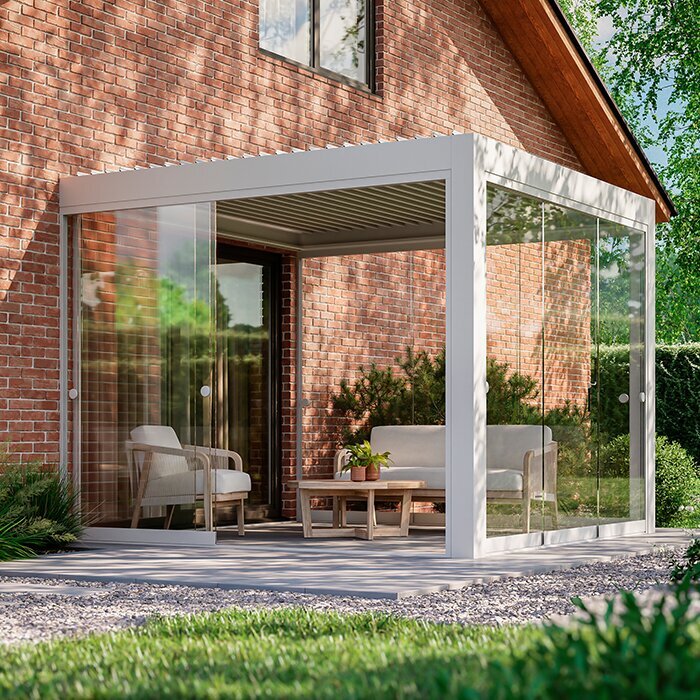
A pergola plan begins with a question about location: should the frame meet the home, or should it define a destination elsewhere on the property?
Either format can add shade, organize an outdoor area and make a patio or garden more inviting. The useful difference lies in how each arrangement works with the building, available space and daily routine.
A photograph cannot show how a structure will affect your doors, views or movement through the yard. Because wind and snow conditions vary across Canada, the final design should also be assessed for its specific site.
The Bloomcabin collection supports either layout. Select the Bloomcabin Pergola when the structure will stand independently, or the Bloomcabin Wall-Mounted Pergola when the design will meet an exterior wall. For shoppers who also want adjustable comfort, another model to explore is the Bloomcabin Bioclimatic Pergola.
For broader planning help, open An Aluminum Pergola Planning Guide for Canadian Homes. To examine roof operation and comfort as a separate choice, see Classic or Bioclimatic Pergola: Comparing the Experience as a companion comparison.
How does mounting change the pergola plan?
The central contrast reaches beyond frame construction. Consider the way each option engages with the home.
A wall-mounted model connects to the exterior wall and visually continues the patio from the building. A freestanding frame remains independent, so its location can be planned with fewer ties to the façade.
A useful rule of thumb:
- Choose a wall-mounted pergola when the useful patio area begins at the house and a cohesive appearance is the goal.
- Choose a freestanding pergola when the preferred sitting area is elsewhere or the layout needs more flexibility.
Why choose the wall-mounted layout?
This format suits a patio that begins immediately outside the home, particularly when the outdoor area should feel closely connected to the adjoining room.
Linking the structure visually with the façade can make the patio appear intentional and complete. It also keeps outdoor dining, relaxing or hosting close to the doors used throughout the day.
Consider the wall-mounted format when:
- the main patio follows the side of the home;
- a unified building-and-patio appearance matters;
- the pergola should complement existing architectural lines;
- you want to give the area beside the building a clear boundary;
- outdoor activity begins immediately outside an interior room.
Where the architecture and patio should form a cohesive composition, review the Bloomcabin Wall-Mounted Pergola first.
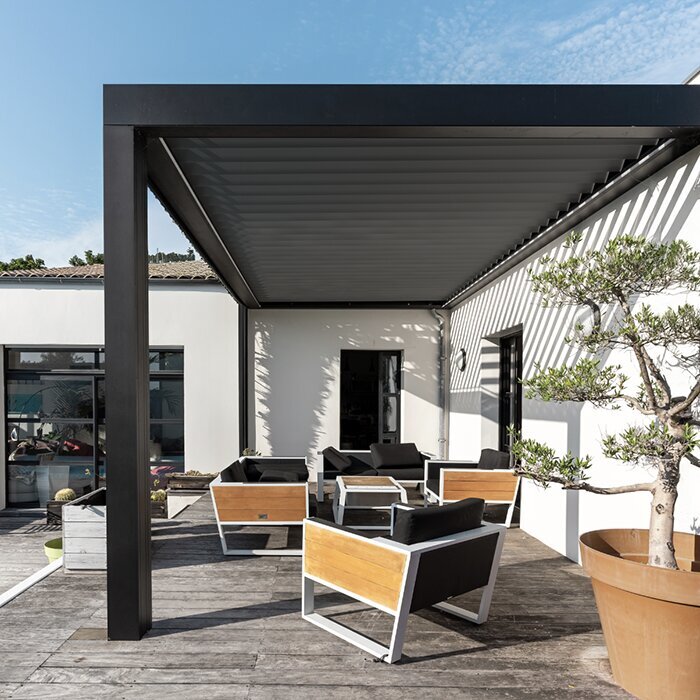
Why choose an independent pergola?
A self-contained frame lets the best outdoor location guide the plan instead of requiring the house wall to determine it. This can be valuable where the preferred view, seating area or patio arrangement lies elsewhere.
Use it to establish a lounge, dining space or garden retreat with its own character, whether on a broad patio or in another prepared part of the yard.
Consider the freestanding format when:
- you need more choice over the structure’s position;
- the available patio cannot accommodate a suitable wall connection;
- a distinct place for outdoor activities is part of the plan;
- the frame should not follow the building line;
- you want the pergola to give an open yard a clearly defined zone.
For this kind of outdoor plan, explore the Bloomcabin Pergola range.
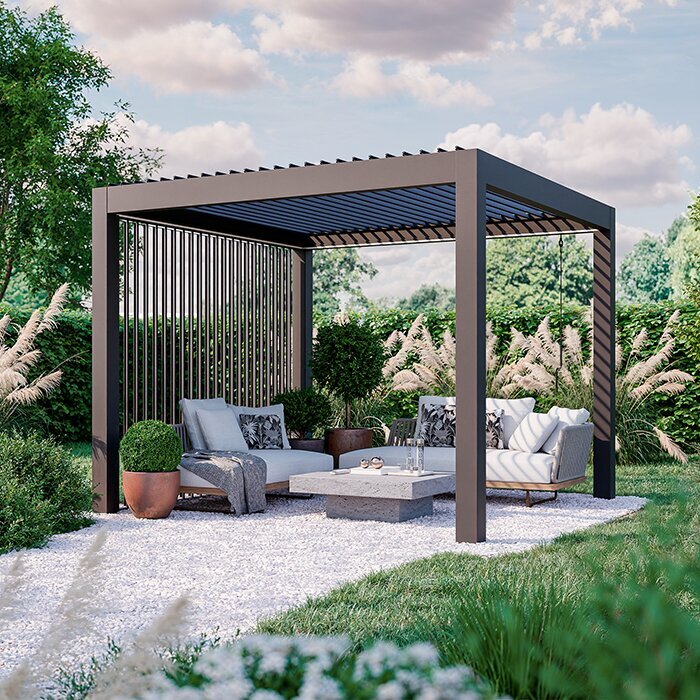
How should the pergola complement the property?
Appearance depends on context rather than a universally superior format. Proportion, position and the relationship with the home determine whether the finished arrangement feels balanced.
An attached line can make the patio feel closely woven into the architecture. This works well when the exterior wall and outdoor area should be read together.
An independent frame can become a focal point away from the façade. On a generous site, it can organize furniture and activity without making the building the centre of the arrangement.
Instead of judging either style in isolation, picture its scale and position within the complete property.
Which arrangement supports your routine?
Follow the way people already move through the space.
A wall-mounted model can be convenient when meals and everyday activities flow through nearby doors. Keeping the sheltered area by the home reduces the distance between interior rooms and patio furniture.
A freestanding model may work better when the aim is to create a destination for reading, dining, conversation or quiet time elsewhere in the yard. Its position can be planned around that particular activity.
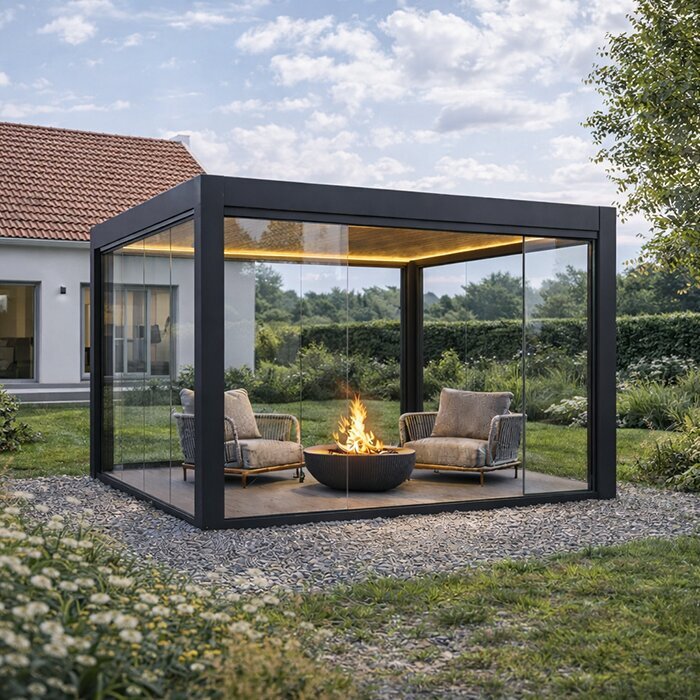
How does bioclimatic comfort enter the decision?
Mounting and roof function answer different needs.
First decide whether the structure should be connected to the wall or fully independent . Then decide whether a classic or bioclimatic system better reflects the control and features you expect.
Either mounting arrangement can create a refined outdoor setting. If adjustability and a higher level of control are priorities, compare the Bloomcabin Bioclimatic Pergola when adjustable operation is central to your plans.
For more detail, use Pergola Roof Choices: Classic and Bioclimatic Compared to assess that question separately from siting.
A checklist for narrowing the options
Walk through how you use the property, then consider:
- Does the main patio begin at an exterior door, or is the preferred spot farther into the yard?
- Should the structure blend into the building lines or establish its own visual identity?
- Are you improving the area beside the home or planning a separate place to gather?
- Which matters more for this project: architectural continuity or flexibility of position?
- Will most activities happen close to the home, or in a garden sitting area planned for a particular purpose?
Your answers will narrow the layout choice. Before installation, have a qualified local designer assess the foundation and site-specific wind and snow conditions.
For help with models, maintenance and warranty information, visit Aluminum Pergola Help: Models, Care and Warranties.
Quick answers
Does a patio beside the building require a wall-mounted model?
Not automatically. A connected model is often a natural fit where the patio meets the home and indoor activities extend outside, but the property layout still needs to guide the choice.
Which format offers more siting choices?
Generally, the independent frame does. It can be positioned without relying on the façade, which is useful for broad patios and separate garden destinations.
Does either format have a more contemporary appearance?
Both can suit contemporary architecture. The result depends on whether the property benefits from a connected line or a distinct feature elsewhere in the yard.
Must an independent pergola be far from the home?
No. It may sit nearby while remaining structurally separate, provided that location serves the patio arrangement and site plan.
When is a bioclimatic pergola worth comparing?
Add it to your shortlist when adjustable operation, greater control and an elevated outdoor experience matter. Compare roof types after settling the basic location and layout.
Choose a pergola around the way your patio works
The strongest choice is not determined by a catalogue image. Look for the arrangement that respects the home, makes good use of the patio and supports your regular outdoor activities.
Explore the Wall-Mounted Pergola Browse the Freestanding Pergola Discover the Bioclimatic Pergola
