



MATERIALS
Tempered Safety Glass for Greenhouses: Strength, Safety and Service Life
Tempered safety glass offers robust performance and a safer break pattern. This guide covers choosing, receiving, fitting, caring for and checking greenhouse glazing over time.
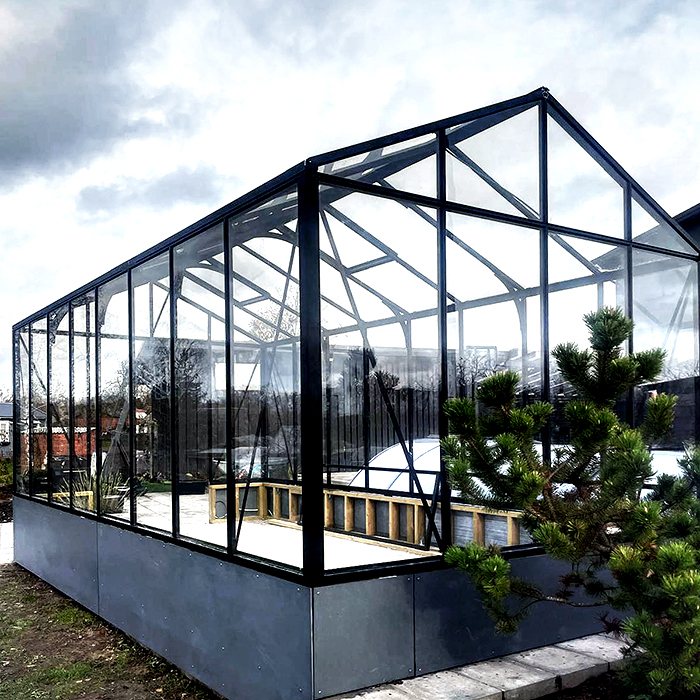
Premium greenhouses often use tempered safety glass because it remains clear and dimensionally stable while resisting mechanical stress better than ordinary, non-tempered glass. Reliable performance also depends on a level base, correctly aligned aluminium profiles, undamaged glass edges, suitable seals and installation without concentrated pressure.
This guide explains the practical and technical points from ordering through ongoing inspection. It is not a replacement for the installation manual for your exact model. Always follow the documents supplied with the ordered model and the requirements that apply at your property. Explore available designs in our greenhouses and conservatories.
How tempered safety glass works in a greenhouse
Tempered glass is generally single-pane safety glass. Its surfaces are placed under compression while balancing tensile stress remains inside the pane. This stress pattern improves resistance to bending and temperature variation, while also determining how the glass breaks.
If its limits are exceeded, tempered glass usually breaks into many small pieces rather than a few long, sharp shards. That can reduce certain injury risks, but it does not eliminate them. Small fragments can still cut, fall, or spread among frames, plants and paving.
For that reason, safety glass is not a promise that a pane is unbreakable, walkable or protected from every impact. The glazing supplied with a model is confirmed by the quotation, order documents and assembly manual. For practical customer perspectives, see our greenhouse reviews.
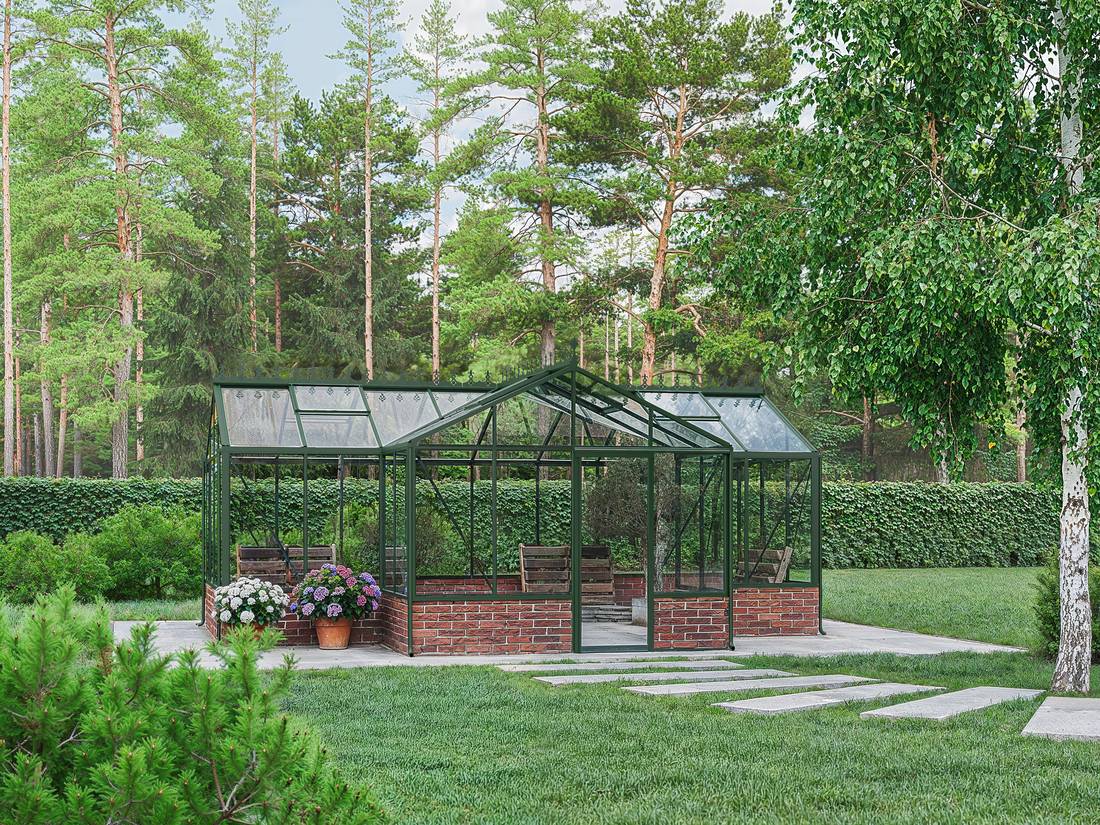
How is glass tempered?
For thermal tempering, a pane already prepared to its final size is heated under controlled conditions and then cooled quickly. The outer zones cool faster than the core, creating the permanent stress pattern within the glass.
Sequence matters: cutting, edge finishing and required holes must normally be completed before tempering. Sawing, drilling or grinding afterwards disrupts the stress pattern and can cause immediate full breakage. A pane that does not fit must never be altered on site. Check its part number, orientation, frame geometry and foundation alignment instead.
Strength, safety and practical limits
| Characteristic | Practical benefit | Important limit |
|---|---|---|
| Mechanical resistance | Well suited to the usual loads on professionally planned greenhouse glazing. | It is not immune to hard impacts, stones, tools or frame distortion. |
| Break pattern | Typically breaks into numerous comparatively small fragments rather than large shards. | Falling glass and fragments can still cause injury or damage. |
| Temperature resistance | Better suited to changing temperatures than ordinary glass. | Avoid local hot spots and severe temperature gradients. |
| Surface | Clear, hard-wearing and straightforward to clean. | Sand, metal tools and unsuitable abrasives can still scratch it. |
| Edges | Protected reliably when stored and installed correctly. | Edges, especially corners, are sensitive to impacts and point contact. |
| Alteration | Made at the factory in its final format. | Cannot be cut or drilled after tempering. |
Plastic panels are another greenhouse glazing option. Our article on polycarbonate for greenhouses explains differences in weight, light transmission, insulation and ageing. Compare materials as part of the whole system: frame, seals, intended use and site.
Why safety glass complements aluminium greenhouses
Aluminium profiles create slim, precise frames and broad glazed areas. Glass adds high light transmission, a hard surface and lasting colour stability. It does not warp from moisture or absorb water.
The combination relies on controlled load transfer. Glass must not sit directly on unprotected metal or be stressed by misaligned profiles. Seals, supports and retaining components position the pane correctly and prevent hard edge contact. The foundation must support the frame level and square over the long term.
For more background on the design of transparent garden buildings, explore Victorian greenhouses and our orangery guide.
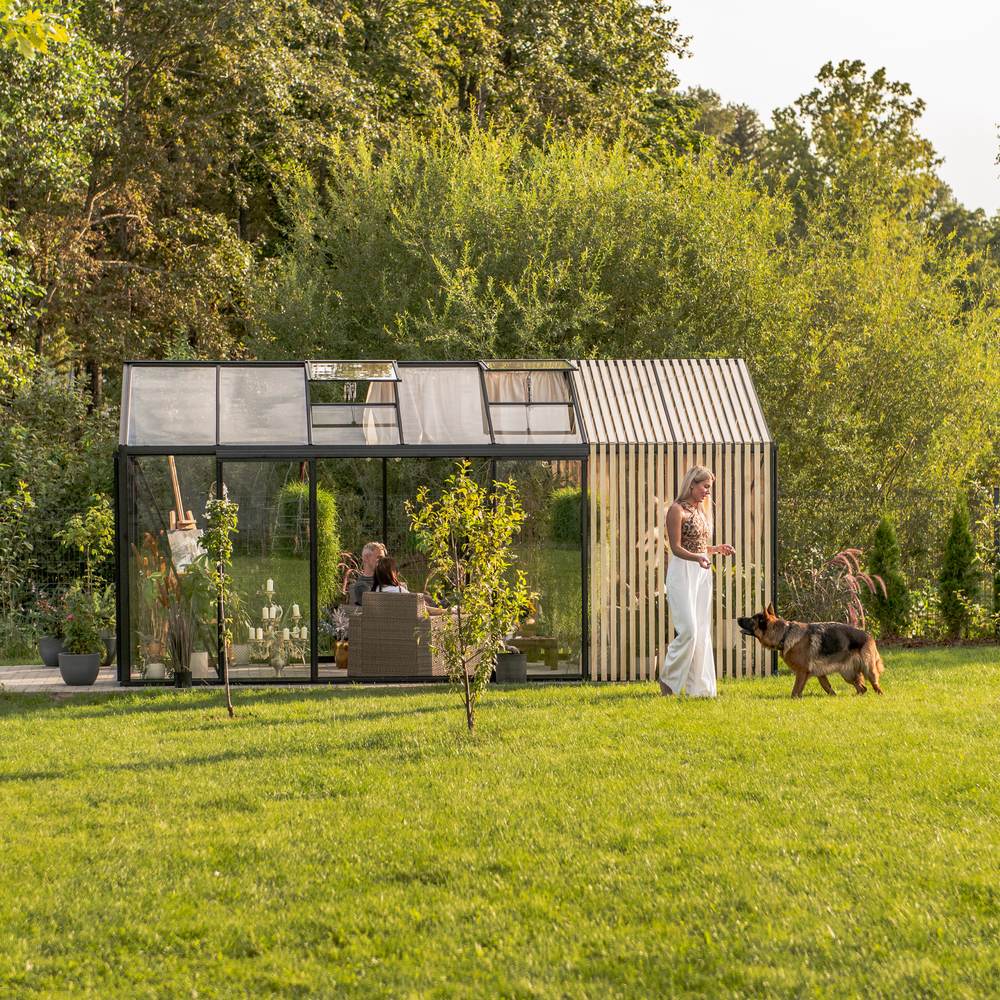
Questions to settle before ordering
- Use: Will the greenhouse mainly be used for growing, overwintering plants, relaxing, or a combination?
- Site: Could nearby shade, falling branches, ball games, thrown gravel or garden equipment create a risk?
- Base: Can a stable, level and accurately sized foundation be prepared?
- Access: Can delivery vehicles, unloading and the route to the site accommodate long or heavy packages?
- Installation: Are enough people, suitable suction lifters, clean resting surfaces and personal protective equipment available?
- Local requirements: Do permits, setbacks or other site-specific requirements need to be checked?
Our article on permits for a greenhouse or pergola offers useful orientation. In Canada, first confirm the province or territory and municipality, then check zoning, permits, setbacks, height, lot coverage, drainage and structural requirements with the local permit office.
Clarify the ordering process and delivery scope before purchase. Helpful pages include how to order, purchasing and delivery and our guidance on greenhouse delivery throughout Canada, including territories and islands.
Receiving and checking a glass delivery
Arrange delivery so a responsible person can receive the shipment and inspect the outer packaging. Compare packages with the available delivery documents. Watch for crushed protective corners, damaged crates, obvious impact marks, loose parts or the sound of broken glass.
Document visible damage before moving the shipment further and report it through the applicable procedure. Open packaging carefully and follow its markings. Do not remove load-bearing packaging while panes could still stand unstably. If you need help with delivery contents or a damage report, contact us with order information and clear photographs ready.
Temporary storage before installation
Glass panes need a dry, protected storage area that is inaccessible to unauthorized people. Store them on a stable, padded support in the orientation stated in the delivery and assembly instructions. A near-vertical pane can tip unexpectedly, while storage that is too flat can create unsuitable bending stress. Use secure support and follow the specified orientation.
Keep sand, screws and metal filings away from between panes. Protect packages from construction traffic, doors, lawn equipment and falling tools. Do not leave damp packaging against the glass unchecked for a prolonged period.
Safe handling during installation
Do not lift glass by one corner, drag it across the ground or set it down on concrete. Wear suitable gloves, safety glasses and sturdy footwear, with additional protection for overhead work. Suction lifters must be clean, undamaged and suitable for the task. Check their grip before every lift.
Move large panes with enough people. Keep the route from storage to the opening clear. Rest a pane only on prepared, soft supports. Wind can catch a broad glass panel like a sail, so postpone glazing in unsuitable weather. Never lean unsecured panes against the greenhouse frame.
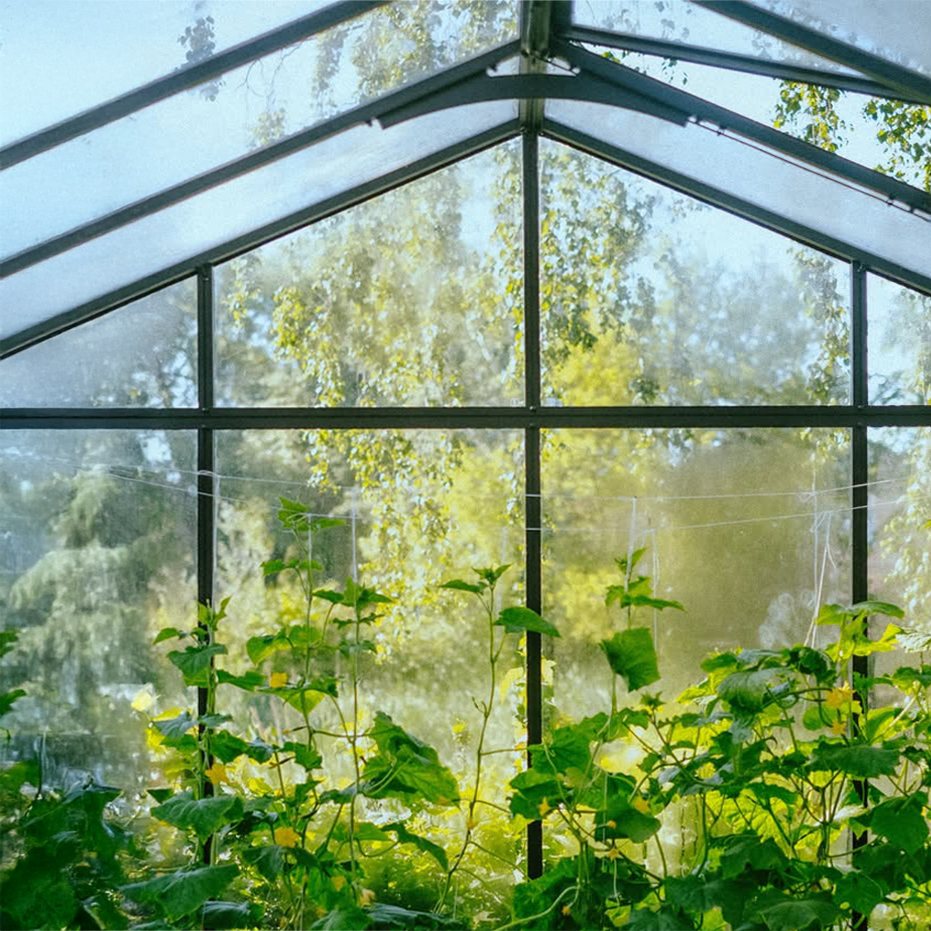
Frame preparation and glazing sequence
Before fitting the first pane, align the aluminium structure fully according to its instructions. Check the foundation level, squareness, diagonals, plumb walls and correct position of all structural profiles. Tighten fasteners in the prescribed sequence. Tightening too early can prevent adjustment and lock stress into the frame.
- Identify each component and glass pane using the manual.
- Clean support surfaces of swarf, sand and packaging debris.
- Check seals for continuity, joints, twists and damage.
- Place the pane in its intended opening with the required edge clearance.
- Fit retaining profiles, strips or clips only as specified.
- Recheck gaps and frame alignment after each section.
- Adjust doors, windows and vents only as directed, then confirm free movement.
Details vary by model. Available assembly documents take precedence over general experience or videos of another structure.
The installation sequence at Anna Koku Skola
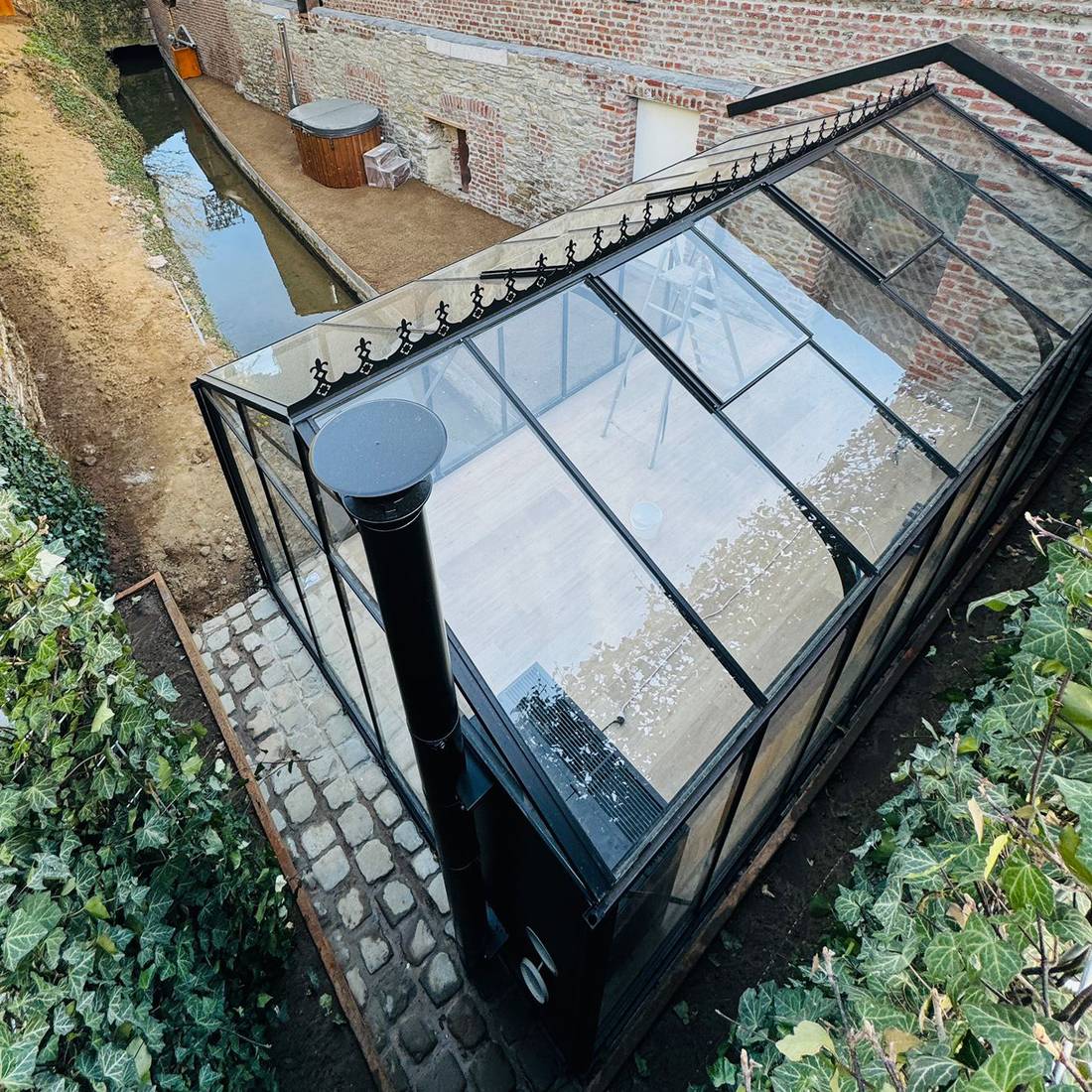
The Anna Koku Skola installation should be read as one connected sequence: the location and base were prepared, the aluminium structure was built and aligned methodically, and glazing and final checks followed. The images or work stages do not show unrelated projects.
The order of work is technically important. First establish a geometrically correct supporting structure. Then check clean glass supports and seals. Only then install and secure the identified panes. Finally, adjust opening elements, inspect fixings and clear remaining parts from the work area. This prevents glass from being used to straighten an unstable frame.
Preventing avoidable glass damage
- Do not lean ladders, boards, plant stakes or tools against glass.
- Use mowers and trimmers so stones cannot be thrown towards the greenhouse.
- Prune branches that may contact the glazing in good time.
- Secure doors and windows against uncontrolled wind slamming.
- Do not position films, heaters or dark objects where they create local heat build-up.
- Address damaged seals and loose retainers rather than leaving them until next season.
Looking after the complete system also includes aluminium greenhouse maintenance. Consider glazing, profiles, drainage and moving parts together.
Cleaning tempered greenhouse glass
Start with plenty of clean water to rinse away loose dust and sand. Then use a soft, clean cloth or non-abrasive sponge with a suitable mild cleaner. Work in sections and rinse away residue.
Metal scrapers, scouring powders, dirty brushes and aggressive products can harm glass, seals or coated aluminium. Do not force stubborn deposits from glass edges. Avoid washing a strongly heated pane with very cold water. Safe access matters more than reaching every spot; never brace a ladder on the glass.
Condensation, temperature and year-round use
Condensation forms when humid air meets a surface below its dew point. In a planted greenhouse, it is often a normal physical effect rather than proof of leaking glazing. Plants, damp soil and watering all increase humidity.
Regular ventilation, appropriate watering and clear drainage routes help limit excess moisture. Our guide to greenhouse temperature and humidity explores this relationship in more detail. For crop-focused examples, see our guide to growing lettuce in a greenhouse.
For year-round use, plan ventilation, shading and any equipment as one system. Have a qualified local contractor confirm that electrical or heating equipment is approved for the destination and that the installation meets local requirements. In Ontario, the Electrical Safety Authority says almost all electrical work requires notification before work starts; hired work must use a Licensed Electrical Contractor, who arranges the required notification and inspection process.
What should you do if a pane breaks?
- Clear the area immediately and prevent access.
- Do not continue working beneath damaged glazing.
- Use suitable gloves, safety glasses and sturdy footwear.
- Collect loose fragments in a controlled manner; never use bare hands.
- Inspect the frame, seals and nearby panes for impact marks or distortion.
- Identify the replacement pane precisely from the model, position and documents.
- Ask the local waste service how tempered-glass fragments should be packaged and discarded.
Investigate the cause before fitting a replacement. A hard impact is often visible, but damaged edges, debris on the support or a distorted frame opening can also be responsible. See warranty information for process and conditions; this does not automatically determine the cause of a particular breakage.
Long-term inspection checklist
- After strong wind or severe weather: Check glazing, roof, opening elements and visible fixings.
- Several times a year: Keep drainage paths clear and check that seals have not shifted.
- Before the gardening season: Test doors, windows and automatic openers for smooth operation.
- After nearby work: Inspect glass for impact marks, scratches and edge damage.
- If something changes: Investigate rattling, changed gaps or stiff doors promptly.
- Before cleaning: Check suction lifters, ladders and tools are safe to use.
Do not compensate for small misalignments with improvised wedges, extra holes or overtightened screws. If in doubt, consult the assembly documents and qualified assistance. More subjects are collected in useful information .
Glass choice is also a design choice
Clear glazing creates direct visual connections between the garden and the interior. It highlights planting, pathways and the geometry of an aluminium frame. When choosing a greenhouse, consider not only growing space but also its appearance from the house, patio and main routes through the garden.
Other structures can help shape a coordinated outdoor space. The choice between a bioclimatic and standard pergola, a wall-mounted and freestanding pergola and planning with our pergola size guide should take sightlines and spacing into account. For technical preparation, see the pergola foundation guide .
A wellness area, such as the Elma S outdoor sauna, should also be positioned with delivery access, maintenance access and possible greenhouse shading in mind.
Frequently asked questions
Is tempered safety glass unbreakable?
No. It is more resistant than ordinary glass to many routine mechanical and thermal stresses, but hard impacts, damaged edges, severe restraint or other overloads can still break it.
Can safety glass be cut if a pane does not fit?
No. Once tempered, a pane must not be cut, drilled or ground at the edges. Check the pane identification, installation direction, frame dimensions and foundation alignment instead.
Why are glass edges especially important?
A tempered pane is highly resistant across its face, but its edges and corners are more sensitive to concentrated impacts. Avoid direct contact with concrete, metal and tools.
Does safety glass remove every injury risk?
No. Its break pattern reduces some risks associated with large sharp shards, but small fragments can still cut, enter footwear or fall from roof areas. Always secure a breakage area.
Does tempered glass become cloudy or yellow?
The glass itself does not normally yellow in use as some plastics can. Dirt, mineral deposits, condensation residue and surface films may reduce clarity. Suitable cleaning preserves transparency.
Can a small chip be repaired?
Do not improvise a repair to an edge chip using adhesive, silicone or grinding. Have the pane assessed to determine whether replacement is necessary. Even small edge damage can be technically significant in tempered glass.
Does condensation mean the glazing leaks?
Not necessarily. Condensation results from humid interior air and cold surfaces. Repeated water at the same frame location can, however, justify checking seals, drainage and installation.
Can a ladder be leaned against greenhouse glass?
No. A ladder creates unintended concentrated and line loads and can slip. It needs its own stable footing without using glass or delicate profiles as support.
Can roof glass be walked on?
No. Greenhouse glazing is not a walking surface. Cleaning, maintenance and repairs require an appropriate access plan that does not transfer body or tool loads onto panes.
Is every Bloomcabin model glazed in exactly the same way?
No. Profile geometry, seals, retainers and installation sequence can vary by model. Only the documents and delivery scope for the exact model are authoritative.
What matters most for a long service life?
A strong, level foundation, square frame installation, protected glass edges, correctly seated seals and regular checks form the essential basis. Avoid unsuitable alterations.
Where should I begin when choosing a greenhouse?
Start by defining the intended use, site, preferred footprint, access and foundation. Then compare forms and glazing. For project-specific questions, Bloomcabin’s about us and contact pages can help you take the next step.
