



COMPARE
Greenhouse Glazing: Clear, Bioclean, Stopsol, Mirror and Matte Glass, and Polycarbonate
Greenhouse glazing shapes daylight, views, solar control, privacy, weight and maintenance. This guide compares clear glass, Bioclean, Stopsol, mirror glass, matte glass and polycarbonate, with practical advice on selecting and combining them.
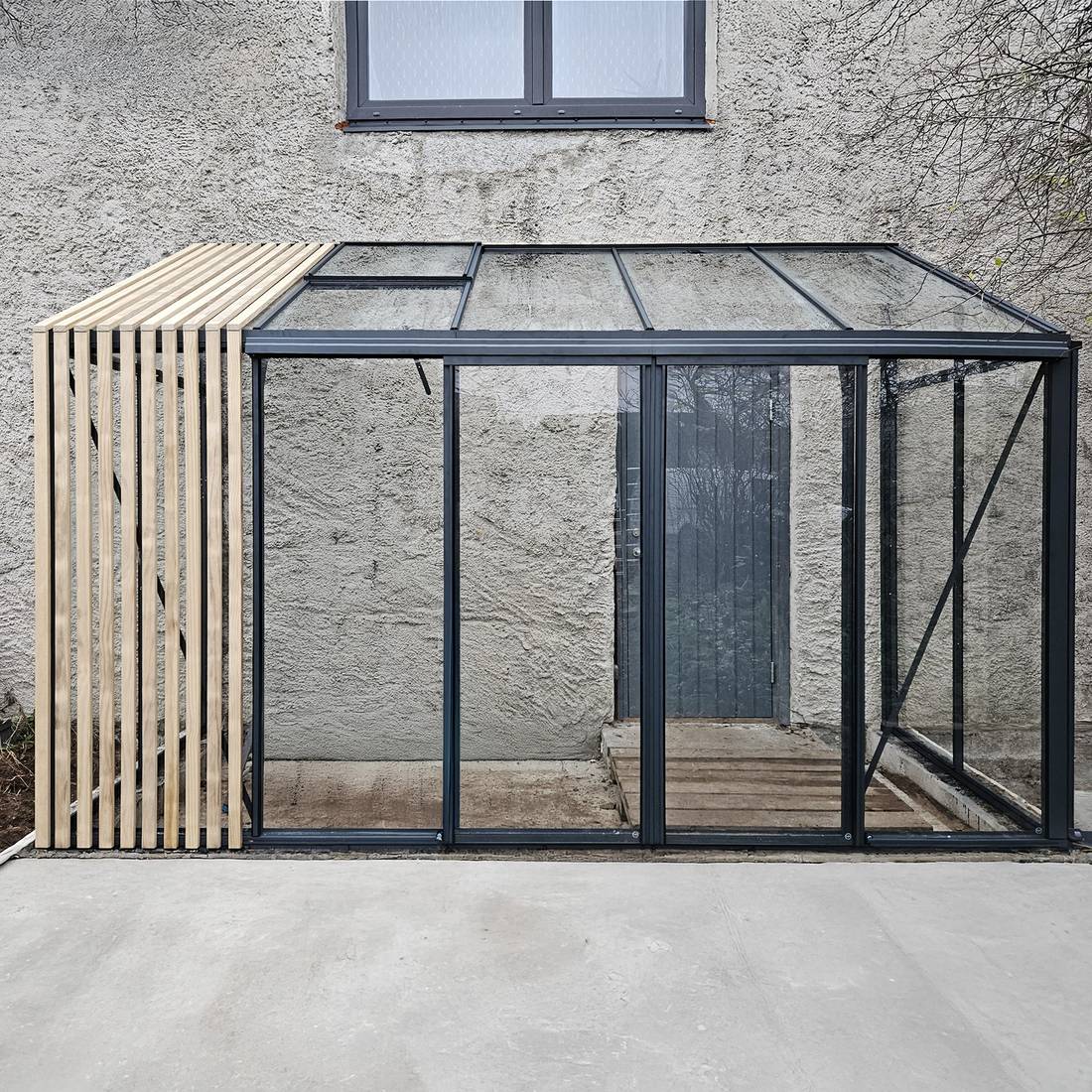
Glazing affects much more than a greenhouse’s appearance. It changes daylight, visibility, privacy, cleaning needs, weight and behaviour in direct sun. Plan it alongside the site, intended use, ventilation and building form. Explore greenhouses and conservatories for an overview of available structures.
Names such as Bioclean, Stopsol, mirror glass and matte glass describe surface or lighting effects, not necessarily the complete glass build-up. Before ordering, confirm the supplied specification, coating position and compatibility with the chosen greenhouse.
Quick greenhouse glazing comparison
| Glazing | Typical benefit | View through panel | Key planning question |
|---|---|---|---|
| Clear glass | High transparency | Clear view both ways | Is an open outlook more important than screening? |
| Bioclean glass | Transparent, care-oriented surface | Similar to clear glass | Is the treated face correctly positioned, and what care is permitted? |
| Stopsol glass | Reflective solar-control effect | Varies with light and specification | How much reflection and solar reduction is wanted? |
| Mirror glass | Strongly light-dependent reflection | Depends on relative brightness | Is daytime-only visual screening sufficient? |
| Matte glass | Diffuses light and outlines | No clear outlook | Where is lasting privacy needed? |
| Polycarbonate | Lightweight and light-transmitting | Usually diffused rather than clear | Do low weight and diffused daylight matter more than a glass-like view? |
Use this table to narrow the options, not as a technical specification. Coatings and polycarbonate panels vary by exact product. For related material guidance, see polycarbonate for greenhouses.
1. Clear glass: an open visual connection
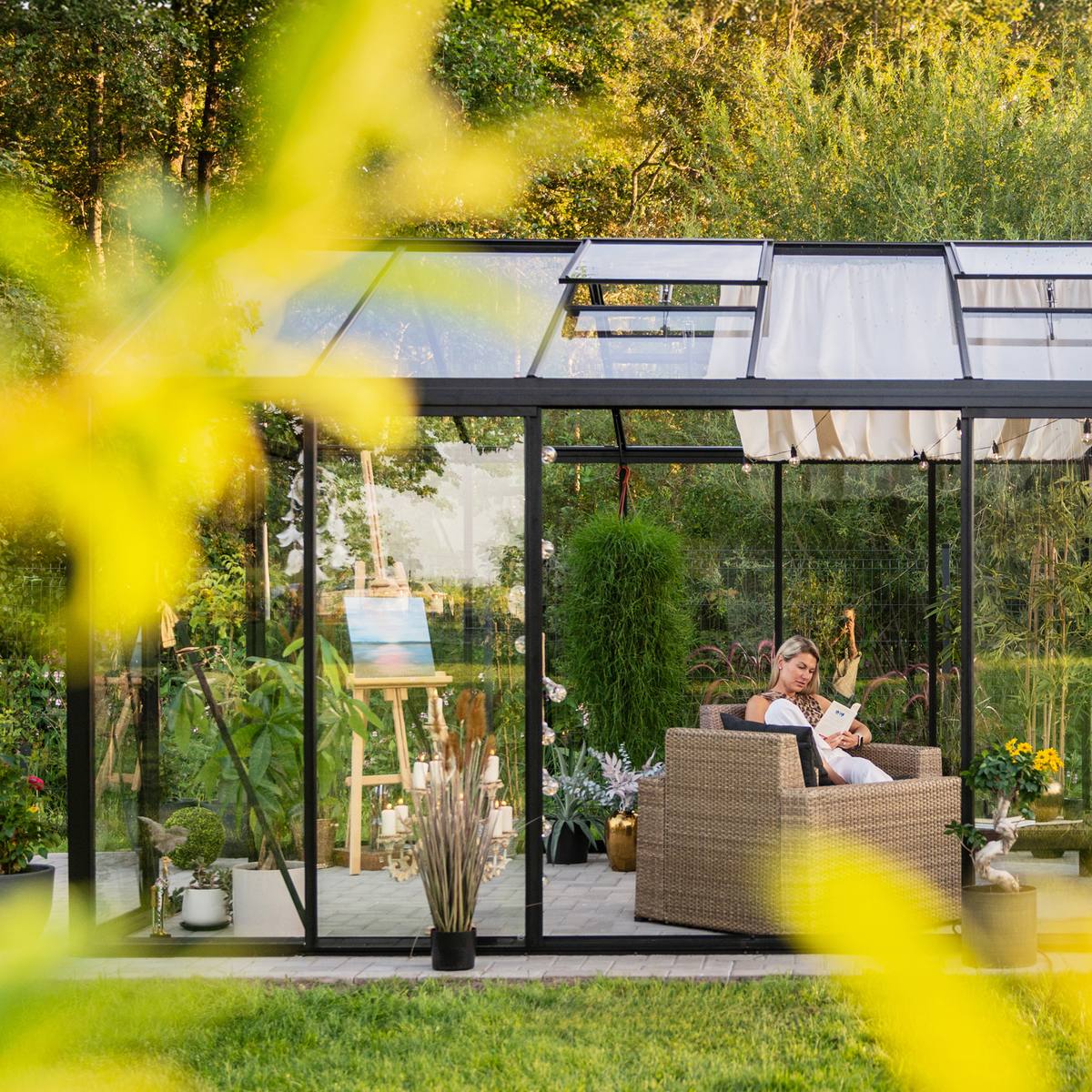
Choose clear glass when you want the greenhouse to feel transparent and visually light. Plants, furniture and structural details remain visible from outdoors, while views from inside stay largely unchanged. It can be especially appealing for freestanding garden buildings with a view, formal orangeries and restrained architectural designs.
That openness also leaves shelving, irrigation equipment and stored items on display. Fingerprints, dust, pollen and mineral marks show readily on clear surfaces. A greenhouse close to a neighbour, street or patio may need additional privacy measures.
Clear glass does not automatically limit solar heat gain. Vent openings, doors, shading where needed and the building orientation remain separate planning decisions. For traditional inspiration, see Victorian greenhouses ; for larger spaces for people and plants, the orangery guide is also useful.
2. Bioclean glass: a lower-maintenance exterior face
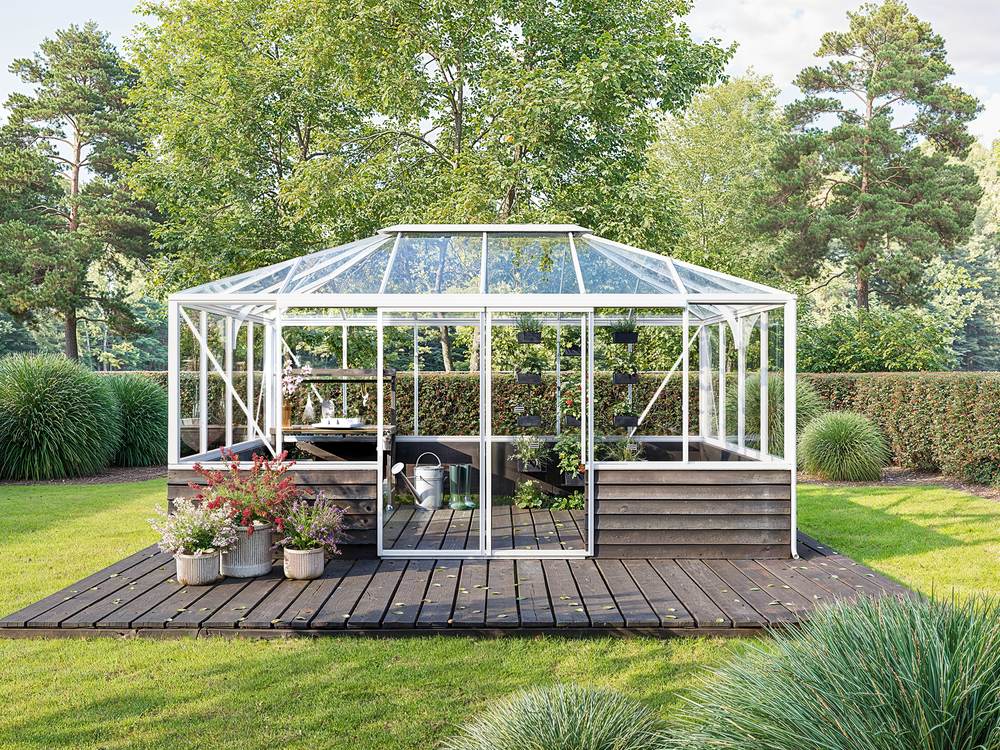
Bioclean is a treated glass surface that can help organic soiling release and rinse away. On a suitable surface, rain spreads more evenly, which may reduce pronounced droplets and dirt marks. Its real-world performance depends on rainfall, roof pitch, soiling, location and correct orientation of the treated face.
It is not maintenance-free. Areas under eaves, dry spells, bird droppings, tree sap, mineral deposits and heavy pollen still require careful manual cleaning. Abrasive or aggressive products may be unsuitable; follow the care instructions for the supplied surface.
Bioclean can be valuable where roof panels are difficult to reach or where a clear-glass look is wanted with less routine exterior work. Read caring for your aluminium greenhouse for broader construction and cleaning guidance.
3. Stopsol glass: reflective solar control
Stopsol is reflective glazing that can return part of the incoming visible light and solar energy. It changes the outside appearance as well as interior light. Depending on the specification, sun angle and viewpoint, the façade may look subtly metallic or distinctly mirrored.
It may suit strongly exposed areas, but it is not a complete climate strategy. A greenhouse remains highly affected by sun. Roof vents, side ventilation, doors, air movement and, where appropriate, extra shading should be planned around the planting. Our guide to greenhouse temperature and humidity explains these relationships.
Before choosing, decide whether reflection is wanted only on the roof, on a particularly sunny elevation or throughout the structure. Check potential reflections towards homes, neighbouring property or traffic areas as part of the site review.
4. Mirror glass: privacy that changes with light
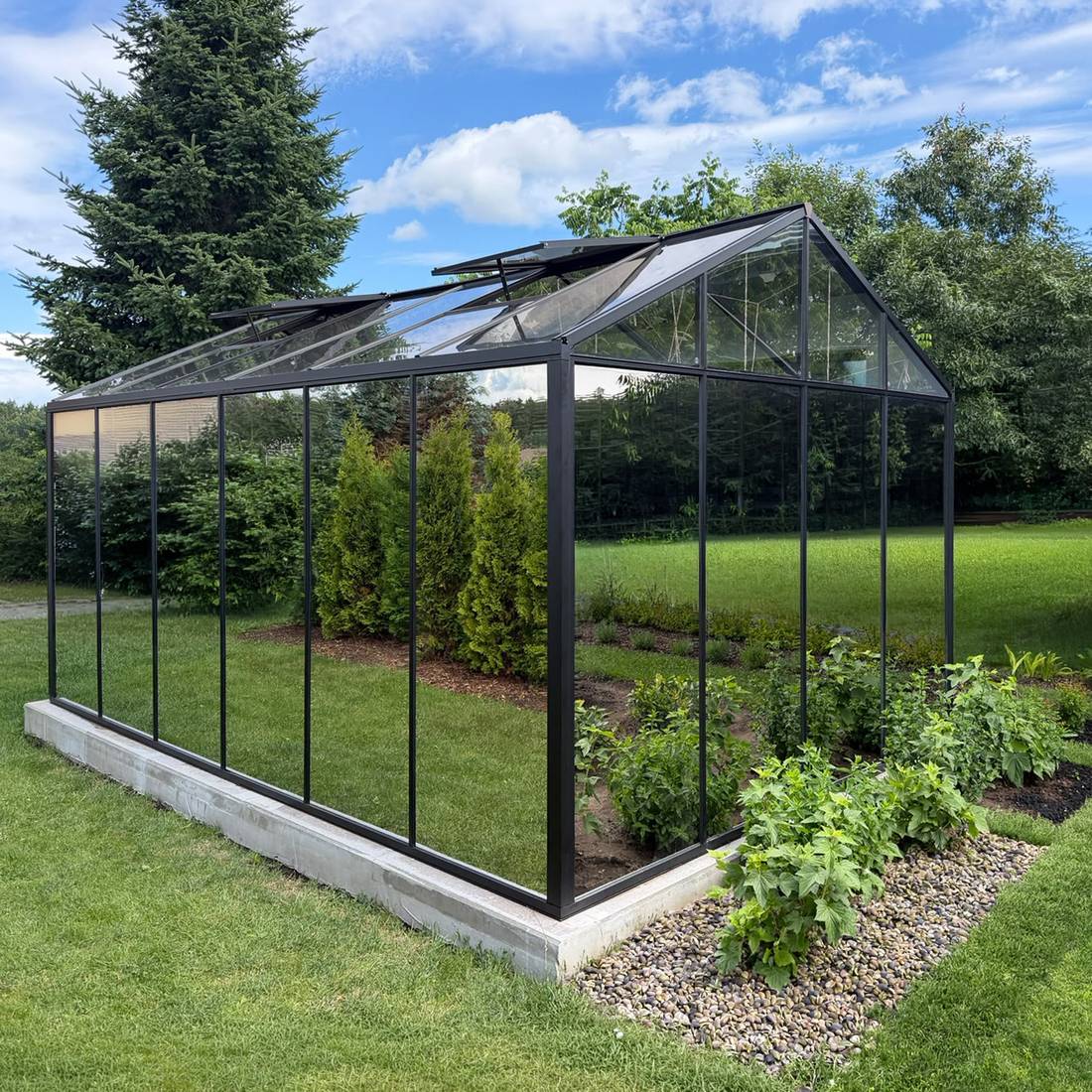
Mirror glass does not provide identical one-way vision in every condition. Reflection is strongest on the brighter side. When it is much brighter outside, the exterior appears more reflective and looking in is harder. Once an illuminated greenhouse is brighter than the surroundings at night, this advantage reverses and the interior may be clearly visible.
Light-dependent screening may be enough for a daytime seating area. It is not dependable on its own for changing areas, a property boundary or any zone requiring consistent privacy. Matte glass, physical screening or an appropriate interior solution is more predictable there.
Reflective panels also give architecture a stronger visual character than clear glass. Review a sample in realistic lighting before ordering. A small sample shows colour and finish, but may not reproduce the effect of an entire façade.
5. Matte glass: privacy through softened outlines
Matte glass scatters incoming light and prevents a clear view through the panel. Brightness remains, while people, plants and objects appear only as blurred outlines or shadows. Actual screening depends on the degree of frosting, distance from the panel and lighting. Someone directly backlit may still show as a silhouette.
Useful locations include a neighbour-facing wall, work or storage area, the rear of a lean-to greenhouse or selected eye-level panels. Fully frosted glazing can, however, greatly reduce the sense of openness and the garden view.
Surface texture affects cleaning. Check product documentation to establish which side faces in or out and which products may be used. Do not automatically clean frosted glass as though it were untreated clear glass.
6. Polycarbonate: lightweight, light-transmitting glazing
Polycarbonate weighs less than glass and is commonly used as a light-diffusing greenhouse panel. Multiwall panels add internal chambers, but thickness, chamber design, surface protection and light transmission are product-specific. The name polycarbonate alone does not establish insulation or load capacity.
Diffused light can soften harsh shadows and spread daylight more evenly across plants. In return, it usually lacks the clear view of transparent glass. Scratch sensitivity, thermal expansion, open panel edges and the correct orientation of a protected exterior face all need attention during handling and installation.
Polycarbonate is not simply better or worse than glass. It serves a different brief: lower weight, diffuse light and less fragile handling, rather than the clear view, tactile quality and high optical transparency associated with glass.
Choose glazing by project priority
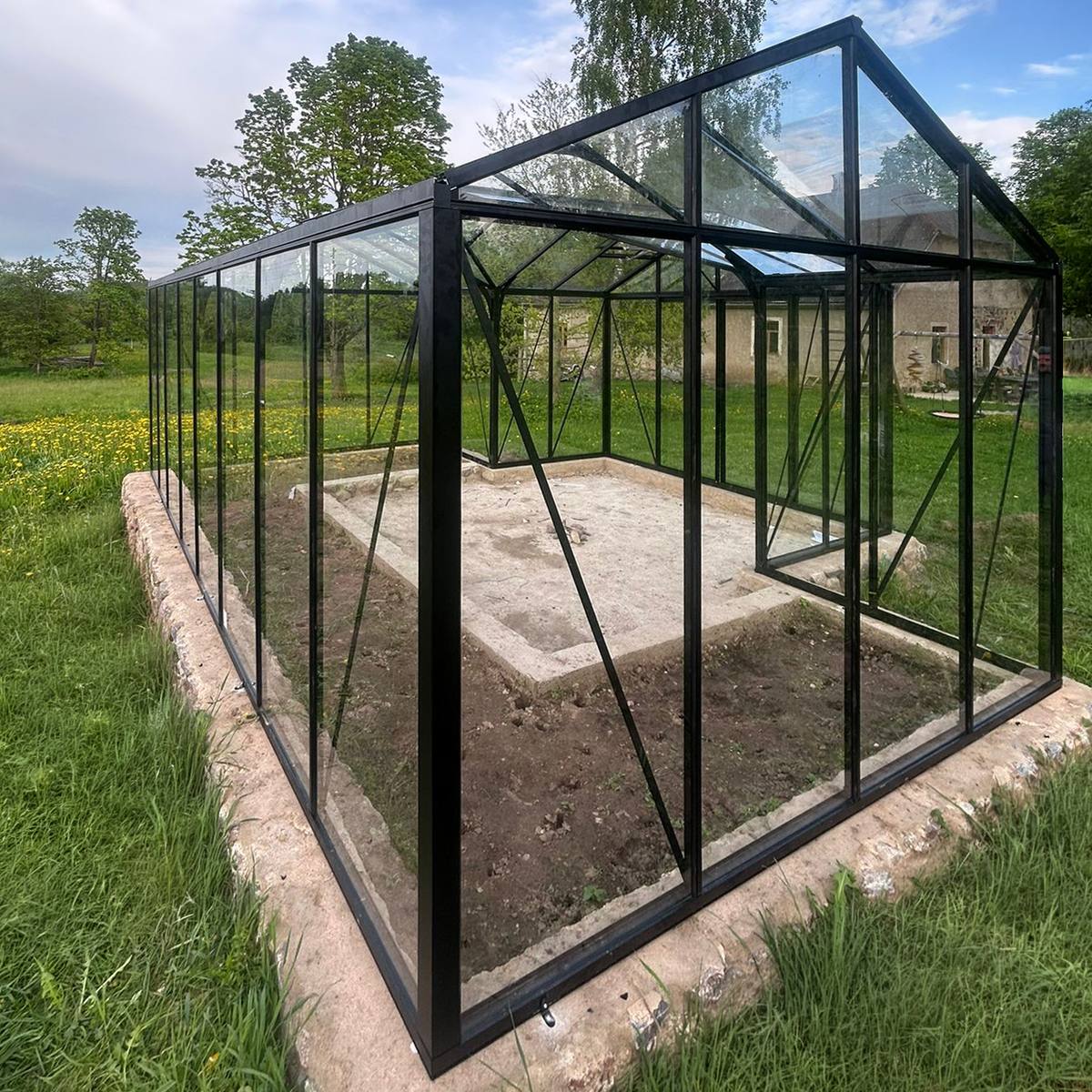
Start with the job the material must do rather than its name. Clear glass suits an open garden room. Bioclean may help on hard-to-reach exterior surfaces. Stopsol addresses solar input and reflective design; mirror glass focuses on light-dependent screening; matte glass offers steadier privacy; and polycarbonate brings low weight and diffused daylight.
- Plant growing: Assess light demand, crop duration, humidity and shading together. The needs of lettuce differ, for example, from those of heat-loving crops.
- Living space: Prioritize outlook, glare, privacy and evening lighting.
- Showpiece building: Consider reflected colour, frame appearance and visibility of the interior.
- Maintenance: Consider roof access, water quality and surrounding trees.
- Budget: Compare installation, cleaning and potential shading as well as material cost.
Other owners’ practical experience can help, but does not replace a project-specific assessment. See greenhouse reviews .
Combining glazing types in one greenhouse
Mixed glazing can respond more precisely to a site and its use than one uniform specification. For example, clear glass may face the garden, matte glass may face a boundary, and solar-control glazing may be selected for particularly exposed roof areas. Polycarbonate can also be used selectively where the frame, fixings and seals are designed for it.
Agree the combination before manufacture. Different thicknesses, edges, gaskets, movement characteristics and installation directions must not be resolved on site. Review the outside appearance as one composition: an accidental mix can look unsettled, while a symmetrical or function-led layout can look intentional.
Where a greenhouse stands beside a patio cover, coordinate the material character of both structures. These decision guides may help: bioclimatic or classic pergola and wall-mounted or freestanding pergola.
Glazing for different greenhouse forms
With a conventional gable roof, each roof slope and wall can receive a different pattern of sun. At Canadian sites, assess the actual seasonal exposure rather than assuming one glazing plan suits every region. A lean-to is also influenced by the house wall, roof overhangs and heat released by the building. Pyramid, T-shaped and orangery forms add junctions and differently oriented faces, where zoned glazing may be useful.
The larger and more complex the form, the more important clear panel identification and a glazing plan become. This matters particularly for coated glass that may look alike but cannot be turned freely. Building dimensions and foundation must match in advance. The size guide and foundation guide cover related planning basics, but the requirements of the particular greenhouse model take priority.
Canada has no single permit rule for every greenhouse. Start with the province or territory and municipality for the site, then ask the local authority about zoning, permits, structural review and any services. The greenhouse or pergola permit guidance is a useful project checklist.
A practical selection process
- Define the use: Choose growing, overwintering, relaxing, display or a combination.
- Document the site: Record orientation, shade, neighbours, trees, wind exposure and access routes.
- Set priorities by panel: Decide separately for roof, entrance, rear and side walls whether light, outlook or privacy matters most.
- Test the material effect: View samples in sun, cloud and artificial light.
- Confirm compatibility: Select only glazing approved for the model, frame and fixing system.
- Plan care and installation: Confirm access, installation direction and permitted cleaning products beforehand.
- Check the quotation: Record every panel area, coating and requested combination in writing.
To request a quote, review how to order or use the contact page . More planning topics are collected under useful information .
Receiving and checking glazing
Check glass and panels systematically as soon as they arrive, without opening packaging carelessly or placing components unsafely. Compare quantities, labels and package references with delivery documents. Record visible damage to packaging or goods in accordance with the applicable delivery and contract terms.
- Photograph packages before moving them and document damage.
- Handle glass only with appropriate personal protective equipment and safe lifting methods.
- Do not identify coated panels by colour alone.
- Keep labels until every panel has been assigned to its location.
- Protect polycarbonate panels from scratches, dirt in open chambers and unsuitable storage.
- Do not trial-fit unclear or damaged parts; report them first.
Before delivery, read the information on purchasing and delivery and the applicable warranty guidance . For a Canadian order arriving from abroad, confirm the import process and any potential charges before purchase. Related cross-border planning is discussed in deliveries to Austria and Switzerland.
Installation: treat glazing as a planned sequence
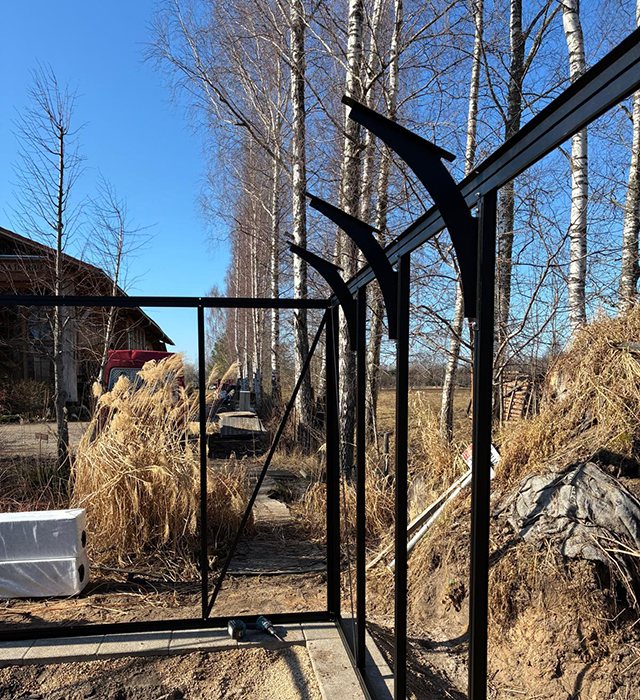
Glazing is not an improvised final step. Check the foundation, frame geometry and diagonals first. Then sort packages by construction stage, match panel labels to the plan and establish coated faces. Install only after these checks, following the stated sequence.
For coated glass, the correct face is essential. Marks, labels, delivery documentation or supplier confirmation are more reliable than visual judgement. Remove polycarbonate protective films in line with the installation manual; removing them too early can unnecessarily expose the surface during work.
Large or high-level elements require enough people, suitable lifting aids and a safe working platform. Strong winds substantially increase risk. The supplied manual for the delivered model overrides general advice. As with installing garden structures such as an Elma S outdoor sauna , prepare delivery, base, component identification and installation as one connected process.
Cleaning and ongoing care
Clean glazing with soft, clean tools and products suitable for the relevant surface. Rinse loose sand and dust first so they do not scratch during wiping. Hard water can leave mineral marks, so do not let dirty standing water dry on the panels.
Coated, frosted and mirrored glass may have different care limits from ordinary clear glass. Avoid abrasives, blades, hard brushes and unapproved chemicals. Polycarbonate also needs material-appropriate cleaning. At the same time, inspect seals, fixings, drainage routes and ventilation elements without altering structural components yourself.
Clean glazing improves light use, but does not solve ventilation or temperature issues. Specialist glazing remains one part of the complete greenhouse system.
Frequently asked questions
Which glazing gives the clearest view?
Clear glass generally gives the most direct, colour-neutral view. Bioclean can look similarly transparent but has a treated surface. Stopsol, mirror glass, matte glass and many polycarbonate panels alter visibility, reflection or light diffusion more noticeably.
Does Bioclean glass mean I never need to wash my greenhouse?
No. The surface can support rain-assisted cleaning, but it does not remove every deposit. Sheltered areas and residue from minerals, sap, bird droppings or heavy pollen still need inspection and gentle cleaning when required.
Will Stopsol glass keep a greenhouse cool?
Stopsol can reduce solar input compared with a clear reference surface, but it cannot guarantee a particular indoor temperature. Greenhouse size, orientation, weather, ventilation, plant mass and extra shading remain important.
Is mirror glass private at night?
Not reliably. If the interior is brighter than the surroundings at night, people may be able to see in. Do not use mirror glass as the only solution where lasting privacy is required.
Is matte glass completely opaque?
Matte glass prevents a clear view, but can still reveal light and sometimes silhouettes. The effect depends on frosting, distance and lighting. A sample helps you assess it.
Is polycarbonate better than glass?
It depends on your priorities. Polycarbonate is lightweight and often diffuses light; glass offers clearer views and a different visual effect. Confirm construction, quality and suitability for the particular greenhouse.
Can I combine glass and polycarbonate?
Yes, if the selected system supports both materials in the proposed arrangement. Different thicknesses, gaskets, edges and expansion behaviour must be considered during design and ordering.
Can I change the glazing after ordering?
That depends on the order stage and the exact specification. Coated or individually assigned panels may enter processing early. Discuss any requested change in writing immediately.
Should every roof panel have the same glazing?
Not necessarily. Uniform glazing looks calm and simplifies identification. Where orientations differ, a planned zoning approach can make sense, provided it is structurally compatible and visually intentional.
Does specialist glass replace greenhouse shading?
No. Solar-control glass can influence radiant heat gain, but does not automatically replace ventilation or additional shading. The right solution depends on the site, use and plants.
How can I tell which side of coated glass faces outward?
Use only labels, installation documents or clear supplier confirmation. Colour, reflection and surface feel are not dependable enough. Keep labels attached until the panel position has been verified.
What should I decide before requesting a quote?
At minimum, provide the building form, site, main use, preferred viewing effect, critical sunny and neighbour-facing sides, and whether different glazing types should be combined. Photos and a simple site plan help the discussion.
Final decision checklist
- Is the greenhouse’s main use clearly defined?
- Have sun path, shade, neighbours and views been considered?
- Has the required function been set for each roof and wall zone?
- Have samples been viewed in different lighting conditions?
- Is the glazing compatible with the frame, gaskets and fixings?
- Are coated faces and installation directions documented?
- Have ventilation and, where needed, shading been planned separately?
- Are delivery access, storage space and safe handling prepared?
- Are cleaning and future roof access realistic?
- Have locally applicable building requirements been checked?
- Does the quotation clearly assign every glazing type?
- Have outstanding technical questions been resolved in writing before order approval?
