



COMPARE
Low-Maintenance Garden Structures: What Everyday Care Really Involves
An easy-care structure still needs attention. This guide looks at how material choice, placement, access, drainage and sound assembly influence the day-to-day upkeep of greenhouses, pergolas, garden buildings and outdoor saunas.
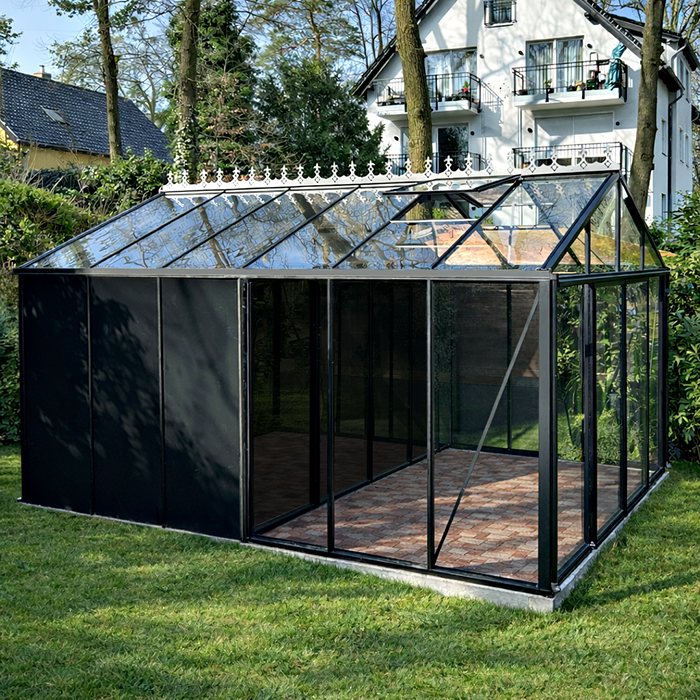
A well-planned garden structure can be uncomplicated to own for many years. That depends on the material, site, foundation and intended use working together. Cleaning, visual inspections and occasional adjustments will still be necessary; the goal is to make them accessible, predictable and manageable without elaborate procedures.
What “low maintenance” really means
Care involves more than washing visible surfaces. Drainage routes, moving parts, fasteners, joints and the area around the building all need attention. A practical low-maintenance design combines durable materials, accessible components and a site where water, leaves and plant growth can be kept under control.
Unlike untreated wood, aluminum normally does not need regular surface coating. Glass or panel glazing still needs cleaning to preserve light transmission, visibility and controlled drainage. Doors, windows and louvres work reliably only when tracks and hinge areas are kept free of dirt. See our guide to caring for an aluminum greenhouse.
Easy care is not a property of one material in isolation. Suitable design, accurate installation and brief, consistent attention all contribute to it.
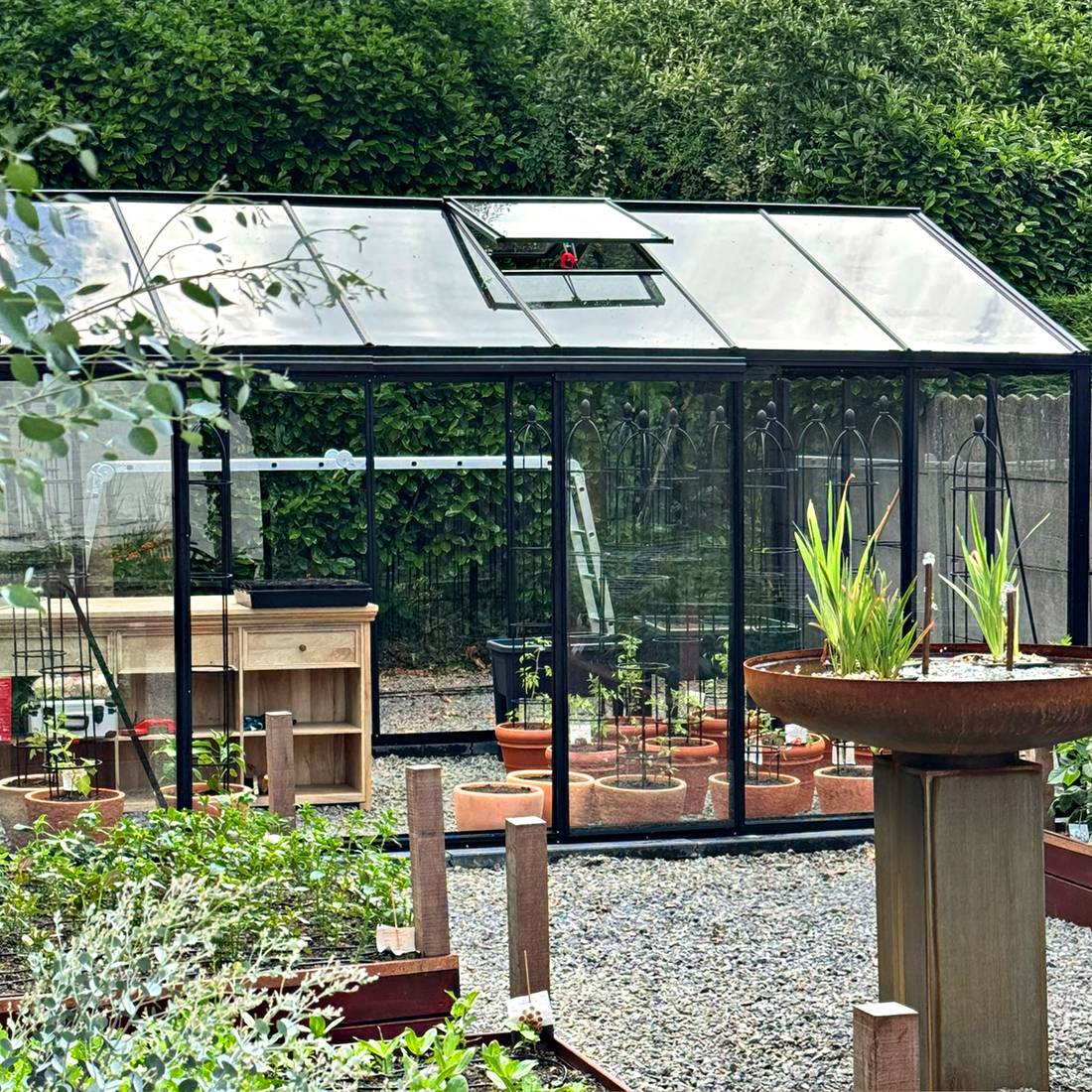
Common garden structures compared
| Structure type | Typical care points | Points requiring attention |
|---|---|---|
| Aluminum greenhouse | Glazing, gutters, door and window mechanisms, fasteners | Clear water flow, ventilation and undamaged glass or panels |
| Wooden garden building | Cladding, end grain, joints, roof and base area | Moisture protection and, where needed, renewal of the surface finish |
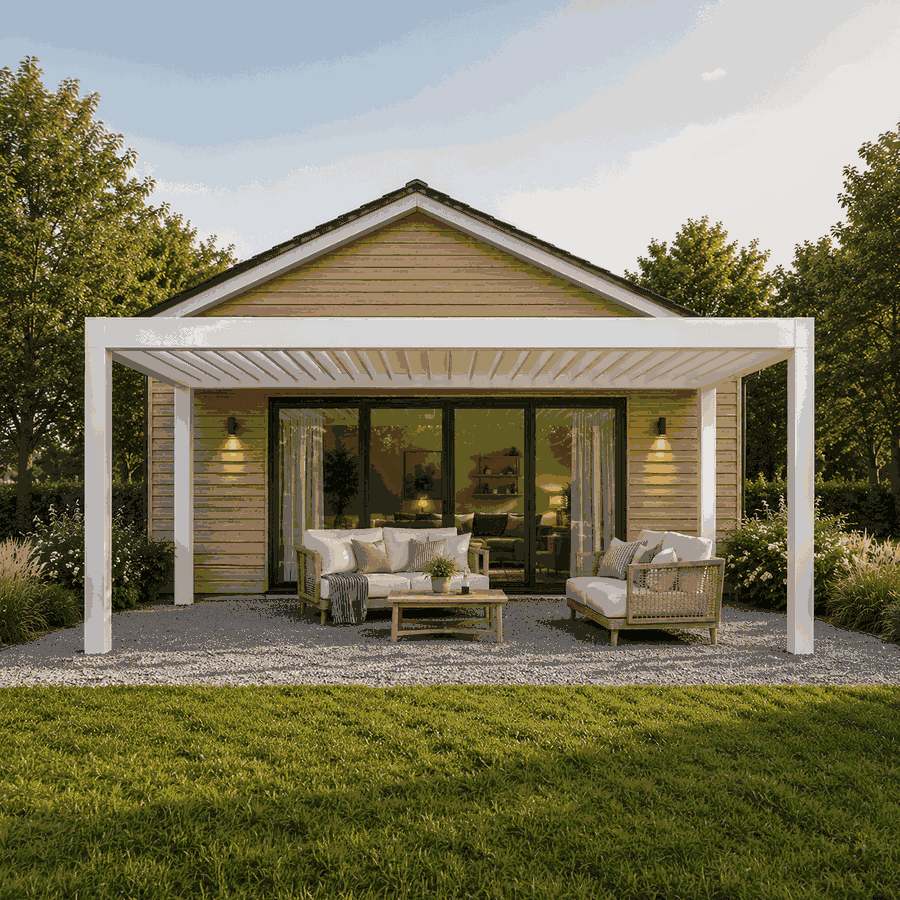
| Pergola | Roof, louvres, gutters, downpipes, post bases and moving parts | Unobstructed drainage routes and cleaning suited to the construction |
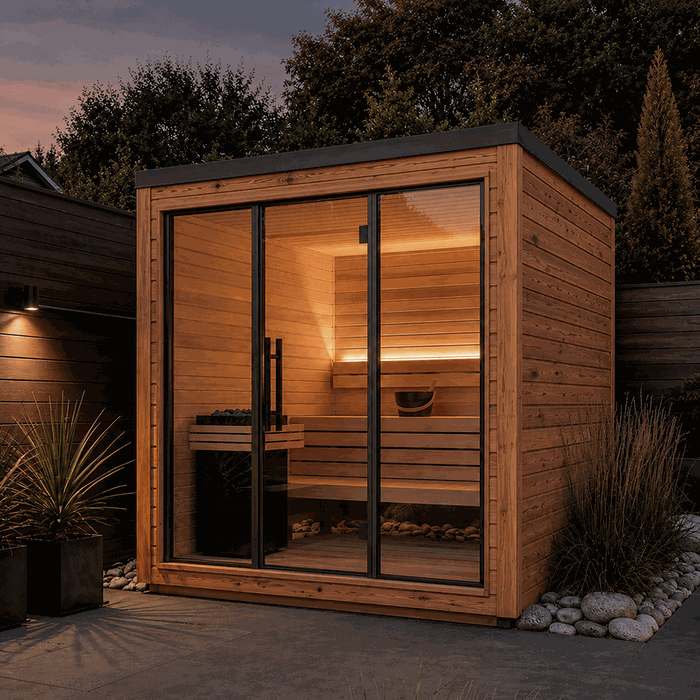
| Outdoor sauna | Exterior shell, roof, door, ventilation areas and interior | Moisture management, drying and care appropriate to the material |
When weighing the options, look beyond the material with the shortest apparent task list. Think about whether the work suits the way you use your property. Aluminum removes some recurring surface treatments, whereas wood may need closer observation for moisture and finish condition. Sauna ownership also involves ventilation and drying after use. Examples of these different structures appear under greenhouses and conservatories, garden houses and saunas.
There are differences within every product category too. For greenhouses, the shape, glazing and number of opening elements affect the routine. Our article on polycarbonate greenhouse glazing covers further selection points. With an outdoor sauna, assess how easily exterior surfaces and technical areas can be reached, whether you are comparing an Elma S outdoor sauna, an Elma L outdoor sauna or an HC150 thermowood barrel sauna.
Before you settle on a structure
What will happen in and around it?
The intended activity determines where moisture, dirt and wear collect. Potting media, irrigation and plant debris give a greenhouse a different routine from a pergola. Regular vegetable growing also calls for washable paths and unobstructed ventilation openings. For practical ideas, read about raising lettuce under greenhouse cover and about managing greenhouse temperature and humidity.
For a pergola, decide whether it will mainly provide shade, shelter a dining area or serve as a frequently used route to the home. For a sauna, the frequency of use, ventilation and opportunity to dry it matter more than floor area alone.
Can every area needing care be reached?
Reserve working room beside hedges, fences and house walls. You should be able to reach cladding, glazing, gutters and junctions without harming nearby plants or improvising an unsafe approach. Plan how roof-level areas will be viewed and reached for inspection. Never stand on the roof unless the instructions for that exact model expressly permit it.
Footprint alone does not determine the effort involved. A spacious building with a clear perimeter may be simpler to inspect than a compact one crowded by a boundary or mature planting. Allow for both usable interior area and the room needed outside. Our pergola size guide offers a useful starting point.
Does the material suit your preferred care routine?
Aluminum may suit owners who would rather avoid recurring sanding and refinishing. Wood offers a natural appearance but calls for regular observation of exposed surfaces and moisture-sensitive details. Thermal modification changes some characteristics of timber without making it an artificial material. The instructions for the ordered model should guide all care. For another look at this form, explore outdoor barrel saunas.
Delivery planning supports easier ownership
Planning the arrival in advance reduces the risk of makeshift storage or avoidable handling damage. Check vehicle access, tight corners, slopes, gates, overhanging trees and the full carrying path to the prepared site. Arrange for someone to accept the shipment and identify a dry, level storage area that meets the handling instructions.
Complete as much site preparation as possible before the scheduled arrival. Provide an open transport path, a finished or firmly specified base and enough room for assembly. Do not leave packaged parts outdoors for an extended period because foundation or approval matters have not been settled. Details of the process are available under shopping and delivery and how to order. Delivery information for greenhouses can help with advance planning.
Begin with the province or territory and municipality for the property. National model codes do not, by themselves, establish the rule in force at every Canadian site. Ask the local permit office which zoning, permit, setback, height, drainage, use, structural and servicing requirements apply before work begins. Our overview of greenhouse and pergola approvals.
Assembly decisions with lasting effects
Prepare the site first
A poorly prepared base can lead to later expense. Settlement or misalignment may interfere with doors, windows, glazing and drainage. Select a foundation appropriate to the model, soil conditions and property, then verify its dimensions, level, anchoring and water management before assembly. The pergola foundation guide supports preparation, but model-specific requirements remain decisive.
Plan where rainwater will go. It should not remain at the base or be directed uncontrolled onto neighbouring areas. Check local drainage requirements.
Follow the sequence for the ordered model
Two structures with a similar appearance may rely on different profiles, connectors and construction stages. Read the complete manual for the ordered model, inventory the parts and tools, and understand each stage before starting. Hardware should not be exchanged merely because another piece looks comparable; an unauthorized substitution can affect fit, operation and later support.
Organize the work into stages that can be verified before proceeding: base geometry, structural frame, roof, glazing or cladding, openings and the final function test. Problems are then more likely to be found while the relevant area is still exposed.
Test operation before furnishing the space
Operate doors, windows, vents or louvres several times before adding shelves, planters or furniture. Check clearances, closing movement, water routes and visible fixings. Early testing is much easier than correcting a fully furnished structure.
Fit accessories only at locations approved in the model documentation. Pay particular attention to substantial shelving, suspended loads, lighting and heaters. For electrical work, seek project-specific direction from the regulator serving the destination and use a qualified local electrical contractor. Confirm any required equipment approval or certification separately from the structural installation.
Build a maintenance rhythm around the site
Conditions are a better trigger than an inflexible date on the calendar. Combine brief routine observations with extra checks prompted by vegetation, use and weather at the property.
- Ongoing: Remove plant debris, soil and objects from door tracks, ventilation areas and water routes.
- Seasonally: Clean exterior surfaces, inspect gutters and outlets, test doors and windows, and check the base area for standing moisture.
- Following high winds or other harsh weather: Look over the glazing, roof, visible fasteners, drainage and nearby tree limbs. Deal with signs of damage promptly rather than waiting for the next scheduled visit.
- Before intensive use: Review accessories, interior fittings and technical equipment using the instructions relevant to each item.
A gentle method for aluminum and glazing
Remove loose debris with water or a soft implement before washing the surface. A mild cleaner compatible with the finish, applied using a soft cloth or sponge, will often be enough. Abrasive products, aggressive chemicals and rigid tools may harm coatings, seals or glazing. Consult the product instructions first and trial an unfamiliar cleaner on a small, hidden spot.
For a greenhouse, clean glazing improves available light. Cleaning does not replace climate management: ventilation, watering and shading remain separate tasks. Our guide to choosing an orangery can also help assess use and access for larger glazed structures.
Wood needs a different approach
Moisture, sunlight and construction details all influence wood. Inspect lower edges, end grain, joints and other places where water evaporates slowly. The need for refinishing depends on the species, existing treatment, exposure and manufacturer instructions, so one fixed timetable would be misleading.
Good care begins with protective design: free drainage, separation from consistently damp vegetation and sound roof details. A timber structure should not be kept continually damp by piled soil, mulch or stored items. When comparing sauna options, consider information about the HC 180 barrel sauna or HCF 225 barrel sauna .
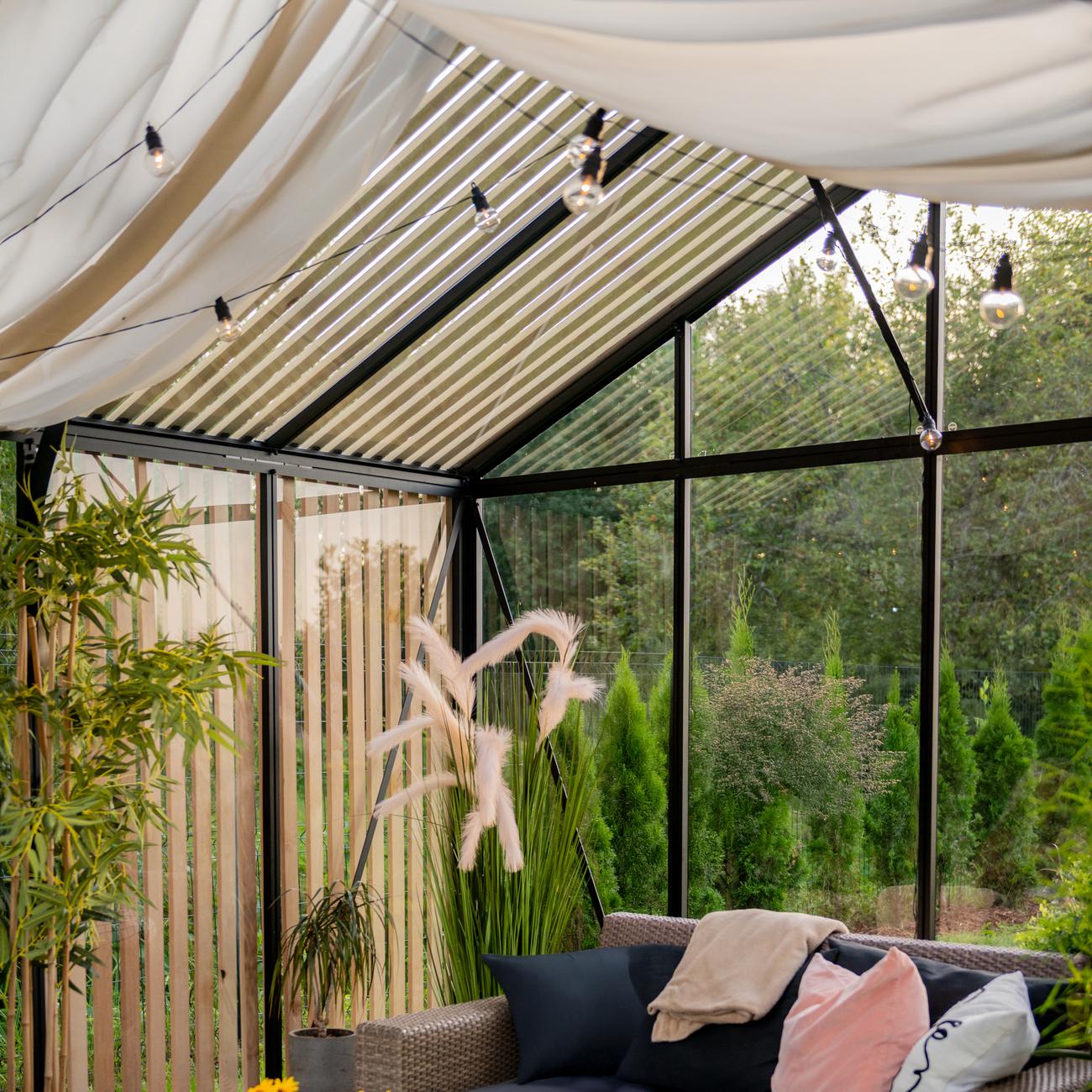
Pergola upkeep starts with keeping water paths open
On a pergola, concentrate on the roof or louvres, gutters, outlets, post bases and any mechanisms. Seeds and leaves can obstruct the intended flow of water, so revisit these areas after autumn debris, a storm or a long idle period. Follow the model manual when cleaning, adjusting or lubricating moving components.
Attaching a pergola to a wall creates different junctions from those on an independent structure. The guide comparing attached and freestanding pergolas can help with the initial decision. Roof-system differences are covered in bioclimatic versus classic pergolas. The article on bioclimatic pergolas with glass roofing offers further points to consider for everyday use.
Documents worth keeping and where to get help
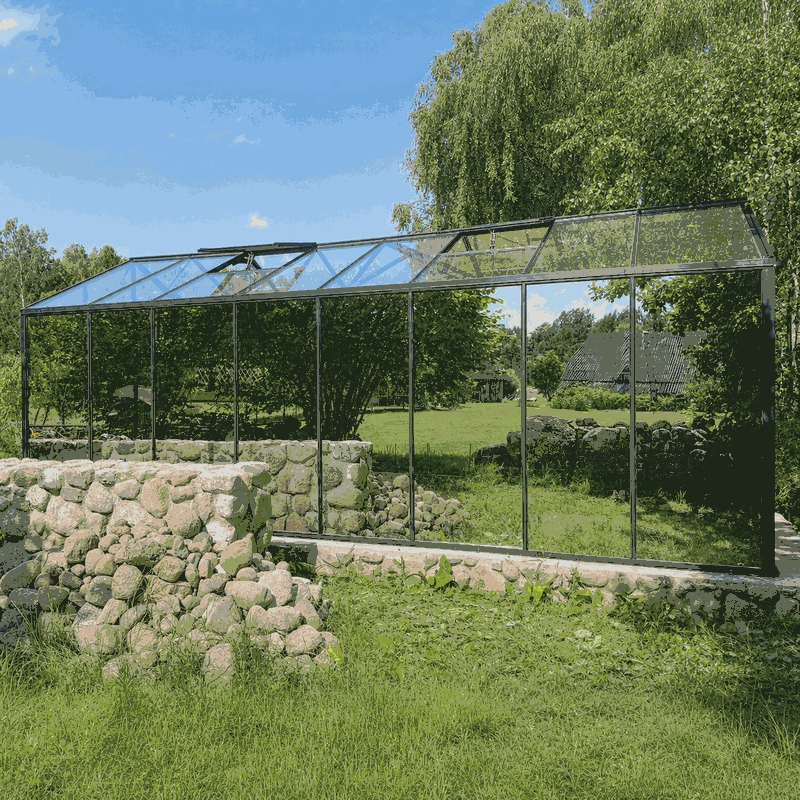
Store the model manual, order paperwork, parts information and completed-installation photos in one place. Note any accessories fitted at a later date. Images showing concealed service routes or attachment points may prove valuable when future work is planned.
Before altering a component, photograph the concern from a distance and close up. Keep the model designation and order details available when requesting assistance. Broader guidance appears within useful information; for specific questions, contact Bloomcabin . Always refer to the relevant documents for the terms and scope of any promised cover; see the warranty. Other buyers' accounts may highlight useful practical considerations, although product instructions and an assessment of the actual site remain the primary references. Browse the greenhouse reviews.
A practical buying checklist for easier upkeep
- Does this type of structure match the way it will be used?
- Does the material suit the cleaning and care routine you want?
- Can the roof, exterior surfaces, drainage and moving parts be reached?
- Will there be adequate space from hedges, walls and property boundaries?
- Is the base ready for the exact model?
- Can rainwater drain away in a controlled manner?
- Have access, unloading, temporary storage and assembly space been planned?
- Have local permit, setback and drainage requirements been checked?
- Is the model-specific assembly manual available?
- Are planned shelves, heaters, lights or suspended items compatible with the structure?
- Can checks after storms, freeze-thaw periods or heavy snowfall be made safely?
- Is there a dedicated place for the manual, receipts and maintenance notes?
Questions owners often ask
Is an aluminum greenhouse truly maintenance-free?
No. Its frame avoids some surface treatments associated with timber, but the greenhouse still needs attention. Keep glazing, gutters, tracks, doors, windows, fasteners and the foundation junction clean and operational. Short, frequent observations help reveal a blockage or alignment problem while it is still minor.
Does a compact greenhouse take less work?
Sometimes, but not automatically. A smaller surface can be faster to wash, while restricted paths and tight exterior clearances may make parts difficult to reach. Layout, ventilation and sensible working room around the greenhouse often matter more than footprint.
How do care needs differ between aluminum greenhouses and wooden garden buildings?
An aluminum greenhouse frame generally avoids recurring timber refinishing, although glazing and ventilation components still need attention. A wooden building calls for closer observation of moisture and surface condition. With appropriate construction and steady care, either can remain serviceable for years; choose according to the routine you are prepared to follow.
Is pressure washing suitable for a garden structure?
Use a pressure washer only when the care manual for the particular model provides an approved method. A concentrated jet may harm seals, coatings, joints, timber fibres or delicate glazing, and it can force water into connections. A soft tool and gentler washing method offer more control.
Which areas deserve attention after rough weather?
From a secure position, examine the roof, glazing, louvres, exposed fasteners, openings, gutters and outlets. Clear branches or debris only where this can be done without risk. If damage is apparent, stop using or loading the affected part until an appropriate response has been determined.
How close can planting be to a greenhouse or garden building?
Leave a practical gap for air circulation, cleaning and inspection. Dense growth can keep surfaces wet and hide developing problems. Climbing plants should have their own planned support rather than being fixed casually to profiles, gutters or cladding.
What are the care trade-offs between attached and freestanding designs?
An attached structure can work neatly with a patio or path, but the supporting wall and junctions need careful assessment. A freestanding design allows more choice of position while requiring an appropriate foundation and drainage around its perimeter. In either case, confirm that the site remains accessible and that local requirements have been addressed.
What should I check before adding shelves, heating, lighting or suspended accessories?
First confirm that the structure, designated attachment points and manufacturer instructions support the proposed addition. Do not place new loads on roof members or profiles without approval. For heating or electrical equipment, assess moisture, ventilation and clearances, then ask the electrical regulator and a qualified local contractor what the destination requires.
What does a year's upkeep usually involve?
A dependable hourly estimate is not possible because size, planting, exposure, material and use vary widely. Plan instead for brief observations throughout the year, a more complete seasonal clean and additional attention after exceptional weather.
What choices simplify care from the outset?
Select a site with workable access, complete the foundation ahead of the shipment and assemble the structure according to its manual. Preserve drainage routes, arrange the interior so openings remain reachable and begin recording maintenance early. Ease of care is largely designed into the project rather than added later.
