



PREPARATION
How to Store Your Product Safely Before Installation
Correct storage between delivery and installation protects glazing, aluminium profiles, timber, seals and fixings. Use this practical checklist to prepare a suitable storage area, inspect the delivery and organise every package for an efficient installation.
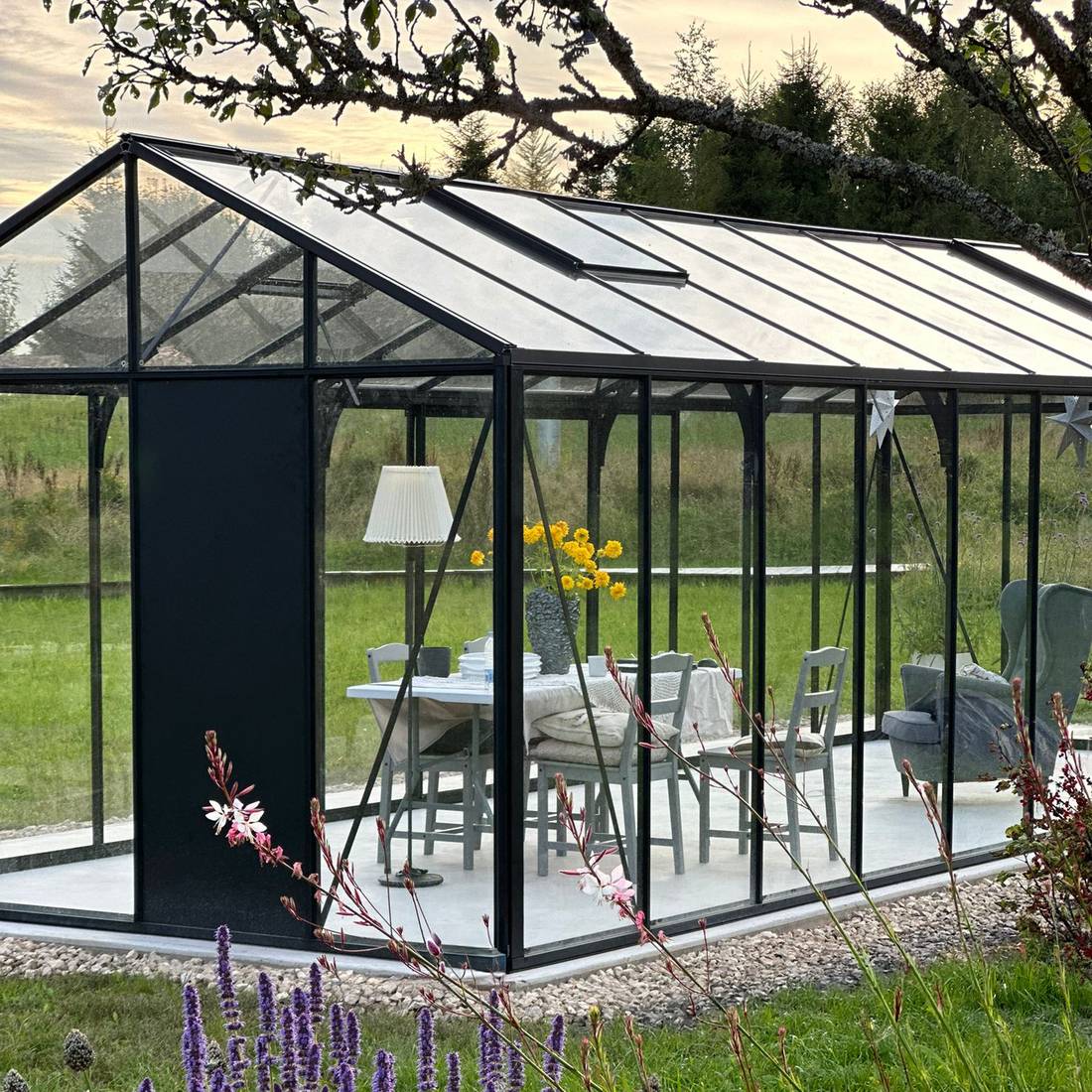
A greenhouse, pergola or similar outdoor structure may arrive before its foundation is complete or before the installation team is available. During this interval, correct storage is essential. Packaging is designed to protect components during transport, but it should not be treated as a substitute for a dry, secure and properly organised storage area.
The safest approach is to plan storage before delivery, inspect the shipment promptly and keep every component in the condition and orientation intended by the packaging. The product-specific documents supplied with your order should always take priority over general guidance. If you are still planning a purchase, review the ordering information and purchase and delivery terms so that access, unloading and storage arrangements are understood in advance.
Pre-installation storage checklist
- Choose a dry, secure and reasonably ventilated storage area before delivery.
- Confirm that the route from the delivery point to storage is clear and suitable for the packages.
- Prepare level supports that will keep packages off soil, grass and standing water.
- Retain labels, package numbers, handling symbols and orientation markings.
- Inspect the shipment soon after receipt and record any visible packaging damage.
- Keep glazing, profiles, timber and small components protected according to their different needs.
- Do not stack packages unless their markings or product instructions expressly permit it.
- Keep foundation work, cement dust, grinding debris, paint and site chemicals away from stored parts.
- Arrange packages so that the first items needed for assembly remain accessible.
- Restrict access to people who understand how the components should be handled.
1. Prepare the storage area before delivery
Do not wait until the vehicle arrives to decide where the shipment will go. Measure doorways, gates, turns and passageways, and remove garden furniture, tools and other obstructions. The planned area must accommodate the complete packages, not merely the finished footprint of the structure. Long profiles and glazing packs can require considerable handling space.
A garage, dry outbuilding or other enclosed space is generally preferable. If enclosed storage is unavailable, use the most sheltered practical location and provide weather protection without sealing damp air inside. Do not place packages directly on a lawn, bare earth or a surface where rainwater collects.
Storage-area requirements
| Requirement | What to check |
|---|---|
| Level support | Packages are fully supported and cannot rock, sag, slide or twist. |
| Dry surroundings | There are no roof leaks, overflowing gutters, rising damp or pools of water. |
| Ventilation | Air can circulate sufficiently to reduce condensation beneath covers. |
| Security | Children, pets and unauthorised visitors cannot enter or move components. |
| Cleanliness | The area is free from abrasive grit, corrosive substances and active building work. |
| Access | Packages can be retrieved without climbing over glazing or shifting the whole delivery. |
Consider how the components will later travel from storage to the installation position. Repeated handling increases the opportunity for scratches, damaged corners and lost fixings. A nearby storage area is useful only if the route is firm, clear and wide enough for safe carrying.
2. Receive and inspect the shipment promptly
Arrange for a responsible adult to receive the delivery and compare the shipment with the available delivery information. Count packages where practical, check identifying labels and look for punctures, crushing, severe dents, broken bands, water saturation or signs that a package has been placed in the wrong orientation.
Inspection does not necessarily mean dismantling every pack. Begin with the outside, photograph all sides and examine vulnerable corners and edges. If damage is visible, record it before moving or opening the affected package. Follow the applicable delivery, reporting and claims procedure rather than making assumptions about what should happen next. The warranty information and return and cancellation policy explain distinct processes that should not be confused with routine storage.
Information to record
- Delivery date and approximate time.
- Order details and the number of packages received.
- Package numbers, labels and any visible handling instructions.
- Overall photographs before unloading where circumstances allow.
- Close-up photographs of torn wrapping, crushed corners, moisture or impact marks.
- Any relevant observations recorded with the delivery documentation.
- The name of the person who received and inspected the shipment.
Keep photographs and documents together in a shared project folder. If personal details are recorded or shared, handle them appropriately; Bloomcabin’s data privacy information is available separately.
3. Preserve labels, orientation and package integrity
Package labels are part of the installation system. They may identify contents, sequence, orientation or handling requirements. Do not remove them merely to make the storage area look tidier. If a label begins to detach, photograph it and secure it without covering the printed information.
Avoid cutting bands, opening cartons or removing corner protectors until inspection or assembly requires it. Where access is necessary, open the package carefully, retain all identification and close it again using a method that will not damage the finish. Never insert a knife deeply into a package: profiles, seals or finished surfaces may sit immediately beneath the wrapping.
4. Protect glass, aluminium, wood, seals and hardware
Mixed-material structures cannot be stored safely using one rule for every package. Read each handling symbol and separate components where their storage needs differ.
Glass and glazing packages
Glazing is vulnerable to edge damage, impact and unsafe movement. Keep a glazing package in its indicated orientation on a firm, level base. Do not lay it flat simply to create more room, and do not lean loose panes against a wall unless the supplied instructions specifically provide for that method. Prevent people from walking or placing tools near exposed edges.
If inspection requires a glazing pack to be opened, use suitable handling precautions and do not work alone with panels that cannot be controlled safely by one person. Re-secure the pack afterwards. Keep abrasive grit away from glazing surfaces and do not slide panels across one another.
Aluminium profiles and finished components
Long profiles should be supported along their length so that they cannot bow or become twisted. Keep them away from wet cement, mortar splashes, grinding dust, fertilisers, pool chemicals and other potentially aggressive substances. Do not place heavy cartons on top of profiles, even if the outer packaging appears robust.
Protective film should normally remain in place until the relevant installation stage, but the supplied instructions govern when it should be removed. Do not use adhesive tape directly on a finished surface as an improvised repair. For an overview of aluminium structures, see aluminium greenhouses and conservatories; after installation, the separate guidance on cleaning an aluminium greenhouse will help with ongoing care.
Wood components
Timber requires dry, ventilated storage on level supports. Keep it off concrete that may transmit moisture and away from direct rain or persistent condensation. Do not tightly wrap damp timber in an impermeable sheet. Uneven support or highly variable conditions can encourage distortion, so retain the original pack arrangement unless inspection is necessary.
Wooden structures have material-specific considerations. Read the information on wooden greenhouses and conservatories and keep all product-specific finishing or assembly instructions with the delivery.
Seals, fasteners and small components
Store seals, gaskets, caps, fasteners and mechanisms indoors in their labelled bags or boxes. Keep them away from heat sources, direct sunlight, damp and workshop contamination. Do not combine similar-looking fixings: a small difference in length, thread or finish may matter during assembly.
Place small-component cartons in one clearly marked container or on a dedicated shelf. If a bag is opened for checking, count its contents only against the supplied documentation and close it securely. Avoid writing directly on components.
5. Control moisture without trapping condensation
A waterproof cover can keep off rain while still causing damage if it traps humid air. Covers should shed water, remain secured against wind and allow appropriate ventilation. They must not press unstable loads against glazing or flap against finished surfaces.
Check stored packages after heavy rain, frost, strong winds or a marked temperature change. Look beneath covers for condensation and inspect the floor for water ingress. If outer packaging becomes wet, move the shipment to a dry area where possible, document its condition and allow moisture to escape without exposing components to dirt or unsafe handling. Do not apply direct high heat.
Cardboard that has lost its strength may no longer support its contents safely. Treat it as a handling concern, not just a cosmetic issue. Add clean external support where appropriate while preserving labels and avoiding pressure on the product.
6. Adapt the plan to the product and project
The storage footprint, package mix and handling priorities depend on what has been ordered. A compact Classic aluminium greenhouse, a Premium Classic Plus glass greenhouse and a larger Bloomcabin orangery may not present the same storage or access requirements.
Likewise, distinguish between a Bloomcabin pergola and a bioclimatic aluminium pergola. Keep mechanisms and smaller accessories especially well organised, and consult the pergola frequently asked questions where relevant.
Other configurations, including the Limited Edition aluminium greenhouse and Prestige greenhouse with metallic base, should be planned from their own order and assembly documentation. Product appearance is not a reliable guide to package contents.
7. Keep foundation work separate from stored components
Do not use delivered packages as site benches, markers or temporary barriers while foundations are being built. Wet concrete, mortar, excavation spoil, masonry cutting and metal grinding can contaminate or damage glazing and finishes. Maintain physical separation between the storage zone and active construction.
Foundation suitability must be established for the actual product and local site. For pergola projects, use the guidance on preparing a pergola foundation and check whether the planned structure is wall-mounted or freestanding. Applicable local planning, building and service-location requirements must be checked separately.

8. Organise packages by installation sequence
Create a simple package register using the labels already supplied. Group items by installation stage without removing them from their protective packaging. Base or anchoring components may be needed before roof details, but the actual sequence must come from the relevant assembly manual.
- List every package number and its stated contents.
- Mark the likely installation stage without obscuring the original label.
- Place later-stage packages behind or beyond first-stage packages.
- Keep glazing protected from general traffic until it is required.
- Store hardware centrally and record whenever a box is opened.
- Leave clear space for safe lifting and package examination.
This method prevents an installation team from moving the same heavy packages repeatedly and makes missing or unidentified items easier to notice before work begins.
9. Handoff checklist for the installation team
- Provide the order documents, package register, manuals and delivery photographs.
- Explain whether any package was wet, damaged, opened or re-secured.
- Identify where glazing, long profiles, hardware and mechanisms are stored.
- Confirm that labels and orientation marks remain readable.
- Show the safe route between storage and the installation area.
- Point out fragile surfaces, low clearances, steps and changes in ground level.
- Confirm who may authorise opening, moving or reporting packages.
- Do not represent the foundation as ready unless the relevant checks have been completed.
If the team needs broader product guidance, the aluminium greenhouse FAQ can clarify common questions, but the manual for the delivered configuration remains the primary assembly document.

Common pre-installation storage mistakes
- Leaving packages on grass: moisture can rise from the ground and the supports may settle unevenly.
- Using a tight tarpaulin as permanent wrapping: this can trap condensation and may rub against finished components.
- Stacking by appearance: a large box is not necessarily designed to carry another load.
- Removing every label: this makes package identification and installation sequencing harder.
- Opening hardware too early: small parts can be mixed, contaminated or lost.
- Storing beside active building work: dust, sparks, wet cement and frequent traffic create avoidable risks.
- Allowing uncontrolled access: packages may be shifted without the change being recorded.
- Assuming packaging is weatherproof: transport protection does not automatically make a package suitable for prolonged outdoor exposure.
- Starting installation before checking the delivery: an unidentified issue can become harder to document once packages are dispersed.
Frequently asked questions
Can I store my Bloomcabin product outdoors before installation?
Enclosed, dry storage is preferable. If temporary outdoor storage cannot be avoided, use a firm, level and raised base in a sheltered, secure position. Protect the packages from rain while maintaining ventilation, and inspect them frequently. Follow package-specific instructions and avoid prolonged outdoor storage.
Should I open every package when it arrives?
Not automatically. Inspect all exteriors promptly and open a package when the supplied checking procedure, visible damage or identification needs make this necessary. Preserve labels and photograph its condition first. Re-secure an opened package without attaching unsuitable tape to finished surfaces.
How long can packages remain in storage?
There is no universal safe period because conditions, materials, packaging and products vary. Minimise the interval and follow the documents for your order. If installation is delayed, reassess moisture, security, supports and packaging condition regularly rather than assuming an undisturbed package remains safe indefinitely.
Can I stack greenhouse or pergola packages?
Only where the package markings or product instructions expressly allow it. Never infer stackability from the shape of a carton. Glazing, long aluminium profiles, timber and mechanisms can be damaged by loads that leave little visible evidence on the outer wrapping.
What should I do if packaging gets wet?
Photograph the package, move it to a dry and ventilated place if this can be done safely, and check whether the outer material has weakened. Do not trap the moisture beneath another airtight layer or use concentrated heat. Follow the applicable reporting process if the product may have been affected.
Can glass packages be laid flat to save space?
Do not change the indicated orientation simply to reduce the storage footprint. Keep glazing in the orientation specified by its packaging and instructions, fully supported and protected from impact. If the marking is unclear, obtain clarification before moving it.
May I remove protective film before installation?
Leave protective film in place until the stage specified in the product instructions. Premature removal can expose finishes during handling, while leaving film beyond the instructed stage may also be inappropriate. Do not assume all components use the same film or removal timing.
Where should hardware be stored?
Keep hardware in a dry, secure indoor location, ideally in its original labelled bags and cartons. Use a dedicated container or shelf and prevent different fastener groups from becoming mixed. Tell the installation team if any package has been opened.
What if the foundation is not ready when delivery arrives?
Move the shipment to the prepared storage area and keep it separate from foundation work. Do not place packages within excavations or on recently completed work. Revisit the installation programme only after the foundation and applicable local requirements have been checked.
Who should have access to the stored shipment?
Limit access to the project owner and people responsible for inspection or installation. Children, pets and visitors should not enter the area. Anyone moving a package should understand its orientation, support and handling requirements and record where it has been placed.
What documents should I keep with the shipment?
Keep the order confirmation, delivery information, package list, assembly manuals, photographs and relevant correspondence together. Store a digital copy separately so that information remains available if paper documents become damp or misplaced.
Final readiness check
Before installation begins, confirm that the delivery has been inspected, packages are identifiable and no component has been left wet, unsupported or exposed to site contamination. Verify that the foundation and access route are ready, and make sure the installation team has the correct manuals.
Once the structure is complete, storage precautions give way to normal use and maintenance. Useful next steps include guidance on making a greenhouse more eco-friendly, preparing a new greenhouse for spring, starting seeds in a greenhouse, using a greenhouse beyond gardening, the benefits of greenhouse ownership and year-round greenhouse uses. Good organisation before installation helps the project reach that stage without avoidable handling damage, confusion or delay.
