



PROCESS
What Happens After You Place an Order? From Confirmation to Dispatch
A practical guide to the period between placing your Bloomcabin order and beginning installation. Learn what to check, how to prepare the site, what happens before dispatch and how to inspect and record the delivery.
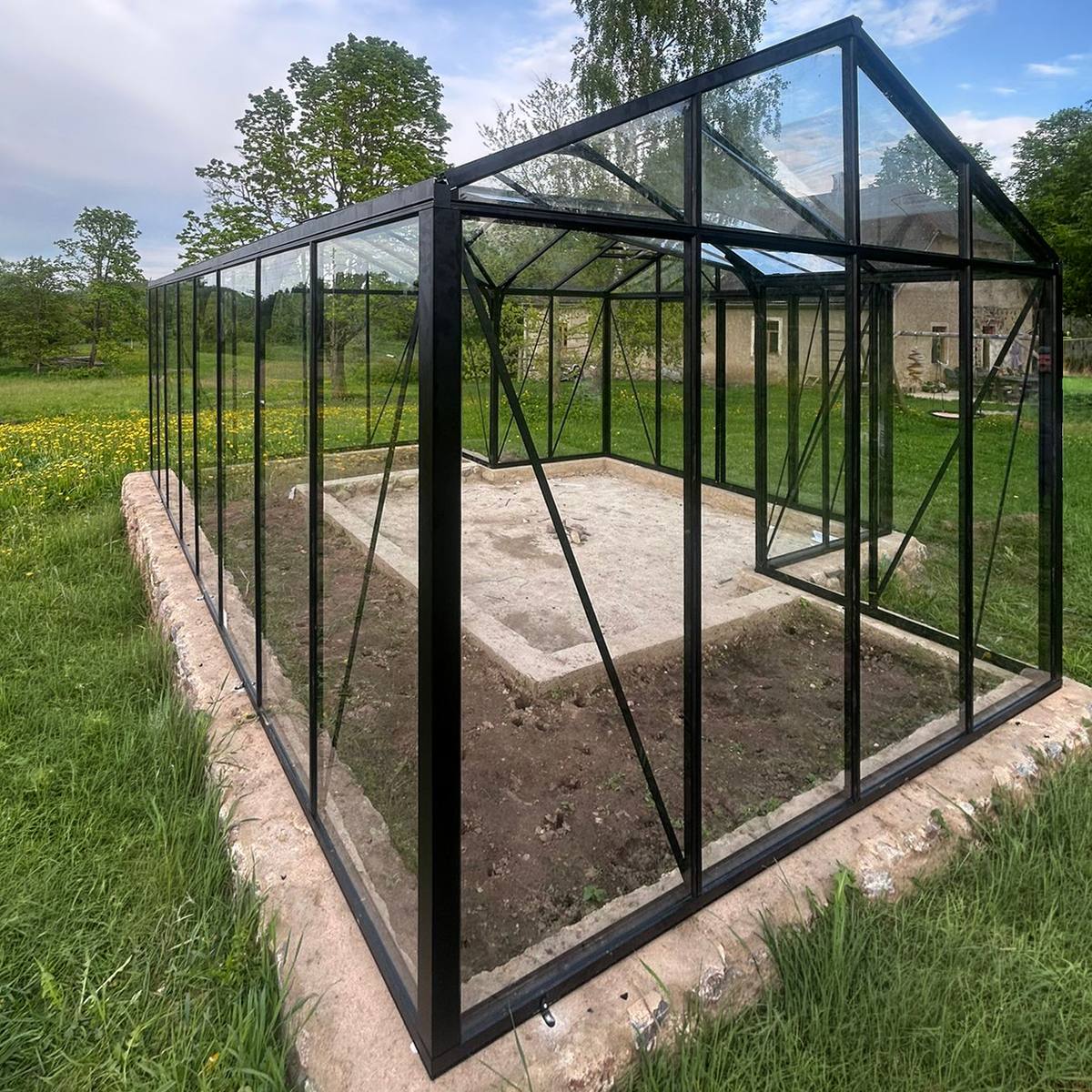
Placing an order is an important milestone, but it is not the end of the planning process. Between order confirmation and installation, there are several useful checks to complete: verifying the ordered configuration, confirming the delivery information, preparing the site, planning access and understanding what to do when the packages arrive.
This guide explains the usual progression from confirmation to dispatch without assuming that every order follows an identical timetable. The exact process can vary according to the product, configuration, destination, site and arrangements stated in your order documentation. Your confirmation, subsequent communications and the applicable Terms of Purchase & Delivery should therefore remain your primary references.
The post-order process at a glance
- Order confirmation: check the product, configuration, contact details and delivery address.
- Order review: the submitted information and selected configuration are reviewed as applicable.
- Site preparation: confirm permissions, placement, foundations, access and storage arrangements.
- Preparation before dispatch: keep your contact information current and avoid making assumptions about dates that have not been confirmed.
- Dispatch communication: read the information supplied and make sure the receiving arrangements are practical.
- Delivery: receive the shipment carefully, note visible packaging concerns and retain the paperwork.
- Inventory and installation planning: identify packages and components using the manual before assembly starts.
An order confirmation and a dispatch notice serve different purposes. Confirmation shows that the order has been recorded; it does not, by itself, mean that the goods are on the way. Keep each message so that you have a clear record of the process.

Stage 1: Read and verify the order confirmation
Read the full confirmation as soon as it arrives rather than checking only the order total. It is easier to raise a query promptly than after preparation or dispatch has progressed. Compare the confirmation against what you intended to buy and against any notes you made during selection.
- Check the customer name, email address and telephone number.
- Verify the complete delivery address, including the postcode and any relevant property identifier.
- Confirm the ordered product and listed configuration or options.
- Check quantities and any separately listed items.
- Review the payment and order information shown.
- Save the order number somewhere accessible.
- Read any attached or linked conditions and instructions.
Product names that appear similar may represent different structures or configurations. For example, an aluminium classic greenhouse, an aluminium limited edition greenhouse and a Bloomcabin Prestige greenhouse with metallic base should not be treated as interchangeable. Check the exact wording recorded on your order.
If no confirmation appears, check the email address used at checkout and look in filtered or junk folders. If you still cannot locate it, use the order details available to you when contacting Bloomcabin rather than placing a duplicate order. For general ordering guidance, see How to order.
Stage 2: Order and configuration review
After submission, an order may require administrative or configuration review before it can progress. This is distinct from dispatch. A review can help identify whether the recorded information is sufficiently clear, but it does not transfer responsibility for checking the customer’s intended model, site or delivery details.
Remain contactable using the telephone number and email address supplied. If a question is raised, respond with the order number and concise, unambiguous information. Avoid sending multiple contradictory messages through different channels, as this can make the requested correction harder to understand.
This is also a sensible point to revisit the technical context of the product. Pergola planning, for example, depends on whether the structure is attached or independent. The guide to choosing a wall-mounted or freestanding pergola explains the practical distinction. If the order concerns an adjustable-roof design, the overview of a bioclimatic pergola can help you plan its eventual use without changing the confirmed specification by assumption.
Changes, cancellations and corrected information
If you notice an error or want to request a change, contact Bloomcabin promptly. Include the order number, clearly identify the existing information and state the requested correction. Do not assume that a request has been accepted until you receive confirmation.
Whether a change or cancellation remains possible depends on the circumstances and the stage reached by the order. It may also affect price, preparation or other arrangements. Consult the Return and Cancellation Policy and the terms applying to your purchase.
Address corrections require particular care. A delivery address is more than a postcode: check house name or number, road, locality and any unit or business details. If site access is different from the postal address, describe that separately rather than modifying the address into unclear directions. Personal information associated with an order is handled in accordance with the Data Privacy Policy.
Do not alter foundations, supporting surfaces or fixing positions merely because you have requested an order change. Work from the configuration that has actually been confirmed.
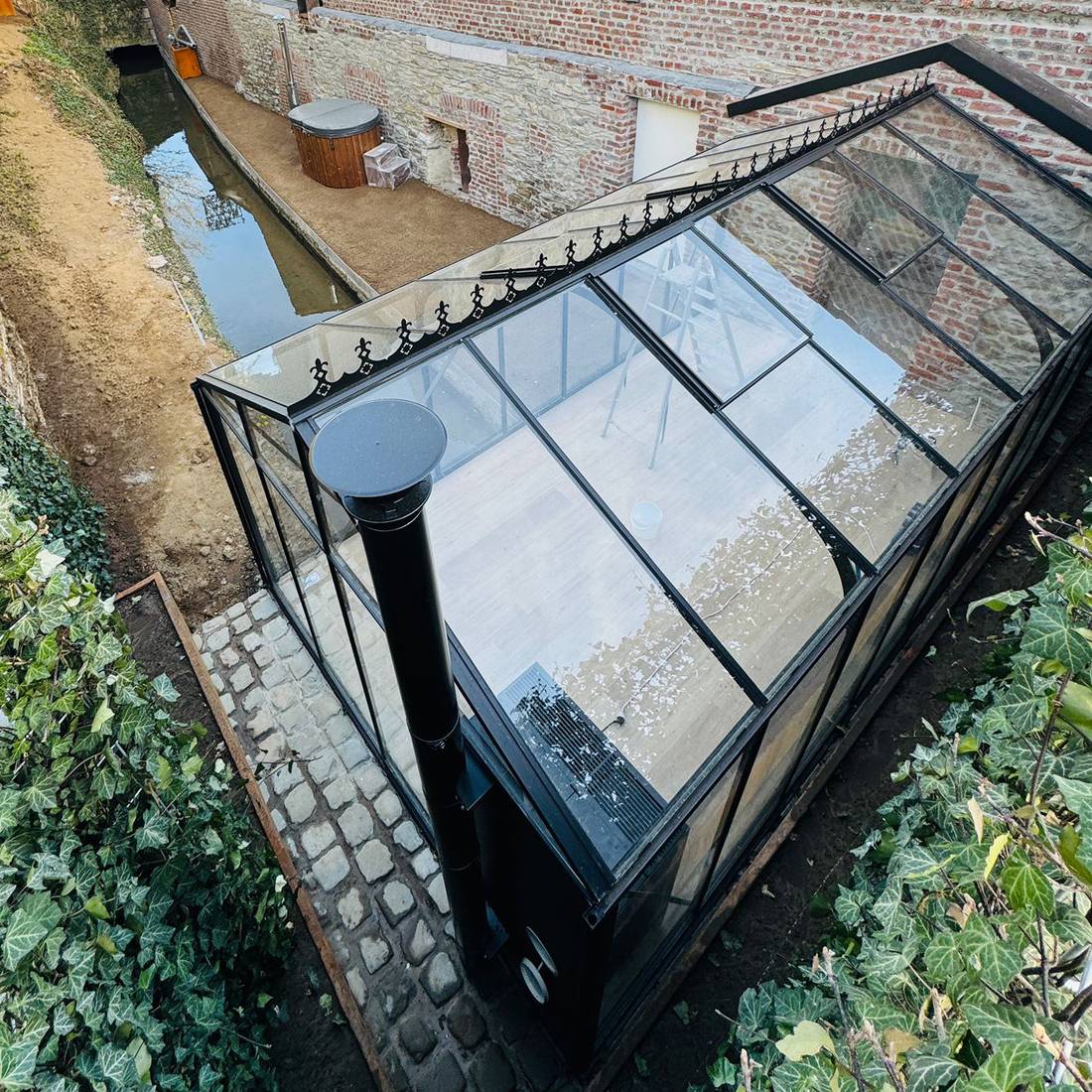
Stage 3: Prepare the site while the order progresses
The period before dispatch is useful for planning, measuring and coordinating trades. It is not a reason to guess critical dimensions. Product-specific documentation should govern the finished supporting surface and fixing arrangement.
Confirm permission before construction
Responsibility for confirming whether consent, planning permission, building control input, landlord approval, title restrictions or other local requirements apply rests with the property owner or project organiser. Requirements vary by location, property and structure. Check the applicable requirements before irreversible work begins.
The UK guide covering planning permission for a greenhouse or pergola is a useful starting point, but project-specific requirements must still be verified with the appropriate local body or adviser.
Review placement and use
Walk around the proposed position and consider how the assembled structure will function, not merely whether its footprint appears to fit. Look at door operation, paths, boundaries, overhanging branches, drainage, maintenance access and nearby windows or services. Allow for safe movement around the site during assembly.
For a compact growing space, the small greenhouse guide for UK gardens discusses size, layout and placement. For a larger garden room concept, the orangery greenhouse guide helps distinguish different intended uses. These planning resources do not replace the documentation for your ordered model.
Coordinate the foundation or supporting surface
A suitable foundation or supporting surface is fundamental to alignment, stability and successful assembly. It should be planned for the actual structure and local ground conditions. Do not derive construction dimensions from a website photograph, product family name or another customer’s project.
For a pergola, review how to prepare a foundation for a pergola and the relevant aluminium pergola dimensions. Give the installer or groundworker the correct model information and current documentation. Any local structural, ground, drainage or service considerations should be assessed by an appropriately competent person.
Check wall conditions for attached models
An attached structure introduces questions that do not arise in the same way with a freestanding model. The wall must be assessed for suitability, condition, level, obstructions and the proposed fixing approach. Cladding, insulation systems, drainage goods, pipes, cables, vents and projecting sills can all affect preparation.
Do not assume that the visible outer surface alone provides an appropriate structural fixing point. The relevant wall construction and local requirements need to be checked before work begins. If the building is not yours, obtain the required approval first.
Plan access and a protected staging area
Consider how the delivery will reach the property and where packages can be placed without blocking a pavement, shared drive, fire route, entrance or neighbour’s access. Note narrow roads, controlled gates, low branches, steep drives, parking restrictions and weak surfaces.
Choose a level, secure and weather-protected staging area close enough to the installation site to reduce unnecessary handling. Keep packages away from standing water, mud, moving vehicles and active building work. Do not lean long or glazed packages in an unstable position.
Who is responsible for what?
| Area | Customer or project organiser | Bloomcabin communications and documentation |
|---|---|---|
| Order details | Check the product, options, quantities, contact details and address. | Record and communicate the order information and any confirmed updates. |
| Permissions | Confirm all requirements applying to the property and proposed work. | Provide product information where available; this is not project-specific approval. |
| Site and foundation | Arrange a suitable site, supporting surface and competent assessment where needed. | Provide the applicable product or assembly information. |
| Access and receipt | Disclose relevant restrictions, remain contactable and arrange a suitable recipient. | Issue delivery or dispatch information as applicable. |
| Delivery checks | Inspect visible packaging, record concerns and retain documents. | Explain the appropriate reporting route when contacted. |
| Installation | Use the correct manual, tools, people and safe working method. | Make model-specific assembly guidance available where applicable. |
If you appoint a builder, landscaper or installer, define their scope in writing. Confirm who will verify measurements, prepare the foundation, receive the goods, perform the inventory, dispose of packaging and protect components. A contractor’s involvement does not automatically make them responsible for every stage.
Stage 4: Preparation before dispatch
Before a dispatch notice arrives, review the practical arrangements rather than committing to an unconfirmed installation date. Keep your phone and email details current, and advise Bloomcabin promptly if corrected information is required.
- Keep the order confirmation and order number readily available.
- Finish permission and site checks before construction work.
- Confirm that product-specific foundation information is being used.
- Tell relevant household members or site staff about the expected shipment.
- Identify a responsible adult who can receive and inspect the delivery.
- Prepare a safe, protected area for packages.
- Keep a camera or phone available to document packaging condition.
- Avoid booking non-refundable labour solely on an estimate.
If you are still comparing how the finished structure will be used, browse the broader Useful Information library. Product selection articles such as bioclimatic versus standard pergola are valuable before ordering, but after confirmation they should not be treated as evidence that your recorded configuration has changed.
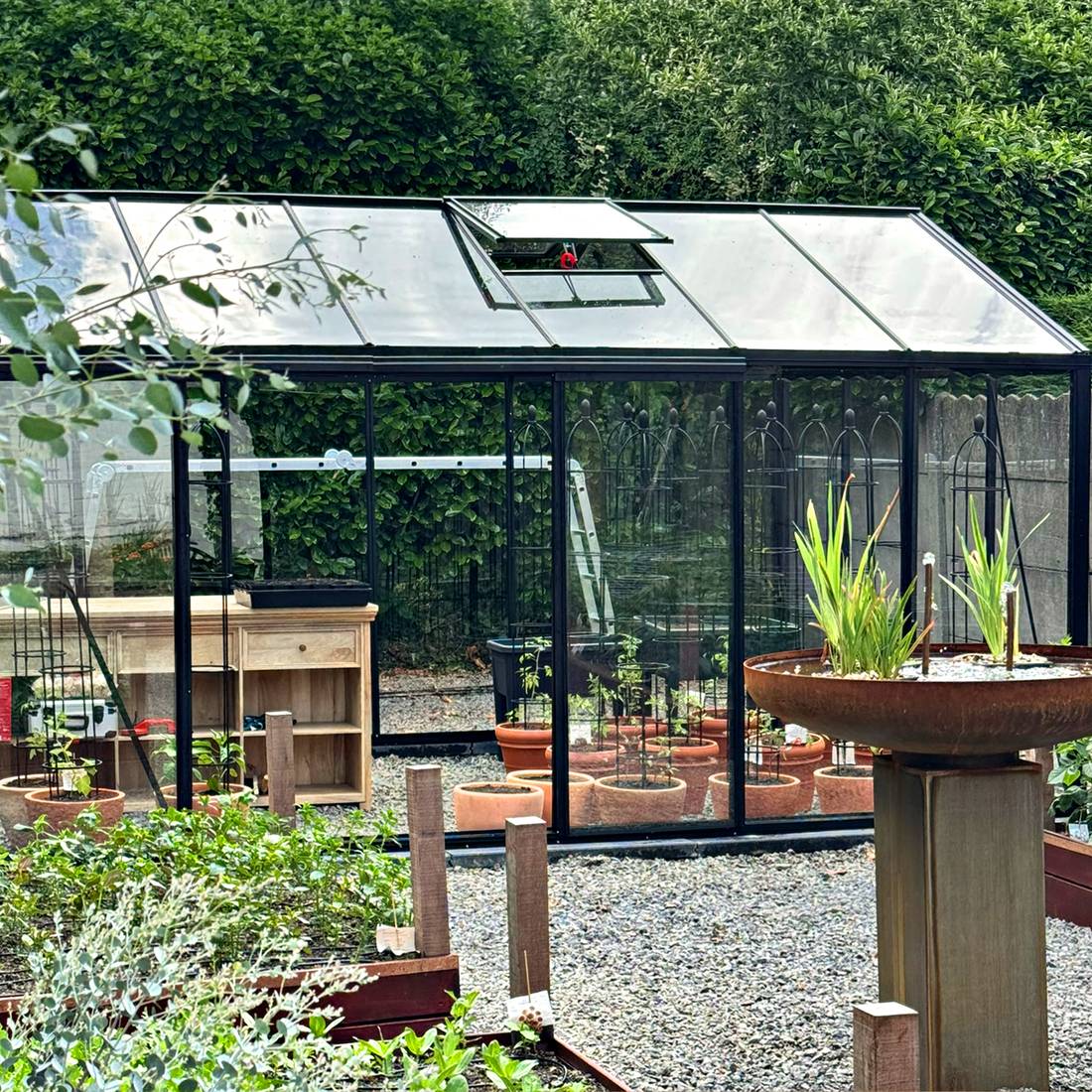
Stage 5: Dispatch communication
A dispatch communication indicates that the order has reached a later logistics stage. Read it fully and follow any instructions it contains. The information supplied may vary, so do not infer arrangements that are not stated.
Check that the contact and destination details remain correct. Make sure the nominated recipient understands that they are receiving component packages rather than an already assembled structure. If an access issue has emerged since ordering, communicate it immediately and describe it accurately.
A dispatch date and a delivery appointment are not necessarily the same thing. Travel, handling and final delivery arrangements form separate parts of the journey. Use confirmed communications when coordinating attendance, trades and equipment.
Stage 6: Receive and document the shipment
Allow enough time to receive the shipment without rushing. Before items are moved or packaging is discarded, inspect the visible condition and compare the delivery with the accompanying information. Follow any stated delivery procedure.
Receiving checklist
- Confirm that the shipment is intended for you and relates to the correct order.
- Count or identify packages where the documentation enables you to do so.
- Look for tears, crushing, punctures, water exposure or signs that a package has opened.
- Photograph the overall shipment and any visible concern before unpacking or moving it unnecessarily.
- Record relevant observations on the delivery documentation where the available process permits.
- Move packages to the prepared secure area using safe handling methods.
- Keep labels, paperwork and packaging until the inventory has been completed.
- Report a concern promptly through the appropriate Bloomcabin contact route, quoting the order number.
Visible packaging damage does not automatically establish that a component is damaged, just as intact outer packaging does not remove the need for a careful inventory. Record facts rather than assumptions. Useful photographs show both context and detail.
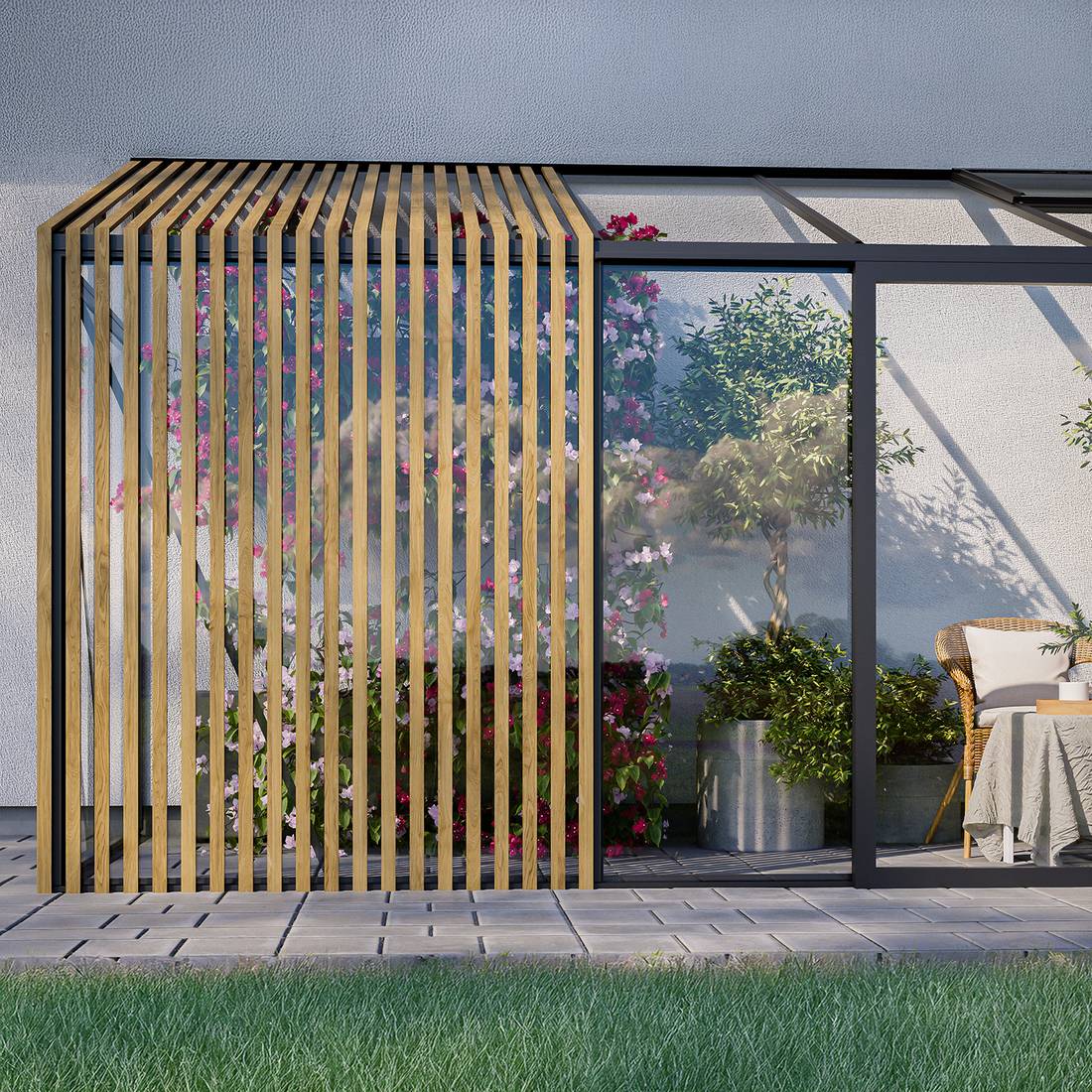
After delivery: inventory before installation
Do not begin assembly by opening every package at once and mixing the contents. First locate the manual for the exact model and configuration. Use its package or component information to work methodically. Manuals differ because structures, options and assembly sequences differ.
Group related parts while preserving labels. Protect glazing, profiles, fittings and finished surfaces from impact and contamination. Small fixings should remain in labelled containers or bags until required. If a part cannot be identified, note its package label and appearance and compare it with the manual before concluding that it is missing.
Installation should start only when the supporting surface is ready, the required components are present, suitable labour is available and conditions permit safe work. For future care, retain the guidance on maintenance of your aluminium greenhouse and review the applicable Warranty information.
From packages to installation: the Anna Koku Skola sequence
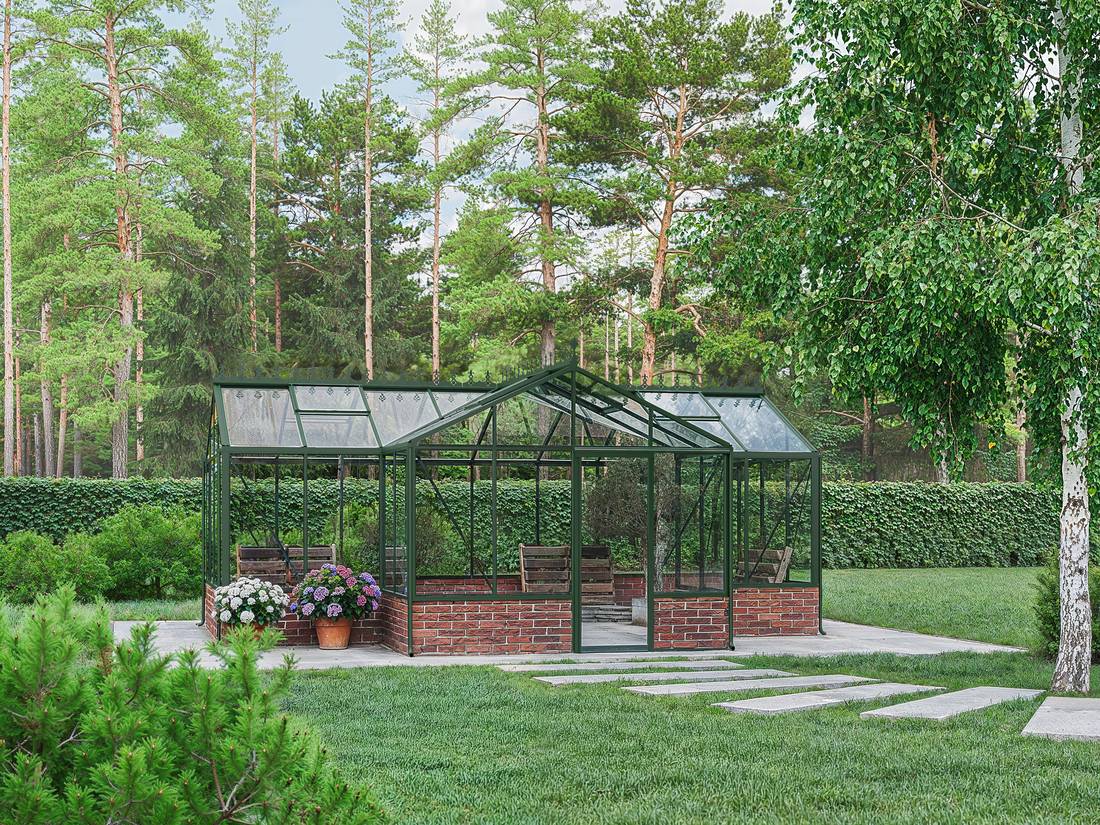
The Anna Koku Skola material should be understood as one continuous installation sequence, not as photographs of unrelated projects. Its value lies in showing the progression from a delivered set of components to an assembled structure.
- Site readiness: the location and supporting work are addressed before the main assembly advances.
- Organised unpacking: components are identified and kept in a workable order rather than spread randomly across the site.
- Initial structure: the base and principal frame establish the geometry for later stages.
- Progressive assembly: framing, panels and other model-specific elements are fitted in the sequence required by the relevant manual.
- Adjustment and checking: alignment, operation and fixings are checked as the structure becomes complete.
- Transition to use: only after construction checks does the space move from an installation site to its intended role.
The sequence is helpful for understanding workflow, but it is not a substitute for your own model’s manual. A Bloomcabin orangery, a Bloomcabin pergola and a Premium Classic Plus glass greenhouse must each be approached through the documentation supplied for the ordered structure.
Planning for use after assembly
Think about internal use before filling the completed structure. In a greenhouse, plan paths, staging, water access, ventilation routines and crop positions without obstructing doors or vents. The UK greenhouse growing calendar and the guide to preparing a new aluminium greenhouse for spring can help turn an empty structure into a practical growing space.
For a pergola, consider furniture positions, circulation and how the outdoor area will be used in changing conditions. Keep operation and drainage areas clear. The discussion of whether louvred pergolas are worth it provides further context for day-to-day use.
Do not add loads, services, attachments or modifications simply because they appear on another project. Any proposed change must be appropriate to the actual structure and should be checked against the relevant guidance and local requirements.
Records to keep after the project is complete
- Order confirmation and confirmed amendments.
- Invoices, payment records and delivery paperwork.
- Dispatch and delivery communications.
- Photographs taken when receiving and unpacking the shipment.
- The correct assembly manual and component information.
- Records relating to permissions, foundations or work by contractors.
- Maintenance notes and dates of relevant inspections or adjustments.
- Warranty information and correspondence concerning the order.
Store digital copies using the order number in the file names. Good records make it easier to identify the model, explain previous work and provide accurate information if assistance is required later.
Frequently asked questions
Does an order confirmation mean my greenhouse has been dispatched?
No. Confirmation records the order and its details. Dispatch is a later stage and should be supported by separate communication. Do not make receiving or installation assumptions based only on the initial confirmation.
When will my order be dispatched or delivered?
Use the information supplied for your individual order. Timing can vary, and dispatch is not necessarily the same as final delivery. Avoid relying on an unconfirmed date when booking labour or arranging access.
Can I change the model or delivery address after ordering?
Contact Bloomcabin promptly with the order number and the exact requested correction. A change cannot be assumed to be possible or accepted until it is confirmed. The stage of the order and applicable policy must be considered.
Should I build the foundation immediately after ordering?
Not from estimated measurements. First confirm the ordered configuration and use its applicable documentation. Permissions, ground conditions, drainage and local requirements should be resolved before irreversible work begins.
Can I book an installer before receiving a dispatch notice?
You may discuss the project and provisional availability, but avoid committing to non-refundable dates on the basis of an estimate. The installer should also receive the correct manual and foundation information before beginning work.
What if my property has restricted delivery access?
Report the restriction as early as possible. Explain narrow roads, gates, parking controls, steep or weak surfaces, overhead obstructions and any difference between the postal address and practical access point. Do not assume the issue will be apparent from the postcode.
What should I do if packaging looks damaged?
Photograph the whole shipment and detailed areas before unnecessary movement or unpacking. Record factual observations in accordance with the delivery process, retain the packaging and contact Bloomcabin promptly with the order details.
What if I cannot identify a component?
Keep the component with its package label and compare it carefully with the exact manual. Do not force it into a position or assume it is surplus. Record the label and clear photographs if you need to request help.
Are installation manuals the same for all Bloomcabin models?
No. Use the manual for the exact model and configuration. Similar-looking products can have different components and sequences, particularly where structures differ in form, material or attachment method. For example, information about wooden greenhouses and conservatories cannot automatically be applied to an aluminium structure.
Can I store the shipment outdoors until installation?
A secure, dry and suitably protected storage area is preferable. Follow product-specific instructions and protect packages from standing water, unstable stacking, impact and unauthorised access. Do not assume outer packaging is intended for prolonged outdoor exposure.
What should I check before considering the project complete?
Check the assembly against the manual, confirm doors and vents operate correctly, review alignment and fixings, clear packaging and hazards, and retain all records. Any site-specific finishing, drainage or local compliance matters should also be completed.
Where can I see how other customers approached their projects?
Greenhouse reviews and the Bloomcabin blog provide ideas and project context. Treat these as inspiration rather than technical instructions for your own model or site.
Final pre-dispatch readiness checklist
- Order confirmation checked against the intended purchase.
- Customer contact details and delivery address verified.
- Requested corrections confirmed rather than assumed.
- Applicable permissions and property approvals checked.
- Final position assessed for access, operation and maintenance.
- Foundation or supporting surface based on the correct documentation.
- Wall construction assessed where the structure will be attached.
- Delivery restrictions communicated clearly.
- Responsible recipient and protected staging area arranged.
- Installation timing kept flexible until reliable delivery information is available.
- Correct assembly manual identified.
- Camera, paperwork and order number ready for receiving checks.
A well-managed post-order period reduces uncertainty at delivery and gives the installation team a better starting point. Verify rather than assume, keep a clear written record and base every site decision on the product that has actually been confirmed.
