



COMPARE
Greenhouse Glazing Options Explained
A practical guide to clear, Bioclean, Stopsol, mirror and matte glass, plus polycarbonate. Compare visibility, privacy, solar control, cleaning and installation considerations before choosing greenhouse glazing.
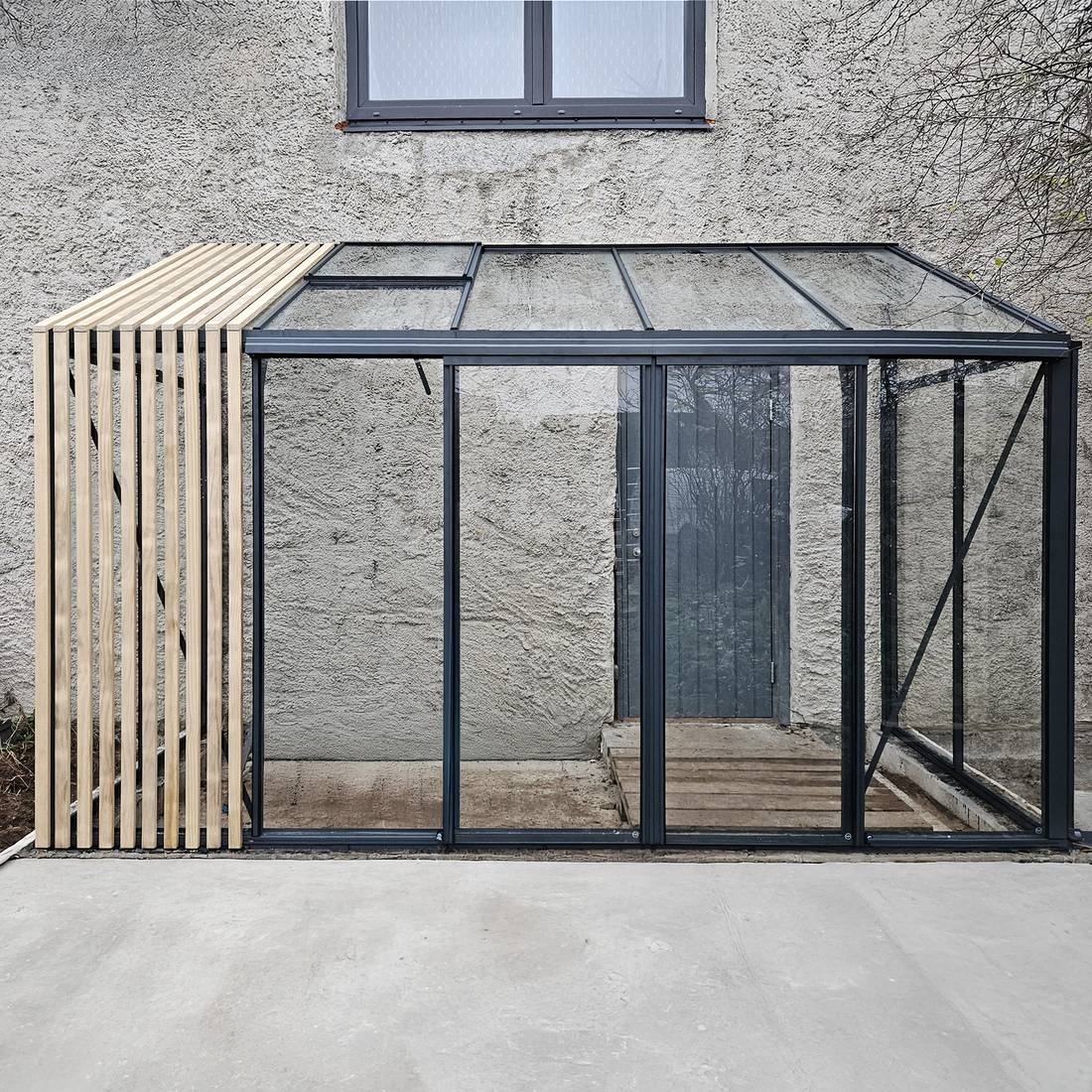
Glazing affects far more than the appearance of a greenhouse. It influences visibility, privacy, daylight distribution, solar gain, maintenance and the way the structure sits within its surroundings. The right choice therefore depends on how the greenhouse will be used, where it will stand and which qualities matter most to you.
This guide explains the main differences without assuming that one material is universally best. Exact coatings, glass build-ups, panel thicknesses and performance values can vary, so these should always be confirmed for the greenhouse being quoted. For a broader introduction to available structures, visit Greenhouses & Conservatories or read the overview of glazing options for aluminium greenhouses.
Quick comparison of greenhouse glazing options
| Glazing | Main characteristic | Often considered when | Important limitation |
|---|---|---|---|
| Clear glass | Direct views and visual openness | The outlook and a traditional glass appearance are priorities | Offers little visual screening |
| Bioclean glass | Coated exterior intended to reduce dirt build-up | Access for regular external cleaning may be inconvenient | Still needs inspection and occasional washing |
| Stopsol glass | Solar-control coating with a reflective character | Solar gain, glare and a distinctive exterior are concerns | Does not prevent overheating by itself |
| Mirror glass | Reflection and screening under favourable light conditions | Daytime visual separation is wanted | Privacy changes as indoor and outdoor light levels change |
| Matte glass | Diffused views and more consistent screening | Privacy is more important than an unrestricted outlook | Shapes and light may remain visible through it |
| Polycarbonate | Lightweight, translucent panel glazing | Low weight, diffused light or impact behaviour is a priority | Does not provide the same clear view or glass appearance |
The table is a decision aid rather than a technical specification. Ask what exact glazing is included, where any coating is positioned and whether roof and wall options differ.
1. Clear glass: maximum visual openness
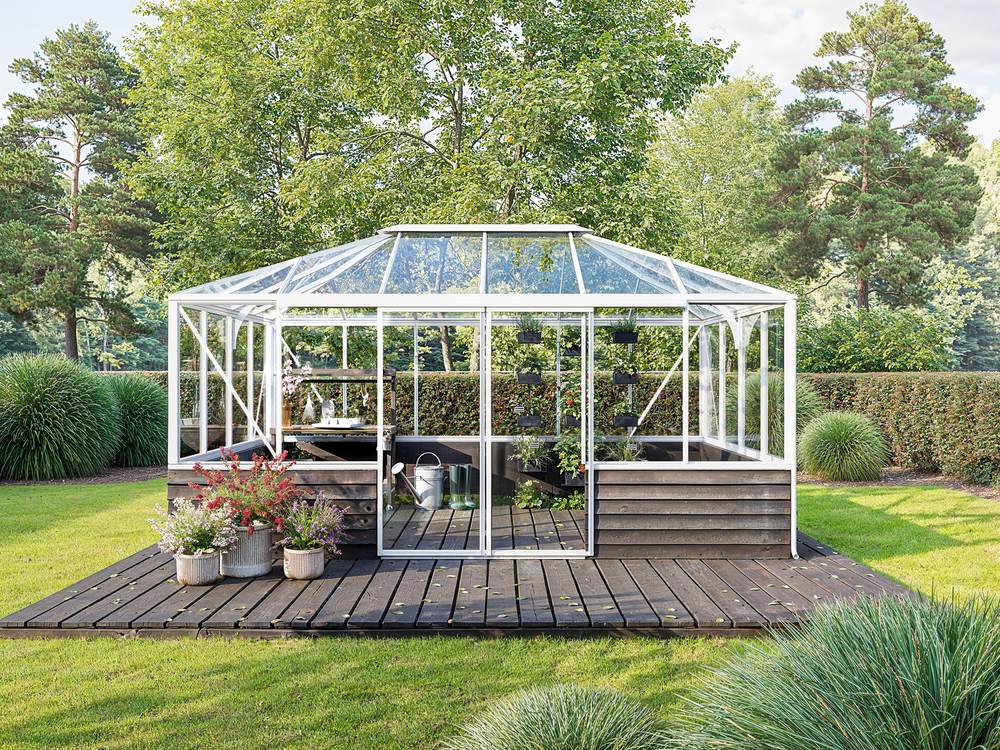
Clear glass is the straightforward choice when uninterrupted views are central to the project. It visually connects the interior with planting, the garden and surrounding buildings. This can make a modest structure feel more open and may suit a greenhouse used for sitting, entertaining or displaying plants as well as cultivation.
Its transparency also means that stored equipment, staging and untidy growing areas remain visible. It provides no meaningful privacy from nearby paths or neighbouring windows. Direct sunlight can create glare and substantial heat gain, particularly where a large glazed elevation faces the sun.
Clear glass works especially well when the architecture itself is meant to remain light and elegant. Examples to compare include the Premium Classic Plus glass greenhouse and the Aluminium Classic greenhouse. Further context is available in the guide to premium glass greenhouses for year-round gardening.
2. Bioclean glass: a lower-cleaning exterior surface
Bioclean glass has a specialist exterior surface designed to make organic dirt easier to break down and rinse away through exposure to daylight and rain. The practical aim is reduced dirt adhesion and less demanding external cleaning, rather than a surface that never needs attention.
Performance depends on exposure. Roof areas sheltered by trees, walls or adjoining buildings may receive less daylight or rain. Pollen, mineral deposits, bird mess and debris can still require manual cleaning. The water used for washing and local environmental conditions can also affect the final appearance.
Bioclean glass is worth considering where roof access is awkward or where retaining a clean exterior is a strong priority. Confirm which face carries the treatment and follow the supplied care instructions; abrasive tools or unsuitable chemicals may affect specialist surfaces. The general principles in maintenance of your aluminium greenhouse remain relevant even when lower-cleaning glazing is selected.
3. Stopsol glass: solar control with a reflective appearance
Stopsol is a coated glass associated with solar control and a more reflective external appearance. Depending on the exact glass, lighting and viewing angle, the coating may give the greenhouse a darker, more architectural character than ordinary clear glazing. It can help manage some incoming solar energy and glare.
Solar-control glass should not be treated as a complete temperature-control system. A greenhouse can still become very warm during sunny weather. Roof vents, doors, cross-ventilation, internal layout and, where appropriate, additional shading remain important. Anyone growing temperature-sensitive plants should consider the whole environmental strategy rather than choosing glazing in isolation.
Reflective glass can complement a contemporary frame, including formats such as the Aluminium Limited Edition greenhouse. Before ordering, view an appropriate sample if possible because digital photographs cannot reliably reproduce reflectivity, colour or transparency.
4. Mirror glass: screening that depends on light
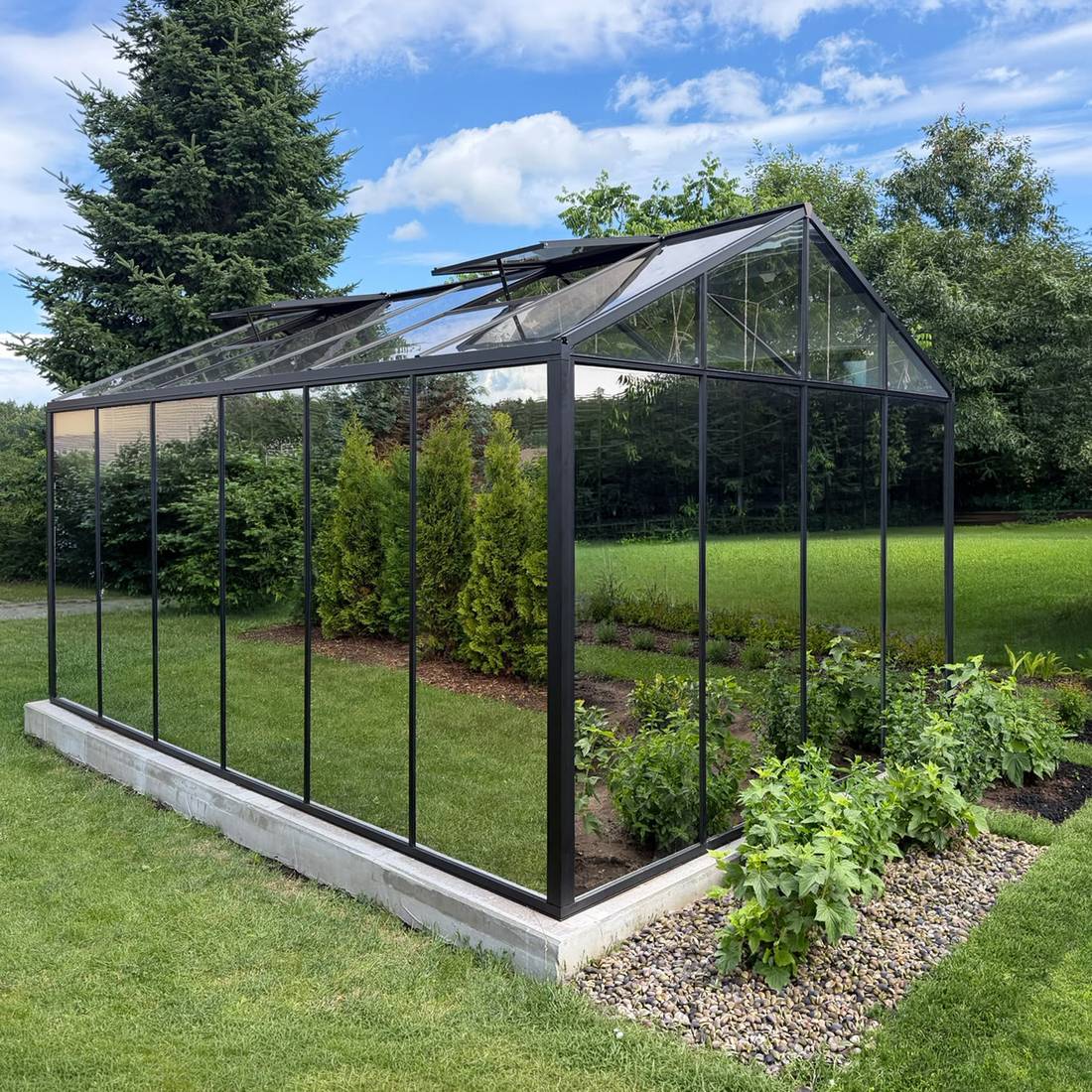
Mirror glass can create useful daytime screening by reflecting the brighter side of the glazing. It can also make a greenhouse appear visually lighter against planting because the surface picks up colours and movement from the garden.
It is essential to understand that the effect depends on relative light levels. When it is brighter outside than inside, external reflection may reduce the view into the greenhouse. At night, an illuminated interior can become clearly visible from a darker garden. Mirror glass must therefore not be treated as guaranteed one-way privacy.
Consider what neighbours and passers-by can see during both daytime and evening use. Blinds, screens, planting or matte panels may be more dependable where privacy is critical. On a design-led structure such as the Bloomcabin Prestige greenhouse with metallic base, reflection should be assessed as part of the complete exterior composition.
5. Matte glass: privacy with diffused views
Matte glass obscures direct views by scattering light. It generally provides more consistent screening than reflective glazing because its effect is not based solely on one side being brighter. It can suit boundaries, changing areas, storage zones or elevations facing a public path.
Matte does not necessarily mean fully opaque. Bright objects, silhouettes and movement may remain noticeable, especially when close to the panel or strongly lit from behind. The level of obscuration should be checked using a representative sample under realistic lighting.
Diffused light can reduce harsh visual contrast and may distribute daylight more softly, but the exact transmission varies by product. Matte panels can also be combined with clear viewing areas. This approach may be useful in a larger social structure such as the Bloomcabin orangery, where different elevations serve different purposes.
6. Polycarbonate: lightweight, translucent glazing
Polycarbonate greenhouse panels are lightweight and generally provide diffused rather than completely clear light. Multiwall forms contain internal channels, while other panel constructions may behave differently. Thickness, layer structure, surface protection and thermal performance must be confirmed for the specific option offered.
The material can be useful where low panel weight or impact behaviour is more important than a glass-like outlook. Diffused light may also reduce sharp shadows. However, polycarbonate has a different appearance from glass, and dirt or condensation within open panel channels can be difficult to address if edges are not prepared and installed correctly.
Expansion, orientation, compatible fixings and sealed or ventilated edge details must follow the installation instructions. Do not assume that panels can be cut or fitted in the same way as glass. The UK greenhouse polycarbonate guide explains the subject further. Polycarbonate may be especially practical for compact formats such as an aluminium mini wall greenhouse, subject to the options available for that model.
How to choose glazing by project priority
Begin with the problem you need the glazing to solve. Choosing by appearance alone can overlook privacy, cleaning access or growing conditions.
- Best possible view: start with clear glass.
- Reduced external cleaning effort: investigate Bioclean glass and the exposure needed for it to work effectively.
- Solar control and a reflective finish: consider Stopsol, alongside ventilation and shading.
- Daytime screening with reflection: mirror glass may suit, provided its night-time limitation is accepted.
- More dependable visual screening: consider matte glass.
- Low panel weight and diffused light: assess polycarbonate.
Growing use also matters. Review the practical relationship between glazing, ventilation and crops in the greenhouse temperature and humidity guide. For frame and format choices beyond glazing, see the largest selection of design options and the introduction to aluminium greenhouses and conservatories.
Mixing glazing types within one greenhouse
Using one glazing type everywhere is visually simple, but a mixed specification can solve different needs. Clear glass might preserve the main garden view, while matte glass screens a boundary-facing wall. Solar-control roof glazing could be considered above a sunny seating area, while other elevations remain clear.
Mixed glazing needs deliberate planning. Check the appearance from inside and outside, especially where neighbouring panels differ in colour or reflectivity. Establish whether the selected panels share compatible thicknesses, edge treatments and fitting systems. A complex plan such as a T-shaped garden orangery may create several orientations, making elevation-by-elevation decisions particularly useful.
Glazing considerations for different greenhouse forms
A freestanding greenhouse receives light from several directions and may have exposed roof slopes. A lean-to or wall-mounted greenhouse has a different daylight pattern because the supporting wall can shade part of the structure while also storing and releasing heat. Boundary-facing walls may require greater privacy than garden-facing elevations.
In an attached design, reflections, drainage, access for cleaning and the relationship with windows in the main building deserve attention. See the wall-mounted T-model greenhouse orangery as an example of a form where several roof and wall zones must work together.
Large orangery-style buildings may contain planting, dining and circulation areas, each with different glazing needs. The guide to orangery greenhouse design and greenhouse-versus-conservatory choices can help clarify intended use. Also check whether local planning permission, listed-building consent or other approval may apply; requirements depend on the site and proposal. The UK overview of planning permission for a greenhouse or pergola provides a starting point, but the applicable local requirements must be verified.
A practical selection process
- Define the use. Record whether the space is mainly for propagation, general growing, overwintering, relaxation, entertaining or mixed use.
- Map orientation and surroundings. Note sunny roof slopes, shade, nearby trees, overlooking windows, paths and the principal garden view.
- Rank priorities. Put view, privacy, solar control, cleaning, panel weight and appearance in order.
- Divide the greenhouse into zones. Roofs and individual elevations do not automatically need the same solution.
- Request exact details. Confirm glass or panel type, finish, coating position, safety treatment where relevant and compatibility with the chosen frame.
- Assess samples properly. View them from both sides, against dark and light backgrounds, in sunlight and shade.
- Plan environmental control. Coordinate glazing with doors, vents, shading and intended planting. The guide to greenhouse sliding-door options may help when planning access and ventilation.
- Approve a written schedule. Identify every roof and wall panel so that mixed glazing cannot be misunderstood.
If wider questions remain, consult the frequently asked questions about aluminium greenhouses before finalising the order.
Receiving and inspecting glazing
Arrange a safe, level place where the delivery can be checked without blocking access. Compare packages and panel references with the delivery documentation before installation begins. Look for damaged packaging, chipped edges, cracks, major scratches, distorted polycarbonate sheets or missing components.
Keep panels supported and secured in accordance with the handling instructions. Glass edges are vulnerable, and large sheets can be difficult to control in wind. Do not drag panels across one another. Leave protective films on polycarbonate until the specified stage, but do not leave them exposed longer than instructed. Record any concern promptly with photographs and panel references rather than fitting a questionable item.
Installation: treat glazing as a planned sequence
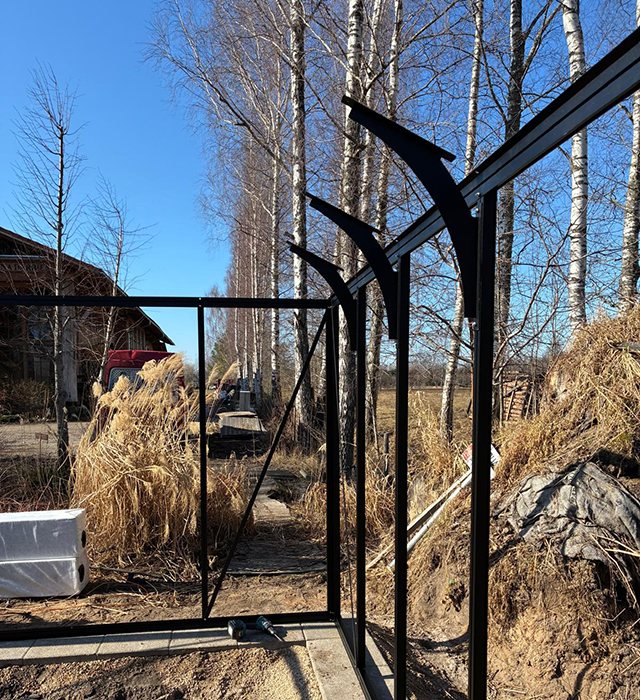
Glazing should begin only when the frame is correctly assembled, aligned, secured and ready to receive panels. Follow the model-specific manual rather than relying on a generic method. Sort panels by elevation and installation order, and identify coated faces before lifting begins.
Check weather conditions and keep the work area clear. Wind can make even lightweight sheets hazardous. Use suitable handling equipment and enough competent people for the panel size and site. Gaskets, blocks, caps, tapes and fixings must be used in the specified positions; substitutions or excessive tightening can damage glazing or prevent necessary movement.
For polycarbonate, verify channel direction and edge preparation. For coated glass, confirm which face points outwards. After each section, check seating and retention before moving on. Never alter safety glass on site unless the documentation expressly allows the proposed operation.
Cleaning and ongoing care
Inspect glazing seasonally and after severe weather. Remove leaves from gutters and roof junctions, check seals and retainers, and deal with algae or dirt before it becomes established. Ventilation hardware and doors should also remain free to operate.
Use the cleaning method specified for the glazing. A soft cloth or non-abrasive implement and a compatible mild solution are generally safer than scouring products, blades or aggressive chemicals, but the supplied instructions take precedence. Rinse loose grit away before wiping because trapped particles can scratch surfaces or coatings.
Do not assume a pressure washer is suitable. Concentrated water can affect seals, force contamination into joints or damage a specialist surface. Safe access matters as much as cleaning technique: do not stand on glazing, and use an appropriate access method for roof panels. More guidance is available in maintenance of your aluminium greenhouse and the wider useful information library.
Frequently asked questions
Which glazing gives the clearest view?
Clear glass normally provides the most direct, glass-like view. Reflections will still occur, particularly at certain angles or when one side is much brighter. Polycarbonate and matte glass diffuse or obscure the view, while coated solar-control and mirror glass alter it.
Does Bioclean glass mean I never need to wash the greenhouse?
No. It is intended to reduce the effort associated with exterior dirt, not eliminate maintenance. Sheltered areas, stubborn deposits and locations with limited rain may still need washing. Gutters, seals, frames and the interior also require routine care.
Will Stopsol glass keep a greenhouse cool?
It may reduce part of the incoming solar energy, depending on the exact specification, but it cannot guarantee a cool interior. Greenhouse temperature also depends on orientation, outside conditions, ventilation, open doors, shading, thermal mass and internal use.
Is mirror glass private at night?
Not reliably. When the greenhouse interior is illuminated and the garden is dark, people outside may be able to see in. Use matte glazing, blinds, screens or suitable planting if evening privacy is essential.
Is matte glass completely opaque?
Not necessarily. It obscures detail, but silhouettes, colours or bright objects may remain visible. Ask to see a sample and test it at realistic viewing distances with lighting on both sides.
Is polycarbonate better than glass?
Neither is better in every situation. Polycarbonate offers low weight and diffused light; glass provides a different appearance, surface feel and view. Compare the exact proposed products, intended use, installation requirements and maintenance expectations.
Can I combine glass and polycarbonate?
Potentially, but only where the greenhouse system is designed to accept the proposed combination. Panel thickness, retention details, movement and appearance must all be checked. Obtain written confirmation before ordering.
Can I change glazing after ordering?
Changes may be difficult once panels have been specified, processed or allocated. They can also affect cost, compatibility and the installation schedule. Ask before confirming the order and ensure every approved change appears in the written documentation.
Should every roof panel use the same glazing?
Not automatically. Different roof slopes can receive different amounts of sun, but mixed finishes may look inconsistent and require a precise panel schedule. The available combinations must also be confirmed for the chosen model.
Does special glazing replace greenhouse shading?
No glazing should automatically be assumed to remove the need for shading. Sensitive plants may still need seasonal protection, and occupied spaces may require glare management. Plan glazing, ventilation and shading as one system.
How do I know which side of coated glass faces outward?
Use the panel labels, order documentation and installation manual. Do not decide from appearance alone because some coatings are difficult to identify. Keep labels attached until the panel position and orientation have been verified.
What should I decide before requesting a quote?
Provide the greenhouse model, intended use, site orientation, preferred view, privacy concerns, roof access, maintenance priorities and any elevations requiring special treatment. State whether you want one glazing type throughout or a mixed schedule.
Final decision checklist
- Have you defined how the greenhouse will be used throughout the year?
- Have you mapped sun, shade, boundaries, overlooking and important views?
- Is privacy needed during the day, at night or both?
- Have you separated roof requirements from wall requirements?
- Have you considered ventilation and shading alongside solar-control glazing?
- Have you checked the exact appearance with a suitable sample?
- Are coating orientation, safety treatment and panel compatibility documented?
- Can every external surface be cleaned and inspected safely?
- Is mixed glazing recorded panel by panel?
- Have delivery inspection, storage and installation responsibilities been agreed?
A successful choice is one that balances growing conditions, human comfort, architectural appearance and practical maintenance. Compare the complete specification rather than relying on a glazing name alone, and keep the approved panel schedule with the greenhouse documentation for installation and future care.
