



MATERIALS
Tempered Safety Glass: Strength, Safety and Long-Term Greenhouse Performance
Tempered safety glass combines clear views, useful strength and safer breakage behaviour, but correct transport, edge protection, frame preparation and maintenance remain essential. This guide explains what UK greenhouse owners should check from ordering through to long-term use.
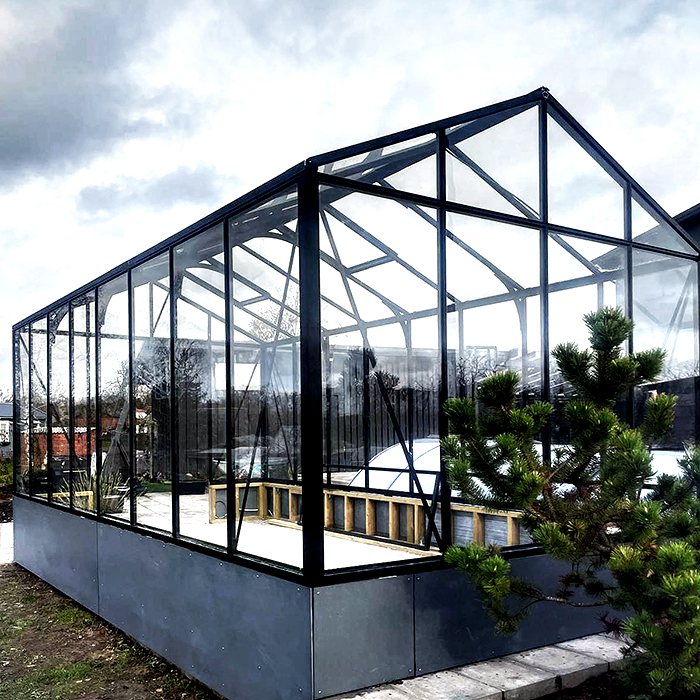
Understanding tempered safety glass in a greenhouse
In the UK, tempered glass is more commonly described as toughened safety glass. It is widely used where clear glazing, weather resistance and safer breakage behaviour are important. In a greenhouse, it provides an uninterrupted view of plants, admits natural light and creates a clean architectural finish that works particularly well with a precisely made aluminium frame.
The word “safety” should not be mistaken for “unbreakable”. Toughened glass is considerably more resistant to impact and thermal stress than ordinary annealed glass of a comparable type, but it can still break. Its main safety benefit is how it behaves when failure occurs: instead of forming a few large, sharp shards, it generally breaks into many relatively small fragments. Those fragments can still cut, scratch or injure, so broken glazing must always be handled cautiously.
Glass is only one part of a complete structure. Panel size, edge condition, supports, gaskets, frame alignment, fixings and foundation accuracy all affect real-world performance. Before selecting a greenhouse, compare the complete structures in the greenhouses and conservatories range, rather than judging the glazing in isolation. The Premium Classic Plus glass greenhouse also illustrates how transparent glazing contributes to the overall appearance of an aluminium building.
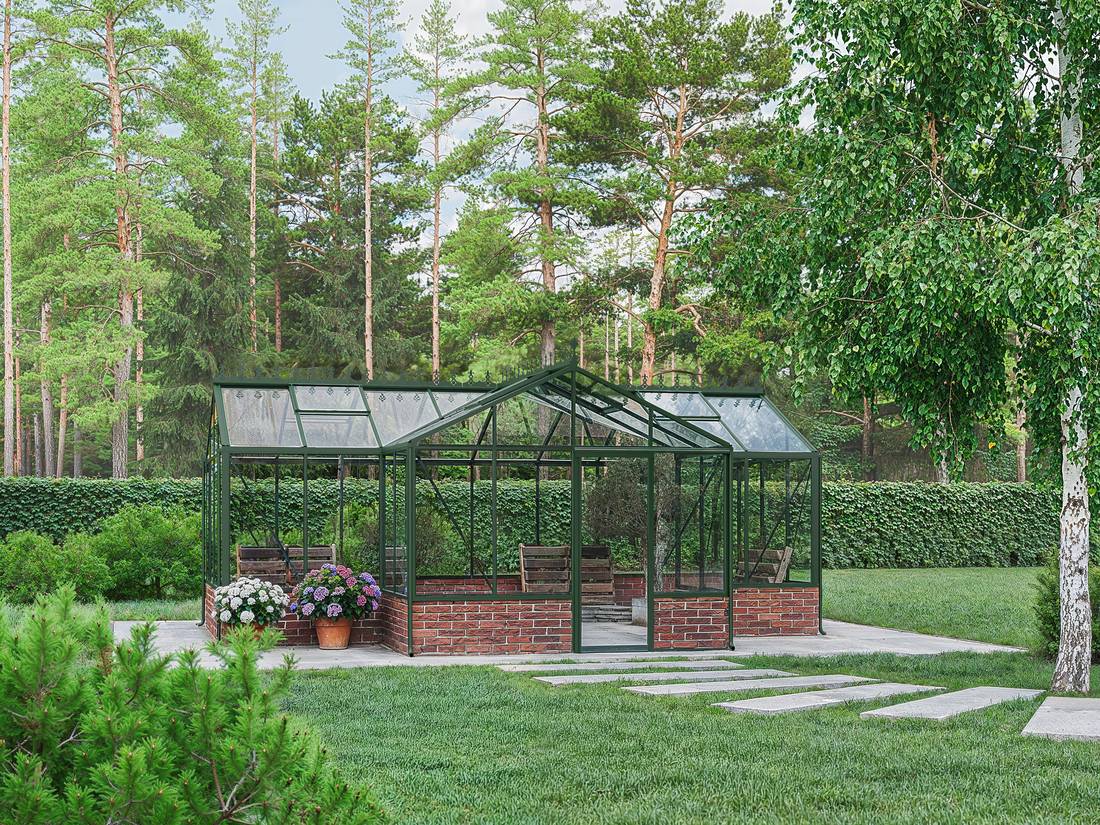
What makes glass tempered?
Toughened glass begins as glass that has already been cut, edged and prepared to its final form. It is heated under controlled conditions and then cooled rapidly. This treatment creates compressive stress at the surfaces and balancing tensile stress within the glass. The resulting stress pattern gives the finished pane greater resistance to certain mechanical and temperature loads than untreated glass.
All machining must normally be completed before this process. A finished toughened panel should not be cut, drilled, ground down or reshaped on site. Disturbing the established stress pattern can cause the entire pane to fragment immediately. If a panel is the wrong shape or its holes do not align, the correct response is to stop and identify why—not to modify the glass.
The tempering process does not make every point on a panel equally resistant. The broad faces usually tolerate normal handling better than the edges and corners. A light-looking tap from a hard tool against an exposed edge can be more serious than a broader impact against the centre. This is why correct packing, lifting and seating are fundamental parts of greenhouse glazing.
Strength, safety and limitations at a glance
| Characteristic | Practical meaning | What it does not mean |
|---|---|---|
| Improved impact resistance | The glass withstands normal use and some accidental contact better than ordinary glass. | It will not resist every stone, tool strike or heavy falling branch. |
| Safer fragmentation | On failure, the panel generally breaks into numerous smaller pieces. | The fragments are not harmless and still require protective equipment. |
| Temperature resistance | It tolerates temperature differences better than untreated glass. | Sudden extreme heating, localised heat or trapped edges cannot be ignored. |
| Stable transparency | Glass does not normally yellow in the manner associated with some plastics. | Dirt, algae, mineral deposits and condensation cannot form on the surface. |
| Rigid surface | Correctly supported panes retain a crisp, flat appearance. | The glass can compensate for a twisted frame or uneven foundation. |
Different glazing materials suit different priorities. Anyone still comparing transparent glass with multiwall panels can consult the UK greenhouse polycarbonate guide. Compare light, visual character, maintenance, insulation approach and replacement requirements—not merely one headline feature.
Why tempered glass suits aluminium greenhouses
Aluminium and toughened glass complement one another visually and structurally. Slim metal profiles can create clearly defined glazing bays, while the rigid panes provide bright, unobstructed views. Aluminium does not require the same surface treatment regime as a traditional timber frame, although joints, seals, drainage paths, doors and vents still need inspection.
A suitable base and accurately assembled frame distribute loads around each opening. Glass should sit in its intended supports without hard, concentrated contact against unprotected metal. Gaskets, blocks, caps or retaining components supplied for the particular system must be installed in the positions stated in its instructions. They are functional parts, not optional finishing details.
For different architectural expressions, compare the Classic aluminium greenhouse, an aluminium Limited Edition greenhouse and the Prestige greenhouse with metallic base. These links are useful for design comparison; the order documentation for the selected model remains the authority for its glazing arrangement. For a broader ownership perspective, see the guide to a long-lasting, low-maintenance aluminium greenhouse.
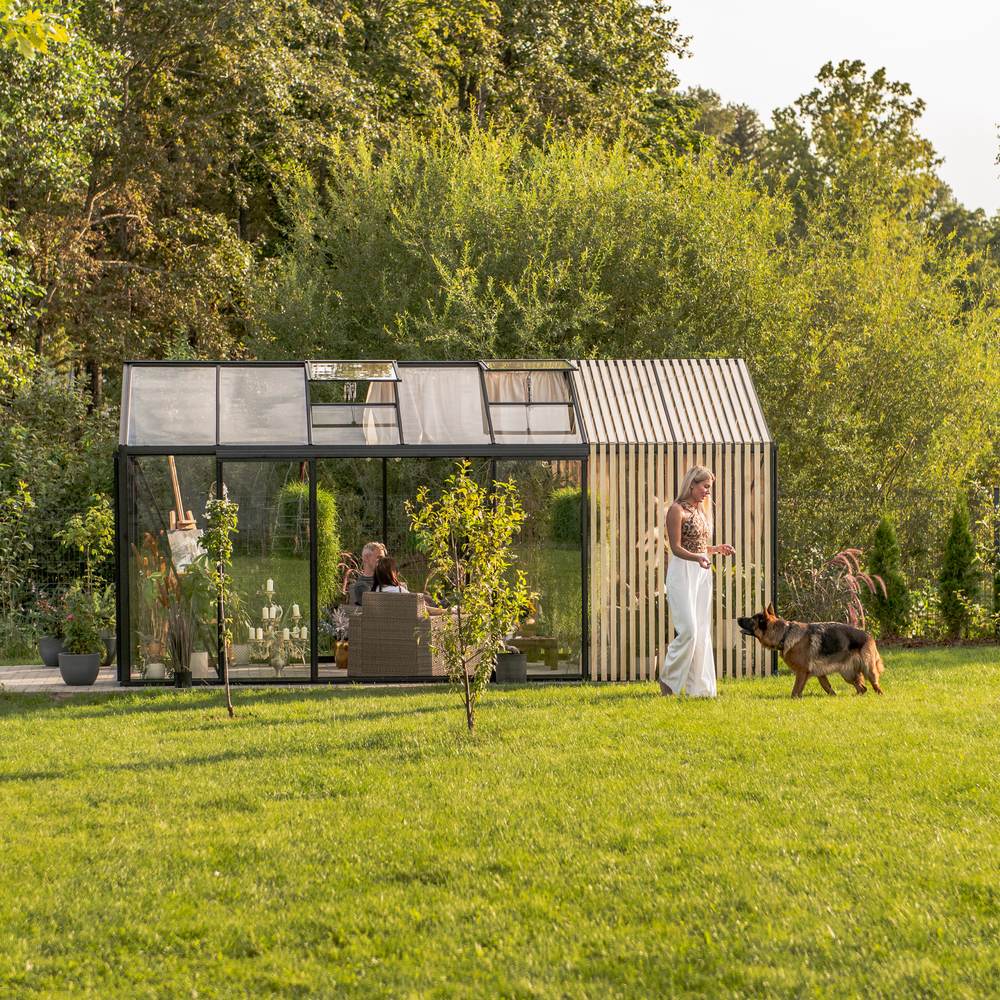
Questions to resolve before ordering
Confirm the site, access and intended use before placing an order. A greenhouse that can be reached easily from the road may still present difficulties if glass must pass through a narrow side gate, climb steps or cross soft landscaping. Establish who will unload, where the components can be placed and whether suitable lifting assistance will be available.
- Is the selected model supplied with toughened safety glass throughout, or does its glazing specification vary by area?
- What base or foundation arrangement is required for that exact structure?
- Can the delivery vehicle reach the agreed unloading point?
- Is there a firm, level and protected area for temporary glass storage?
- Who is responsible for checking quantities and reporting transit damage?
- Do doors, vents, gutters or accessories change the assembly sequence?
- Are local planning controls, covenants or property restrictions relevant?
- Will professional installation be needed because of access, panel size or site conditions?
Use the official ordering guidance and read the terms of purchase and delivery before confirming arrangements. Customer experiences in the greenhouse reviews may help identify practical questions, but they do not replace model-specific instructions. Planning rules depend on the property and location; the UK planning permission overview is a starting point, after which applicable local requirements should be checked.
Receiving and inspecting a glass shipment
Prepare before the delivery arrives. Clear people, pets, vehicles and loose materials from the unloading route. Have suitable gloves, protective footwear and eye protection ready. Follow the agreed delivery procedure and do not rush because the vehicle is waiting.
- Inspect the outside first. Look for disturbed packaging, broken restraints, impact marks or the sound of loose fragments.
- Check the consignment. Compare packages and components with the supplied documents without unnecessarily unpacking stable glass.
- Record concerns. Photograph damaged packaging and affected items before moving them, where it is safe to do so.
- Isolate breakage. Keep people away and do not reach into a package containing loose glass.
- Report promptly. Follow the applicable order and delivery procedure. If unsure, use the Bloomcabin contact page.
Do not assume a panel is undamaged simply because its main face is intact. Check visible corners and edges for chips, shelling or abrasions. Equally, do not drag panes out merely to carry out an immediate full inspection if that creates a greater handling risk. Use the delivery instructions and keep the load stable.
Temporary storage before installation
Store glass in a dry, secure area away from normal traffic and active building work. Panes should be supported in the orientation and manner required by the supplied handling guidance, with suitable separation and protection from hard floors, walls and metal objects. Never leave unsupported panels where wind can catch them.
Avoid prolonged exposure to standing water between stacked panes. Trapped moisture and contaminants can leave deposits that are difficult to remove. Do not place tools, frame sections or fixings against the glass, and prevent children or visitors from entering the storage area. If the original packaging is designed to provide support, do not dismantle it prematurely.
Safe handling during installation
Plan every lift before touching a pane. Check the route, remove trip hazards and agree clear instructions between handlers. Glass can be awkward even when its weight seems manageable. Panel dimensions, wind, wet surfaces and restricted access may make a two-person or specialist lift necessary.
- Wear suitable cut-resistant gloves, eye protection, covered clothing and protective footwear.
- Keep hands and gloves clean enough to maintain a dependable grip.
- Lift panes clear; never drag an edge across concrete, paving or metal.
- Keep corners away from tools, fixings and frame ends.
- Do not twist a panel to force it into a misaligned opening.
- Never leave unsecured glass resting in a partly assembled roof.
- Stop outdoor glazing in unsafe wind or weather conditions.
- Use any handling equipment only as instructed and within its applicable limits.
Suction lifters can assist with positioning when they are appropriate for the glass and used correctly, but they do not remove the need to support and control the panel. Their contact surfaces and the glass must be clean, and their condition must be checked before use. Never rely on improvised handles, adhesive tape or wire loops.
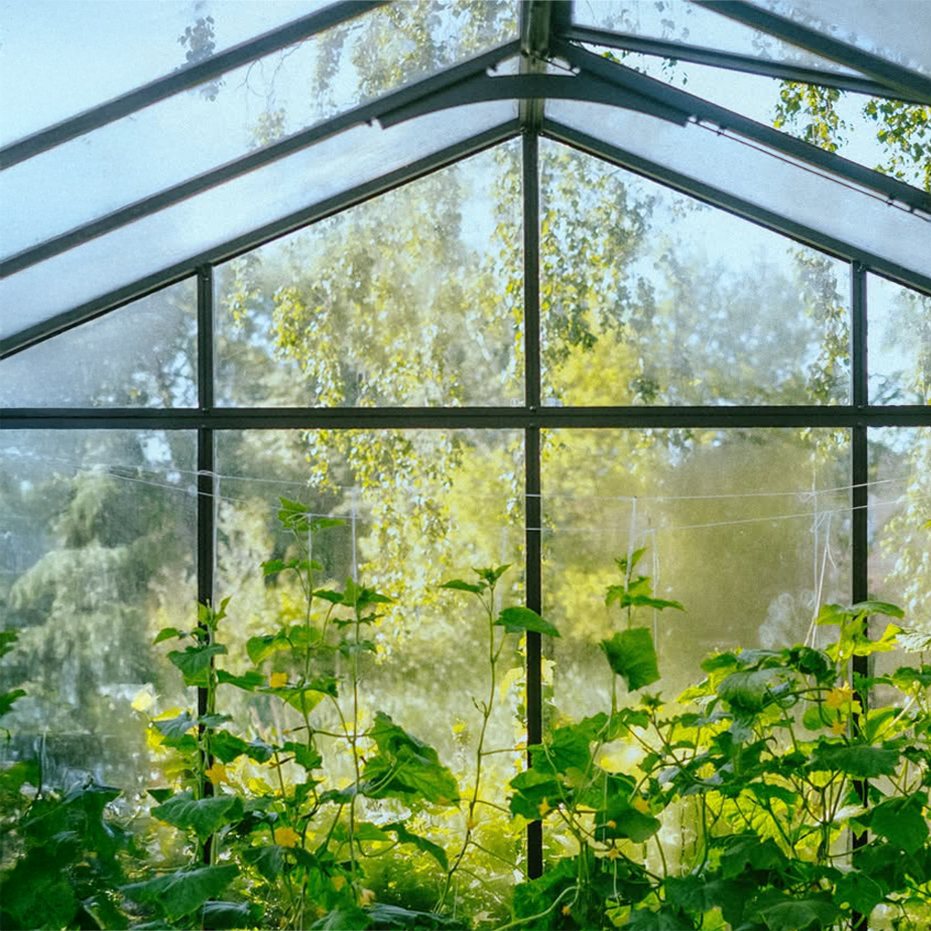
Frame preparation and glazing sequence
Before glazing, confirm that the base is complete, stable and appropriately level, and that the frame has been assembled in the specified order. Measure and visually check the openings. A diagonal difference, loose brace or misplaced profile may not appear serious while the frame is empty, but rigid glass can reveal the error immediately.
- Identify every panel and its intended location from the assembly information.
- Check that profiles are correctly orientated and all required structural fasteners are present.
- Remove grit, swarf and dropped fixings from rebates and supports.
- Fit specified gaskets, setting blocks and separators correctly.
- Install panels in the stated sequence so the structure remains stable and accessible.
- Engage retaining parts evenly without striking or overloading the glass.
- Check doors, vents and drainage routes as work progresses.
- Carry out a final visual inspection before removing access equipment.
Do not substitute sealants, packing pieces or fasteners without confirmation that they are suitable for the system. The general aluminium greenhouse maintenance guidance can support ongoing care, but the assembly manual supplied for the actual model governs installation.
The Anna Koku Skola installation sequence
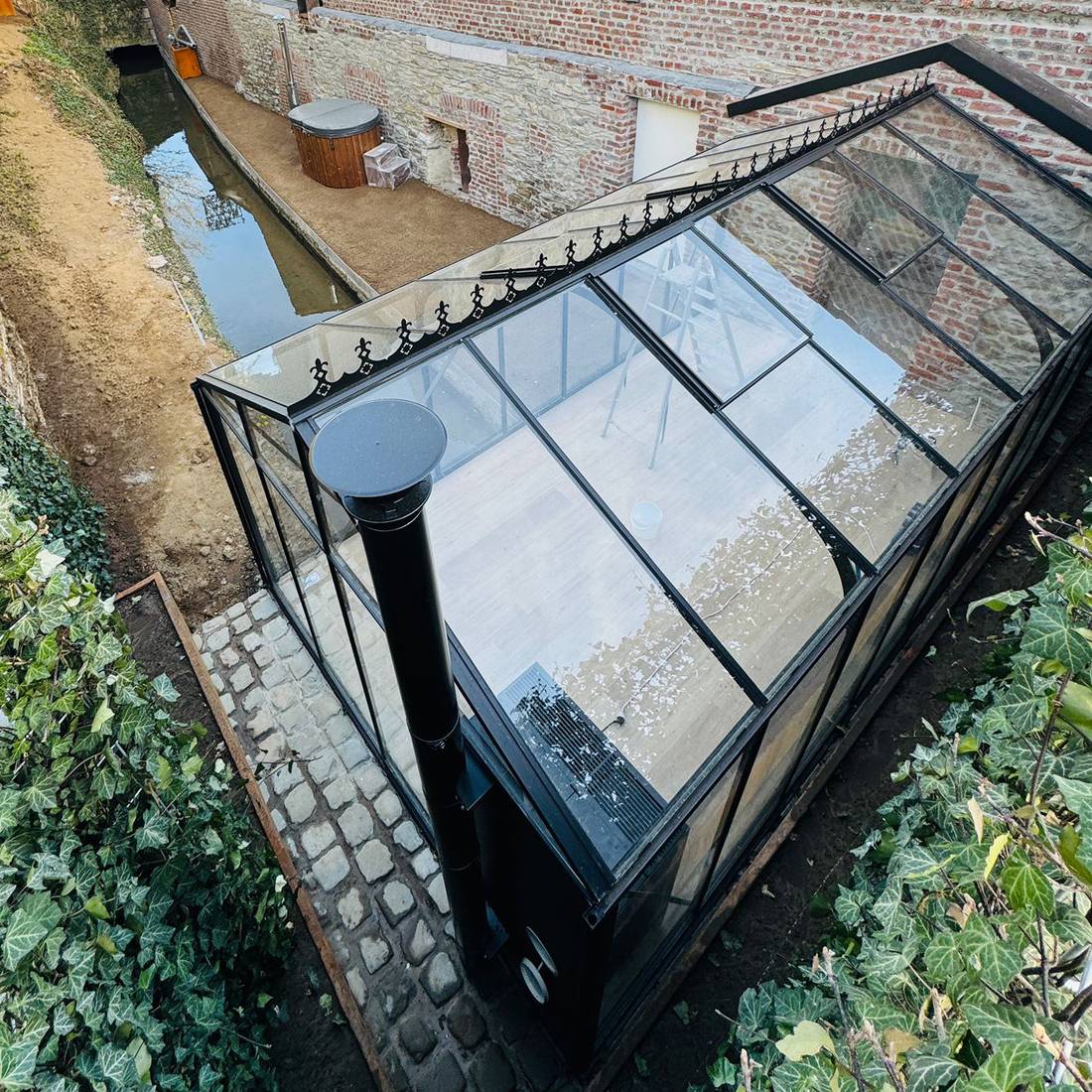
The Anna Koku Skola material should be understood as one continuous real installation sequence, not as photographs from unrelated greenhouse projects. Its value lies in following the progression: components and glazing are received, the supporting structure is prepared, the aluminium frame develops into a complete stable form, panels are installed in an organised order, and the finished greenhouse is checked as a whole.
When reviewing that sequence, focus on dependencies rather than trying to copy a single image. Glazing depends on accurate groundwork and frame assembly; later finishing depends on the panels being seated and retained correctly. A photograph cannot reveal every fixing, gasket or adjustment, so it must not override the manual for another model. The practical lesson is to preserve the sequence, maintain a tidy working area and verify each stage before covering it with the next.
Preventing avoidable glass damage
Many failures begin with a damaged edge, hard local contact or a distorted opening rather than an impact in the centre of the pane. Prevention therefore means controlling the surroundings as well as caring for the glass itself.
- Keep mowers and strimmers from throwing stones towards the greenhouse.
- Store long-handled tools where they cannot fall against a wall or roof panel.
- Prune branches that could repeatedly rub or strike the glazing.
- Do not suspend shelves, baskets or equipment from glazing retainers unless the system explicitly permits it.
- Investigate rattling glass, displaced seals and loose caps promptly.
- Avoid slamming doors and vents, particularly during windy weather.
- Do not lean ladders, timber, bicycles or garden machinery against the glass.
- Never walk or kneel on greenhouse roof glazing.
Review the structure after severe weather once conditions are safe. Look for debris, shifted components and impact marks without climbing onto the roof. If high-level access is required, use independent access equipment on firm ground and keep it away from the glazing.
Cleaning tempered greenhouse glass
Routine cleaning maintains light transmission and makes defects easier to spot. Begin by removing loose grit with clean water. Wash with a soft cloth, sponge or non-abrasive tool and a mild cleaning solution suitable for the glazing and adjacent frame materials. Rinse thoroughly and use clean equipment to avoid dragging particles across the surface.
Avoid abrasive pads, metal scrapers and aggressive chemicals unless specifically approved for every material they will touch. Pay attention to gaskets and coated aluminium finishes. Do not direct high-pressure water into seals, vents or joints, and do not use boiling water to clear frost or ice. In cold conditions, allow frozen glazing to change temperature gradually.
Clean gutters and drainage channels at the same time, because retained leaves and compost can obstruct water flow. More general ownership ideas are covered in the guide to premium glass greenhouses for year-round gardening and the aluminium glass greenhouse guide.
Condensation, temperature and year-round use
Condensation forms when humid air meets a surface cold enough for water vapour to condense. In a greenhouse this often appears during cool nights, after watering, or when dense planting raises humidity. Moisture on the room-facing surface does not automatically indicate that rainwater is leaking through the glazing.
Use vents and doors sensibly, avoid unnecessary overwatering and leave room for air to circulate between plants. Wipe persistent drips from vulnerable equipment and do not allow water to pool around the base. If moisture appears in one location during rainfall, inspect nearby seals, laps, drainage routes and frame joints rather than assuming all droplets have the same source.
Heating, shading and electrical equipment introduce separate considerations. Follow equipment instructions and check applicable UK and local requirements. Keep intense local heat sources away from glazing and frame components. Tempered glass copes with ordinary temperature variation better than untreated glass, but no glazing should be subjected to uncontrolled flame or extreme concentrated heat.
What to do if a panel breaks
- Keep everyone, including pets, away from the area.
- Do not stand beneath a damaged roof panel or unstable fragments.
- Wear eye protection, suitable gloves, protective footwear and covered clothing.
- Restrict access until loose pieces have been safely removed.
- Collect fragments with appropriate tools rather than bare hands.
- Check soil, staging, pots, gutters and paths for widely scattered pieces.
- Photograph the panel position and frame before disturbing relevant parts, if safe.
- Identify and correct the probable cause before installing a replacement.
A temporary covering must not create a wind hazard, overload the frame or conceal unstable glass. Obtain advice if the opening cannot be made safe immediately. Confirm the exact model and panel position when requesting a replacement; visually similar panes may differ. Relevant order protections and exclusions should be checked in the warranty information and, where applicable, the return and cancellation policy.
Long-term inspection checklist
Inspect the greenhouse periodically and after exceptional weather or accidental impact. The appropriate frequency depends on exposure, use and the selected structure.
- Look for chipped corners, damaged edges or unusual marks.
- Check that panes remain correctly seated and do not rattle.
- Examine gaskets, retaining strips, caps and seals for movement or deterioration.
- Check frame joints, braces and visible fixings for looseness or displacement.
- Confirm that doors and vents operate without striking adjacent glass.
- Clear gutters, outlets and drainage paths.
- Remove branches and objects that could contact the structure.
- Check the base and surrounding ground for movement or persistent standing water.
- Keep paths clear so carrying tools near the glass remains safe.
- Arrange expert inspection if distortion, repeated movement or unexplained damage appears.
Glass selection is also a design decision
Clear toughened glazing has a visual effect as well as a technical role. It can make a compact greenhouse feel open, connect planting with the wider garden and give an aluminium structure a crisp appearance. Frame colour, roof form, door position and internal layout all change how that transparency is experienced.
For traditional influences, explore Victorian-style greenhouse design. Larger layouts can be compared through the Bloomcabin Orangery and the orangery greenhouse guide. Timber has a different character and maintenance profile, discussed under wooden greenhouses and conservatories.
Transparent walls are also used in outdoor living structures, but their function and support system may differ from greenhouse glazing. For context, compare the standard Bloomcabin pergola, the bioclimatic aluminium pergola and the guide to sliding or fixed pergola glass walls. Do not transfer installation assumptions from one product category to another.
Frequently asked questions
Is tempered safety glass unbreakable?
No. It is stronger than comparable untreated glass and has safer fragmentation behaviour, but severe impact, edge damage, frame distortion or extreme localised stress can still cause breakage.
Can tempered glass be cut if a panel does not fit?
No. Cutting, drilling or grinding a finished toughened panel is likely to release its internal stress and fragment it. Check the panel identity, frame alignment, gaskets and assembly sequence. Order the correct replacement if necessary.
Why are glass edges so important?
The tempering stress pattern makes edges and corners particularly sensitive to hard, concentrated contact. A small edge chip can compromise a whole panel, which is why glass must be lifted rather than dragged and seated against the intended supports.
Does safety glass eliminate all injury risk?
No. The smaller fragments are generally less hazardous than large sharp shards, but they can still cause cuts and eye injuries. Isolate breakage and use suitable protective equipment and tools during clearance.
Will tempered glass become cloudy or yellow?
The glass itself does not normally yellow like some plastic materials. However, dirt, algae, hard-water residue, condensation or unsuitable cleaning products can reduce clarity. Regular gentle cleaning is important.
Can a small chip be repaired?
Do not attempt a structural repair with household adhesive or filler. Keep people away from a chipped panel and request an assessment. Replacement is generally the dependable option where an edge or corner has been damaged.
Does condensation mean the glazing leaks?
Not necessarily. Condensation commonly forms on cold internal surfaces when greenhouse humidity is high. Observe when and where the water appears, improve ventilation where appropriate, and separately inspect seals and drainage if moisture is associated with rain.
Can I lean a ladder against greenhouse glass?
No. Use independent, properly positioned access equipment on firm ground. A ladder against the glazing creates concentrated loads and may slip, damage an edge or push the panel out of position.
Should roof glass be walked on?
No. Greenhouse roof glass should not be used as a walking or working surface. Use a suitable independent access method and follow the relevant safety instructions.
Is every Bloomcabin model glazed in exactly the same way?
No assumption should be made that panel layouts, retaining parts or installation sequences are identical. Follow the documents for the exact model and order. The useful information library provides wider guidance but does not replace model-specific instructions.
What matters most for long service life?
An accurate foundation, correctly assembled frame, protected glass edges, proper retaining components, unobstructed drainage and prompt attention to movement or damage all matter. Long service life results from the complete system being installed and maintained correctly.
Where should I start when selecting a greenhouse?
Begin with purpose, available space, access, foundation conditions and preferred appearance. Then compare glazing, ventilation, doors and maintenance needs across suitable structures. Confirm all details for the selected model before ordering rather than relying on general photographs or assumptions.
