



SUPPORT
Payments, Invoices and VAT: What to Know Before Ordering
Understand quotations, payment instructions, invoices, VAT and the wider costs of a greenhouse, pergola or outdoor structure before authorising payment.
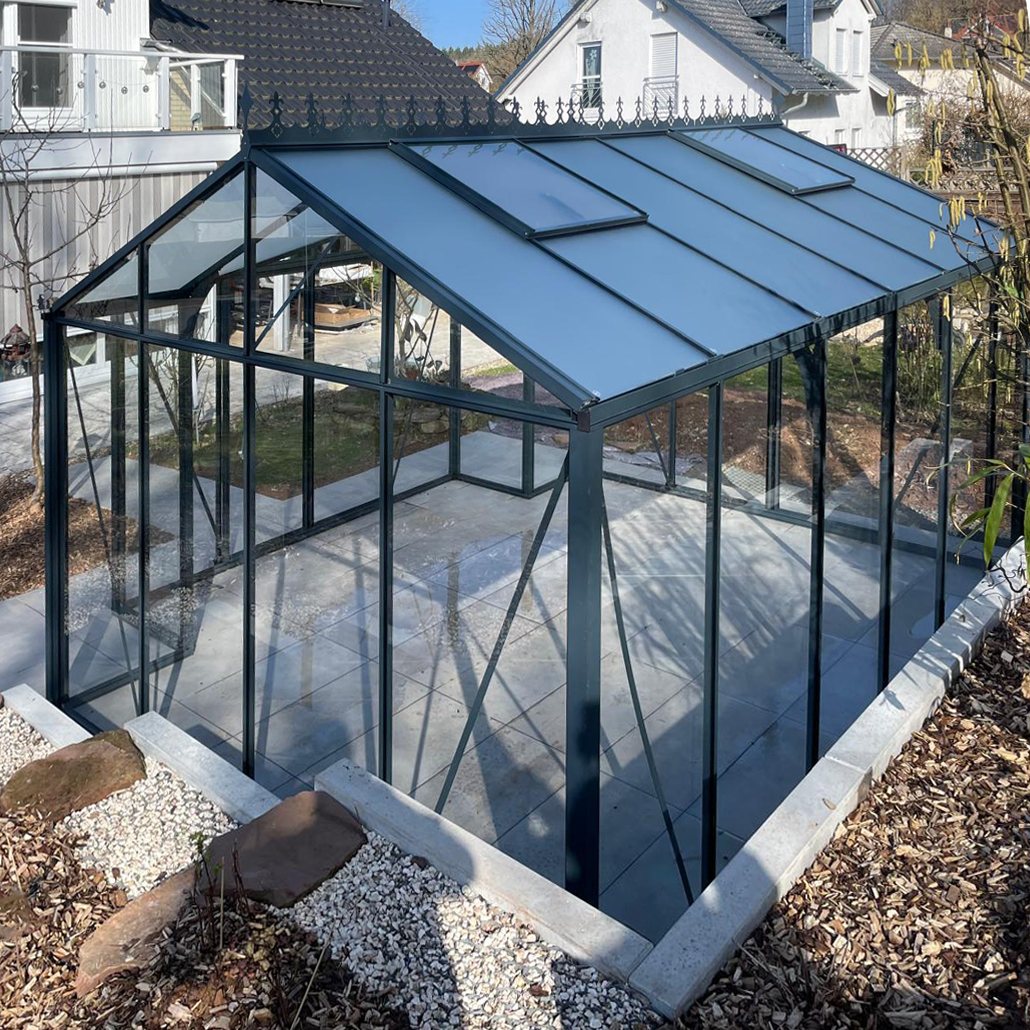
Ordering a greenhouse, pergola or other substantial garden structure involves more than choosing a design and making a payment. The product configuration, delivery arrangements, billing details, VAT treatment and any separately organised site work should all be clear before funds are transferred.
This guide explains what to check at each stage. It is intended as a practical purchasing checklist rather than tax, legal or financial advice. If your order has unusual business, cross-border or tax circumstances, confirm the treatment applicable to your transaction before paying.
Quick answers before you order
- Do not rely on a product-page figure alone. The amount payable should come from the current quotation, order confirmation, pro forma invoice or other payment document issued for your particular order.
- Check the complete configuration. Model, size, colour, glazing, base, doors, accessories and other selected options can affect both the product and the price.
- Confirm whether VAT is included. Look at the document’s net amount, VAT amount or rate where shown, and gross total rather than making an assumption.
- Check delivery details. The delivery address, access information and any quoted delivery charge should correspond with the actual site.
- Use only verified payment instructions. If bank details appear to have changed or arrive unexpectedly, verify them through a known Bloomcabin contact before transferring money.
- Payment is not a substitute for written confirmation. Requested alterations should appear in the accepted order documents.
- Keep every record. Save the quotation, invoice, proof of payment, correspondence, delivery records and relevant product documentation.
The general How to order page explains the normal ordering route. The applicable Terms of Purchase & Delivery should also be read before payment.
Understand the documents in the purchasing sequence
Several documents may be used during a purchase, and they do not all serve the same purpose. Names and formats can vary, so read the content rather than relying only on the heading.
| Document | What it normally helps establish | What to check |
|---|---|---|
| Quotation | The proposed product, options and price at that stage | Validity, scope, VAT presentation, delivery and exclusions |
| Order summary or confirmation | The configuration being processed or accepted | Every selected component, addresses and agreed changes |
| Pro forma invoice or payment request | The amount and instructions for payment | Payee, reference, currency, due amount and bank details |
| Invoice | The formal billing record for the transaction | Supplier and customer details, items, totals and VAT information |
| Credit note | An adjustment reducing or reversing invoiced value | The invoice and items to which the credit relates |
| Payment receipt or bank record | Evidence that a payment was initiated or received | Amount, date, recipient, currency and transaction reference |
A quotation is not automatically interchangeable with an invoice, and a bank record does not describe the complete product specification. Retain the full sequence so that the commercial and technical records can be read together.
What to verify before authorising payment
Use the latest document supplied for the order. If several versions exist, confirm which version supersedes the others. A sensible prepayment review covers:
- Seller: confirm that the named supplier and payment recipient match the documentation you expect.
- Customer: check the individual or company name and the billing address.
- Delivery site: make sure the postcode and full delivery address are accurate and distinct from the billing address where necessary.
- Product: compare the model, dimensions, finish, glazing or roof type, base and accessories with your final selection.
- Amounts: check the net sum, VAT, delivery or other charges, credits, deposits already paid and final total.
- Currency: verify the currency shown on the payment request and the currency your bank will send.
- Reference: use the specified order or invoice reference so the payment can be matched correctly.
- Instructions: independently query unexpected changes to account details or payment destination.
If anything is unclear, pause and contact Bloomcabin through the published contact details. Resolving a discrepancy before payment is usually simpler than correcting records afterwards.

Match the invoice to the exact product under consideration
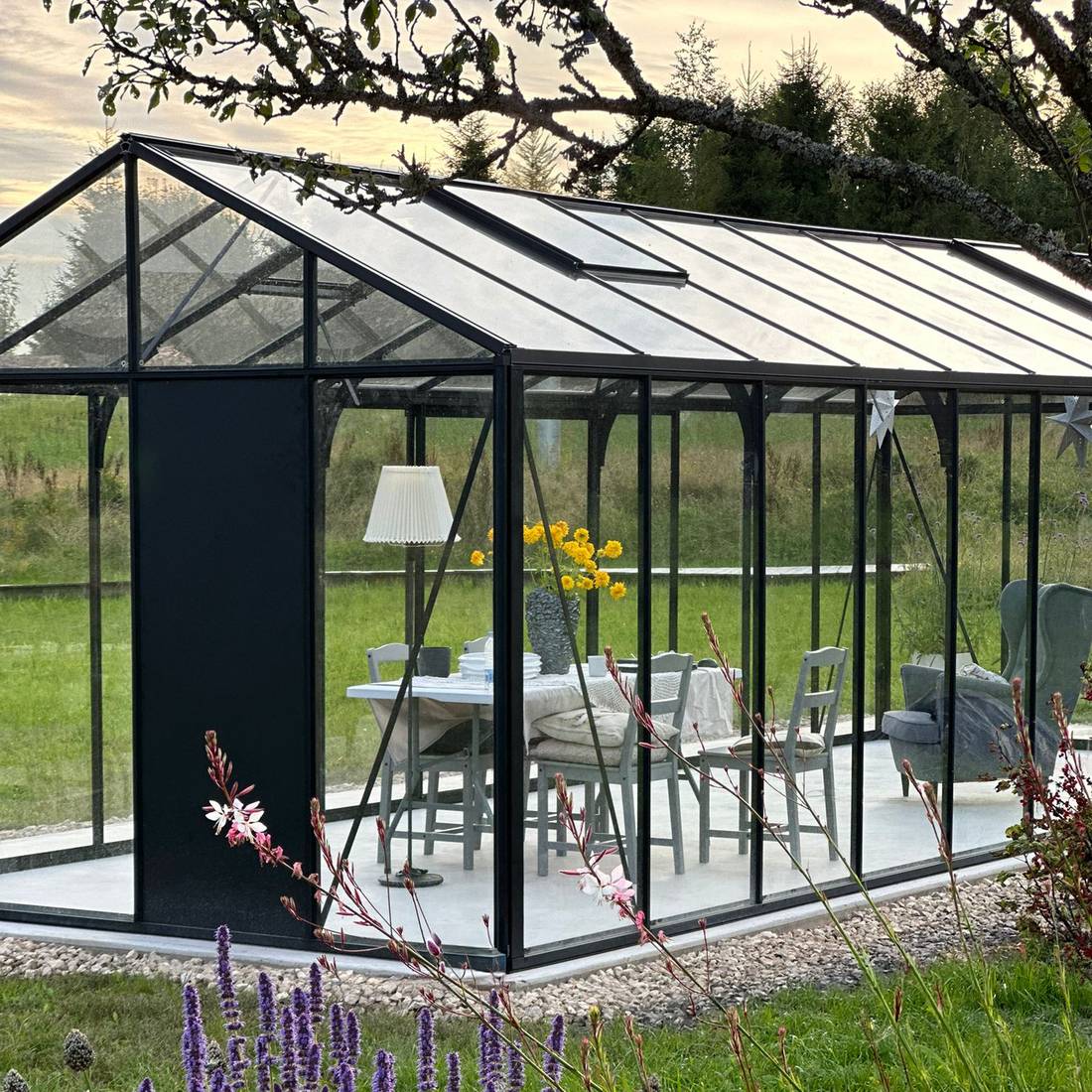
Product names can be similar while configurations differ materially. Compare the invoice with the exact page and written selections used during your decision. For example, an aluminium classic greenhouse, a Premium Classic Plus glass greenhouse, an aluminium limited-edition greenhouse and a Prestige greenhouse with metallic base should not be treated as interchangeable descriptions.
The same principle applies to larger structures. A Bloomcabin orangery has a different project context from a greenhouse, while pergola choices can involve distinct layouts and roof systems. Compare the relevant Bloomcabin pergola and bioclimatic aluminium pergola information with the order description.
Do not depend on a shortened bank-payment narrative to identify the product. The detailed order documents should record the agreed configuration. If you are still deciding between installation types, review the guidance on a wall-mounted or freestanding pergola before confirming the order.
Payment methods and payment instructions
The payment methods available for a particular order should be taken from the current checkout, quotation or payment request. Availability may vary with the transaction, so this guide does not promise that any specific method will be offered.
Before using a bank transfer, card payment or another presented method, check the recipient, amount, currency and reference. Your bank or payment provider may apply its own limits, security checks, conversion rates or charges. Those arrangements are separate from the amount shown by the seller.
Treat an unexpected message changing bank details as something that must be verified, even if the message refers to a genuine order. Use a known telephone number or the established correspondence route rather than contact details contained only in the unexpected message.
After paying, keep a PDF, screenshot or bank confirmation showing the date, amount, recipient and payment reference. A pending or submitted status may not mean that funds have reached the recipient, so monitor the payment and respond if your provider rejects or returns it.

Invoices: the details that deserve attention
An invoice should be read from top to bottom. Check the supplier identity and address, invoice number and date, customer details, product description, quantities, line values, delivery or other listed charges, VAT presentation and total payable. If a prior payment or credit should be reflected, confirm that it is shown appropriately.
A model name alone may not capture all selected features. Cross-check the invoice against the quotation and order correspondence. This is particularly important where finishes, glazing materials, door arrangements, bases or optional components have been discussed.
Billing details should be supplied correctly before the invoice is prepared wherever possible. A trading name, registered company name, personal name and delivery-site name are not necessarily interchangeable. If your accounting records require a particular customer name or address, state it clearly during ordering rather than assuming it can be changed later.
If you require the invoice for business records, ask about the available format and timing before payment. Do not assume that a payment-provider receipt contains the same information as the seller’s invoice.
VAT, sales tax and use tax terminology
For a UK purchase, VAT is the familiar tax term. However, ecommerce systems, payment platforms and document templates may sometimes use the broader label tax. That wording alone does not necessarily indicate a separate additional charge. Examine the monetary breakdown and ask for clarification if the document is ambiguous.
Terms such as sales tax and use tax are associated mainly with other markets. They should not be casually substituted for UK VAT when assessing a UK invoice. Nevertheless, software used across several countries may display generic field names. The transaction document and the applicable tax treatment matter more than a website field label viewed in isolation.
Check whether a displayed price is inclusive or exclusive of VAT and whether delivery or other listed items affect the taxable total. Do not calculate the final amount from a headline price if a current quotation already gives an itemised total.
Providing a business name or VAT number does not by itself guarantee that VAT can be removed. Tax treatment depends on the circumstances of the supply and the information required for that treatment. Bloomcabin must apply the treatment appropriate to the order; customers should obtain their own professional advice where their ability to account for or recover VAT matters.
Cross-border orders, special customer circumstances and changes to the place of supply can require different handling. Confirm the applicable position in writing rather than relying on an assumption based on another customer’s invoice.
Order changes, cancellations, credits and refunds
If you request a change, do not assume it is accepted merely because the request was sent or payment was made. Obtain written confirmation showing the revised product and any change to price, VAT, delivery or timing. The latest accepted document should be identifiable.
Changes can affect connected decisions. Altering pergola dimensions may affect the prepared site, so consult the information on aluminium pergola dimensions and preparing a pergola foundation before authorising work.
Cancellation, credit and refund arrangements depend on the order’s status, circumstances and applicable terms. Read the purchase terms rather than assuming that every order can be changed or cancelled in the same way. Where a correction is agreed, retain the credit note, revised invoice, refund confirmation and related correspondence. A refund may also appear separately from the original payment in your bank records.
Budget beyond the product invoice
The product invoice is not necessarily the complete project budget. Depending on your site and arrangements, separate costs may arise for ground preparation, foundations, drainage, access work, unloading assistance, installation, landscaping, professional advice, permissions, electrical work, water connections, heating, shading, staging or ongoing maintenance. Do not assume an item is included unless the quotation says so.
Research the intended use before fixing the budget. The small greenhouse guide can help with size and placement, while the greenhouse polycarbonate guide explains considerations around panel choices. For larger glazed structures, the orangery greenhouse guide helps distinguish design intentions.
Pergola buyers can compare the explanation of bioclimatic and standard pergolas with the broader UK bioclimatic pergola guide. These choices can influence the scope of the surrounding project even when external works are not part of the product invoice.
Planning and building controls depend on the property, location and proposed work. Review the general guide to planning permission for a greenhouse or pergola, but check the requirements applicable to your own site with the relevant authority or adviser before committing expenditure.
Receiving, installation and maintenance records
Keep the financial records together with delivery and technical documents. When the order arrives, record the delivery date and follow the supplied checking and reporting procedure. Preserve packaging or identification labels until the components have been checked, and photograph any visible issue where appropriate.
Give installers the current product documents rather than an obsolete quotation. Keep invoices for separately commissioned foundations, installation or services so responsibilities remain clear. After completion, store maintenance records with the original invoice and consult the guidance on maintaining an aluminium greenhouse.
Future growing plans may also shape your records and accessory purchases. The UK greenhouse growing calendar and advice on preparing a new aluminium greenhouse for spring are useful after installation. Keep any later accessory invoices separate but linked to the main product file.
Retain the relevant warranty information as well. An invoice can help identify the purchase, but it does not replace compliance with applicable care, installation or reporting requirements.

A simple records checklist
- Final quotation and all clearly identified revisions
- Accepted order summary or confirmation
- Payment request and verified payment instructions
- Invoice and any credit notes or corrected invoices
- Bank, card or payment-provider confirmation
- Written record of agreed product changes
- Delivery correspondence and receiving records
- Installation, foundation and separate contractor invoices
- Product instructions, maintenance information and warranty records
- Photographs and correspondence relating to any reported issue
Store copies somewhere accessible to everyone responsible for the project. The main Useful Information area and Greenhouses & Conservatories section can be bookmarked alongside the order file.
Frequently asked questions
Is the price on a product page my final invoice total?
Not necessarily. A page may show a starting price or a price for a particular configuration. Options, delivery and the VAT presentation may affect the amount. Use the latest itemised quotation or payment document issued for your exact order.
Why does my document say tax instead of VAT?
Some international ecommerce or payment systems use tax as a generic label. Check the actual breakdown and ask Bloomcabin if it is not clear whether the amount represents VAT applicable to your order.
Can Bloomcabin remove tax if I provide a business name?
A business name alone does not establish that VAT should be removed. The appropriate treatment depends on the transaction and required information. Confirm your circumstances before paying and seek professional tax advice if needed.
Can I request an invoice after paying?
Contact Bloomcabin with the order and payment references. However, it is better to provide the correct billing details before payment and ask what document will be supplied, particularly if it is needed for business accounting.
What if the invoice has the wrong billing or delivery address?
Report the error promptly and do not alter the document yourself. Clarify whether the billing details, delivery instructions or both need correction. Obtain an updated document or written confirmation as appropriate before dispatch or further payment.
What if my payment record and invoice show different amounts?
Compare currency, bank charges, conversion, deposits, credits and payment status. Send Bloomcabin the invoice number and non-sensitive payment evidence. Do not email full card credentials, online banking passwords or security codes.
Does payment mean that every requested change was accepted?
No. A requested change should be confirmed in writing and reflected in the current order documents. Payment of an earlier amount does not by itself prove acceptance of a later technical alteration.
Are installation and site work included in the product invoice?
Only if the quotation or invoice explicitly includes them. Foundations, preparation, installation and services may be separately arranged. Check each line and exclusion before setting the overall project budget.
Should I keep an invoice after installation?
Yes. Keep it with proof of payment, delivery records, instructions, maintenance history and warranty documents. These records can help identify the product and transaction if a later query arises.
Where should I start if I still have a payment question?
Gather the current quotation, order reference, invoice and payment evidence, then use Bloomcabin’s published contact page. State the specific discrepancy without sending passwords or complete payment-card details.
Final prepayment check
Before authorising payment, stop and compare the product, options, customer details, delivery address, itemised charges, VAT, total, currency, recipient and reference. Make sure site work and installation are either included or budgeted separately, and verify that every requested change has been accepted in writing.
Finally, read the current ordering information and purchase terms, save a copy of the documents you relied upon, and verify any unexpected payment instruction. A careful ten-minute review can prevent confusion between the product you intended to buy, the amount you expected to pay and the order that will actually be processed.
