



MATERIALS
Powder-Coated Aluminium: Durability, Corrosion Resistance and RAL Colours
A practical guide to powder-coated aluminium for greenhouses and pergolas, covering durability, corrosion behaviour, RAL colour selection, installation care, cleaning and cosmetic repairs.

Powder-coated aluminium is widely used for greenhouse and pergola frames because it combines a relatively light structural material with a durable decorative finish. The aluminium provides the underlying corrosion resistance, while the coating creates the visible colour and helps protect the surface from weathering, handling marks and everyday contamination.
That does not mean every coated component will remain visually perfect without care. Exposure, location, cleaning methods, installation practices and contact with other materials all affect long-term appearance. This guide explains what the finish does, what it does not do, and what to check when choosing and looking after an outdoor aluminium structure.
What Is Powder-Coated Aluminium?
Powder coating is a dry finishing process. Finely ground coating material is applied to a prepared metal surface and then cured to form a continuous layer. Unlike a conventional liquid paint, it is applied without a liquid carrier. The result is a consistent, practical finish suitable for many exterior aluminium components.
Successful performance depends on the complete finishing process rather than colour alone. Surface preparation, coating application, curing and careful handling all matter. The coating protects the visible aluminium surface and provides the selected colour, but it does not change the engineering purpose of the profile beneath it.
Powder coating should also be distinguished from the protective film sometimes fitted for transport. Transport film is temporary packaging and must be removed as instructed. It is not the exterior finish and should not be left to weather indefinitely.
Bloomcabin offers different forms of outdoor aluminium construction. Buyers can begin with the overview of greenhouses made from aluminium, then compare the finish with the design, glazing and layout required for the site.
Durability in Everyday Outdoor Use
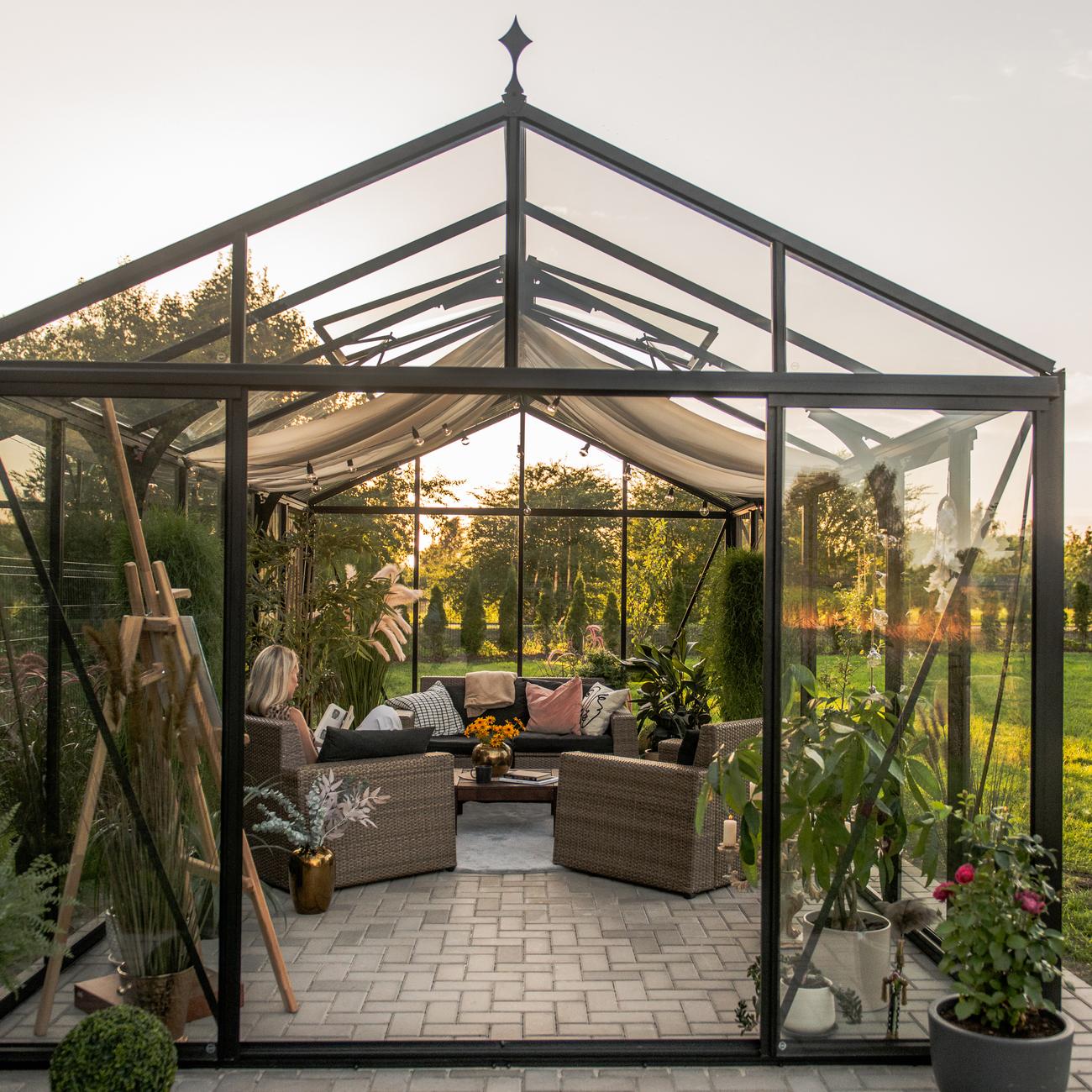
A properly applied powder coating is intended to cope with normal outdoor exposure, including rain, sunlight, seasonal temperature changes and routine cleaning. It also gives aluminium a more uniform appearance than an unfinished surface. Dark, pale and muted colours can therefore be incorporated into a garden design without relying on frequent decorative painting.
Durable does not mean impossible to damage. Sharp tools, dragged components, abrasive pads, masonry dust and impact from loose fixings can mark the coating. Gateways, door tracks, corners, roof edges and areas beside paths may experience more contact than elevated or sheltered sections.
The finish should therefore be treated as a durable architectural surface rather than as an indestructible shell. Sensible handling during assembly often has a greater influence on initial appearance than years of ordinary use. For a broader ownership perspective, see the guide to a long-lasting, low-maintenance aluminium greenhouse.
How Aluminium Resists Corrosion
When bare aluminium is exposed to air, it naturally forms a thin oxide layer. This tightly bonded layer helps protect the metal beneath, which is why aluminium behaves differently from ordinary carbon steel. It does not develop the familiar spreading red rust associated with unprotected steel.
Powder coating adds another barrier between the aluminium and its surroundings. If the coating remains intact, moisture and contaminants have less direct access to the metal surface. However, corrosion resistance is not the same as immunity from every environment. Deposits can hold moisture against the frame, and chemical contamination can affect both the coating and exposed metal.
A small scratch does not normally produce red rust on an aluminium profile. Nevertheless, damaged areas should be inspected because moisture, salts or aggressive deposits may collect around edges and fixings. White or greyish surface deposits can have several causes; they should not automatically be diagnosed without checking the location, nearby materials and care history.
Conditions that deserve extra attention
- Coastal exposure: wind-borne salt can settle on sheltered surfaces even when the structure is not directly beside the sea. More frequent fresh-water cleaning may be appropriate.
- Fertilisers and garden chemicals: powders, concentrates and spray residues should not be allowed to remain on the frame.
- Persistent damp: leaf litter, soil and blocked drainage routes can trap water against coated edges.
- Masonry work: cement, lime, mortar splashes and brick-cleaning products should be kept away from finished components.
- Swimming-pool or hot-tub areas: chemical exposure and condensation conditions can differ from those in an ordinary garden.
- Mixed metals: unsuitable fasteners or direct contact between dissimilar metals can create local corrosion risks, particularly where moisture is present.
Location-specific maintenance is especially important in exposed gardens. The article on aluminium greenhouses for demanding weather conditions discusses wider site considerations, although the requirements for the chosen model and local setting must always be checked.
Understanding RAL Colours
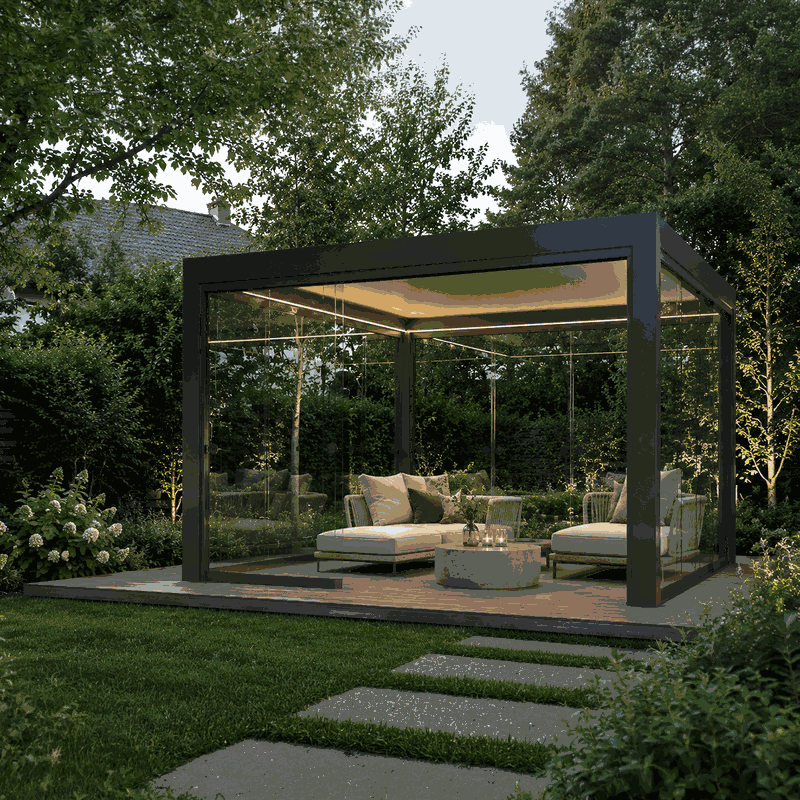
RAL is a recognised colour reference system used to communicate standardised colours. A RAL reference is much more reliable than descriptions such as “dark grey”, “forest green” or “black”, which can mean different things to different people. It helps manufacturers, installers and buyers refer to an agreed colour family.
A RAL code does not, by itself, define every aspect of the finished appearance. Gloss level, surface texture, substrate, coating formulation and application process can all influence how the eye perceives the result. If a precise match to windows, doors, cladding or garden furniture is important, confirm the finish rather than relying solely on a colour name.
Why the same colour can appear different
Light has a major effect. A dark frame beneath a bright overcast sky may look cooler than the same frame in warm evening sunlight. Vertical posts reflect different surroundings from horizontal roof members, so two adjoining components can appear dissimilar even when their coating reference is the same.
Texture and sheen also alter reflected light. A smooth glossy sample, a matt digital illustration and a textured exterior profile will not look identical. Screens add further uncertainty because brightness settings and colour calibration vary. Printed brochures can also shift in appearance according to paper and printing conditions.
Assess a physical finish sample in daylight and beside the materials it must complement where matching is critical. Look at it from several angles and at different times of day. Treat online imagery as a useful design guide, not as a colour-control instrument.
Choosing a Product and Finish Before Ordering
Begin with the structure and its intended use. A colour choice cannot compensate for an unsuitable footprint, door position, foundation or relationship with the house. Compare an aluminium classic greenhouse, the available limited-edition aluminium greenhouses and a Bloomcabin aluminium pergola according to their intended application rather than colour alone.
Constrained sites may call for a limited-edition mini wall greenhouse, an aluminium lean-to greenhouse or an aluminium greenhouse on a wall. Storage requirements may instead favour an aluminium greenhouse with built-in storage. The articles on space-saving lean-to greenhouses and aluminium pergola ideas can help with early planning.
Pre-order finish checklist
- Confirm the exact product, configuration and components included in the order.
- Check the stated colour reference and available finish for that particular product.
- Ask whether visually adjacent accessories have the same finish or a deliberately contrasting one.
- Review the colour in relation to brick, render, paving, roof coverings, window frames and planting.
- Consider how dust, pollen, dried rain marks and fingerprints may show against very light or dark finishes.
- Check whether coastal, highly exposed or chemically demanding surroundings require additional advice.
- Record the confirmed finish on the order documentation rather than relying on memory or a screen image.
Glazing affects the appearance of the complete structure as well. The guide to glazing options for aluminium greenhouses provides useful context, while the aluminium greenhouse FAQ covers broader purchasing questions.
Receiving and Inspecting Coated Components
Inspect packages and components as soon as reasonably possible, following the delivery and assembly documentation. Look for obvious package damage before moving items around the site. Photograph any concerning area clearly, including the packaging, component identification and both close and wider views.
Differentiate removable dirt or packaging residue from an actual break in the coating. Do not scrub an uncertain mark with an abrasive material to test it. Keep packaging and labels until the parts have been checked and contact the seller promptly through the appropriate channel if damage is found.
Store components safely before assembly. Keep them supported, dry and protected from site traffic, loose masonry materials and metal grinding debris. Avoid stacking coated faces where they can rub as parts are removed.
Protecting the Finish During Installation
Plan a clean unpacking and sorting area. A soft, stable surface is preferable to gravel, bare concrete or soil. Lift long profiles with suitable help rather than dragging an end across the ground. Follow the product manual and use the specified fittings, tools and assembly sequence.
- Remove rings, watches or other items likely to scrape coated faces during close handling.
- Keep drill swarf, screws and cut metal away from glazing channels and horizontal surfaces.
- Do not rest ladders or tools directly against finished profiles without suitable protection.
- Prevent sealants, mortar and paving compounds from smearing onto the frame.
- Use only approved holes and fixing positions; unnecessary drilling exposes fresh metal and may affect assembly.
- Do not substitute fasteners merely because they appear to fit.
Lean-to and wall-mounted structures require particular coordination with the supporting building. Dimensions, fixings, waterproof interfaces and applicable local requirements must be confirmed for the actual site. General planning information is available through aluminium pergola dimensions and the wider greenhouses and conservatories section.
Cleaning and Routine Maintenance
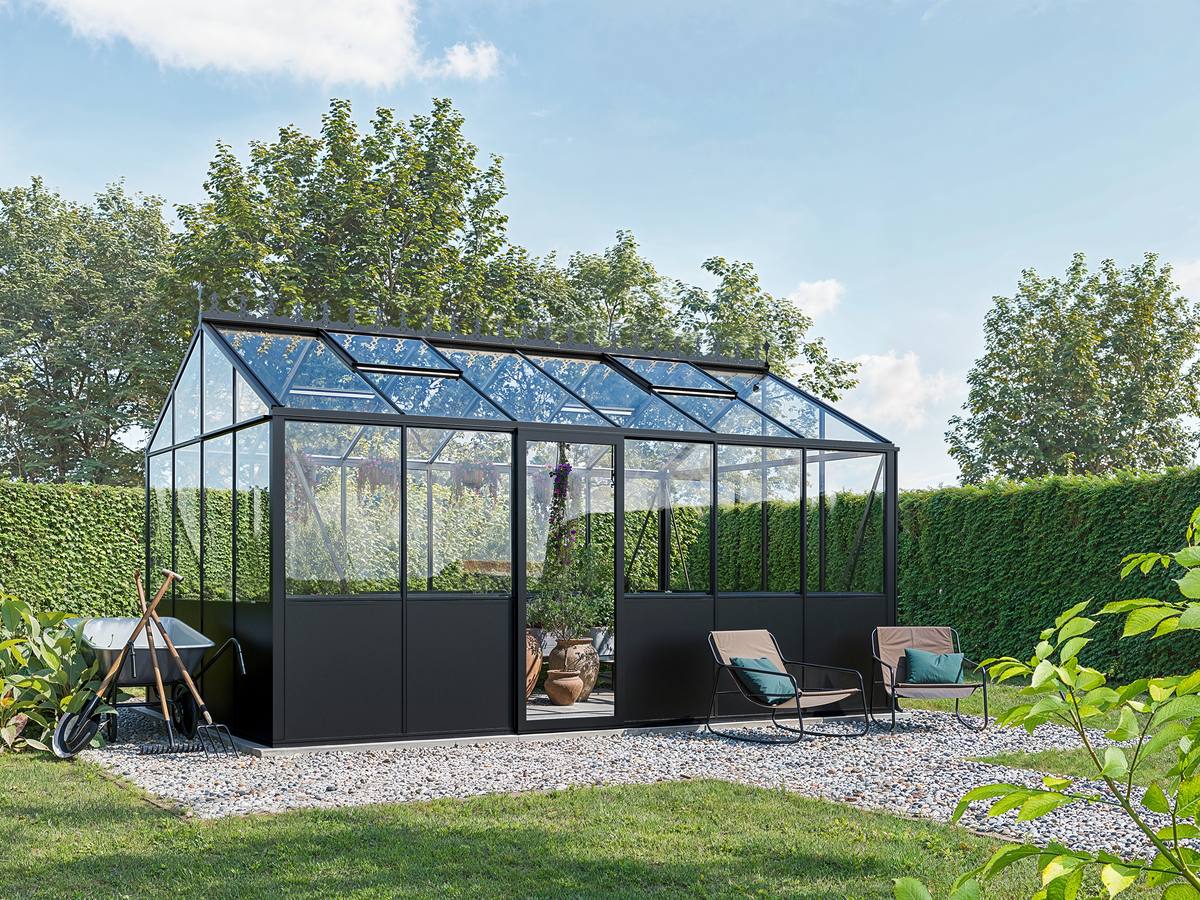
Routine cleaning removes deposits before they become firmly attached or hold moisture against joints. Start with clean water and a soft cloth or non-abrasive sponge. Where needed, use a mild, suitably diluted cleaner that is compatible with the finish, then rinse thoroughly. Always follow product-specific care instructions.
Avoid abrasive powders, scouring pads, wire brushes, scrapers and aggressive solvents. Strong acidic or alkaline cleaners can harm the coating. Cleaning products intended for masonry, ovens, drains or heavy industrial use should not be assumed safe for an architectural powder-coated surface.
Work on a cool surface out of intense sun where practical, particularly when using a cleaning solution. This reduces rapid drying and streaking. Clean from the top down and pay attention to sheltered undersides, corners, drainage routes, door tracks and places where leaves accumulate.
Practical maintenance routine
| Occasion | Recommended check |
|---|---|
| After installation | Remove assembly debris, check drainage paths and inspect for accidental marks. |
| During normal cleaning | Wash the frame gently, rinse it and clear leaves, soil and standing debris. |
| After severe weather | Inspect accessible joints, doors, roof areas and nearby objects that may have struck the frame. |
| In coastal or polluted locations | Check more often for salt or airborne deposits and adjust cleaning frequency to actual exposure. |
| Before using garden chemicals | Protect the frame from spray and rinse accidental splashes promptly. |
For greenhouse-specific tasks, follow Bloomcabin’s aluminium greenhouse maintenance guidance. Pergola owners can consult the frequently asked questions about aluminium pergolas.
Scratches, Chips and Cosmetic Repair
First determine whether a mark is dirt, transferred material, a shallow scuff or a genuine chip exposing metal. Clean the area gently before deciding what action is needed. Never enlarge a small defect by sanding or scraping it without an approved repair procedure.
Minor cosmetic damage may sometimes be suitable for a matching touch-up system, but colour reference alone does not guarantee an invisible result. Texture, sheen, age and application method affect the repair. A brushed or dabbed repair can look different from the original factory-applied coating, especially in oblique light.
For significant damage, damage at a joint, widespread blistering or an uncertain change in the finish, contact the supplier before attempting repair. Provide photographs, the product and component details, the order information and a description of exposure or cleaning products used. A scratch is not automatically structural damage, but structural significance should not be guessed from appearance.
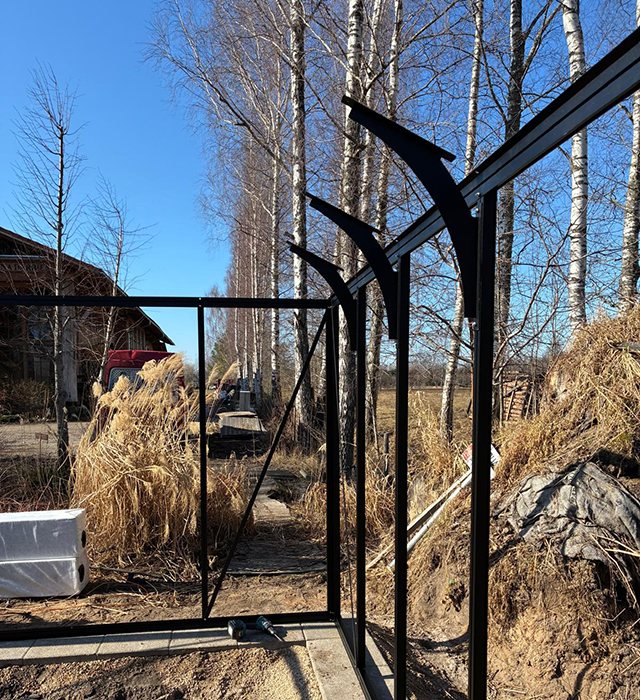
Greenhouse and Pergola Considerations
Greenhouses combine exterior weather exposure with a warm, humid internal environment. Condensation, soil, fertiliser and plant treatments may contact internal frame surfaces, so ventilation and housekeeping matter. Keep compost and growing media away from frame recesses and clean chemical splashes promptly. For an overview of greenhouse forms and ownership considerations, read the guide to aluminium glass greenhouses.
Pergolas have their own exposure pattern. Horizontal and moving elements can collect dust, leaves and pollen, while cooking smoke or grease may settle on structures near an outdoor kitchen. Drainage routes and operating components should be maintained according to the relevant instructions. Do not apply oils, waxes or lubricants indiscriminately to coated surfaces or mechanisms.
Colour also influences visual character. Dark frames can create strong architectural lines; lighter or softer shades may blend differently with paving and walls. This is primarily a design decision. It should not replace consideration of ventilation, shading, orientation or plant needs. Ideas about broader design and value can be explored in the article on how an aluminium greenhouse can contribute to a property.
Frequently Asked Questions
Does powder-coated aluminium rust?
Aluminium does not develop red rust in the way ordinary steel does. It forms a protective oxide layer, while powder coating supplies an additional barrier. Aluminium can still experience local corrosion or surface changes in adverse conditions, particularly around damage, trapped contaminants or unsuitable metal contact.
Will the coating ever need to be repainted?
Routine repainting should not be assumed. Service life and appearance depend on exposure, cleaning and damage. If widespread refinishing is considered, obtain product-specific advice because preparation and coating compatibility are critical to adhesion and appearance.
Is a RAL code an exact digital colour?
No. It is a standard colour reference, not a guarantee that every phone, monitor or printer will display it accurately. Use a relevant physical sample when a close match matters.
Can two components with the same RAL reference look slightly different?
Yes. Angle, daylight, shadow, texture, gloss and surrounding reflections can create a perceived difference. Components made or coated at different times may also require careful confirmation where exact visual continuity is essential.
Can I clean the frame with a pressure washer?
Do not assume that high-pressure cleaning is suitable. It can force water into joints, disturb seals or concentrate impact at coating edges. Follow the product’s care instructions; gentle washing with water and a soft cloth is the safer default.
What should I do if a component arrives scratched?
Stop unnecessary handling, photograph the component and packaging, retain identification labels and contact the seller promptly. Do not fit, sand or repaint the affected part until the appropriate next step has been confirmed.
Is powder-coated aluminium maintenance-free?
No exterior structure is literally maintenance-free. Powder-coated aluminium is low maintenance, but it still benefits from cleaning, removal of deposits, inspection after severe weather and prompt attention to accidental damage.
Can I use any stainless steel or hardware-store fastener?
No. Material description alone does not establish that a fastener has the correct grade, shape, length, load function or compatibility. Use the specified fixings and seek advice before making substitutions.
Does a scratch automatically mean the frame will fail?
No. Many scratches are cosmetic, but depth and location matter. Damage near a connection or deformation of the profile requires more attention than a light surface scuff. Ask the supplier if there is any doubt.
Which colour is best for heat or plant growth?
Frame colour is only one part of a complex system. Orientation, glazing, ventilation, shading, local weather and greenhouse management have much greater practical relevance. Do not choose a structural product based on assumptions about colour alone.
Where can I confirm my product’s colour and care requirements?
Check the order confirmation, product documentation and current care instructions for the exact model. The useful information library provides supporting guidance, while specific questions can be sent through Bloomcabin contacts.
Final Buying and Ownership Checklist
- Choose the product and layout before treating colour as the deciding factor.
- Confirm the colour reference, texture and sheen available for the exact configuration.
- Use a physical sample when matching nearby architectural finishes is important.
- Inspect delivered packages and components before assembly.
- Lift rather than drag coated profiles and keep the installation area clean.
- Use only the specified fixings, openings and assembly method.
- Wash with gentle, compatible products and remove chemical or salt deposits promptly.
- Record and photograph damage before attempting cosmetic repair.
- Follow the maintenance requirements for the actual greenhouse or pergola and its location.
