



COMPARE
European manufacturing and quality control: a practical buyer’s guide
European manufacturing is meaningful when it is supported by suitable design, controlled production, accurate documentation and careful installation. This guide explains how UK buyers can assess quality claims, inspect a delivered order and protect manufactured components throughout assembly and use.
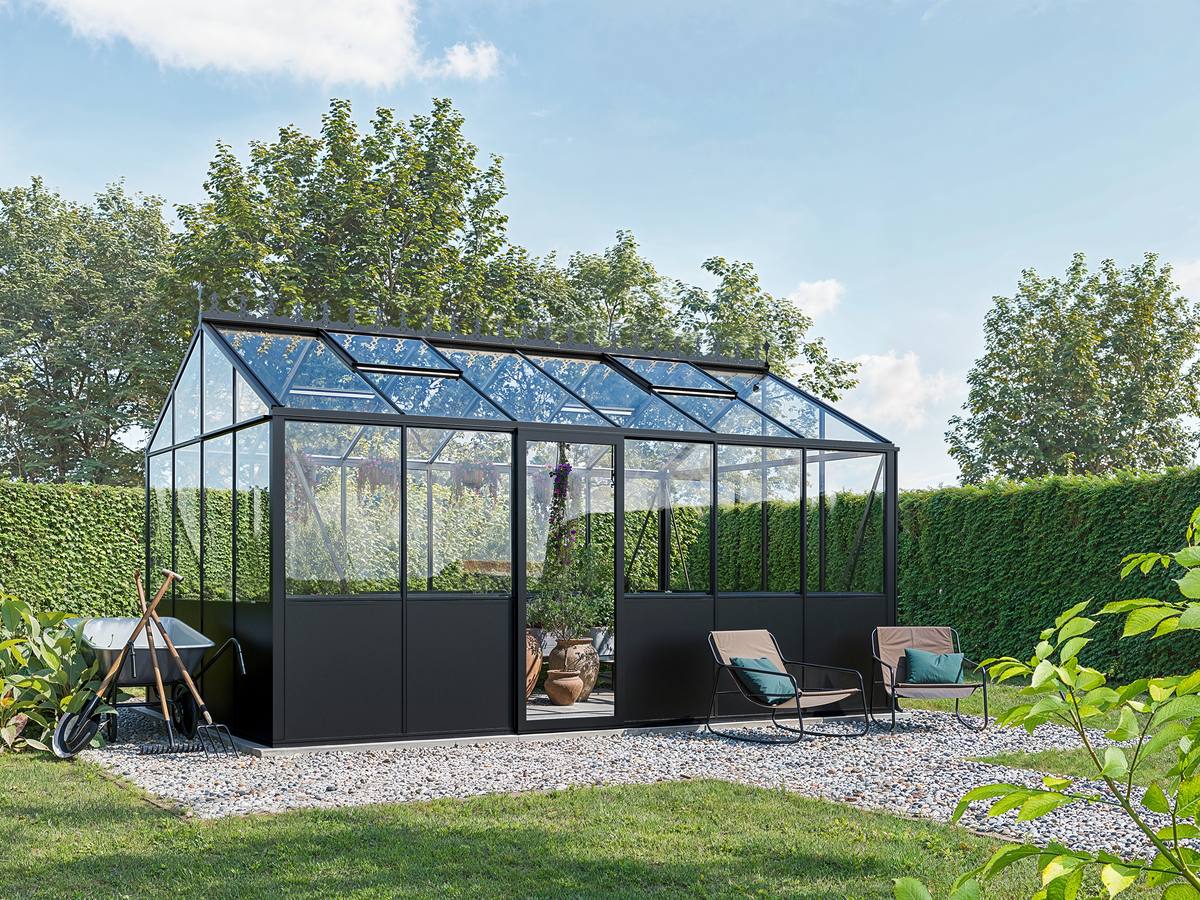
The country or region in which a greenhouse or pergola is manufactured can be useful information, but it is not a complete quality measure. A dependable result comes from the interaction of design, materials, production control, packaging, delivery, foundations, assembly and maintenance. Buyers therefore need to look beyond a simple country-of-origin statement.
This guide explains how to assess European manufacturing in practical terms. It also shows how to inspect an order without confusing transport or installation issues with factory defects. For broader background about Bloomcabin and its approach, visit About Us and the overview of premium quality.
What European manufacturing quality means in practical terms
European manufacturing does not describe one universal standard. Europe contains many factories, production methods and quality systems. The useful question is not simply whether a structure was made in Europe, but how its design was converted into consistent, identifiable and installable components.
For an aluminium structure, manufacturing quality may be reflected in straight and accurately prepared profiles, repeatable hole positions, suitable finishes, correctly processed joints and parts that correspond with the current drawings. For glazing, roof elements, seals and fixings, it includes correct identification, compatible interfaces and protection against avoidable handling damage.
Quality control should take place at more than one stage. Material and component checks can occur before production, dimensional checks during fabrication, and visual or inventory checks before packing. The precise process varies between manufacturers and product families. A statement such as “European made” should therefore be treated as a starting point for further questions rather than proof that every detail has been assessed.
It is also important to distinguish a handmade appearance from uncontrolled variation. Decorative details or natural timber components may show legitimate visual differences, while engineered connection points still need to function as intended. Buyers comparing aluminium with wooden greenhouses and conservatories should consider the characteristics of each material rather than expecting identical finishes.
Manufacturing quality versus installation quality
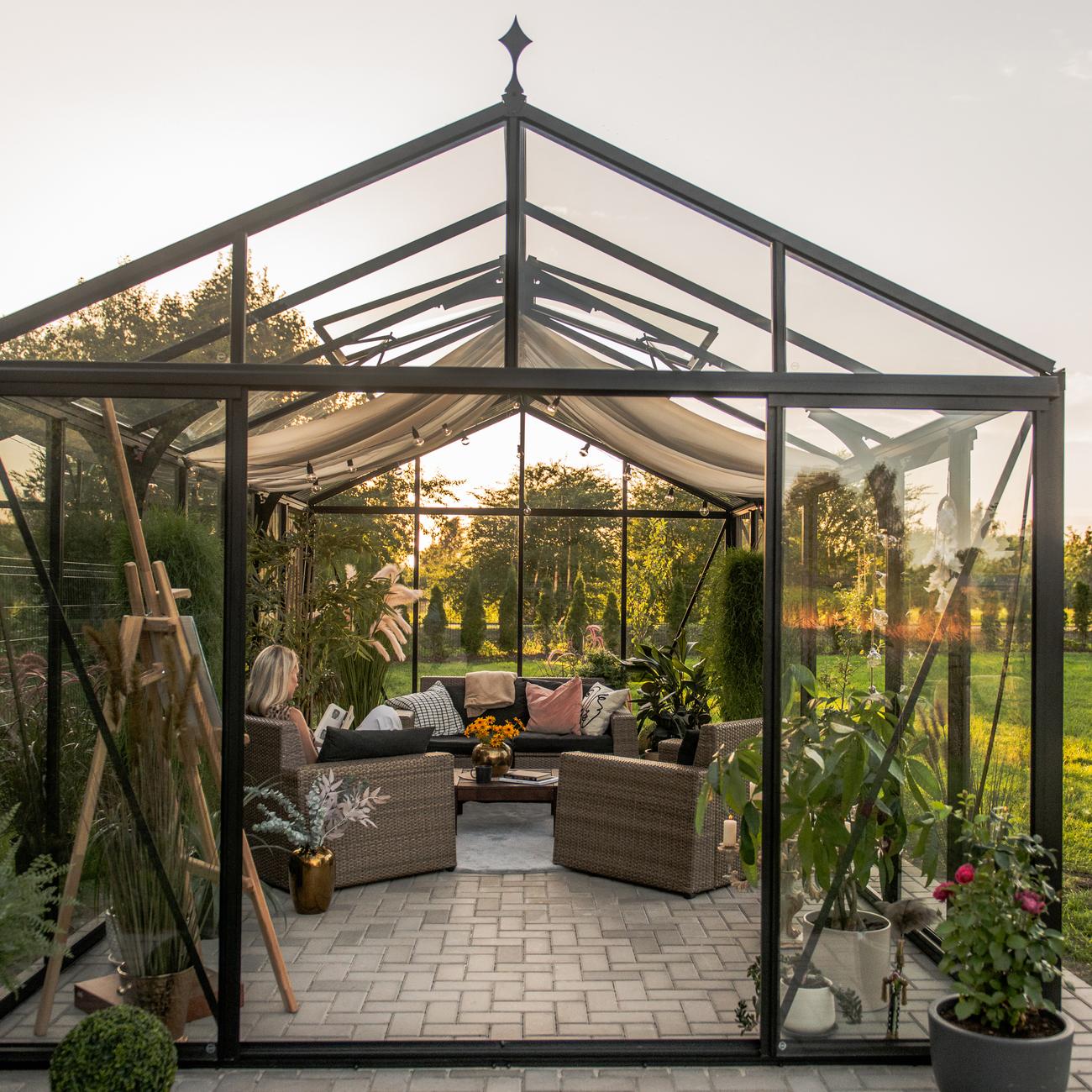
A well-made component can perform poorly when installed on an unsuitable base, forced into position or connected in the wrong sequence. Equally, careful installers cannot correct every factory or transport problem. Separating these areas helps everyone identify the right remedy.
| Area | Typical responsibility | Examples to examine |
|---|---|---|
| Product design | Designer or manufacturer | Drainage concept, connection method, glazing support and access for assembly |
| Factory production | Manufacturer | Cutting, drilling, finishing, component identification and packing checks |
| Transport | Relevant delivery parties | Package condition, handling marks and missing parcels |
| Site preparation | Customer and groundworks provider | Location, dimensions, levels, drainage and fixing substrate |
| Assembly | Installer | Correct sequence, orientation, fixings, alignment and protection of finishes |
| Ongoing care | Owner or operator | Cleaning, inspection, ventilation and prompt attention to damage |
These categories can overlap. For example, a door that does not close properly could result from an incorrect component, an out-of-square frame or a base that has settled. Diagnosis should be based on measurements, drawings and photographs rather than assumptions.
Compare the design before comparing quality
Two structures offered for the same garden may solve different problems. A compact growing house, an orangery-style structure and a roofed seating area cannot be judged fairly by price or aluminium weight alone. Begin by defining the intended use, position, appearance, access and level of weather protection.
Within the greenhouse range, an aluminium classic greenhouse, a Premium Classic Plus 384 glass greenhouse, an aluminium limited-edition greenhouse and a Prestige greenhouse with metallic base should each be assessed against its own documented configuration. Do not assume that a feature shown on one model is standard on another.
A larger Bloomcabin orangery also deserves a use-led comparison. The guide to orangery and greenhouse design can help clarify terminology, while the article on Victorian-style greenhouses provides context for traditional visual details.
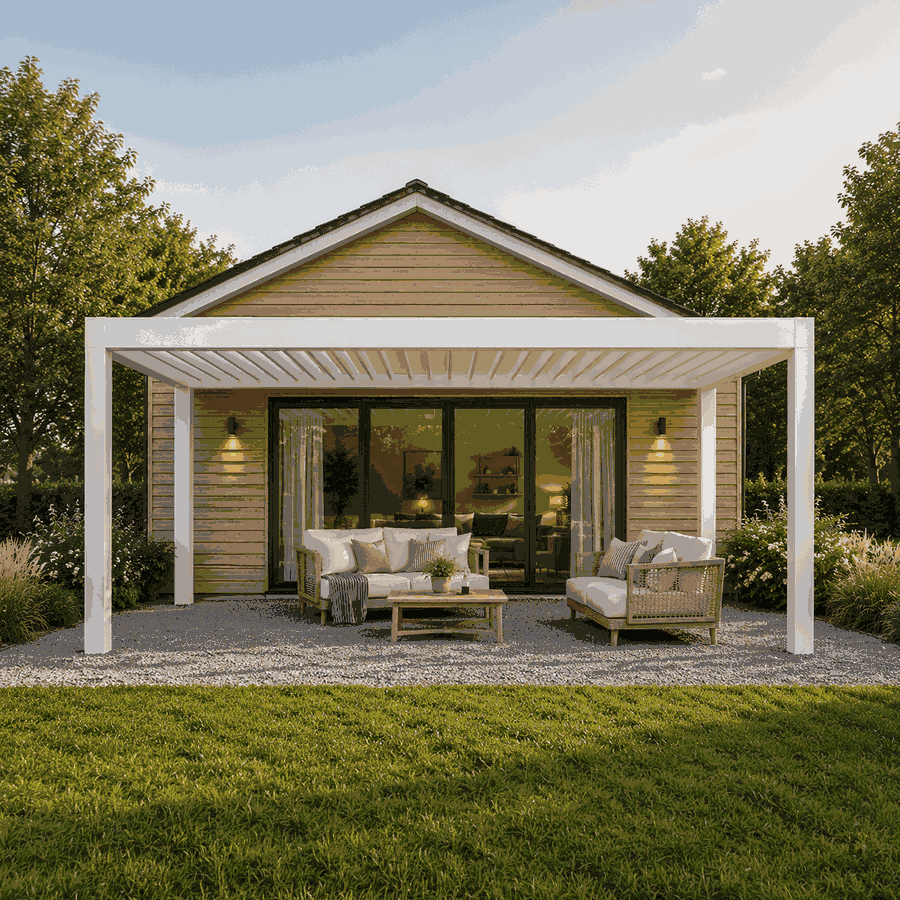
For pergolas, decide whether the structure should be attached or independent, and whether an adjustable roof is relevant. Compare the guidance on a wall-mounted or freestanding pergola, bioclimatic versus standard pergola design and louvred pergola considerations. A Bloomcabin pergola and a Bloomcabin bioclimatic aluminium pergola should not be treated as interchangeable simply because both create covered outdoor space.
A pre-purchase quality-control checklist
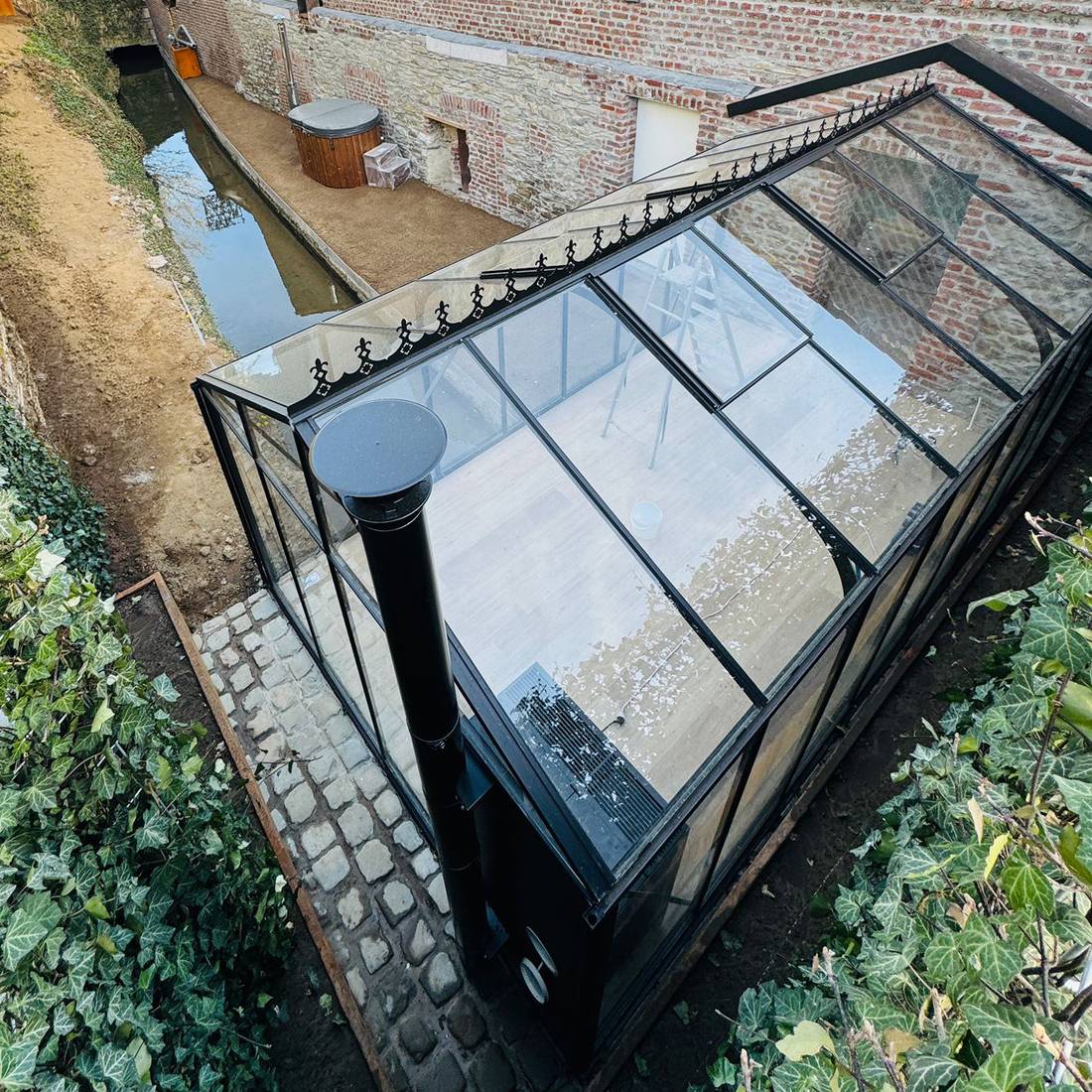
Good quality control begins before an order is placed. Use the following checklist to remove uncertainty while changes are still straightforward:
- Confirm the exact model and configuration. Record the product name, selected options, finish and any agreed accessories.
- Check the intended use. Growing plants, entertaining, sheltering a doorway and creating an ornamental focal point place different demands on a design.
- Review dimensions methodically. Distinguish overall external measurements from base, opening and usable internal dimensions. For relevant structures, consult the information on aluminium pergola dimensions.
- Assess the route to the site. Consider gates, steps, corners, overhead obstacles and a dry area for sorting packages.
- Plan the base early. Foundation work must follow the requirements for the selected structure. The guide to preparing a pergola foundation explains the importance of this stage.
- Check local constraints. Planning permission, building requirements, boundaries, drainage and other rules depend on the site and proposal. Check the applicable local requirements; the UK overview of planning permission for a greenhouse or pergola is a useful starting point.
- Read the current order information. Review how to order and the applicable documentation before confirming the purchase.
- Resolve ambiguous details in writing. If an image and written description appear different, ask which information applies to the precise configuration being ordered.
Keep the final quotation, order confirmation and approved drawings together. They form a more reliable reference than screenshots or photographs of a different installation.
What quality control can and cannot prevent
Factory checks can reduce errors, but no responsible manufacturer should imply that inspection makes every later problem impossible. Packed components pass through loading, transport, unloading, storage and assembly. Damage or loss can occur after production has finished.
Quality control also cannot compensate for an inaccurately built foundation, unapproved modifications, unsuitable storage or failure to follow the assembly sequence. Natural condensation, routine dirt and expected weathering should not automatically be interpreted as manufacturing defects. If a concern arises, compare the evidence with the applicable warranty information rather than relying on a general assumption about coverage.
Receiving and inspecting the order
Arrange enough clear space to receive, photograph and separate the packages. Do not discard labels, wrapping or protective pieces until the order has been checked. The applicable Terms of Purchase & Delivery should be read in advance so that the correct procedure and timescales are understood.
Initial receiving check
- Compare the number of received packages with the available delivery documentation.
- Look for crushed corners, punctures, broken restraints, wet packaging or signs that a package has opened.
- Photograph all sides of visibly affected packages before moving or opening them.
- Record any visible concern through the appropriate delivery process and retain the relevant paperwork.
- Move packages using safe methods and sufficient help. Do not drag finished profiles or place heavy items on glazing packages.
External packaging damage does not always mean that the contents are damaged, and intact wrapping does not guarantee that every component is present. It is evidence to preserve, not a final diagnosis.
Detailed inventory check
Carry out the detailed check in a dry, well-lit space. Work package by package and use the current packing list or manual. Group profiles, glazing, roof parts, doors, seals and fixings without removing identification prematurely.
- Count components by part reference rather than general appearance.
- Check left- and right-handed parts separately.
- Inspect visible surfaces under ordinary, even light before installation.
- Check that long components remain adequately supported while stored.
- Photograph labels beside any questionable part.
- Do not test-fit by drilling, cutting or forcing components together.
If something appears missing or incorrect, record the package number, part reference, quantity and photographs. Clear evidence is more useful than a message stating only that “parts are wrong”. Contact details are available on the Contacts page.
Protecting manufacturing quality during installation
Read the complete assembly information before starting, then organise parts in the order in which they will be needed. A manual is not merely a list of fixings: it establishes orientation, sequence and the point at which the structure should be checked for level, square and plumb.
Protect coated components from masonry dust, metal swarf, abrasive ground and sharp tools. Use clean supports and avoid stacking unprotected finished faces together. Remove protective film only at the instructed stage; leaving it on too long or removing it too early can both create practical difficulties.
Never force a joint to disguise misalignment. Stop and check the foundation, part number, orientation and preceding steps. Use only the specified fixing locations and components unless an authorised technical instruction states otherwise. Site drilling or cutting can remove protective finishes, introduce water paths and make diagnosis more difficult.
The foundation is especially important. Check dimensions, diagonals, level and fixing positions before the frame is committed. Where specialist anchoring, electrical work, drainage or connection to an existing building is involved, use appropriately competent people and verify the requirements that apply locally.
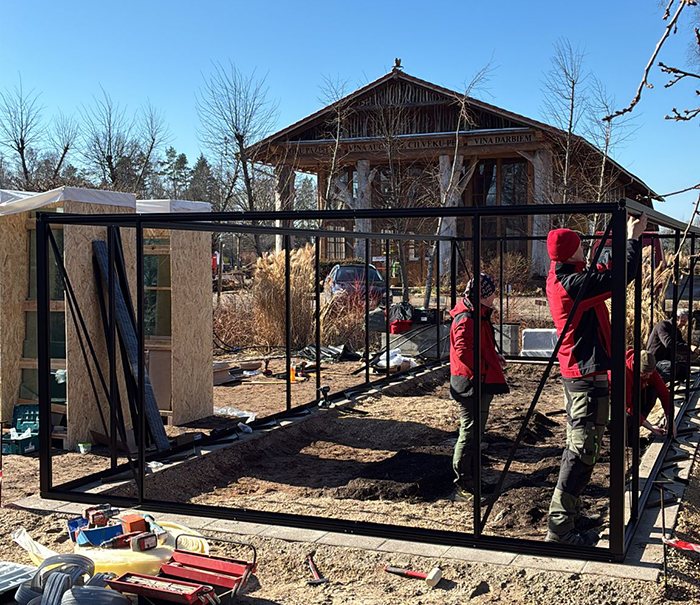
Anna Koku Skola as one installation sequence
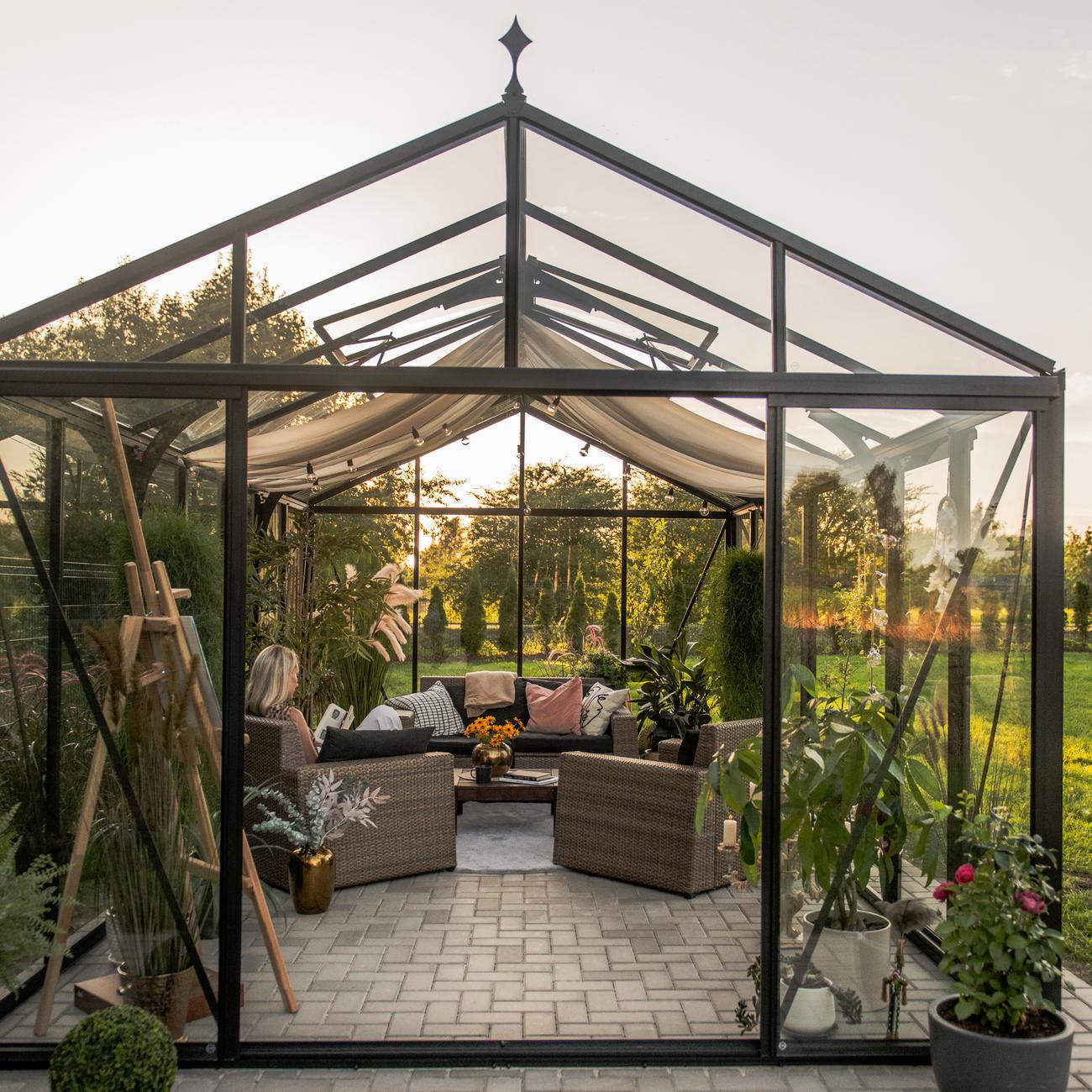
The Anna Koku Skola material should be understood as one continuous installation sequence. Early-stage photographs, an incomplete frame and later finished views are not separate projects or alternative product specifications. Each image records a different point in the same progression.
This distinction matters when using photographs to understand quality. Temporary bracing, exposed connections or components awaiting adjustment may be normal at an intermediate stage. Conversely, a completed photograph cannot show every concealed fixing or preparation step. The proper way to assess the sequence is to follow the order of work, compare it with the relevant manual and judge the completed assembly as a system.
Quality after completion: use and maintenance
Following completion, make a final inspection before moving benches, furniture or equipment inside. Check operation of doors, windows, vents or roof mechanisms as applicable. Confirm that drainage routes are clear and that leftover fixings have been identified rather than simply discarded.
Maintenance preserves rather than creates manufacturing quality. Clean surfaces with suitable non-abrasive methods, remove debris from drainage areas and inspect seals, moving elements and accessible fixings periodically. Guidance on the maintenance of an aluminium greenhouse provides a useful framework.
How a greenhouse is operated also affects the environment inside it. Ventilation, shading, watering and crop load influence moisture and condensation. The UK guide to greenhouse temperature and humidity helps distinguish environmental management from structural quality concerns. If selecting glazing, the greenhouse polycarbonate guide explains why panel type should be considered as part of the original design rather than as an isolated quality label.
How to compare quality claims responsibly
Ask for information that can be related to the precise model. Useful evidence includes clear product drawings, identifiable options, assembly documentation, finish descriptions and a defined process for reporting delivery concerns. General phrases such as “best quality”, “heavy duty” or “European standard” have limited value without context.
Customer feedback can reveal patterns, but a review should still be read carefully. Check whether it concerns the same model, seller, delivery arrangement and installation method. The page containing greenhouse reviews can supplement technical information; it should not replace it.
Build a like-for-like comparison table covering intended use, structural format, glazing or roof system, foundation needs, included components, documentation, finish, delivery arrangement and maintenance. The broader Greenhouses & Conservatories section and Useful Information library can help establish the right product category before detailed comparison begins.
Frequently asked questions
Does European manufacturing automatically mean higher quality?
No. It indicates a production location or supply context, not a guaranteed outcome. Design suitability, material control, fabrication accuracy, inspection, packaging and documentation all need to be considered. Compare evidence relating to the specific model rather than relying on geography alone.
Are all Bloomcabin greenhouses manufactured or assembled in the same way?
Do not assume so. Product families can have different profiles, glazing, bases, decorative elements and assembly sequences. Use the current documentation for the exact model and configuration ordered.
Can I compare a greenhouse and a pergola by price alone?
No. They serve different purposes and can use different roof, drainage, enclosure and foundation concepts. Define the intended use first, then compare structures within a relevant category and on a like-for-like basis.
What should I do if a package looks damaged?
Photograph it before opening or moving it unnecessarily, record the condition through the applicable delivery procedure and retain packaging and labels. Then inspect the contents carefully and report identifiable parts and quantities rather than assuming the whole order is unusable.
What if two parts look almost identical?
Check their references, hole positions, orientation and position in the drawings. Similar parts may be handed or intended for different stages. Do not remove labels or modify either component until its identity is confirmed.
Can installers modify components to make them fit?
They should not make unapproved modifications. Cutting, drilling, grinding or forcing a part may damage the finish, alter drainage or conceal an underlying alignment error. Stop and obtain the correct technical guidance first.
Is a perfectly prepared foundation part of factory quality control?
No. The factory can define interface requirements, but site measurement and construction are separate responsibilities. The foundation must be checked before installation because small errors can affect alignment across the completed structure.
Do product photographs prove construction details?
Not by themselves. Photographs may show a different size, option, installation stage or earlier configuration. Use them alongside current written information, drawings and the manual for the exact product.
How can I preserve the finish during assembly?
Store components dry and supported, keep finished faces away from abrasive surfaces, control masonry dust and metal swarf, and use clean tools and gloves. Follow the stated instructions for protective film and cleaning products.
What records should I keep?
Retain the quotation, order confirmation, selected options, drawings, manual, packing list, delivery paperwork, package labels and dated photographs. Also keep a record of questions, answers and any authorised corrective work.
Does premium manufacturing eliminate maintenance?
No. All outdoor structures require appropriate inspection and care. Maintenance helps keep drainage clear, moving components operational and surfaces clean. It also makes developing issues easier to identify before they become more serious.
Where should I start if I am uncertain about the correct design?
Write down the intended use, available site dimensions, preferred appearance and constraints such as access, boundaries and foundations. Then compare the relevant product categories and ask for clarification before ordering. The main Bloomcabin UK site provides the starting point for the available information.
