



MATERIALS
Powder-Coated Aluminium: Longevity, Corrosion Care and RAL Finishes
Powder coating gives aluminium a durable, corrosion-resistant finish in numerous RAL colours. Lasting results still rely on an appropriate product, careful assembly, compatible fixings and suitable maintenance.

Frames for greenhouses, pergolas and other garden structures often use powder-coated aluminium for its light weight, dimensional stability, resistance to corrosion and durable colour. Yet the finish is not armour. Exposure, pretreatment, fitting practices, connecting parts, cleaning and abrasion all influence its long-term appearance.
The following sections outline how the material works and what deserves attention when ordering, accepting a delivery, assembling the structure and caring for it afterwards. Instructions for the particular product take precedence. Related advice is available under Useful Information.
How does powder coating work on aluminium?
During powder coating, dry finishing material is deposited on prepared aluminium and cured in controlled conditions. Curing produces a continuous film bonded firmly to the underlying metal. In contrast with liquid paint, the powder has no liquid carrying medium before this stage.
What can be seen on the surface is only one part of the finished system. Alloy selection, cleaning, pretreatment, curing conditions and the design of each component also affect quality. Once assembly is complete, customers cannot readily judge those processes. Confirm the stated colour and finish from the product documents and order confirmation instead of assuming that photographs reveal every technical characteristic.
Besides creating the visible finish, the coating supports easier routine cleaning and places an extra barrier between the aluminium, moisture and contamination. Proper design, effective water run-off and accurate assembly remain essential.
What affects service life outdoors?
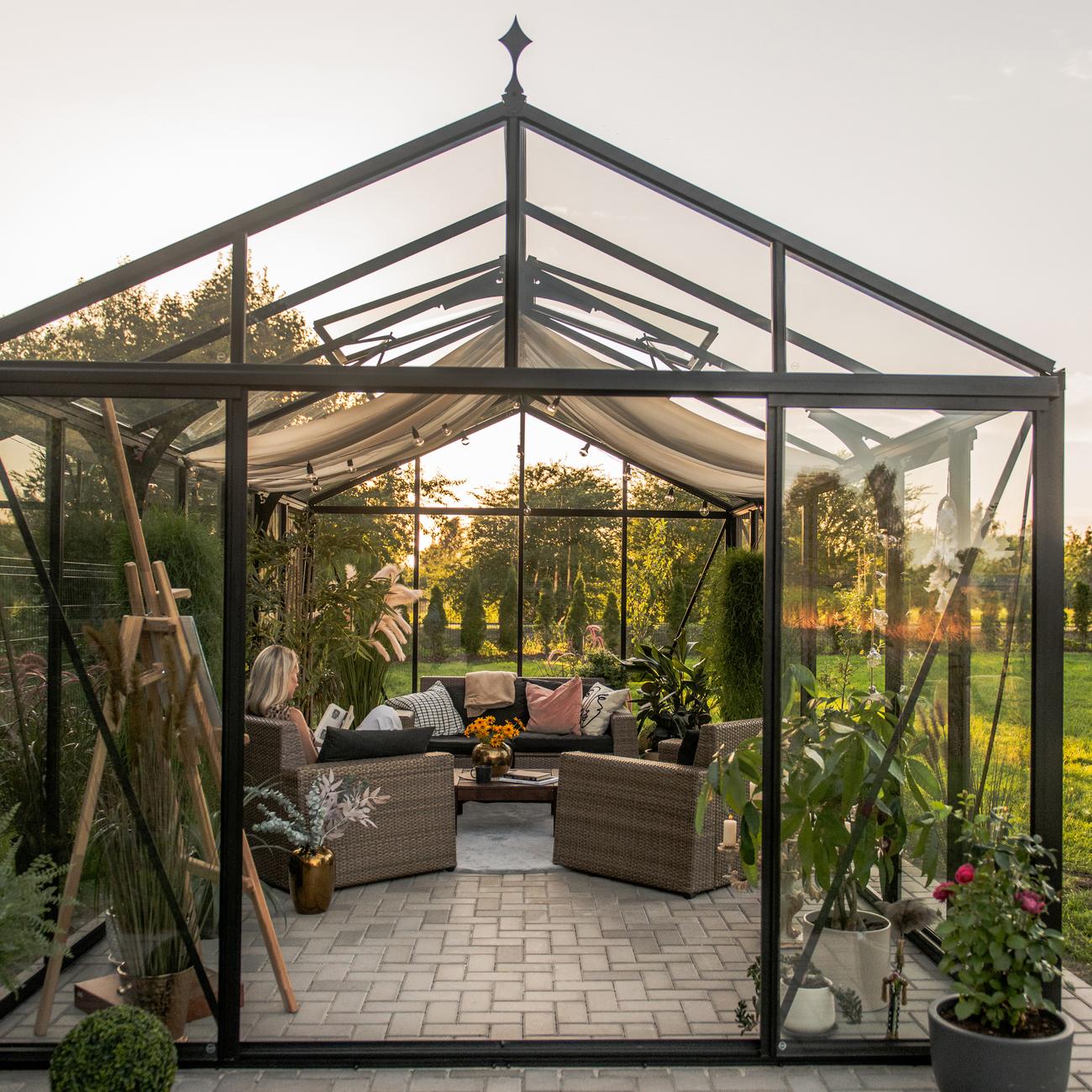
A garden structure encounters rain, ultraviolet light, temperature swings, pollen, bird droppings, plant sap and occasional knocks. Coated aluminium can perform well in these surroundings when users handle the finish and its components in accordance with their intended purpose.
Ordinary ageing does not by itself indicate a structural fault. Time and exposure may gradually alter sheen or the way a colour is perceived. Pale dust, pollen and dried mineral traces tend to show readily on dark finishes; darker grime is more conspicuous on light ones. Neither effect alone establishes a problem with the frame.
Contact damage often presents a greater risk than routine weathering. Tools resting against a frame, moving branches, garden furniture, metal ladders or trapped grit can score the coating. Decorations left in place must not chafe against profiles when the wind rises. For a frame-care routine, read Caring for Your Aluminium Greenhouse.
The natural corrosion resistance of aluminium
Unlike bare steel, aluminium develops an extremely thin oxide film when oxygen reaches the surface. That film slows subsequent deterioration of the underlying metal. It consequently does not produce the familiar reddish-brown corrosion associated with iron. The powder finish contributes a further physical barrier.
Resistance should not be mistaken for complete immunity. Retained water, salt, unsuitable chemicals and incompatible metal contact can promote localised deterioration. Crevices holding damp dirt are especially troublesome. Keep designed outlets and run-off channels free from soil, foliage, sealants and fitting debris.
Dissimilar metals can also create galvanic action when they are electrically connected and moisture provides an electrolyte. Fit only screws, washers and connectors specified for the structure or expressly accepted by the supplier.
Environments that merit closer attention
- Coastal gardens and salt exposure: Rinse deposited salt away with fresh water and inspect and wash the finish more frequently.
- Road treatments and passing traffic: Clear contaminated spray from nearby paths or roads rather than allowing it to remain on the frame.
- Town and industrial deposits: Airborne grime can hold dampness against the surface, so remove it before it accumulates.
- Swimming and spa settings: Treat vapours, splashes and treatment chemicals as potential exposures until suitability for that particular setting has been confirmed.
- Wet mortar, concrete and render: Shield finished parts during adjoining building work and remove alkaline material before it hardens on them.
- Plants kept against the frame: Arrange wires and supports so growth cannot close water outlets or wear the finish through repeated movement.
What a RAL reference tells you
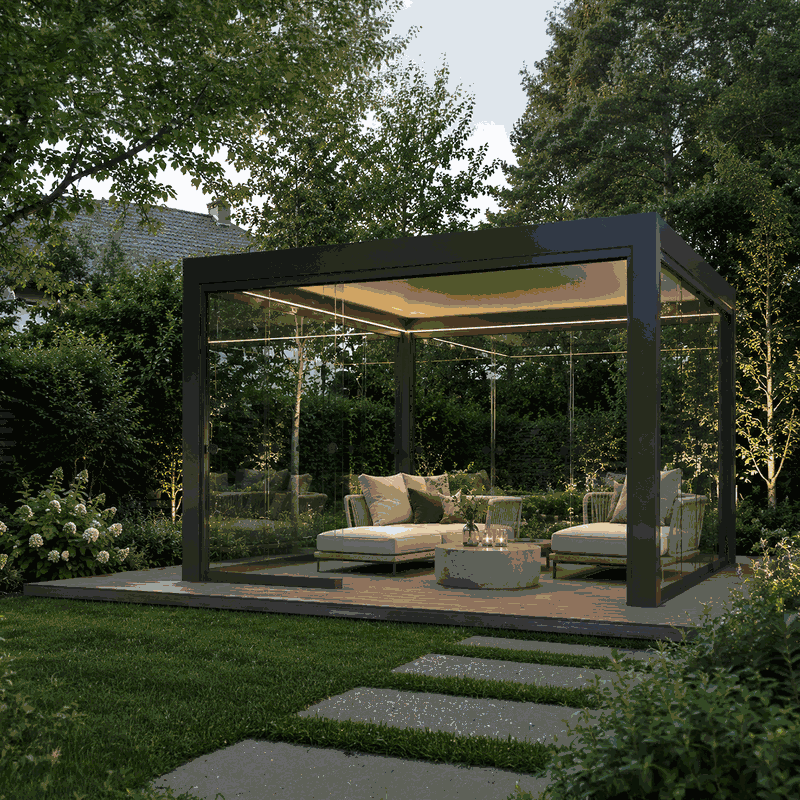
RAL designations provide a consistent reference for discussing colour. They convey more than broad descriptions such as anthracite, dark green or black-grey, but a code by itself does not specify every visible feature of the completed finish.
Texture and sheen influence perception as much as the nominal hue. Light behaves differently on a smooth gloss coating than on a matt or finely textured one. Along with the RAL designation, verify the texture and sheen actually offered for the chosen item.
Printed sheets and digital displays offer an indication rather than a dependable match. Screen brightness, colour rendering, browser settings, room light and image processing can each shift the result. Where architectural coordination is important, a representative physical sample is preferable. Ask before purchase whether one is available and whether it forms part of the agreed specification.
Light, surroundings and perceived colour
The same frame may look deep and cool early in the day but warmer or paler under afternoon sunshine. Glazing, polycarbonate, timber cladding, paving and surrounding plants alter contrast too. Traditional design context is discussed in our articles on Victorian greenhouses and the orangery greenhouse guide.
Geometry, sight lines, batch variation and texture may create further differences in appearance. Slim extrusions catch reflections differently from broad sheet sections. If the finish must closely coordinate with doors, windows or adjoining building elements, settle that requirement before confirming the order.
Settle the structure before settling the colour
First confirm the form, measurements, location and purpose; then choose the finish. On a pergola, its roof arrangement, wall interface and water management generally have greater practical consequences than colour. Planning comparisons include bioclimatic or classic pergolas, wall-mounted or freestanding pergolas and the pergola size guide.
A greenhouse decision should consider glazing, air movement, growing conditions and purpose as a whole. Begin with Greenhouses and Conservatories for the broader range, then consult the articles about greenhouse polycarbonate and temperature and humidity for two other important aspects of selection.
Where an outdoor product combines different materials, use its own page as the controlling reference. Details for an Elma S outdoor sauna or a HC150 barrel sauna cannot be borrowed from another model: frame construction, timber, hardware and finishes may differ. The general Sauna section provides a wider comparison of available forms.
Pre-purchase finish review
- Write down the full product name, chosen variant and dimensions.
- Verify the offered RAL designation together with the stated sheen and texture.
- Avoid making a colour decision from a mobile phone or computer display alone.
- Review interfaces with walls, foundations, gutters and adjacent construction.
- Tell the supplier about coastal air, road spray or unusually heavy contamination at the site.
- Decide whether exposed accessories and connectors should visually coordinate with the main profiles.
- Before approval, compare the confirmation with the agreed finish, configuration and quantity.
- Use Contact to resolve outstanding details and retain the answer in writing.
Ordering information is also available in How to Order and Shopping and Delivery .
Inspection when coated parts arrive
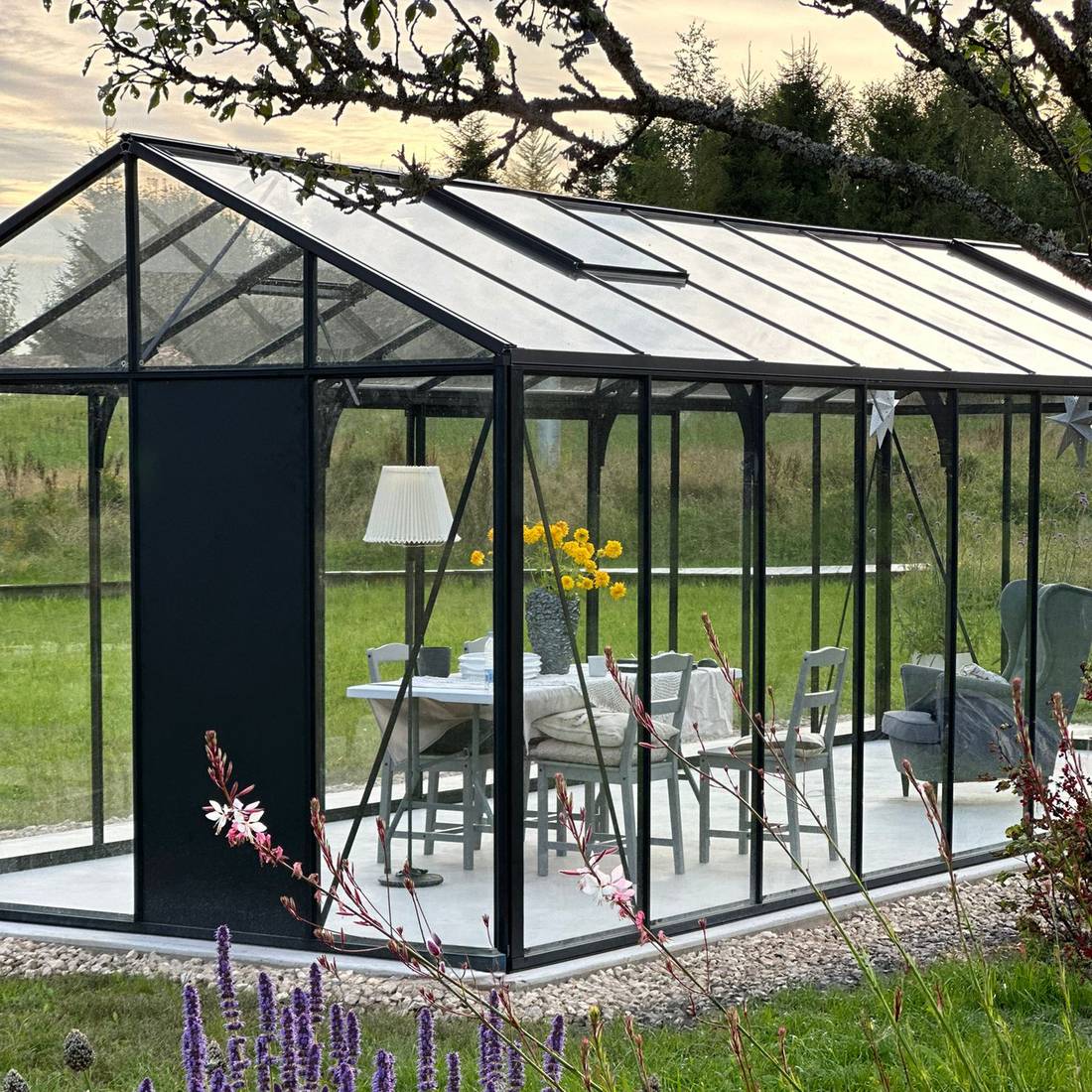
Where practicable, examine the consignment before installation starts. Look for crushed areas, punctures or moisture on each package, and reconcile identifiable components and parcels with the paperwork. Choose opening tools and methods that cannot stray into the profiles.
Establish whether a mark is loose packing material, removable dirt or genuine damage. Gently wash a soiled patch with water and soft fabric first; vigorous rubbing is not an appropriate test. Before fitting affected parts, photograph any dent, scratch, chip or shortage from several viewpoints and report it through the stated procedure. The relevant terms are explained under Warranty.
Until fitting begins, keep the parts dry, securely supported and away from movement around the work area. Unless the individual instructions say otherwise, do not leave protective films exposed to prolonged sunshine and damp conditions.
Avoid finish damage while assembling
Unpacking and fitting account for many preventable marks. Keep profiles off gravel, concrete and paving, using clean padded supports so trapped grit cannot work as an abrasive. Put tools and loose screws in suitable containers instead of resting them on finished surfaces.
Align and secure the structure on the base intended for it. Forcing misaligned parts together can distort profiles and harm joints. For pergola projects, bring the Pergola Foundation Guide into early planning. In the Republic of Ireland, status depends on the site, use, dimensions, previous structures and other restrictions. From 27 July 2026, qualifying greenhouses, garages, sheds and similar incidental structures within a house’s curtilage may fall under a 30 m² aggregate exemption only if every condition is met. Pergolas are not automatically covered; ask the planning authority about earlier development, heritage and site constraints. The guide to planning permission for a greenhouse or pergola provides an introduction, while the authority’s decision and the requirements for the actual property remain controlling.
- Fit only the designated seals, hardware, screws and prepared openings.
- Clear every shaving promptly after drilling or an approved adjustment.
- Protect profile faces from bare clamps and metal hand tools.
- Follow the manual’s timing and method for taking off protective film.
- Leave every designed drain route and opening unobstructed.
- Do not add holes or cuts unless the product documentation or supplier authorises them.
A gentle approach to cleaning
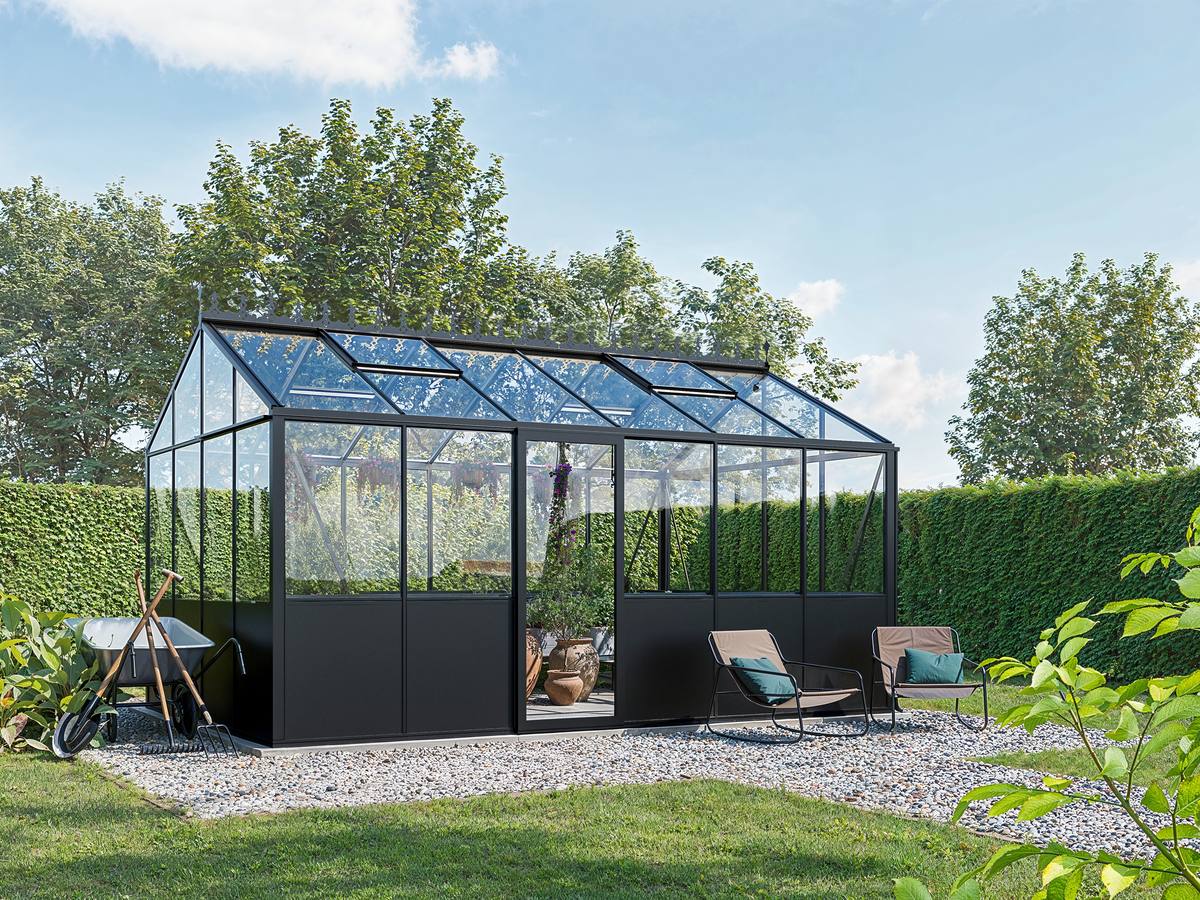
Light, regular washing is preferable to infrequent harsh scrubbing. Begin by flushing away loose matter with fresh water. If more is needed, work with soft fabric or a non-abrasive sponge and a mild product confirmed as compatible, then rinse off all cleaner residue.
Keep steel wool, scouring agents, stiff brushes, blades and strong solvents away from the coating. Highly acidic or alkaline substances and unknown site-cleaning products require confirmed compatibility before use. Work before the surface becomes hot enough to flash-dry the solution. Trial unfamiliar products discreetly and defer to the care directions for the item.
Exposure determines a sensible routine. A sheltered structure in a clean rural garden may require attention less often than one below trees, beside heavy traffic or near salty Atlantic air. In exposed Irish locations, inspect after severe weather as well. The aim is to remove corrosive or moisture-holding deposits before they linger, not to obey an arbitrary calendar.
Suggested inspection routine
| When | What to inspect or do |
|---|---|
| Once assembly is complete | Clear packaging, adhesive traces, site grime and swarf, then confirm that water can drain. |
| Whenever dirt is apparent | Wash with fresh water and soft materials, addressing bird fouling and plant juices without delay. |
| Following winter or peak pollen | Examine and clear the frame, joints, gutters, outlets and other water routes. |
| Following storms or nearby works | Look for chafing, displaced objects, mortar contamination and impact or tool damage. |
| When minor damage appears | Record it in photographs, eliminate its cause and request the correct repair method before proceeding. |
Assessing chips, scratches and touch-ups
Start by identifying what has been affected: removable material, the coating itself or the profile’s shape. A dent, distorted section or impaired joint is not merely an appearance issue. Where the significance is unclear, stop loading or altering the part and obtain technical advice.
An appropriate touch-up system may make a small defect less conspicuous and cover it against direct exposure. Work carried out on site cannot recreate factory powder coating, so shade, sheen and texture may remain visibly different. A similar-sounding colour name on automotive or general-purpose paint is not enough to establish suitability.
Prepare a repair only after the location is dry, clean and clear of detached material. Select both product and method from the applicable maintenance guidance. Broad sanding of the area risks removing sound layers that did not need treatment.
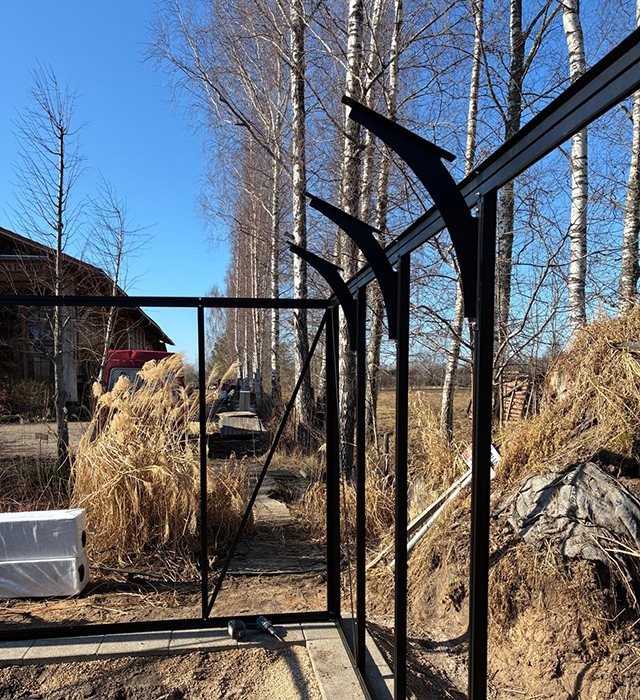
Different demands in greenhouses and pergolas
A greenhouse concentrates condensation, humidity, fertiliser, crop-treatment products, cleaners and organic matter within a limited space. Wipe splashes from the profiles and prevent soil or plant debris from filling gutters and outlets. Gardeners using the space intensively can consult growing lettuce in a greenhouse for cultivation advice; it does not supersede maintenance directions for the frame.
On a pergola, foundations, wall interfaces and controlled water flow are fundamental. No finish can remedy incorrectly designed drainage. Keep paint and unsuitable lubricants away from moving louvres and other mechanisms, and do not obstruct them. The article Is a bioclimatic pergola worth it? explores the initial choice of system.
Sunlight may heat pale and dark finishes differently, but this does not identify a single ideal colour. Glazing, shade, ventilation, moisture management and position usually have more direct importance for crops than the shade of slim frame sections. For people using a pergola, orientation, roof form and air circulation matter along with appearance.
Questions customers often ask
Can corrosion affect powder-coated aluminium?
Yes, although aluminium does not produce iron’s reddish-brown rust. Salt, retained dampness, aggressive substances or poorly matched metals may still cause local deterioration. The coating contributes useful protection, but drainage, compatible construction and considered care are still required.
When is recoating worth considering?
There is no universal repainting interval. Judge the finish by its condition, exposure and history of physical contact. Wash sound coating rather than covering it as a precaution. If deterioration is extensive or appears in many places, seek advice on whether professional refurbishment is technically worthwhile.
Does a RAL reference reproduce exactly on screen?
No. It identifies a standard colour reference rather than a fixed digital display value. Monitor settings, brightness, photography and surrounding light alter what the viewer perceives. Nor does the designation alone prescribe surface texture or sheen.
Why might matching RAL components appear different?
Profile shape, viewing direction, light, substrate, sheen, texture and manufacturing batch can all shift perception. A visible difference is not by itself proof that the designation is wrong. When close coordination is essential, compare representative physical samples.
Is pressure washing suitable for the frame?
Prefer a soft sponge, fresh water and a compatible gentle cleaner. Concentrated jets may disturb seals, vulnerable joints or damaged edges and can drive contamination into crevices. Use pressure equipment only when the documentation for that product specifically allows it.
How should an arrival scratch be handled?
Pause before fitting or touching up the part. Take clear photographs of the package, component, identification and affected location, and compare everything with the shipping documents. Submit the concern through the stated reporting channel and retain the packaging while it is being considered.
How much upkeep does coated aluminium need?
It requires relatively little care, but not none. Clear away leaves, salt, dirt and aggressive residues, and periodically examine joints, drains and places subject to contact. Frequency should reflect how and where the structure is used.
Are alternative stainless-steel fixings acceptable?
Only after suitability has been confirmed. Length, strength, head form, sealing arrangement, finish and metal compatibility must all correspond with the connection. A material’s reputation for quality does not make every fastener appropriate. Use supplied or specifically authorised parts.
Is every scratch a structural concern?
No. A shallow mark may affect only the local appearance. Deep scoring, distortion, a cracked joint or damage beside a load-carrying connection deserves technical review. Its position, cause and depth are more informative than how noticeable it looks.
Does frame colour control heat or plant performance?
No one frame shade is best in every setting. Although darker surfaces commonly take up more solar energy, greenhouse conditions depend far more on glazing, ventilation, shading, overall size and position. Colour selection cannot replace proper environmental planning.
Which documents confirm colour and maintenance?
Use the description for the exact product, the quotation, order confirmation, assembly instructions and supplied maintenance literature. Images or specifications belonging to a similar model are insufficient. Ask for written clarification before purchase or surface treatment if those sources conflict.
Purchase and ownership summary
- Record the exact item, variant, RAL designation and agreed finish.
- Judge colour under representative lighting rather than trusting a display image.
- Resolve location, base, water management and local project requirements before purchase.
- Examine the consignment and photograph concerns before parts are fitted.
- Use padded clean supports during assembly and clear metal swarf at once.
- Retain the prescribed accessories, seals and connecting hardware.
- Choose gentle compatible cleaning products, avoiding abrasive tools and harsh chemistry.
- Promptly wash away salts, bird fouling, plant juices and construction deposits.
- Identify a scratch’s location and depth before deciding on a coating repair.
- Let the documentation for the particular product override general guidance.
Treating design, colour and upkeep as connected decisions helps maintain the finish and prevents avoidable harm during transport, assembly and ownership. More guidance appears in Greenhouse Reviews and on the main Bloomcabin Ireland page.
