



COMPARE
Durability and the Real Cost of Garden Structures
The cheapest greenhouse, pergola or outdoor sauna may not prove economical over time. Its design, location, base, glazing, assembly, upkeep and ease of repair shape the real ownership cost.
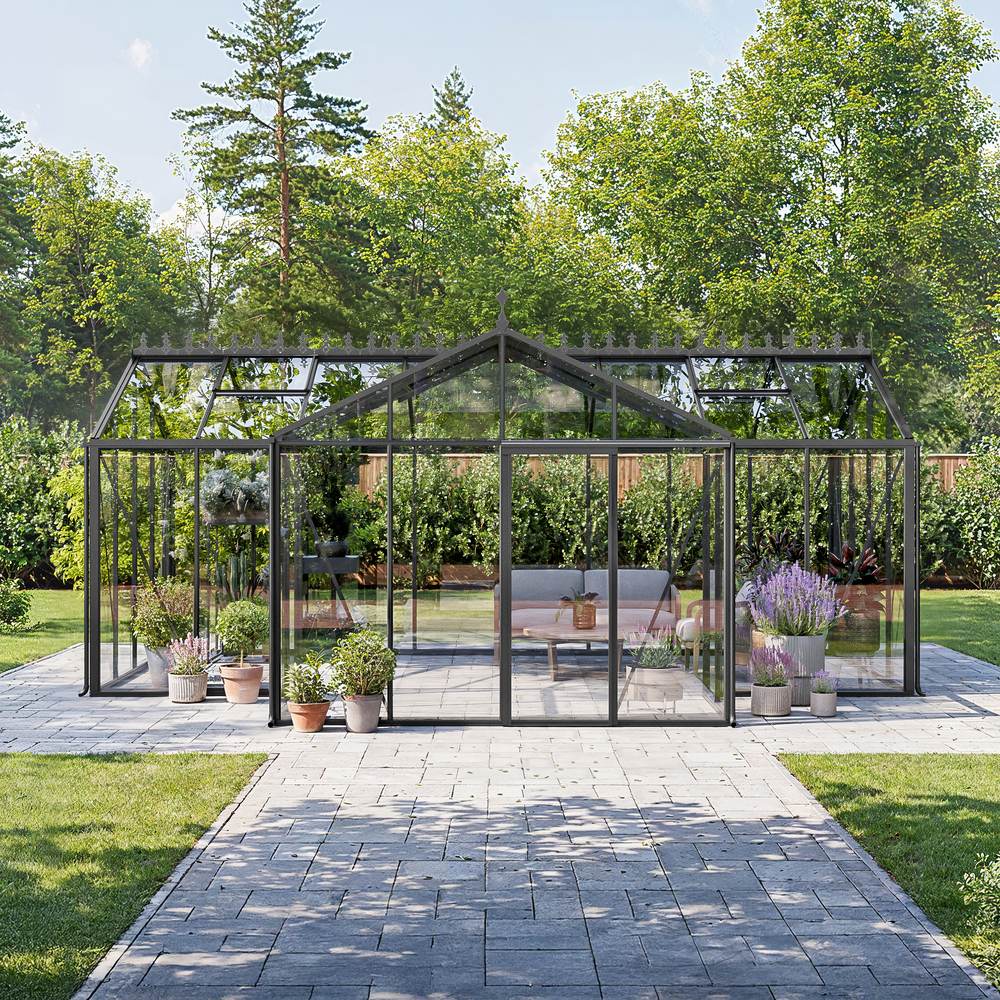
Price is often the first point considered when selecting a greenhouse, pergola or outdoor sauna. It is a useful starting point, but not a complete basis for a decision. The eventual outlay can also include preparing the site, building foundations, transport, assembly, maintenance, repairs and replacement components.
A stronger comparison asks how much work and expense the structure may require during the planned ownership period, alongside the use it provides. Often described as total cost of ownership, this method helps uncover whether an attractive initial quote is likely to remain good value.
The initial price tells only part of the story
The quoted price is easy to identify, yet it is only the opening entry in an ownership budget. Greenhouses of comparable size may follow very different paths. One could soon require adjustment, new glazing or corrosion treatment, while a correctly assembled alternative may continue working reliably for many years.
The highest price does not guarantee the best choice. An excellent structure on an unsuitable site can prove costly; a simpler option may better match intended use, conditions and maintenance capacity.
Instead of comparing only the purchase price per square metre, estimate the overall cost for each worthwhile year of use. To review the available formats, browse Greenhouses and Conservatories. Those still defining their requirements can also begin with Useful Information for broader guidance.
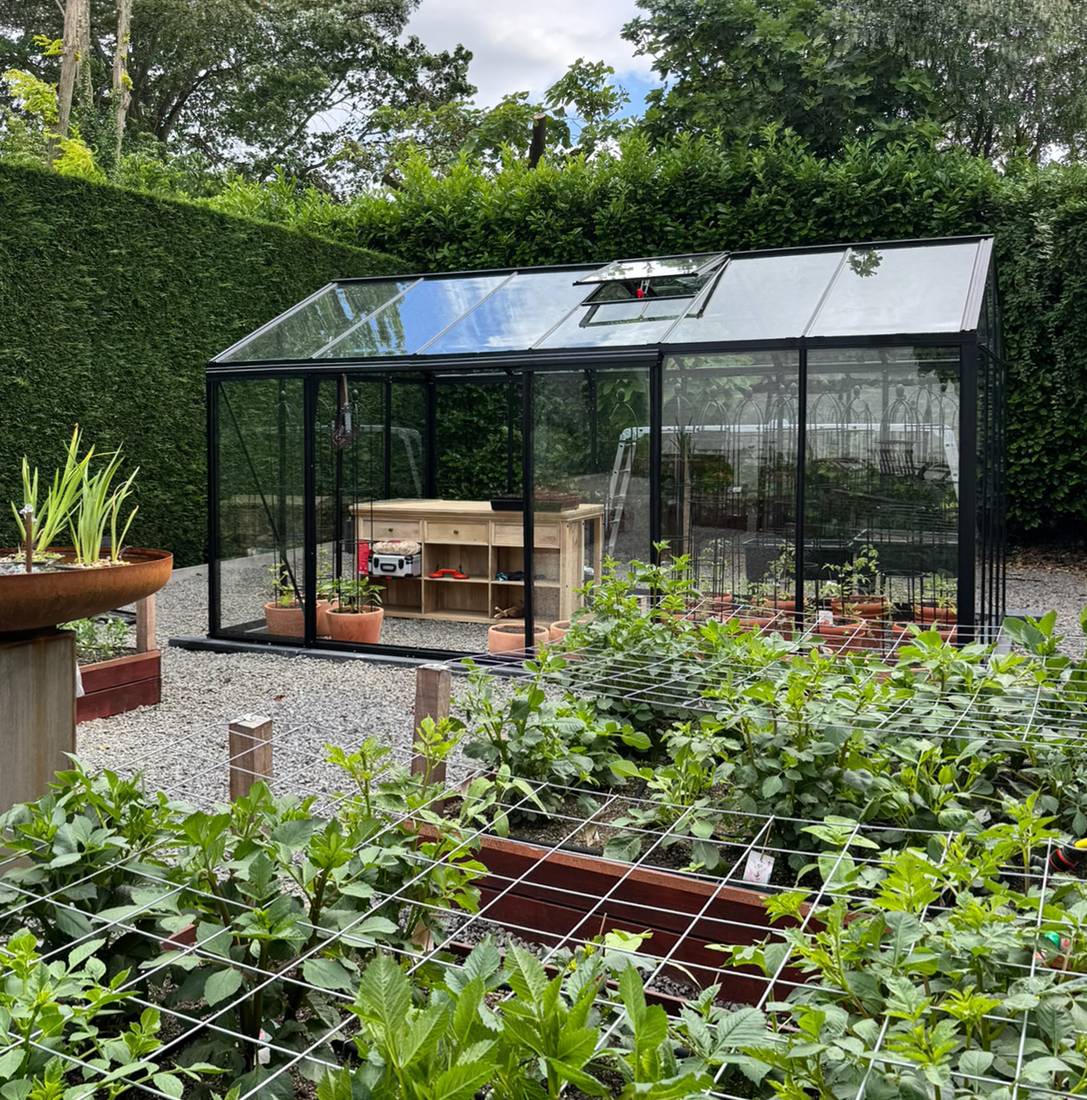
Building a complete ownership budget
Include less obvious expenditure as well as the items shown in the product quote. Work beyond the supplied package can be substantial. A basic table is sufficient at first, provided every proposal is assessed using identical categories.
| Budget category | Details to examine | Potential effect over time |
|---|---|---|
| Product purchase | Frame, glazing, doors, ventilation and accessories | Establishes the initial technical specification |
| Project planning | Site assessment, planning enquiries and foundation design | May prevent redesigns or interrupted work |
| Handling and logistics | Transport, vehicle access, unloading and interim storage | Limits avoidable damage and delays |
| Construction | Owner assembly, specialist labour, equipment and assistance | Influences alignment, sealing and reliable operation |
| Ongoing use | Washing, lubrication, adjustments and consumable items | Protects finishes and everyday usability |
| Remedial work | Replacement parts, panels, seals and fasteners | Supports a longer economically useful period |
| Interrupted use | A lost growing period or temporarily closed outdoor space | Lowers the benefit received |
Record a realistic comparison period and its assumptions. One year poorly represents a permanent structure. Avoid lifespan promises without considering site conditions, maintenance and spare-part availability.
Terms governing the order and delivery also affect the calculation. Consult Purchasing and Delivery, How to Order and Warranty to distinguish purchasing, transport and cover-related considerations.
Where a durable structure earns its keep
Durability involves more than rainfall. Assess actual exposure alongside materials, drainage, connections, glazing and anchoring. Accessible wearing parts and replacement options influence whether deterioration remains manageable.
Reducing disruptive repair work
Sound construction makes early replacement of broad surfaces or structural assemblies less likely. Routine tasks will still arise, but they can usually be scheduled and budgeted. Planned care is generally preferable to urgent repairs once damage has already disrupted use.
Distinguish ordinary wear from design weaknesses. Seals and fittings wear over time; access and replacement options can prevent routine servicing from becoming a major repair.
Getting more from groundwork and assembly
Initial costs include foundations, site preparation and assembly. A longer useful life spreads those costs; early replacement can repeat the work as well as the purchase expense.
Pergolas illustrate this especially well. A carefully designed base assists correct positioning and transfers loads into the ground. The Pergola Foundation Guide sets out the main matters to consider, although the finished solution must suit the exact model, soil and individual location.
Keeping the space available for use
A greenhouse provides its benefit when crops need it. Problems with a door, vent or glazed section may upset plant care and daily routines. The article on greenhouse temperature and humidity explains why dependable control of the enclosure is valuable.
Regular availability matters for pergolas and saunas too. Paying a substantial sum achieves little when awkward access, burdensome upkeep or recurring faults leave the space out of action for lengthy periods.
Judge the whole care system, not a material label
Material names alone do not establish quality. Compare specifications, joints, finishes, drainage, contact points and care requirements as one construction and maintenance system.
Aluminium avoids the treatment schedule associated with untreated timber. Deposits, drainage and joints still need attention. For care guidance, see the caring for an aluminium greenhouse provides a sensible routine.
For timber, consider the finish, the way moisture is managed and details intended to protect the wood. Repeated cycles of heat and humidity add another consideration in an outdoor sauna. Review ventilation, access, cleaning and use alongside appearance. For contrasting examples, consider the Elma S outdoor sauna, the HC150 thermowood barrel sauna and the HC 225 thermowood barrel sauna . Confirm the applicable specification and care information on each model page.
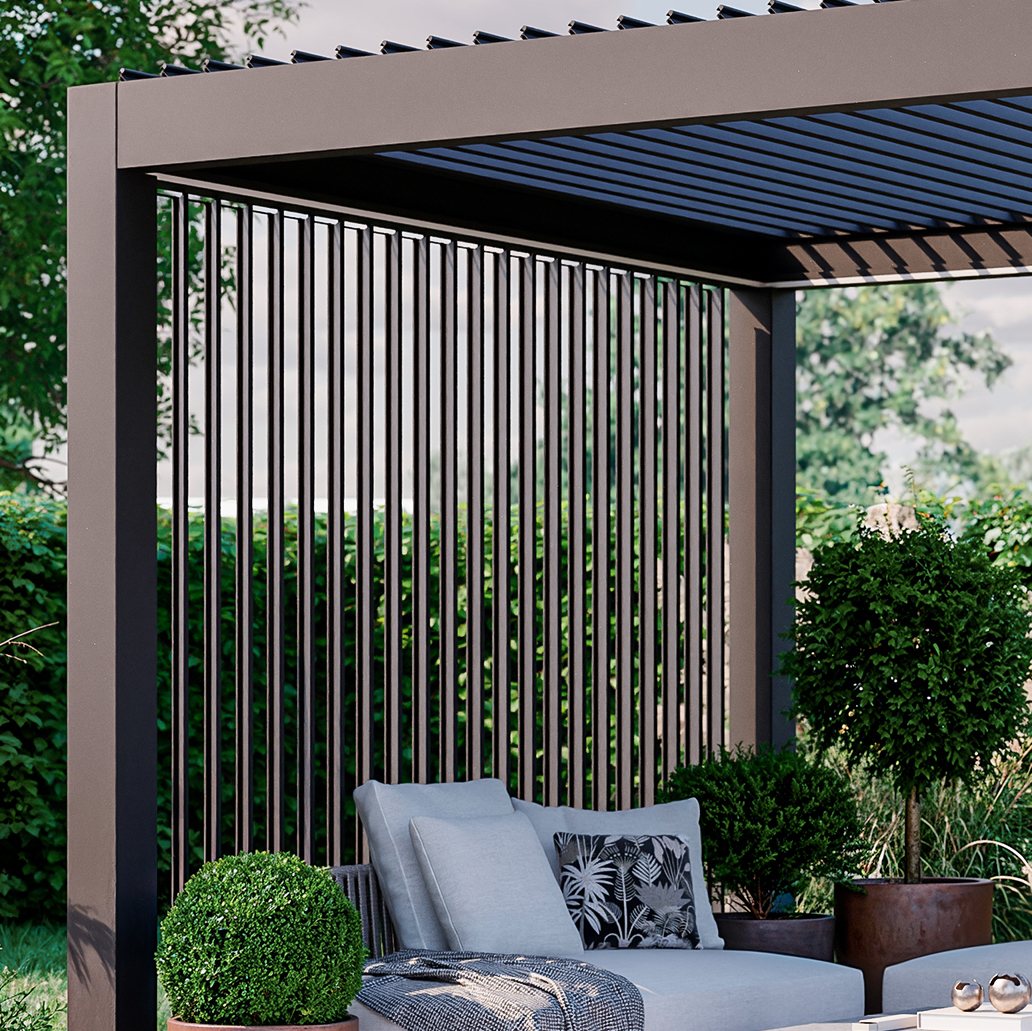
Roofing and glazing alter costs throughout ownership
Glazed and roofed areas affect daylight, heat behaviour, weight, washing and the difficulty of future repairs. Priorities depend on purpose: a wall-side greenhouse differs from a freestanding orangery, while shade, rainfall control and movement are central to a pergola roof.
Glass stays rigid and clear, though a broken section may call for skilled replacement. Polycarbonate weighs less and responds differently to heat and physical loads. Panel construction, edge restraint and workmanship matter alongside the chosen material. The Polycarbonate for Greenhouses article discusses panel depth, multiwall sheets and thermal performance.
Questions worth asking for any system include:
- What secures each separate pane or sheet?
- Is it possible to renew one damaged bay on its own?
- What safe access is available for washing and examining the roof?
- Where do rainwater and internal condensation discharge?
- How much of the surrounding assembly must come off during a repair?
- Can the correct replacement pieces be identified later?
Roof operation needs separate attention on a pergola. For more detail, compare a bioclimatic or classic pergola and consult the guide to bioclimatic pergolas and glass roofs when considering future expense associated with moving roof parts and everyday operation.
Select a shape that works with the site
Longevity begins with a design that belongs in its location. Extra size does not always add value: it may complicate movement, make cleaning awkward or leave persistent shade elsewhere in the garden. Too little room, however, can lead to an earlier-than-planned enlargement or replacement.
Assess sun, wind, roof drainage, nearby buildings, trees, boundaries, access and future changes. Irish Atlantic exposure makes local conditions particularly relevant to pergola attachment choices. The wall-mounted and freestanding pergola comparison examines that choice, while the Pergola Size Guide helps translate the intended use into a workable footprint.
A design that remains visually satisfying adds lasting value. If traditional architecture appeals, include that preference when considering the Victorian greenhouses and our advice on planning an orangery for ways to connect form, function and the wider garden.
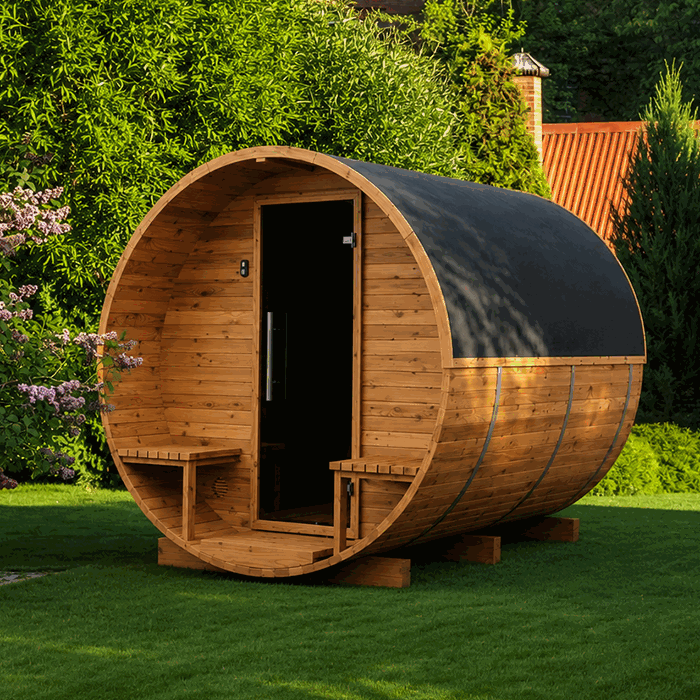
Durability starts with preparing the location
Even a robust product needs a sound platform. Ground movement, inadequate drainage or incorrect positioning may strain frames, doors and glazed sections. Resolving these faults after assembly normally costs more than addressing them before work begins.
- Clarify the purpose: Describe the crops or leisure activity, expected seasons and circulation needed.
- Record the location: Measure the footprint, changes in level, gradient, clear spaces and delivery route.
- Investigate the soil: Arrange suitable assessment of load-bearing ability, drainage and local frost exposure.
- Choose the correct base: Match its design to both the selected model and the actual ground.
- Establish the local position: Planning status, boundaries and other site requirements depend on the particular proposal and planning authority.
- Set out utilities: Decide the routes for any electricity, water or drainage before erection starts.
No general article can decide whether a particular project needs permission or another approval. The article Planning Questions for Greenhouses and Pergolas provides a planning checklist. Ask the local planning authority about your property. Revised rules effective 27 July 2026 provide a conditional 30 m² aggregate for qualifying domestic incidental structures; position, retained private open space, height, use and all other conditions still apply.
Protecting the purchase during delivery and construction
Transport, storage and assembly damage can shorten service before use. Plan access, unloading, dry storage and component checks; handle long profiles, glazing and roof parts securely.
Compare the received items with the paperwork without undue delay. Leave protective wrapping in place until each component has been recognised and safely laid out. Take photographs of visible damage or discrepancies and follow the stated reporting process. For assistance, use Contact .
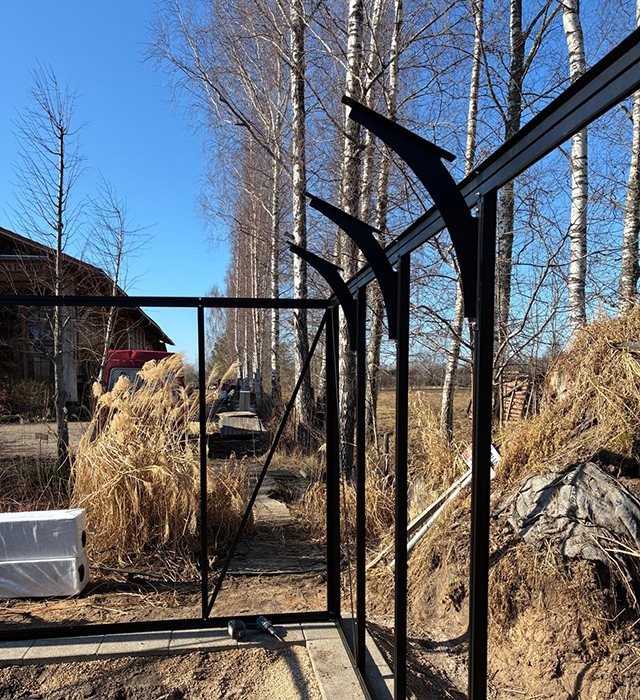
Assembly sequence, squareness, level and the specified fixings all affect the completed structure. Unplanned modifications can interfere with load transfer, drainage and fit. Tighten every fastener in accordance with the instructions, and confirm suitability before substituting holes or hardware.
A modest maintenance routine can control future expense
Care need not be elaborate. Brief checks recorded at regular, sensible intervals often reveal developing problems sooner than occasional large maintenance sessions.
Routine walk-around check
- Do the visible covers and fasteners remain in their proper positions?
- Can doors, windows and louvres move freely without unexpected resistance?
- Is there any damage to panels, seals or their surrounding frames?
- Are gutters, outlets and ventilation openings unobstructed?
- Has any new distortion, rubbing point or unusual sound appeared?
Scheduled washing
Deposits can hold moisture, impede water flow and place extra strain on moving mechanisms. Select methods compatible with each surface. Harsh chemicals and abrasive products may mark finishes or transparent panels. Elevated work demands secure access; where that cannot be provided, engage someone with the appropriate skills and equipment.
Checks prompted by an event
Inspect again following severe local weather, a collision, nearby construction or signs that the ground has moved. Deal with imposed loads only through a safe method intended for the product. The relevant model documents determine its permitted loads and the actions appropriate to it.
Ease of repair deserves as much attention as robustness
A structure kept outdoors cannot be protected from every incident. Ownership planning should therefore ask what follows if one item is harmed. Construction that permits a focused repair may be more economical than an apparently strong system where a small fault requires renewal of a broad assembly.
Make sure parts can be named accurately, installation papers can be retained and individual panels, seals or fittings remain reachable. Structural, electrical and safety-related repairs should not be attempted without the necessary competence. To view the outdoor range, browse Sauna section.
Assess competing quotations on equal terms
Create a side-by-side worksheet and seek an equivalent level of detail from each supplier. Customer feedback may add practical context, though it cannot replace a technical review. The Greenhouse Reviews page supplies another viewpoint.
| Question for comparison | Proposal A | Proposal B |
|---|---|---|
| Has the complete construction been specified clearly? | Add notes | Add notes |
| Does the package contain glazing, doors and ventilation? | Add notes | Add notes |
| What groundwork and foundation tasks are necessary? | Add notes | Add notes |
| Which transport and unloading activities are covered? | Add notes | Add notes |
| Who is responsible for erection and the final check? | Add notes | Add notes |
| Which continuing maintenance tasks are anticipated? | Add notes | Add notes |
| May separate components be renewed or repaired? | Add notes | Add notes |
| What information or assumptions still need confirmation? | Add notes | Add notes |
Compare totals after completing the worksheet. Missing foundation, delivery or installation costs make quotations appear cheaper. Treat uncertain costs as risks to clarify, rather than zero-euro entries.
Apparent savings that may prove costly
- Allowing too little room: Replacing or extending an undersized structure may exceed the cost of choosing suitable capacity initially.
- Choosing the wrong position: Inadequate drainage, awkward entry or heavy shade can diminish the benefit received.
- Leaving the foundation until last: Errors at the base can disturb alignment throughout the finished build.
- Judging package contents by headings: Glazing, accessories and assembly work may be included on different bases.
- Omitting care from the budget: Weather-resistant materials still gain from washing and periodic examination.
- Hiding a fault with a temporary patch: Prompt, appropriate work usually costs less than allowing related damage to develop.
- Disregarding appearance: An unwanted design may be replaced prematurely even while it continues to function.
Questions owners commonly ask
Will the toughest greenhouse necessarily cost least over time?
No. The design must also fit the location, purpose and level of upkeep the owner can provide. Good materials cannot make an oversized or unsuitable construction economical. Robustness is one consideration among several.
What period should the calculation cover?
Prepare short, medium and extended scenarios rather than relying on an unverified prediction of longevity. The comparison will then show where extra initial expenditure might be offset by reduced repair, maintenance or replacement expense.
Can aluminium be treated as upkeep-free?
Aluminium requires less maintenance, not none. Whatever the material, clean and inspect drainage, joints, glazing and moving parts.
Does glass always outlast every other glazing option?
Glass is not universally better. Compare glass type, framing, exposure, loads and repair options against polycarbonate’s advantages and limitations. Judge the complete system.
Could owner assembly reduce the budget?
It may, provided the chosen model permits it and sufficient knowledge, tools, time and assistance are available. Mistakes in the base, alignment or glazing can outweigh the intended labour saving. Work with safety implications requires capable hands.
Why budget for receiving the delivery?
Vehicle entry, unloading, checking and protected storage all require space, labour or time. Poorly organised handling also makes delays and damage more likely. For further logistics guidance, see ordering a greenhouse for delivery before finalising arrangements.
Does warranty cover establish expected longevity?
No. Written warranty terms define particular commercial commitments; they do not promise a fixed technical lifespan. Check the scope, eligibility requirements and exclusions applying to the precise product.
Should visual appeal influence long-term value?
A design that continues to suit its surroundings encourages use and care. Lasting visual appeal contributes to value but cannot replace technical suitability.
What project paperwork is worth storing?
Retain quotations, confirmations, delivery and assembly documents, foundation information, warranty terms, photographs and maintenance or repair records. Record model and component details.
How can I choose among several suitable Bloomcabin models?
First define the location, purpose and space available. Then examine layout, entry, glazing, airflow, assembly demands and continuing care. Settle unanswered technical, delivery and purchasing matters before ordering.
Choose a structure that can remain useful and manageable
Good value combines a proportionate purchase price with informed siting, accurate construction and care that can realistically be maintained. No single material creates durability. The form, base, enclosure, joints, water management, operation and access for repairs must function as one system.
Do not let the lowest final quotation decide the project by itself. Define a credible ownership period, include associated work and expenditure, and consider how readily the structure can be checked, washed and repaired. Those decisions help a garden purchase remain a worthwhile long-term asset.
