



MATERIALS
Tempered Greenhouse Safety Glass: Performance, Protection and Lifespan
Tempered safety glass combines mechanical strength with a safer break pattern. This guide covers selection, delivery, installation, cleaning and checks throughout its service life.
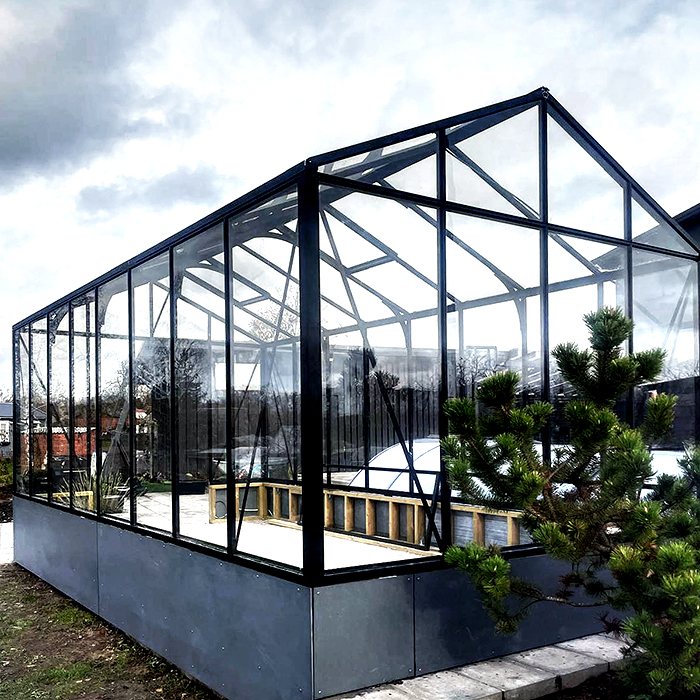
High-quality greenhouses often use tempered safety glass for its transparency, dimensional stability and improved mechanical resistance compared with ordinary glass that has not been tempered. Sound performance still depends on the complete structure. The base must be even, aluminium members properly aligned, pane edges intact, seals suitable and every panel seated without localised pressure.
These principles cover buying through long-term care, but do not replace model-specific instructions. Follow the selected model’s documents and applicable site requirements. To compare greenhouse styles, explore the greenhouses and conservatories.
What tempered greenhouse glass does
Tempered safety glass is a single pane treated to create surface compression and internal tension. This improves resistance to bending and temperature differences while determining how the pane breaks.
Stress beyond its limit causes small fragments rather than long, sharp shards. This reduces injury risk without eliminating it: fragments can cut, fall and spread across frames, plants and floors.
The term safety glass should never be read as meaning that the material cannot break, can be walked on or will withstand every blow. Check the quotation, order documents and assembly manual to establish the glazing included with the chosen greenhouse. Owners also share practical observations in the greenhouse reviews.
What happens during tempering?
Thermal tempering starts with glass already prepared to the finished shape. Controlled heating is followed by rapid cooling, with the outside cooling ahead of the centre. The resulting difference fixes the intended pattern of internal stresses into the completed pane.
Order matters. Cutting, edge preparation and required drilling are normally finished before heat treatment begins. Trying to saw, drill or grind the treated pane disturbs the stored stresses and may shatter the entire sheet at once. If glass will not enter its opening, do not modify it at the site. Verify the component reference, orientation, frame dimensions and alignment of the foundation.
Key strengths and practical boundaries
| Feature | What it offers | What to remember |
|---|---|---|
| Resistance to loading | Suitable for the expected demands of a correctly designed greenhouse glazing system. | It cannot guarantee survival after a tool strike, flying stone, forceful impact or distorted frame. |
| Failure pattern | A failed sheet divides into many comparatively small pieces instead of large blades. | Falling fragments can still injure people or damage items below. |
| Response to temperature | Handles normal cycles of warming and cooling better than untreated glass. | Intense heat in one spot or a steep temperature difference remains undesirable. |
| Exposed face | Provides a hard, clear surface that can be washed readily. | Grit, metal implements and abrasive cleaning products may leave scratches. |
| Corners and edges | Remain dependable when correctly protected in storage and during fitting. | A knock or concentrated contact at a corner or edge can be especially serious. |
| Further processing | Leaves the factory already made to the required finished shape. | Drilling and trimming are no longer possible after treatment. |
Plastic panels provide another approach to greenhouse glazing. Weight, transmitted light, thermal performance and ageing are covered in our article about polycarbonate for greenhouses . Judge either material as part of a complete arrangement that includes the frame, seals, location and proposed use.
Pairing safety glass with an aluminium frame
Slim, accurately formed aluminium sections allow generous transparent areas without visually heavy framing. Glass contributes excellent light transmission, a tough face and a colour that does not change through moisture. It neither absorbs water nor distorts because it has become damp.
The pairing succeeds only where forces pass through the structure as designed. A pane should not bear against bare metal or be squeezed by an out-of-square profile. Purpose-made supports, seals and retainers locate it while shielding vulnerable edges from hard contact. Beneath everything, the foundation must keep the aluminium level and square.
For ideas on the architectural origins of glazed garden rooms, read about Victorian greenhouses and consult our orangery guide.
Points to resolve before placing an order
- Use: Will you grow crops, shelter plants through winter, spend time inside, or combine these uses?
- Site: Consider shade, overhanging limbs, ball play, gravel thrown by machinery and Atlantic exposure at your particular Irish site.
- Foundation: Is it possible to construct a load-bearing base that is level and accurate in size?
- Access: Can the vehicle approach, unloading point and final carrying route accommodate lengthy or weighty packages?
- Installation: Will there be adequate help, properly selected glass lifters, protected resting points and suitable personal protective equipment?
- Site controls: Have you checked whether the project raises planning, boundary-distance or other property-specific questions?
Start with our guide to planning permission for a greenhouse or pergola. In Ireland, Class 3 exemption changes effective 27 July 2026 are conditional. Check your property with the planning authority.
Agree what is included in the order and how delivery will work before committing to a purchase. See how to order, purchasing and delivery , plus information about greenhouse delivery throughout Ireland, including its islands.
How to receive and examine a glass shipment
Arrange for someone responsible to be present and able to inspect the packaging when the order arrives. Reconcile the packages against the delivery paperwork. Warning signs include crushed corner protection, damage to a crate, distinct impact marks, parts moving freely or the noise of shattered material.
Record any visible concern before carrying the load onwards, then report it using the stated procedure. Respect package labels and open each unit carefully. Supporting parts of the packaging should stay in place while removing them could leave panes unstable. For help with missing contents or transit damage, go to the contact page , keeping your order details and useful photographs to hand.
Holding the panes safely before assembly
Choose a dry, sheltered place that unauthorised people cannot enter. Follow the delivery and assembly documents when positioning glass on a firm, cushioned support. An almost upright sheet might topple, yet laying it too shallow may impose inappropriate bending. Secure the load and maintain the orientation specified for that package.
Keep sand, screws and metal objects between panes out of the handling area. Protect glazing from doors, mowers, falling tools and site traffic; avoid prolonged storage in wet wrapping.
Handling glass responsibly on site
Never carry a pane from one corner, slide it along the ground or set an edge directly onto concrete. Appropriate gloves, eye protection and sturdy shoes are needed, together with any extra protection required for overhead activity. Use only clean, sound suction equipment suited to the lift, testing its hold each time.
Provide enough handlers for large sheets and clear the full route before movement begins. Prepared soft pads are the only suitable temporary resting points. A wide pane behaves like a sail in gusts, particularly on exposed sites, so delay work whenever weather prevents control. Do not prop loose glazing against the greenhouse.
Preparing the frame and setting the work order
Complete the alignment of the aluminium structure, as directed by its manual, before introducing any glass. Confirm the base plane, diagonal measurements, square corners, vertical walls and location of every structural member. Fasteners should be tightened in the stated progression. Locking them early may remove adjustment and trap stress in the assembly.
- Match every component and sheet to its reference in the instructions.
- Remove grit, swarf and discarded packing from every supporting surface.
- Examine each seal for damage, twisting, interrupted runs and poorly formed joints.
- Lower the correct pane into the opening while maintaining the specified clearance around its edges.
- Install clips, cappings or retaining strips exactly as the manual directs.
- After each section, check gaps and frame alignment.
- Set doors, vents and windows at the prescribed stage, ensuring afterwards that each moves freely.
Details vary by model. Its instructions take precedence over experience or videos from other builds.
Following the work at Anna Koku Skola
The Anna Koku Skola example follows one project: site and base preparation, aluminium frame erection and alignment, then glazing and final checks. Its photographs are not drawn from unrelated installations.
Its progression carries an important technical lesson. Establish correct structural geometry before checking that supports and seals are clean and ready. The identified panes can then be seated and retained. Finish by adjusting moving sections, inspecting attachments and removing leftover items from the workspace. Glass should never be made to pull an unstable skeleton into alignment.
Reducing preventable damage
- Keep ladders, boards, stakes and hand tools entirely clear of glazed faces.
- Direct mowing and trimming activity away from the structure so that gravel cannot strike it.
- Cut back any branch likely to rub or knock against a pane.
- Restrain openings so gusts cannot slam a door or window.
- Keep dark items, applied films and heaters from producing a concentrated warm patch on the glazing.
- Attend to shifted retainers and defective seals promptly rather than waiting for another season.
Use our aluminium greenhouse maintenance guide to care for glazing, drainage channels, profiles and moving assemblies as one structure.
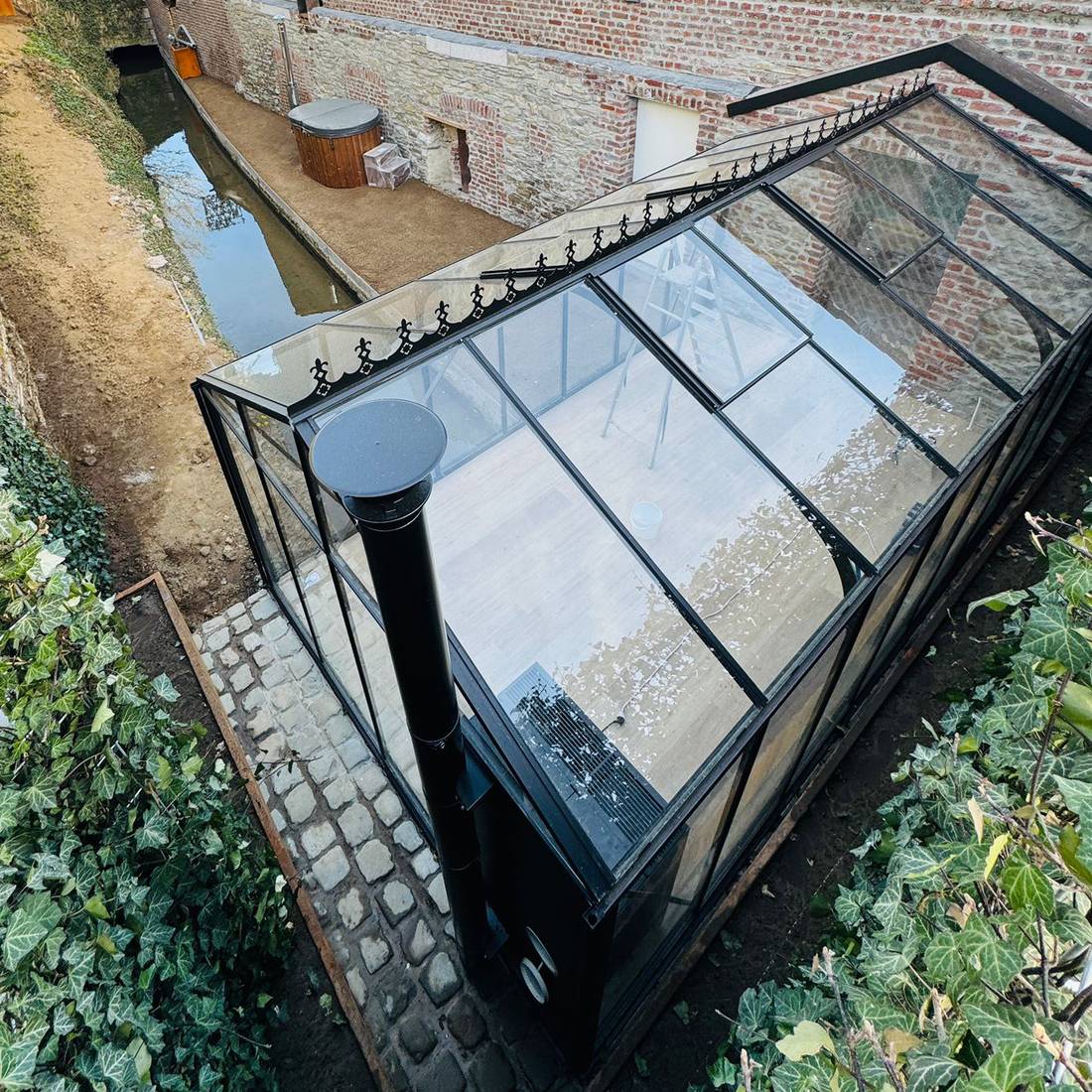
Washing tempered greenhouse panes
Rinse away loose grit and dust with plenty of water before wiping. Use a soft, clean cloth or non-abrasive sponge with a mild, compatible cleaner. Work in sections and rinse thoroughly.
Dirty brushes, metal blades, scouring powder and harsh chemicals may harm the pane, gasket or coated frame. Avoid scraping resistant deposits forcefully near an edge. Nor should cold water be applied suddenly to glass that is very hot. Prioritise secure access over reach, and support every ladder independently of the greenhouse glazing.
Moisture, temperature and use in every season
Water condenses when moisture-laden air touches a surface colder than its dew point. That is a routine physical occurrence in many planted greenhouses, not by itself evidence that rain is entering. Irrigation, damp compost and the plants themselves can all add considerably to indoor humidity.
Sensible watering, open drainage and regular air exchange can keep excessive dampness in check. See managing greenhouse temperature and humidity for a fuller explanation, or consult our crop example on raising lettuce under greenhouse glass.
Coordinate ventilation, shading and equipment for year-round use. In Ireland, Restricted Electrical Works require a Registered Electrical Contractor and certification; ask the contractor to classify the proposed work and confirm its certification requirements.
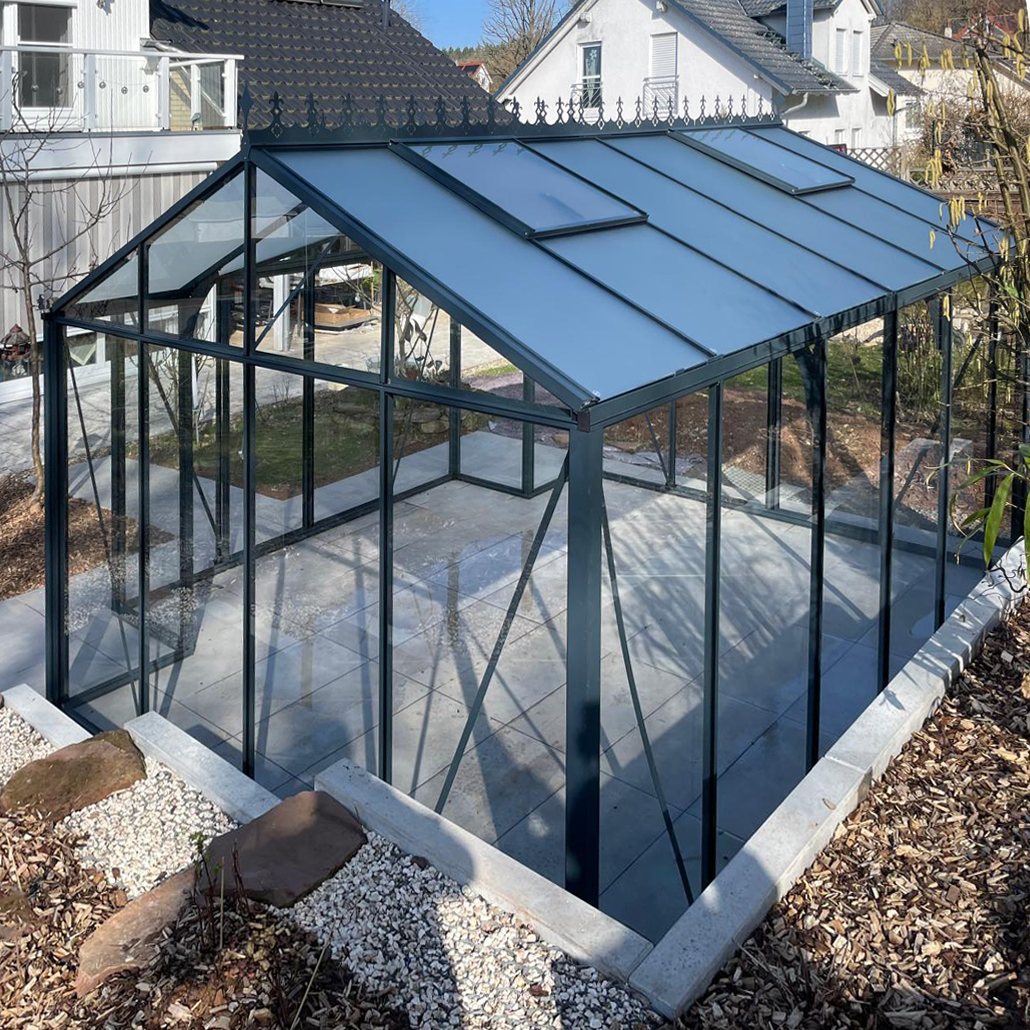
Responding to a broken pane
- Remove everyone from the vicinity at once and block entry.
- Stop all activity below the affected section.
- Put on robust footwear, eye protection and appropriate protective gloves.
- Gather fragments carefully with suitable tools, never uncovered hands.
- Look for deformation or evidence of impact on adjacent glass, seals and frame members.
- Use the model records and panel location to specify the correct replacement accurately.
- Follow local glass-disposal rules; ask your waste provider.
Establish why failure occurred before inserting new glass. A severe strike may leave an obvious mark, although trapped debris, an injured edge or a misshapen opening can produce other explanations. Review the warranty information for the process and conditions, not proof of an individual damage cause.
Routine inspection points
- Following a gale or other severe conditions: Inspect the panels, roof, operable sections and accessible attachments.
- At intervals during the year: Remove drainage obstructions and ensure gaskets have not crept out of place.
- Ahead of the main growing period: Operate doors, vents and automatic mechanisms to confirm smooth travel.
- After work beside the structure: Look over the glass for scratches, chipped edges and signs of impact.
- When behaviour alters: Trace the reason for a rattle, changed clearance or binding door without delay.
- Before starting a wash: Inspect access equipment, tools and suction devices for safe condition.
Never disguise a slight alignment fault with makeshift shims, new drill holes or excessively tightened screws. Return to the assembly information and obtain knowledgeable help where necessary. Browse useful information for related ownership topics.
Considering glass as part of the garden design
Transparent elevations visually link the planting inside with the wider garden. They draw attention to paths, foliage and the ordered lines of the aluminium. Alongside the required growing area, consider the view of the structure from the home, patio and principal routes around the property.
A coherent garden may contain several structures. Compare a bioclimatic or conventional pergola, choose between a wall-attached or freestanding pergola , and use the pergola sizing guide to assess spacing and important views. For preparation below the structure, consult the pergola base and foundation guide .
A garden wellness zone featuring the Elma S outdoor sauna also needs a position that allows delivery and maintenance while avoiding unnecessary shade over the greenhouse.
Questions greenhouse owners often ask
Can tempered safety glass still break?
Yes. Compared with ordinary glass it performs better under many everyday thermal and mechanical demands, yet an edge defect, heavy blow, severe constraint or another excessive load may still make it fail.
May I trim safety glass when it will not fit?
No. Tempered panes cannot be edge-ground, drilled or cut. Recheck the panel reference and direction, the dimensions of the frame and the level and alignment of the base.
Why do the edges require special care?
The broad face of tempered glass has substantial resistance, but corners and edges respond less favourably to a force concentrated in a small spot. Prevent them from meeting tools, concrete or exposed metal.
Is injury impossible with safety glazing?
No. Fragmentation avoids some hazards associated with long, knife-like shards, but the smaller pieces may still cut, lodge in footwear or drop from the roof. Keep everyone outside the affected zone.
Will tempered glazing discolour or turn hazy?
Glass does not normally yellow like some plastics. Dirt, limescale, condensation and deposits can cloud it; suitable cleaning and maintenance preserve clarity.
Is it possible to mend a small chip?
Do not glue, silicone or grind a chipped edge yourself. Have damage assessed for replacement: even small edge injuries can matter in tempered glass.
Does moisture on the pane prove there is a leak?
Condensation is not automatically a leak: humid air meeting cold glass forms moisture. Recurrent water around frames warrants checks of seals, drainage and installation.
May a ladder rest on greenhouse glazing?
No. It applies concentrated forces for which the pane was not intended and may also slide. Position it on its own secure footing without relying on delicate profiles or any glass for stability.
Is the glazed roof safe to stand on?
No. These roof panels are not working platforms. Plan independent access for washing, servicing and repairs so neither a person nor their equipment places weight on them.
Do all Bloomcabin greenhouses use an identical glazing method?
Profiles, gaskets, retainers and assembly methods vary. Use documents and delivered components matching the exact model.
Which factors best support a lengthy service life?
The principal safeguards work together: a solid and accurately level base, a square frame, protected edges, properly placed seals and ongoing inspection. Avoid unofficial alterations or improvised corrections.
What is the first step in choosing a greenhouse?
Define purpose, site, footprint, access and foundations before comparing forms and glazing. Begin your Bloomcabin shortlist with the company information and contact page pages as your next point of reference.
