



COMPARE
Evaluating the Craft Behind European Garden Structures
A European origin tells you where an item was produced, but not how well it was made. Design, component checks, usable paperwork, delivery, assembly and upkeep all contribute. This guide offers practical ways to investigate quality statements.
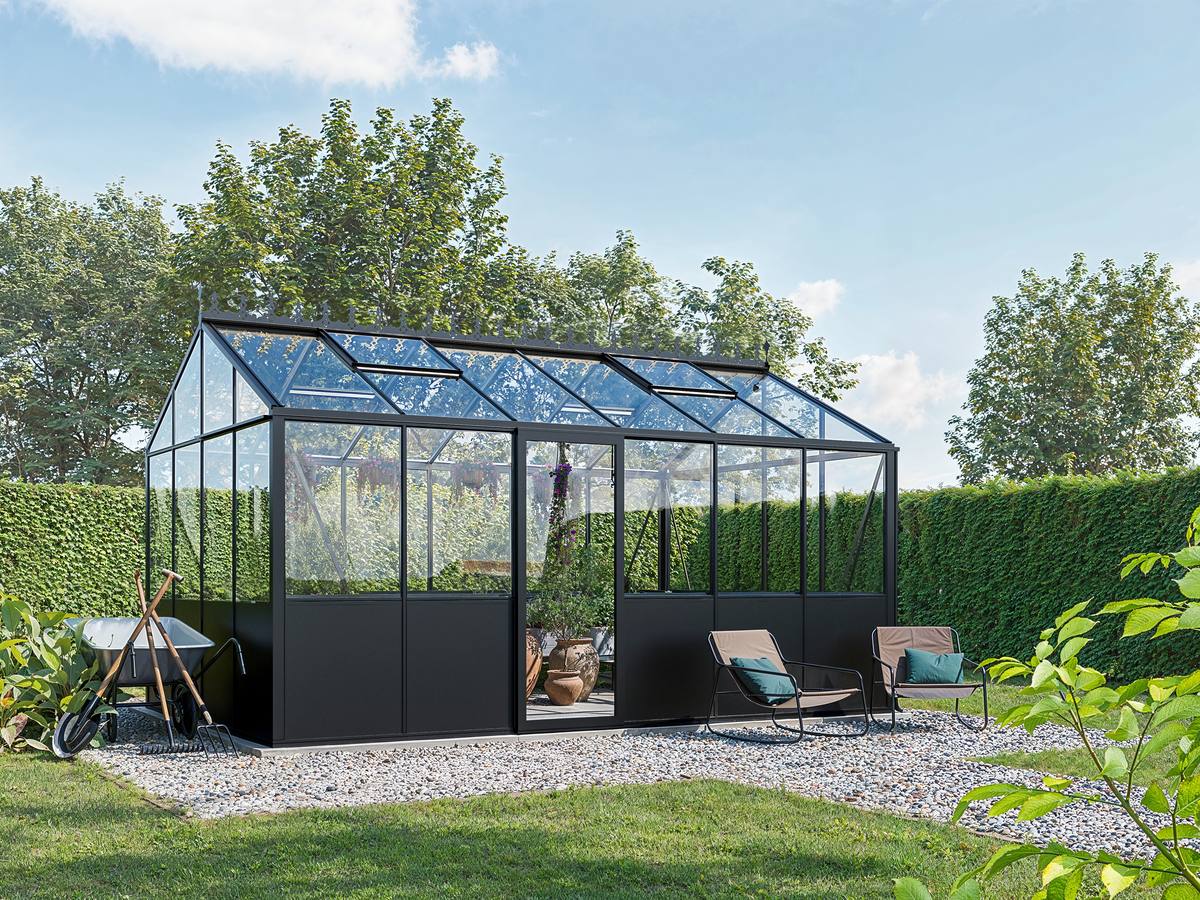
European manufacture may suggest shorter supply routes, coordinated factory stages and accessible oversight, yet origin is no engineering review. Lasting performance across greenhouses, pergolas and outdoor saunas depends on design, material selection, manufacture, transit protection, installation and care working together.
The factory location is therefore only one question for a buyer. Check whether the components form a coherent system, what supporting information comes with it and how installation will work on the proposed site. These steps distinguish evidence of sound workmanship from unspecific promotional language.
Reading the signs of sound European production
No single impressive feature establishes controlled production. Evidence is found across the product: profiles carry clear identities, holes and joints correspond with the design, surfaces are consistently treated, and pieces connect without improvised reworking. An accurate inventory, intelligible fitting guidance and transit protection for delicate items are equally revealing.
For aluminium products, inspections can follow profile cutting, prepared junctions, finish application and allocation of fittings. Glazing and other panels add questions about dimensions, edges and labels. Timber sauna elements need a different approach from coated pergola profiles, so assess workmanship against the requirements of each product.
To browse the principal types of structure, start with Greenhouses and Conservatories and then visit Saunas. The story of the business and its collection appears on the About Us page.
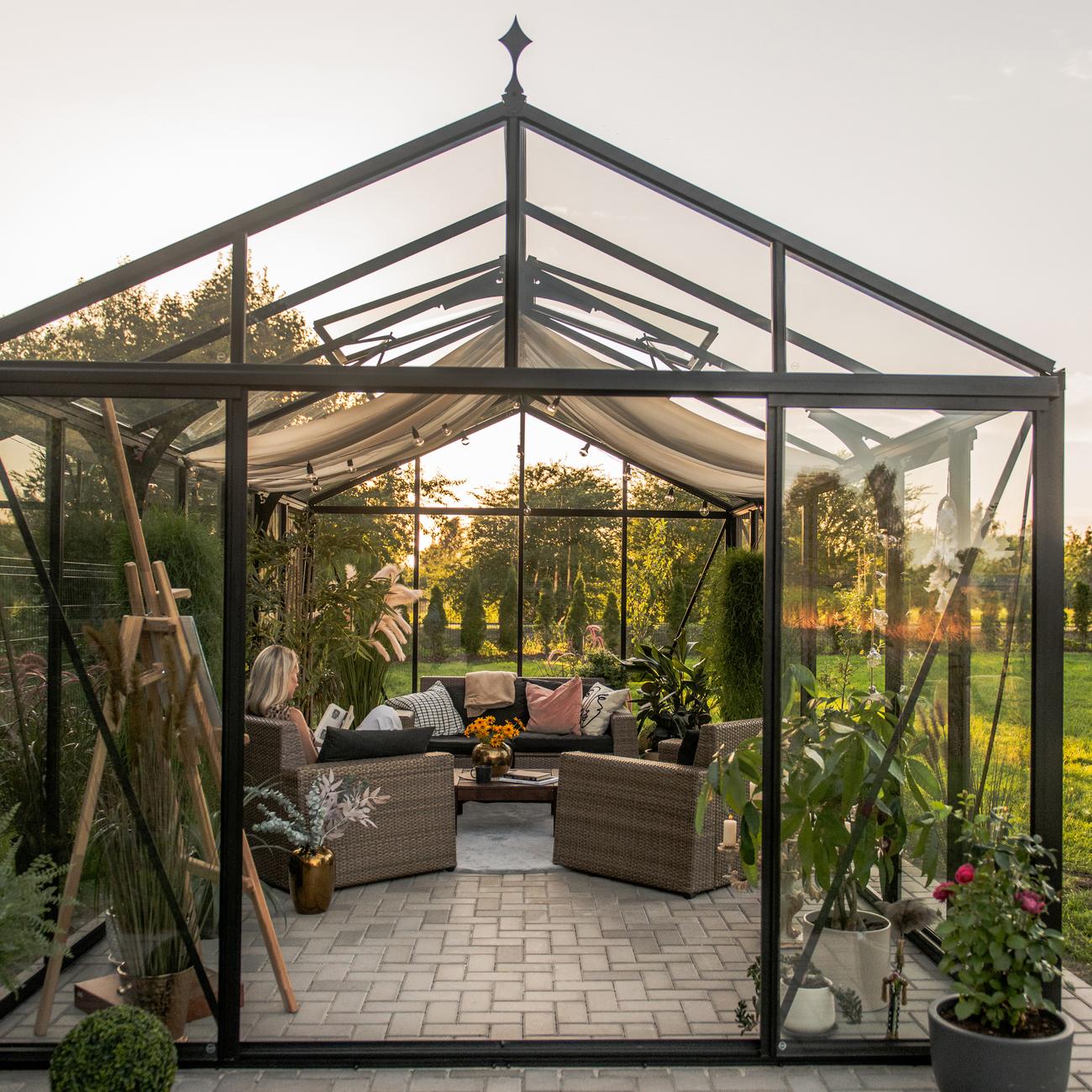
Factory workmanship and on-site fitting require separate checks
Even a precisely manufactured kit may suffer from an inappropriate foundation, confused components or inconsistent fastener tension. Attentive fitting likewise cannot cure defective design or prior component damage. Separating each party's role makes fault-finding easier.
| Stage | Positive signs | Points of concern |
|---|---|---|
| Project planning | Appropriate format, surveyed location, resolved interfaces | Poor fit, inadequate room, unanswered constraints |
| Factory work | Correct machining, full inventory, protected surfaces | Absent item, incorrect sorting, fabrication or packing fault |
| Carriage | Secure wrapping with identifiable consignments | Damage from impact, compression or damp |
| Base | Flat, sufficiently supportive and accurately located | Twisting, irregular load paths, fitting problems |
| Site assembly | Specified sequence followed, dimensions monitored | Wrong components, forced joints, marked finish |
| Use | Suitable cleaning and periodic observation | Obstructed outlets, loosened joints, avoidable deterioration |
The base is often where the supplied product meets construction work. The pergola base planning guide introduces the main decisions, but the chosen solution must reflect the soil, exact product, setting and requirements applying to that project.
Establish structural purpose before comparing workmanship
A similar footprint does not make two products structurally alike. A standalone frame carries forces differently from a system fixed to a building, while an adjustable louvre roof serves another purpose than solid cover. Greenhouse geometry is also shaped by glazing, openings, entry, airflow and the planned use of its interior.
Begin by deciding whether each proposal answers the same need. Helpful reading includes bioclimatic pergolas set against traditional designs, the discussion of wall-attached versus self-supporting pergolas plus the guide to selecting pergola dimensions.
Greenhouse glass and polycarbonate also deserve more than a price or thickness comparison. Our explanation of insulation, polycarbonate and multiwall sheets sets their principal characteristics in context. If a more formal appearance is preferred, consult the guide to orangery greenhouses alongside the introduction to greenhouses in the Victorian style too.
Questions worth settling before purchase
A structured review reveals more than sales-page superlatives. Record unresolved points and settle them before placing the order.
- Set the purpose: Will it shelter plants, cover seating or serve as a sauna? Identify the necessary doors, ventilation provisions and access.
- Assess the site: Record area, height, routes, plot edges, fall, drainage and practical approaches for delivery and fitting.
- Compare like functions: Keep comparisons between systems intended for similar work. An adjustable bioclimatic roof is not simply another version of every fixed canopy. Further context appears in Deciding whether bioclimatic pergolas offer value.
- Confirm the order scope: Confirm the supplied components, accessories and fixings, plus any work or services you must arrange separately.
- Examine the paperwork: For the chosen version, verify availability of the fitting manual, inventory and supporting product details.
- Judge materials by purpose: Compare profiles, infill panels, timber and finishes by function; no single material feature defines the whole system.
- Assign responsibility for the base: Decide who will specify, construct and approve the foundation ahead of fitting. Use only the ordered product's own information when confirming measurements and build details.
- Investigate Irish requirements: Check with the appropriate Irish planning authority whether permission is needed and whether the site or boundaries impose constraints. Describe the property and proposed use. The guide to planning enquiries for Irish greenhouses and pergolas provides orientation only, not a decision for your property.
- Plan the handover: Read the guidance covering ordering and receiving deliveries beforehand and set aside a suitable receiving area.
- Retain a project file: Keep the quoted specification, confirmation, selected configuration and messages together. Read the terms attached to that particular product's commercial guarantee.
The reach and limits of factory inspection
Factory inspection may uncover machining faults, omissions, visible finish defects or incorrect packing. Risk becomes lower, not zero, since wrapping, carriage, temporary warehousing, foundation construction and installation follow the last factory check.
Factory checks cannot remedy a mismeasured garden, unsuitable ground, later changes to the building, unidentified buried services or assembly contrary to the instructions. Exposure, drainage and other site-specific effects must be considered in planning and use, especially at exposed or coastal Irish locations. Assess the actual site.
A carefully applied finish remains vulnerable to physical damage. Rough paving can scratch a dragged powder-coated profile, while uncovered tools and metal fragments can also leave marks. Panes, sheet materials and timber each need handling appropriate to their properties.
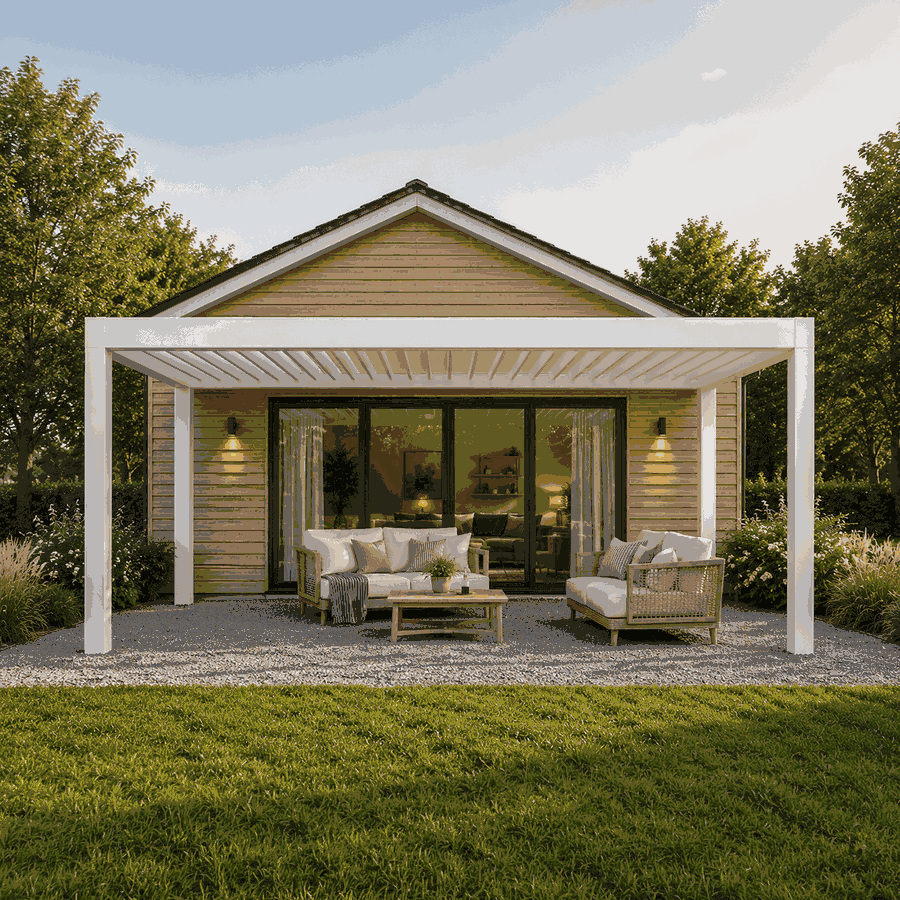
A disciplined approach to receiving the order
Checks before unpacking
Plan order receipt as a separate task. With parcels still sealed and in their delivered position, inspect them, then reconcile the count and labels against shipping records.
- Check wrapping for tears, punctures, dents, damp and deformation.
- Photograph concerns immediately: the whole package, damage, label and its location.
- Note the observed condition through the stated receiving process.
- Do not open damaged packaging without a controlled plan.
- Store packages dry, level and secured against tipping.
For doubts, use the Bloomcabin contact form . Torn wrapping does not establish harm to the item, while an untouched exterior cannot guarantee sound contents.
Checking every supplied item
Use both packing and component inventories, working through one consignment group at a time. Arrange items by subassembly and retain identifiers until fitting ends.
- Identify profiles by reference, geometry, length and machining details.
- Sort hardware and connectors into containers, not loose piles.
- View glazing, sheets and exposed finishes under appropriate lighting.
- Keep protective layers on until their scheduled fitting stage.
- Record missing or suspect parts by reference and photograph.
- Resolve identification before drilling, trimming or attempting to reshape anything.
Near-identical pieces may be mirror images or belong in different positions. Small holes, drainage openings or prepared ends can be decisive, so visual similarity alone does not justify swapping them.
Preserving finished components throughout the build
Orderly site practice avoids many preventable marks. Keep profiles off masonry, bare soil and wet lawn, supporting them on clean cushioning instead. Separate coated faces and establish distinct, tidy working zones for metalwork, glazing, sheet material and timber.
- Approve the base first: Verify base size, placement, flatness and datum levels before setting the frame down.
- Study the full sequence: Identify in advance any steps needing several people or special lifting equipment.
- Square the framework before final tightening: If later adjustment is specified, do not fully tighten the relevant connections beforehand.
- Monitor geometry as work proceeds: Repeatedly verify squareness, verticality, straight runs, apertures and joints during erection.
- Prepare suitable equipment: Correct driver ends, padded rests and an orderly workspace prevent scoring and stripped fasteners.
- Stop if parts resist: When substantial pressure seems necessary, verify the piece, its direction and the work completed immediately before it.
Unapproved alterations can affect operation, water management, strength, corrosion resistance and any later claim. Cut, drill or exchange fixings only when the ordered version expressly provides for it or appropriate technical advice approves the work.
Reading Anna Koku Skola as a single installation story
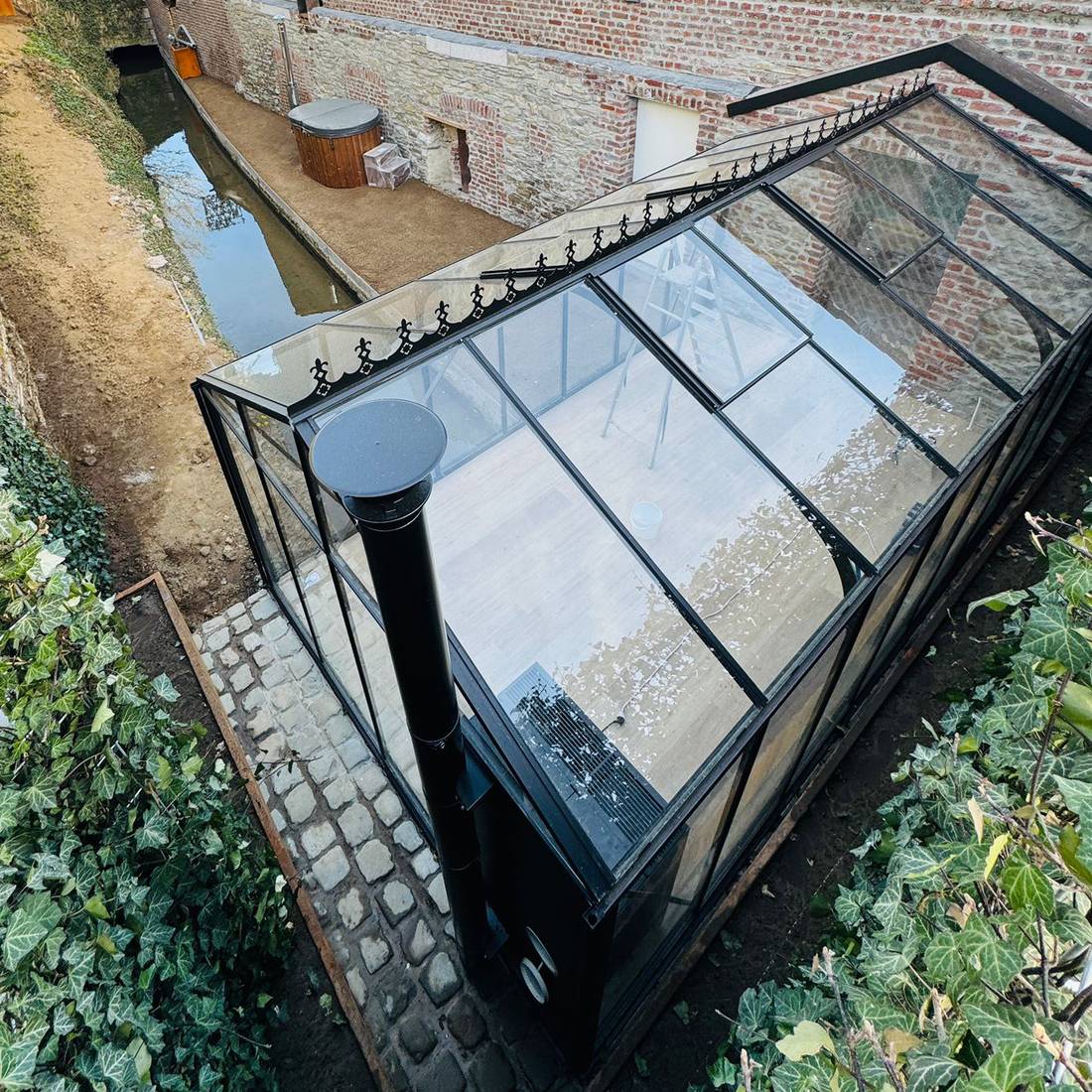
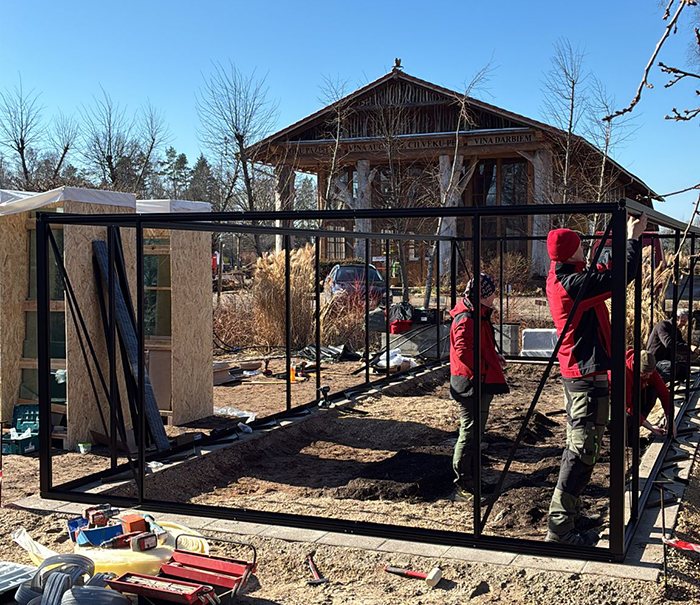
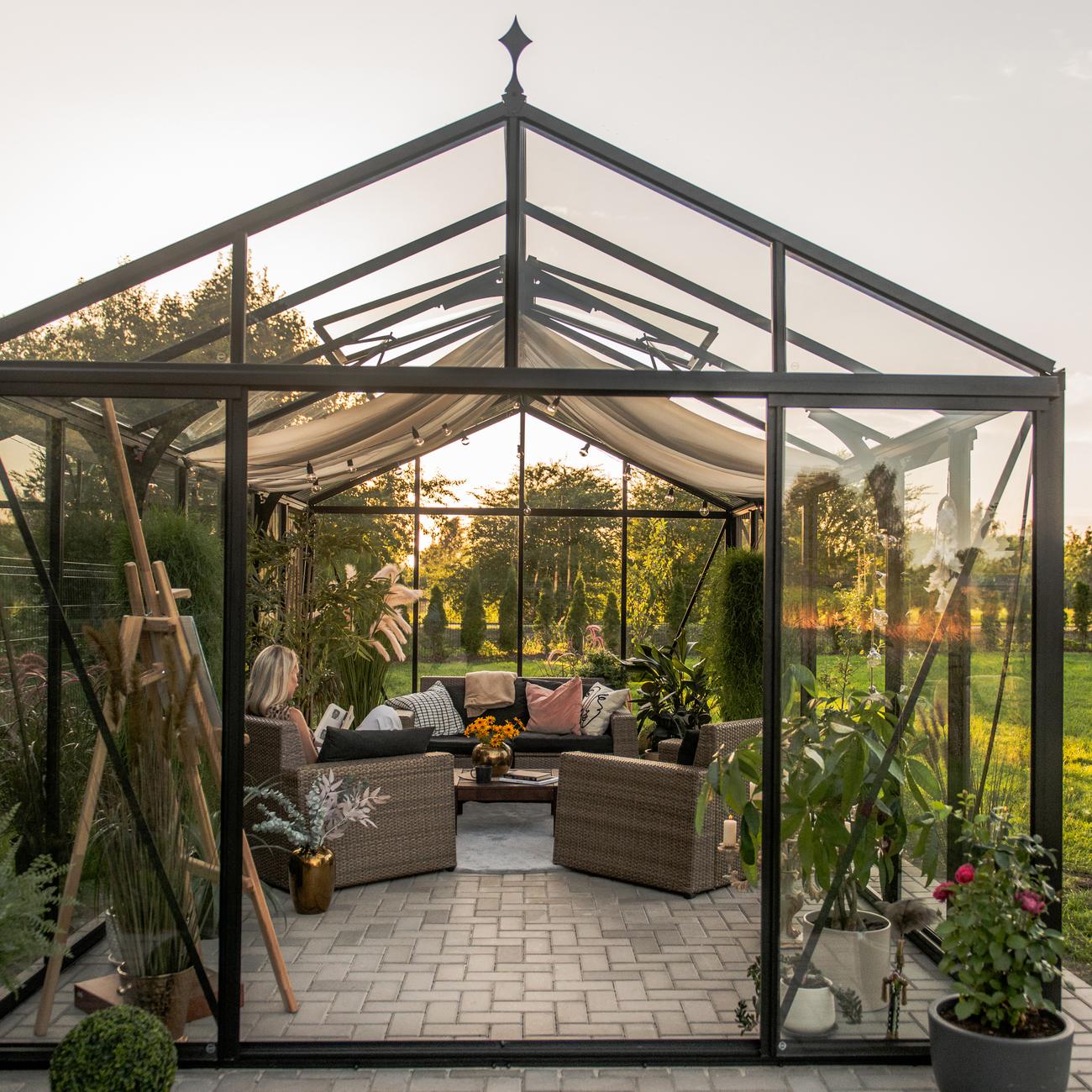
Treat the Anna Koku Skola image sequence as one job recorded from stage to stage, rather than several separate showcase builds. This distinction is important: viewed in order, the pictures connect the prepared setting and supporting frame with the completed installation.
The last photograph should not dominate the reading of the series. Look instead at the handovers between tasks: the organisation of the build, the points when alignment occurs, continued access to working areas and the timing of uncovering delicate surfaces. Although each fixing is not visible, the photographs can still demonstrate why sequence and organisation matter.
Images do not replace the parts list or fitting manual. Angle, light and coverings may conceal construction details, so never infer dimensions or performance from a photograph alone.
Looking after quality once the build is finished
After fitting, operate every door, window, louvre and similar mechanism gently. Keep water channels and outlets unobstructed. A follow-up inspection after initial use may reveal contamination or fitting issues that were less obvious at handover.
Greenhouse owners can consult the article on aluminium greenhouse upkeep for practical routines. Conditions within the structure also influence correct use; the discussion of managing greenhouse humidity and temperature explains how operation and ventilation relate.
For an outdoor sauna, follow its documents when caring for timber, air passages, doors and technical equipment. Maintenance can vary between models such as the Elma S outdoor sauna and the HC150 thermowood barrel sauna may need different maintenance. For a proposed electrical connection, ask a Registered Electrical Contractor whether it is Restricted Electrical Works and what certification applies.
Put promotional quality language to a practical test
Labels including “premium”, “European” or “handcrafted” say little without supporting detail. Test each one by asking what component it describes, what evidence verifies it, and which services or characteristics sit outside its scope.
Customer comments broaden the picture of purchasing, fitting and ownership, but they are not engineering evidence: every site, chosen version and installation team can differ. Treat greenhouse reviews as supporting context rather than the deciding evidence.
Compare the complete scope: design, equipment, supplied items, documents, site preparation and assembly. The page on the ordering process helps organise the purchase, and further guidance can be found in the Useful Information library.
Common questions before ordering
Does manufacture in Europe guarantee better quality?
No. Place of manufacture proves neither the design nor every component's quality. Look instead for identifiable parts, accurate machining, sound surfaces, complete documents and a traceable inspection process.
Do all Bloomcabin greenhouse ranges follow one production and fitting method?
Not necessarily. Production and assembly can vary with the range, material, dimensions and selected options. Follow the information issued for the version named in your order.
Does price alone provide a fair comparison between pergolas and greenhouses?
No. Their functions and load-related connections are unlike. First assess intended use, dimensions, roofing or infill arrangement, foundation, supplied contents and fitting effort; only then compare price.
What steps should follow if packaging looks damaged?
Photograph it before opening, capturing the consignment label, full package and affected section. Examine the contents methodically, then notify the seller by the designated channel.
How can I tell apart two very similar components?
Identify each one by comparing references, hole patterns, machined ends, section shape and intended orientation with the inventory and manual. Never test it under pressure; mirrored items can vary in one tiny feature.
Can a fitter reshape or alter a component to obtain a fit?
Only where relevant product information anticipates the alteration or qualified advice approves that installation. Unauthorised changes to holes, length, shape or fixings may impair operation, finish and structural integrity.
Is the site-built base covered by production quality checks?
No. Creating the foundation at the property is a distinct design and construction task. Confirm product requirements, soil conditions, water run-off, applicable local rules and the finished base on site.
Can a sales image establish hidden construction features?
No. A picture provides orientation, not proof of concealed joints, precise measurements or the selected variant. Rely on the written description, confirmed configuration, drawings and fitting information.
What precautions help prevent marks during fitting?
Set profiles on padded, debris-free bearers; prevent contact with grit or metal swarf and never slide them across the ground. Leave protective coverings until directed. Pad tools or ladders that might touch a coated face.
Which records should be retained?
Retain the quote, confirmation, specification, dispatch papers, inventory, manual, delivery photographs, correspondence and records of fitting or specialist work. Where practical, also photograph the foundation and important build stages.
Does excellent production make routine care unnecessary?
No. Well-manufactured structures still require washing and periodic inspection; water outlets and airflow routes must remain unobstructed. Service moving and technical elements according to their own product information.
What should I establish first when the best structure is uncertain?
Start with intended use, site, available room and required features. Next examine relevant ranges and settle outstanding technical points ahead of purchase. An enquiry through Bloomcabin Contact is preferable to modifying a structure after its specification has been confirmed.
