



SUPPORT
Inspect Deliveries and Document Transit Damage
A consistent receiving routine helps reveal visible and hidden transit damage, missing packages and incorrect items early. This guide covers inspection, photographs, reporting and safe interim storage.

Why an arrival inspection is worthwhile
Greenhouses, pergolas and outdoor saunas combine varied components: long aluminium profiles, glazing or roof panels, timber parts, fittings, fasteners and sometimes pre-assembled units. They may arrive on one or more pallets and in separate cartons, so a compact load can contain many assembly-dependent pieces.
An orderly handover check provides a dependable account of what first arrived. It records the package total, the state of the protective materials and any clear evidence of impact or pressure. Precise observations later help separate harmless marks on disposable wrapping from damage that calls for a replacement part or specialist evaluation.
Receiving the goods is not a full assembly check. Some parts can be identified only after opening packages and comparing them with the packing list and instructions. While the driver is present, however, record obvious damage, shifted freight and any discrepancy in the package count.
A broader account of purchasing and despatch appears under Ordering and delivery. For destination-specific information, read greenhouse purchasing and delivery in Ireland.

Get ready before the vehicle arrives
Set aside an appropriate unloading and storage space
Before delivery, decide where the lorry can stop and unload. Check access width, gates, gradients, ground strength, parked vehicles, branches and other obstructions. The chosen area must safely support the load. Raise any concerns about access or unloading in advance through the contact route on your order.
Use a firm, level, well-lit area with enough room. Support long profiles so they neither overhang dangerously nor sag on small points. Secure glazing, panels and assembled sections against toppling. Keep packages away from traffic routes, wet ground and roof run-off.
Clear the area first and have a phone or camera, writing materials, gloves and, if useful, a torch ready. Arrange help for heavy or bulky loads; do not lift awkward parts alone. Allow for the receiving area during project planning, perhaps using the guide to choosing a pergola size.
Have the order records within reach
Keep a printed or saved copy of the confirmation, delivery information and available package data. Write down the order reference, addressee and delivery location. If somebody else will receive the goods, brief them to count every package, examine its condition, photograph it and describe any discrepancy accurately.
A receiver need not sign immediately simply because the driver is waiting. “Packaging damaged” conveys far less than a note such as “long carton crushed at upper-right corner; securing strap broken”. The purchase steps are outlined in How ordering works, while further project and ownership material is collected in Practical information.
A sensible sequence for delivery checks
- Begin with safety: From a secure position, look for tilted, unstable or visibly harmed freight before unloading starts. Stay away whenever something could slide or fall.
- Capture the complete load: Where conditions allow, photograph it from different directions before removal from the vehicle. Otherwise, take those overview images as soon as it has been set down.
- Establish the package total: Reconcile the delivered cartons and pallets with the information provided. Include individual bundles and packages attached separately rather than counting pallets alone.
- Examine all accessible wrapping: Look over the corners, ends, undersides, films, cardboard surfaces, bands and other securing points.
- Trace anything unusual: Focus on punctures, tears, damp patches, scuffing, crushed sections and evidence that contents have shifted.
- Describe every exception: Request a specific entry for an observable defect or missing package in the carrier's system or whichever delivery document is available.
- Retain proof of the entry: Keep your copy or photograph the completed notation. Never sign wording that is inconsistent with the condition in front of you.
- Open packages methodically afterwards: Approach suspect areas gently, preserving labels, wrapping and affected components as far as reasonably possible.
- Reconcile parts with the records: Use the assembly material and packing list to identify each component. Notify Bloomcabin promptly of damage, shortages or wrong items through Contact Bloomcabin or the communication channel named in your order.
This orderly approach is particularly valuable where numerous profiles have a similar appearance. A carton total does not reveal the number of separate parts packed within. Work through one package before moving to the next, and retain every identifying mark.
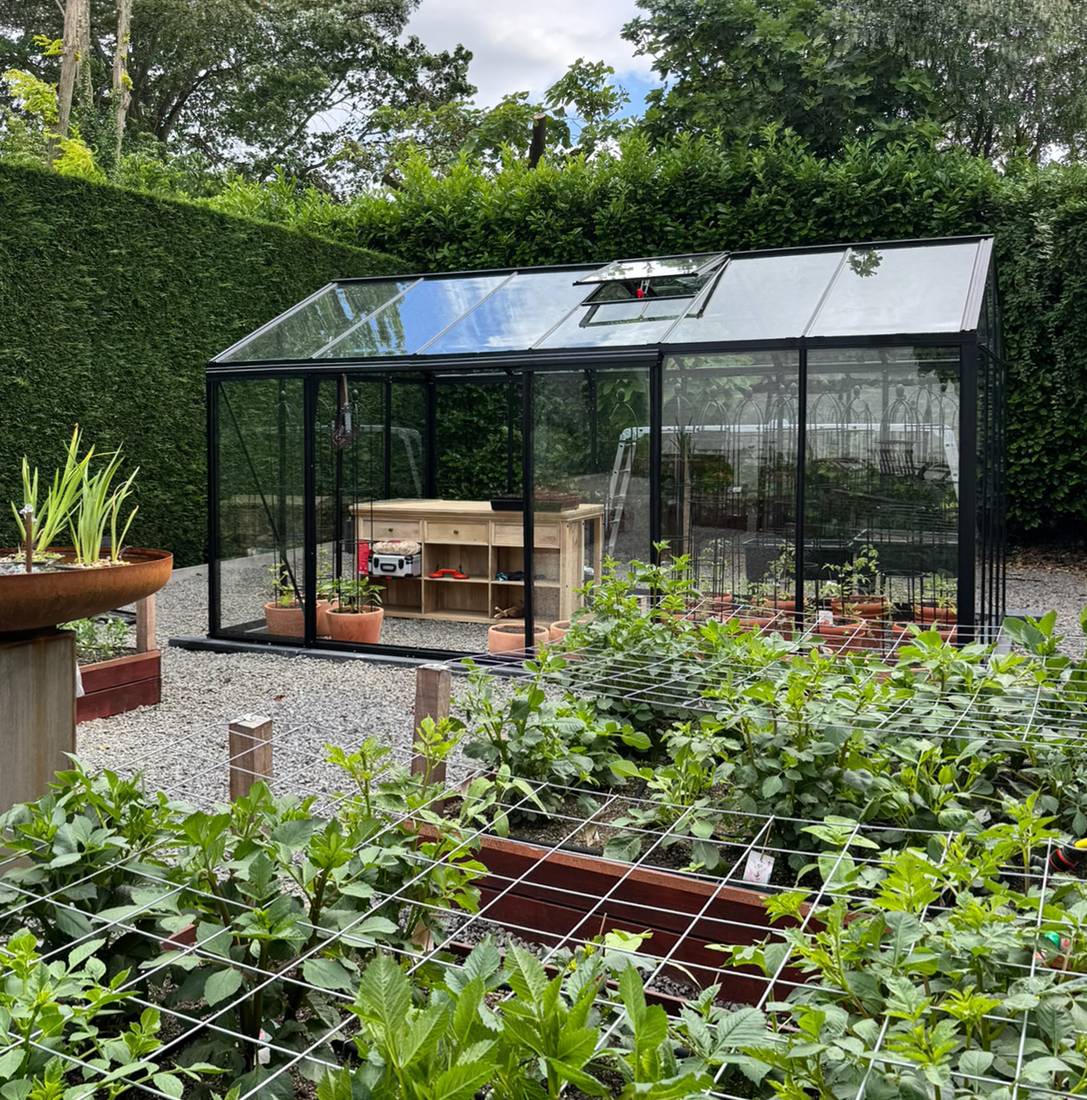
Points to examine before the driver leaves
| Area to inspect | What may be wrong | Evidence to retain |
|---|---|---|
| Position of freight | Leaning pallet, displaced cartons or inadequate support | Wide photograph before further handling |
| Film and cardboard | Open seam, puncture, tear, heavy compression or rubbing | Context photograph plus detailed view |
| Securing bands | Loose, snapped, cutting into packaging or apparently substituted | Images of the band, fastening and nearby edge |
| Signs of water | Saturated cardboard, staining or moisture trapped by film | Photographs contrasting affected and dry sections |
| Firm structural pieces | Bent profile tips, fractured panels or impaired frames | Image taken without stressing the affected piece |
| Number of packages | More or fewer units than the delivery information states | Full consignment view with readable labels |
A sound-looking top does not prove that the underside is unharmed. Fork tines, an edge strike or pressure concentrated at one point may leave damage below. Do not enter the space beneath raised or unstable goods: no inspection justifies personal danger.
Should a damaged load be received or declined?
A torn or crushed wrapper does not by itself render the entire order unusable. Conversely, neat outer packaging cannot confirm that everything inside is sound. Consider the observable severity, the security of the load and the instructions attached to that particular delivery before deciding what to do.
It may be reasonable to receive a safely handled consignment with minor exterior damage, provided the observations are recorded precisely. State where the problem lies and what form it takes instead of writing a vague reservation. General wording cannot replace timely notification and useful photographs.
If the load is clearly unstable, major assemblies are badly damaged or unloading would be unsafe, do not attempt to rearrange or secure it yourself. Photograph it from a safe position and contact Bloomcabin. Use the delivery documents and advice from the relevant contact to decide whether to refuse all or part of the consignment; each case differs.
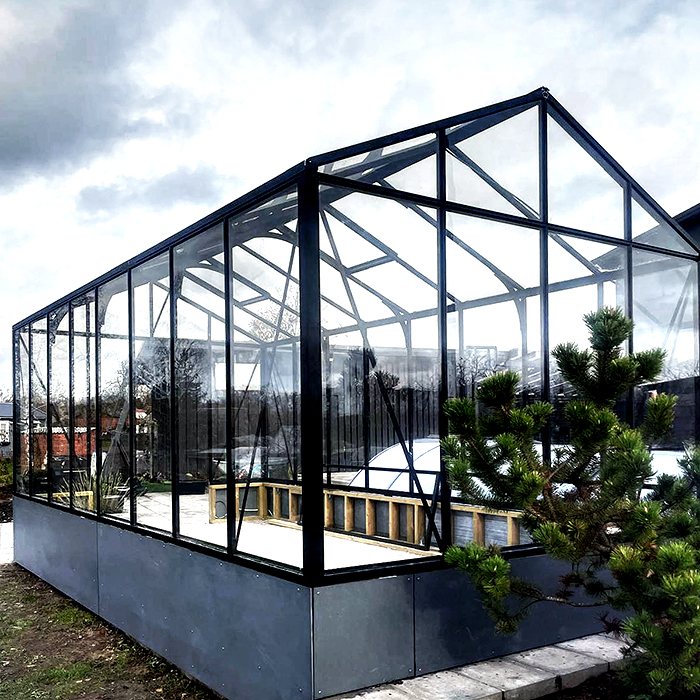
Create photographs that explain the problem
The aim is clarity rather than attractive composition. Each image should help identify the consignment, locate the affected spot and convey the scale of the problem. Check focus and use balanced light without obscuring detail.
- Context image: include the entire pallet or parcel and its immediate setting.
- Position image: show the affected place in relation to an identifiable edge, corner or package code.
- Detailed image: record the split, indentation, fracture, scrape or bend at close range.
- Identification label: make the despatch or parcel label readable, but avoid publishing unnecessary personal information.
- Inside the carton: record how the component lay within the packaging before lifting it out.
- Part reference: include the relevant position code or other marking beside the affected area.
A straight, unloaded object or measuring scale can help show distortion. Position it without forcing the part further out of shape or scratching a delicate finish. Keep the original images free of filters and annotations; copies marked with arrows may help explain the issue, but retain the untouched files.
Obvious damage, hidden damage, shortages and wrong items
Damage apparent on arrival
Visible transit damage can be identified before or during receipt: torn cartons, crushed ends, broken panels, bent frames or loose parts. Photograph it before unpacking and have it noted in the delivery record. Then open the package carefully, preserving evidence of the link between the external impact and internal damage.
Damage revealed after opening
Hidden damage appears only after opening, such as a profile bent inside its carton, a damaged coating, a cracked element or a distorted connector. Pause at the affected point, photograph the original position, and keep the carton and protective material. Report the finding promptly in accordance with your order documents.
Greenhouse panels require careful identification because impressions on wrapping or removable films are not necessarily defects in the panel itself. Material background is available in understanding greenhouse polycarbonate, and broader project examples appear under our greenhouse and conservatory collection.
Packages or components that cannot be found
Distinguish a missing package from a missing component. Record an expected pallet or separate carton that did not arrive at handover. A screw, fitting or profile missing from a delivered package, however, may be discovered only when its contents are checked against the packing list and instructions.
Open every related carton carefully. Small fittings may be secured inside cavities, accessory boxes or larger components. Report the reference, description and expected quantity rather than only saying “parts missing”. Consulting the assembly documents early also prevents confusion between mirrored, optional and later-use components.
Items supplied in error
A wrongly supplied piece may initially resemble the correct one. Check its code, drilling arrangement, joints, material, finish and illustrated location. Leave it unmodified and do not fit it. Photograph the piece with its label, then identify both what the instructions call for and what was actually received.
The same principle covers products including standard and bioclimatic pergolas, a attached and freestanding pergola designs , as well as sauna kits containing numerous components.
How to compile a useful delivery-damage notification
Provide the following information together
- the order reference, addressee and destination address,
- the arrival date and, if relevant, when the concern was first noticed,
- how many pallets and other packages were actually handed over,
- an exact account of the visible state of the outer protection,
- identifiable position or component references for affected pieces,
- where each defect appears, its nature and its apparent extent,
- whether it could be seen at receipt or emerged only after opening,
- images covering the load, labels, packaging and relevant individual components,
- a retained image or copy of any notation made at delivery,
- confirmation of whether the component remains as received.
Where several concerns exist, arrange them by package and component reference. A consolidated notification is easier to assess than unrelated fragments sent separately. Keep matters concerning commercial guarantees distinct from the factual record of delivery condition.

Leave suspect parts unfitted and unrepaired
Straightening a profile, repairing its coating or trying a cracked panel in place can change the damage. Without assessment, effects on dimensions, joints or load behaviour remain unknown. Until you receive a response, do not drill, cut, bond, sand, heat or alter the part.
Ordinary ownership work described in caring for an aluminium greenhouse is different from remedying damage sustained in transit. If an outdoor-sauna housing, lead or connection looks abnormal, do not energise or test its electrical or heated components. Have the relevant local electrical and technical considerations assessed by an appropriately competent professional.
Look after everything else in the order
One damaged item is no reason to leave the remaining parts exposed. Separate checked from unchecked packages by location or removable labels. Unless the instructions say otherwise, store profiles horizontally with even support. Keep panels and frames stable and protected from impact, wind, moisture and site traffic.
Keep the original packaging while the issue is assessed. Remove wet outer material only where necessary to prevent further damage, and document it first. Provide dry, suitable cover without trapping moisture. Retain labels, relevant cardboard and cushioning while they may still help identify or assess the goods.
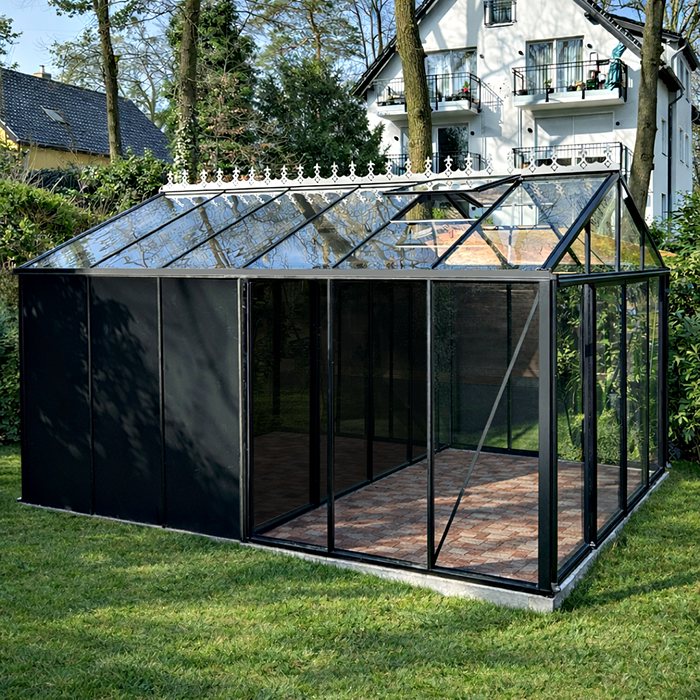
Receiving considerations for each type of garden structure
For greenhouses: Place transparent pieces and extended profiles on a clean, even support. Ornamental or period-influenced projects, such as those discussed in our Victorian greenhouse guide , may use frame pieces that are difficult to distinguish visually. Preserve their markings until identification is certain. A planned orangery project also needs enough orderly space for delivered materials.
For pergolas: Roof sections, beams and posts may combine considerable length with substantial weight. Do not let stored packages cover the points prepared for the base. The guide to pergola foundations offers useful site-planning context. Roof choice is a separate design matter, explored in When is a bioclimatic pergola worthwhile?.
For outdoor saunas: Keep sizable timber and framing pieces clean, dry and securely supported. Before models such as the Elma S garden sauna, the Elma L or the HC150 barrel-style sauna arrive, establish where unloading and checking will take place. Other designs and supporting information can be found under Outdoor saunas.
Project requirements can differ regardless of the product category. For a Republic of Ireland overview, consult planning requirements for greenhouses and pergolas in Ireland . For an actual property, ask the relevant planning authority whether permission or an exemption applies. A planning exemption does not, by itself, settle building-control compliance.
Arrival-day checklist
- Is access clear, with a safe unloading point and protected storage ready?
- Are the order reference, consignment information and camera close at hand?
- Has the freight been viewed for instability before anybody unloads it?
- Have you included every pallet, carton, bundle and loose parcel in the count?
- Were accessible undersides, corners, ends and wrapping examined?
- Do your photographs cover the whole load, each concern and all relevant labels?
- Is every observable discrepancy described accurately in the available record?
- Were suspect cartons opened gently and their contents identified?
- Have affected pieces been protected without alteration?
- Was one clear, timely notification submitted with all available evidence?
Questions customers often ask
Does a mark on the packaging prove that its contents are harmed?
No. Protective materials can take the force of handling while leaving the product beneath them sound. Nevertheless, photograph the affected section before opening it with care. A dependable conclusion is possible only after the corresponding component has been examined.
What if concealed damage appears after the driver has gone?
Stop unpacking where you find the damage. Photograph the component in position, internal protection, outer carton and label. Keep all materials and notify Bloomcabin promptly with the order and part references. The absence of a handover notation does not prevent you from documenting concealed damage technically.
May I discard the packing once I have inventoried the order?
Not while a defect, shortage or mistaken item remains under consideration. Labels, cartons and protective pieces can establish which parcel held a component and how it was positioned. Sound packaging can also protect goods awaiting assembly.
May I personally straighten a bent piece or carry out a repair?
Wait until its condition has been assessed. Reshaping may further affect the geometry and make the received state harder to evaluate. Supply clear identification and photographs before taking action. Avoid any unapproved heat treatment or mechanical adjustment.
What happens when every package arrived but a component is absent?
Read the packing list and assembly material completely, then search accessory cartons, cavities and the areas around larger pieces without causing harm. If it remains missing, report its reference and the quantity expected. A general statement that a fixing is absent rarely identifies the required item sufficiently.
Is notifying delivery damage equivalent to making a return or guarantee request?
No. This notification establishes the order's state and completeness at arrival. A return or commercial-guarantee enquiry may have separate requirements and processes. Begin with an objective explanation of how and when you found the discrepancy.
What quantity of photographs is appropriate?
Use as many as are required to establish the affected item's identity, position and condition, but omit near-duplicate shots. For one concern, provide context, location and detail views along with the label and original packing position. Ensure that each affected component can be distinguished from the others.
Can work continue using the parts that appear sound?
Only if proceeding cannot interfere with examination or with later fitting of the disputed piece. Await advice where the component carries load, joins another element or controls the assembly sequence. Avoid construction steps that hide the concern or lead to preventable dismantling.
How should I respond when the delivered freight looks dangerous?
Stand clear, move other people out of the hazard zone and never enter beneath or between unstable parcels. Do not use your hands to restrain a displaced heavy part. Make a visual record from a protected position, then discuss safe next steps with the driver and the named delivery contact.
Which action matters most when an order arrives?
Before completing handover, establish the package total and make a clear record of exterior condition. Accurate written observations and focused images are more valuable than later recollection. Afterwards, unpack in a controlled manner, identify the pieces and send one prompt, complete notification where necessary.
More practical and gardening material is available in the Bloomcabin Blog, including an article about managing greenhouse heat and humidity. Such ownership guidance becomes relevant after the delivery, base and assembly have been completed correctly.
