



SUPPORT
Getting the Right Spare Glass, Parts and Components
A technical guide to identifying items unambiguously, making an enquiry, checking deliveries and fitting spare glazing, hardware, seals and related components.
Identify the structure, model and component before requesting a spare. Similar-looking profiles, panes, seals or fittings in aluminium greenhouses and pergolas may have different functions, so measurements can mislead. This guide covers the details to send, safe measurement of replacement glass and avoiding unnecessary follow-up questions.
Explain first why the part is required
Why a replacement is needed offers valuable technical clues. Glass broken in transit is handled differently from a window that begins binding after several years. Open the enquiry by explaining the incident or gradual change that created the need.
- Transit damage: Record the packaging and label, where the damage occurred and which position is affected.
- Damage during assembly: specify when in the assembly process it happened and note any effect on neighbouring components.
- Wear: give the structure’s age, maintenance and observed functional change.
- Weather or external impact: examine the frame, fixings and connection areas as well as the visibly damaged item.
- Loss: identify the likely construction stage or package.
- Modification: state clearly that an alteration, rather than restoration, is planned.
For an operating fault, say whether it is constant, temperature-related or occurs only in wind or under load. Dirt, altered alignment, loose connections or an unsuitable adjustment may make a door leaf bind. Replacing one component will not necessarily remove the cause.
Details that establish which spare part is required
Supplying a thorough starting record helps prevent an unsuitable item being chosen merely because it looks similar. Use the original order paperwork and model-specific assembly manual whenever available. The normal purchase process is explained under Ordering from Bloomcabin.
Details of the order and structure
- Available order reference, invoice reference or other job identifier
- The purchaser’s or ordering business’s full name
- Delivery address used originally and the approximate ordering period
- Name of product, model family and version
- Aluminium frame colour or finish
- Configuration, for example freestanding, attached or made to an unusual plan
- Accessories ordered together or modifications made later
Earlier images of the finished structure may provide further clues. The greenhouse reviews illustrate different installations, showing why context and close detail together communicate better than a photograph of the item in isolation.
Component information
Define the viewpoint before describing the position. Words such as “left” and “back” are ambiguous without one. A clearer example is: “Viewed from outside while facing the door, the second right-hand roof panel.” Also provide:
- Required quantity
- Component function
- Any visible identifier, reference or stamped marking
- Principal dimensions plus relevant spacing between holes
- Profile or seal cross-section
- Damage type and location
- Scaled details and wider installation views
A fastener is not identified by length and diameter alone. Head shape, thread, material, mating part and fitted position may also matter. Do not remove a load-bearing fixing solely for a photograph if this could make the structure unstable.
Establish the applicable product range
Bloomcabin’s range includes several forms of garden structure. First place the requested item within its correct group: greenhouse, conservatory, pergola or another product category. An overview is available from Greenhouses and Conservatories offers the overview. Wall junctions and roof geometry on an attached structure may differ from those used on freestanding models; more detail is provided in the lean-to aluminium greenhouse guide.
Do not assume a part fits from colour or age alone. Within a model family, position, opening direction and function may vary, and names do not transfer across unrelated product categories. The Elma S outdoor-sauna model as an example: it belongs to a wholly separate technical range from aluminium greenhouses. Accurate classification keeps the enquiry focused on the intended construction.
Main groups of spare components
| Category | Examples | Features to record |
|---|---|---|
| Glazing | Panes for roofs, sides, doors or gables | Model, position, shape, edges, holes, nominal dimensions |
| Aluminium profiles | Uprights, rails, rafters, cover and junction profiles | Cross-section, length, finish, connections |
| Seals | Glazing, door, window and junction seals | Cross-section, orientation, groove, condition |
| Hardware | Hinges, rollers, handles, brackets and connectors | Hole pattern, side, movement, mating part |
| Fixings | Screws, nuts, channel nuts and clamps | Thread, dimensions, head, material, location |
| Opening elements | Roof-window, door or ventilation parts | Model, opening method, travel, fixing points |
| Drainage | Gutter, outlet and end components | Profile, outlet side, connection, fall |
Avoid grouping several damaged small items under the vague description “assembly set”. Give every component its own entry or identify each one on an image. Bloomcabin can then determine if the request concerns the full kit or a defined subset.
Choosing replacement greenhouse glass
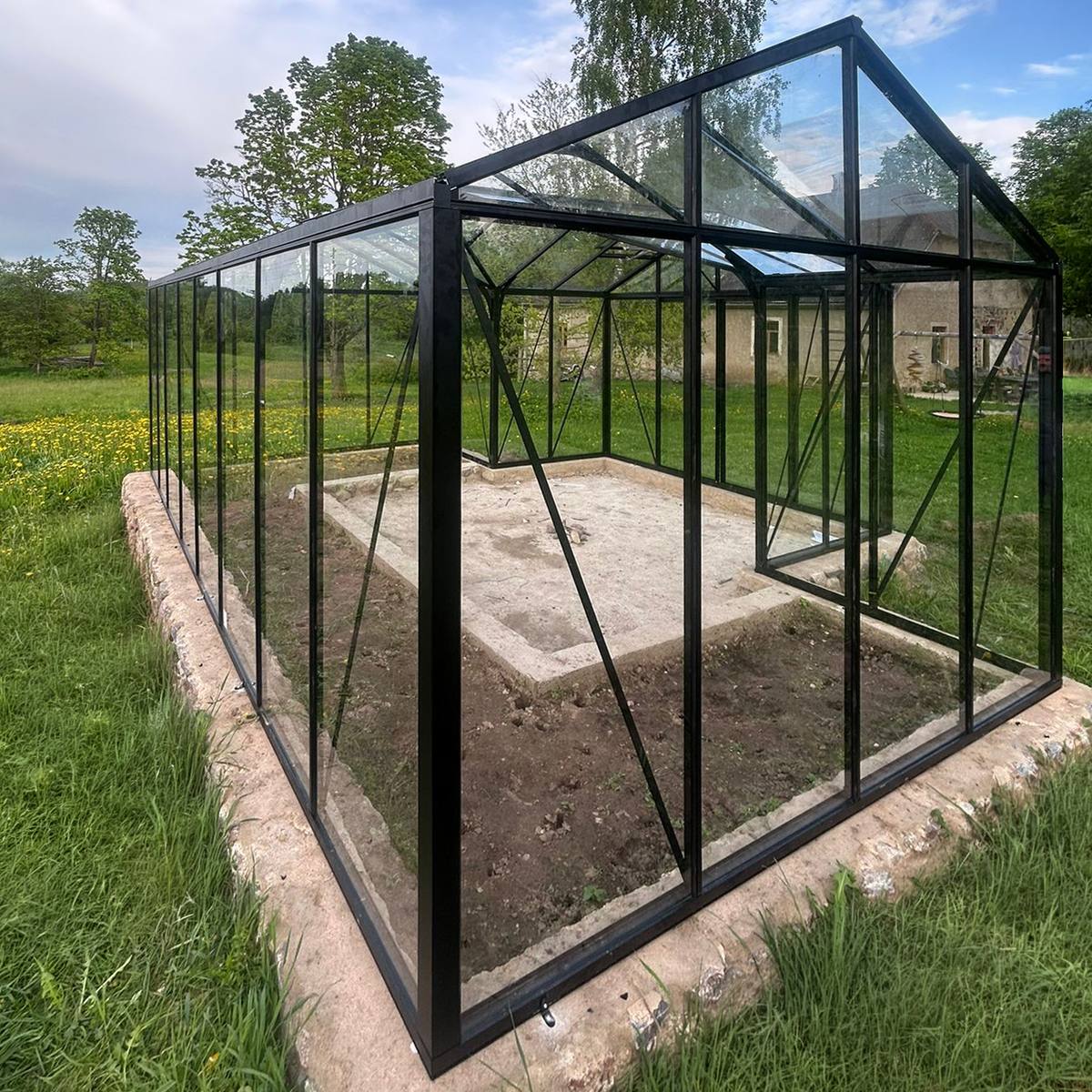
A greenhouse pane is structural. Width and height may not identify it: glass type, thickness, shape, edge finish, holes, cut-outs and location can matter. Roof glazing may differ from a similar side pane, so use the model, panel position and original documents.
Glass, multiwall panels and other glazing products are not interchangeable descriptions. For an explanation of plastic-panel construction and selection, read Polycarbonate for Greenhouses. Substituting another material is a design alteration rather than routine parts supply, and the consequences for retention, sealing and transfer of loads must be assessed.
Dealing with cracked or shattered glazing
Isolate the area first. Wear suitable PPE, avoid wind and place no further load on the pane. Temporary restraints must stop fragments or loose covers falling or being caught by wind.
- Take an overall image first, followed by photographs of the damaged glazing field.
- Record the crack, edges, fixings and adjacent profiles.
- Identify the location from one clear viewing direction.
- Without adding load, check profiles, seals and supports for damage.
- Retain existing labels and any components that are both recognisable and safe to handle.
- Dispose of dangerous shards correctly; preserving evidence never takes priority over safety.
Find the source of any unusual stress before fitting new glazing. A distorted frame, an uneven foundation, displaced seals or inconsistent clamping could otherwise damage the replacement in the same way.
Use glass measurements as a cross-check
Measurements help confirm identity but may not establish the model. Measure the pane itself, not only the visible opening. For broken glass, use original records, an identical position or retained edges, and label any estimate used for a missing corner.
- Take both principal dimensions in more than one place
- Write every measurement in millimetres
- Prepare an annotated drawing when the pane is not rectangular
- Check the diagonals whenever there is doubt about the outline
- Locate apertures by measuring from clearly defined datum edges
- Determine glass thickness with a suitable method
- Show unambiguously where each recorded dimension was taken
Certain safety-glass products cannot undergo ordinary cutting or drilling once manufactured. Their outline and all machining must consequently be agreed beforehand. Do not commission supposedly matching glass locally using only the unobstructed frame opening.
Prepare a clear parts enquiry
Put the entire record into a single communication. Sending isolated photographs through several messages without captions invites confusion. Where more than one item is wanted, organise them in a numbered schedule.
- Give order and contact details.
- Name the model and version.
- Summarise what prompted the request.
- Number each part and state its quantity.
- Use matching numbers for photographs.
- Add measurements and locations.
- State whether the structure remains safe to use.
Send the material through the Bloomcabin contact options. Avoid a vague description such as “door seal”. Instead write: “Item 3: seal along the bottom of the movable door panel, seen while facing it outdoors; photos 3a–3c show its location and section.”
Problems with delivery and accepting spares
If a part is missing or damaged at first delivery, document the consignment before altering goods or packing unnecessarily. Photograph the outer package, shipping label, damage, inner packing and component context. Further steps appear under Shopping and Delivery.
Cross-border orders may require extra route and identification details. If the original delivery went to Austria or Switzerland, consult the guidance on greenhouse purchasing and delivery for that destination.
Checks on arrival
- Check consignment and recipient details.
- Photograph every side before opening.
- Document visible damage.
- Match parts to the accompanying documents.
- Examine glazing and lengthy profiles for obvious defects.
- Separate small items from waste packing before disposal.
- Protect components from moisture and damage, with each one labelled unmistakably.
Do not trial-fit a visibly wrong or damaged part. This may harm other components and hinder later assessment.
Plan the replacement installation
Before installation, establish whether the structure needs unloading, support or partial dismantling. Keep the correct manual available and label removed parts. Work on glass, roofs and structural connections requires suitable tools, safe access and enough people.
Confirm beforehand:
- Is the part matched to its position?
- Are all seals, connectors and fixings present?
- Is the frame correctly aligned, square and undistorted?
- Is there a safe method for taking out the existing item?
- Will any neighbouring components require temporary support?
- Have relevant local requirements and the need for competent trades been checked?
Moving the structure, changing its foundation or altering its form can affect the planning position, which should then be checked again. Begin with the Irish guidance on whether a greenhouse or pergola needs a planning check and consult the appropriate planning authority about the specific property and proposed work. For practical background on the supporting base, the pergola foundation guide may help.
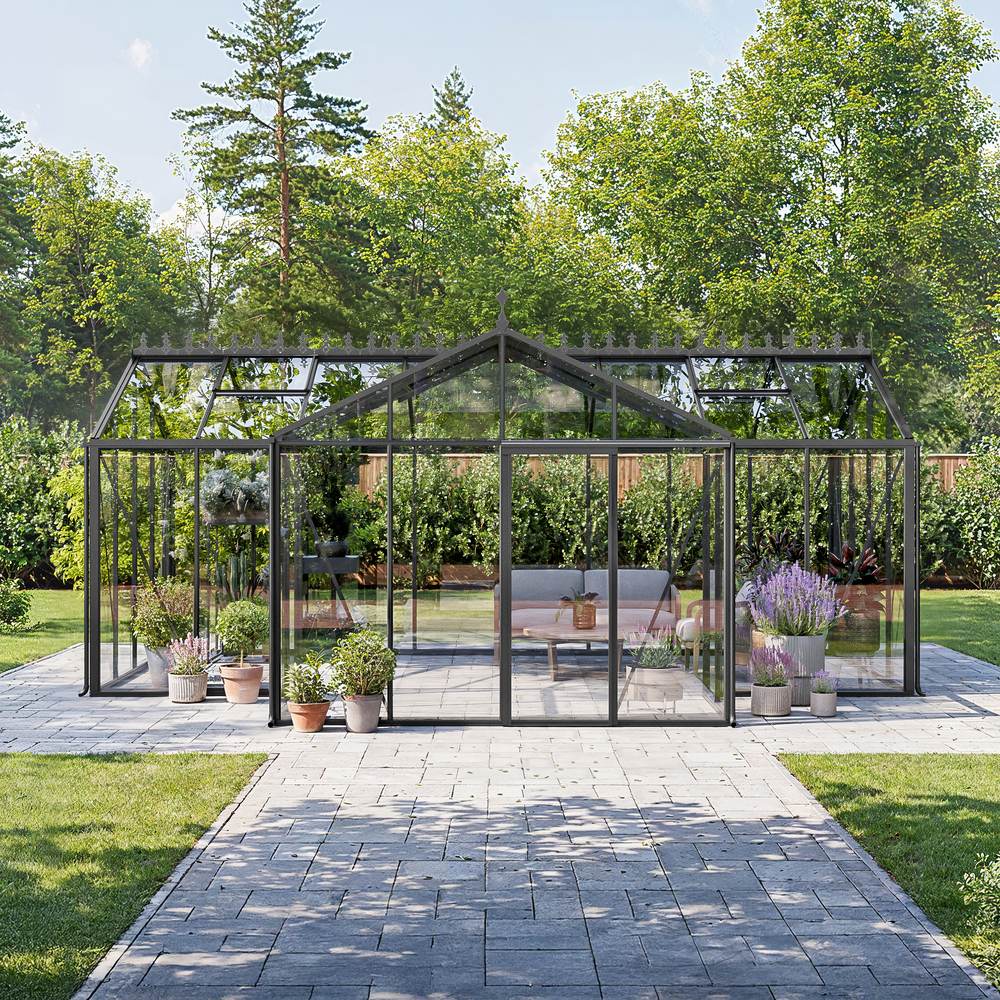
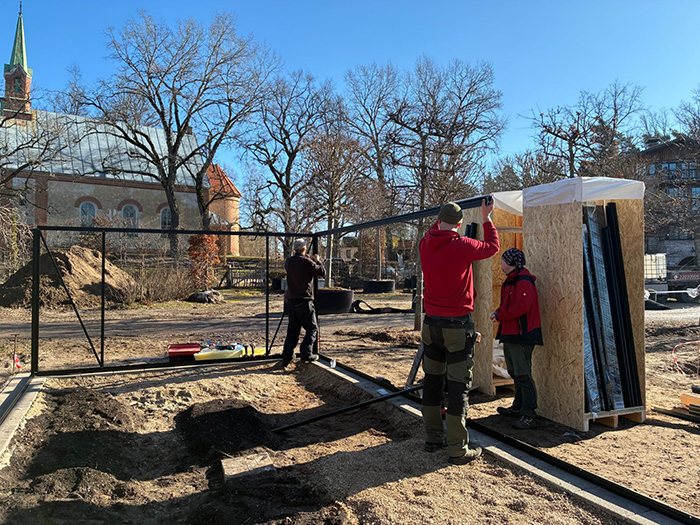
Anna Koku Skola: one documented installation
The Anna Koku Skola photographs show one continuous installation, not separate projects. This makes them valuable for parts enquiries: early views expose components and junctions; later ones show their final places in the completed structure.
The sequence records three stages: delivery condition, assembly in progress and the finally aligned structure. File photographs chronologically by construction phase so a pane, connector or profile can be traced later. Capture hidden junctions before glazing or covers conceal them.
Maintenance and a practical stock of spares
Regular checks can limit consequential damage. See Aluminium Greenhouse Care for guidance. Examine moving elements, drainage, seals and visible joints, but never tighten every fixing indiscriminately. Excess torque may cause difficulties just as readily as a loose connection.
Condensation, dirt accumulation and demands on ventilation components are influenced by temperature and humidity. Operating guidance is set out in Managing Greenhouse Temperature and Humidity. A properly organised watering system helps prevent persistent pooling where water is unsuitable; further ideas are covered in water-efficient gardening.
A small stock of clearly identified wear or assembly parts may help; avoid speculative “universal” items. Store seals without tension, small parts in dry conditions, and glass securely against tipping, impact and edge loading. Label every package with its model, position, part number and storage date.

Pergola glazing walls and operating parts
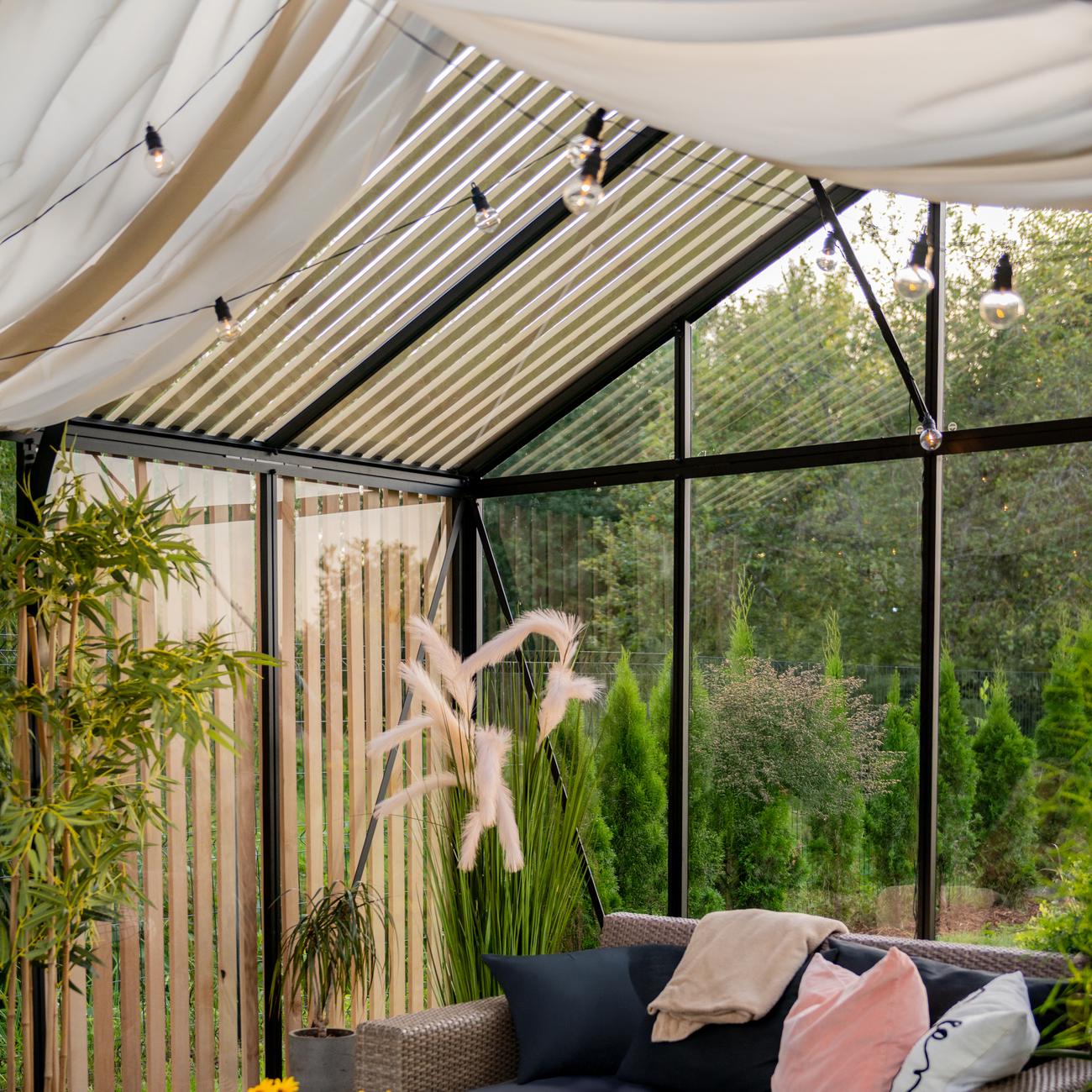
The same careful identification process applies to pergolas, although configuration and operation carry particular weight. Establish at the outset whether you have a bioclimatic design or a conventional pergola and then establish whether its frame is freestanding or fixed to a wall . Its overall dimensions and division into fields can be interpreted with the guide to pergola sizing .
For glass walls, record panel position, opening direction, track or guide system, and floor and roof junctions. For controls, note drive type, wiring or mechanical linkage, and the precise fault. In Ireland, a Registered Electrical Contractor should determine whether work is Restricted Electrical Works and what certification applies.
A roof or glazed-wall alteration may not suit an existing pergola. The guide Bioclimatic Pergolas, Roofs and Glass explains the functional relationships. Do not force jammed louvres, sliding panels or drives.
Frequently asked questions
Can glass be ordered from its two principal dimensions alone?
Use width and height as checks, not a complete specification. Where possible, give model, position, glass type, thickness, shape, edges and holes. A whole-panel photograph and dimensioned sketch reduce misidentification.
Are panes interchangeable between Bloomcabin models?
Never infer interchangeability from appearance. Matching outside measurements can conceal differences in edge treatment, retention and constructional purpose. Even within one greenhouse, panes fitted in the roof, sides and doors need not be identical.
What images will make the enquiry clear?
Send an overall view, the relevant elevation, exact fitted position and several close-ups. Show a tape or scale, markings and mating parts. For movement problems, a short image sequence in different positions may clarify the fault.
Can damaged items be discarded once photographed?
Keep safe parts, labels and identifiable fragments until documentation is complete. Remove and dispose of hazardous glass safely. People’s safety comes first; clear photographs can retain the details needed for identification.
Is self-installation of spare glazing appropriate?
Suitability depends on pane size and position, access, construction and your competence. Large, heavy or roof glazing presents serious risks. If uncertain, engage a suitable professional, use the relevant assembly instructions and observe local workplace-safety requirements.
How can I explain a component when I do not know its name?
Number the photographs and describe the position, function, attachment and element moved or supported by the part. A simple arrowed sketch is often clearer than a guessed technical name.
May a locally sourced seal, fixing or bracket be used?
Only after confirming technical suitability and compatibility. Check geometry, material, corrosion, strength and interaction with aluminium or glass. A similar-looking item is not automatically an appropriate replacement.
How should stiffness in a door or roof vent be investigated?
Do not force it. Check for dirt, distortion, loose connections, guide faults and misalignment, noting when stiffness occurs. Before replacing anything, rule out movement or distortion of the foundation or frame as the cause.
Does submitting a spare-parts enquiry confirm guarantee cover?
No. Whether the commercial guarantee applies is determined by the particular product, the cause of the problem, the available records and the relevant terms. Submitting technical details begins an evaluation and does not itself confirm cover. Consult Guarantee.
May I request parts for modifying my greenhouse?
You may enquire, but part availability does not make an alteration technically acceptable. Changes can affect structure, glazing, drainage, ventilation and connections. Describe the existing arrangement and intended result fully.
What conditions are suitable for storing spare items?
Store items dry, protected and labelled. Support long profiles against bending and secure glass against tipping, impact and edge damage. Never kink or overstretch seals, or expose them long-term to strong heat or direct sunlight.
Where can I review purchase terms and privacy information?
Consult the Bloomcabin terms and privacy notice displayed during the purchase or enquiry process. Provide no personal details beyond those needed to identify the request. Broader routes to ordering and service guidance appear under Service and Ordering Information.
Final spare-parts checklist
- Cause and purpose of the request stated clearly
- Relevant purchase reference and exact model included
- Position defined from a clear viewpoint
- Each part numbered with its quantity
- Overview, position and detail photographs attached
- Supporting dimensions recorded in millimetres
- Pane outline, edge treatment and apertures recorded
- Surrounding components examined for possible harm
- Safe fitting arrangements considered
- Recipient contact information and destination rechecked
Good records shorten the process and reduce ordering mistakes. Numerous images are less important than an unambiguous trail linking the product and fitted location to the item, its dimensions and the fault observed.
